How to Train at Home Without Getting Distracted by the Couch
I spent years paying $80 a month for a commercial gym membership I barely used because of the commute. Then I bought some cheap adjustables, put them in my living room, and realized the hardest part wasn't the weight—it was the couch. Learning how to train at home is 90% psychology and 10% having the right floor mat. If you can't mentally separate your 'chill zone' from your 'kill zone,' you're going to end up scrolling Instagram on your weight bench.
Quick Takeaways
- Your brain associates the living room with rest; you must break that loop.
- Visual boundaries like a dedicated mat act as a 'gym mode' switch.
- Consistency beats complexity every single time.
- Floor protection is a non-negotiable investment for renters and homeowners alike.
The Real Reason You Keep Skipping Your Living Room Workouts
The problem isn't your motivation; it's your environment. Your brain is a pattern-recognition machine. When you walk into your living room, your brain thinks 'Netflix and snacks.' Asking it to suddenly pivot into a high-intensity session in the same spot where you eat pizza is a massive cognitive lift.
To truly figure out how I stuck to a strength training routine at home, I had to stop pretending my lounge area was a gym and start treating it like a lab. You need to create a ritual that signals the transition. For me, it's putting on shoes—even if I'm just lifting in my basement. It’s about killing the friction between 'relaxing' and 'working.'
Visual Cues: Drawing the Line Between Gym and Living Space
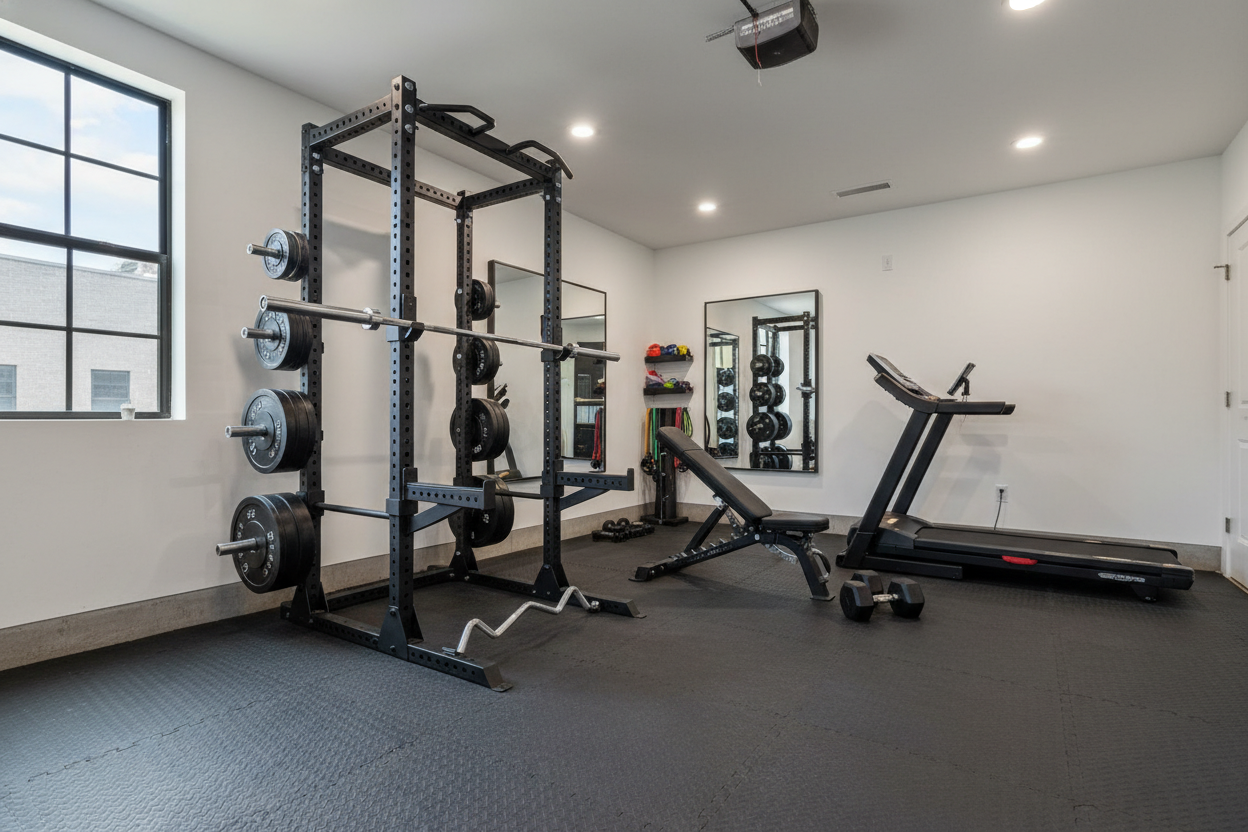
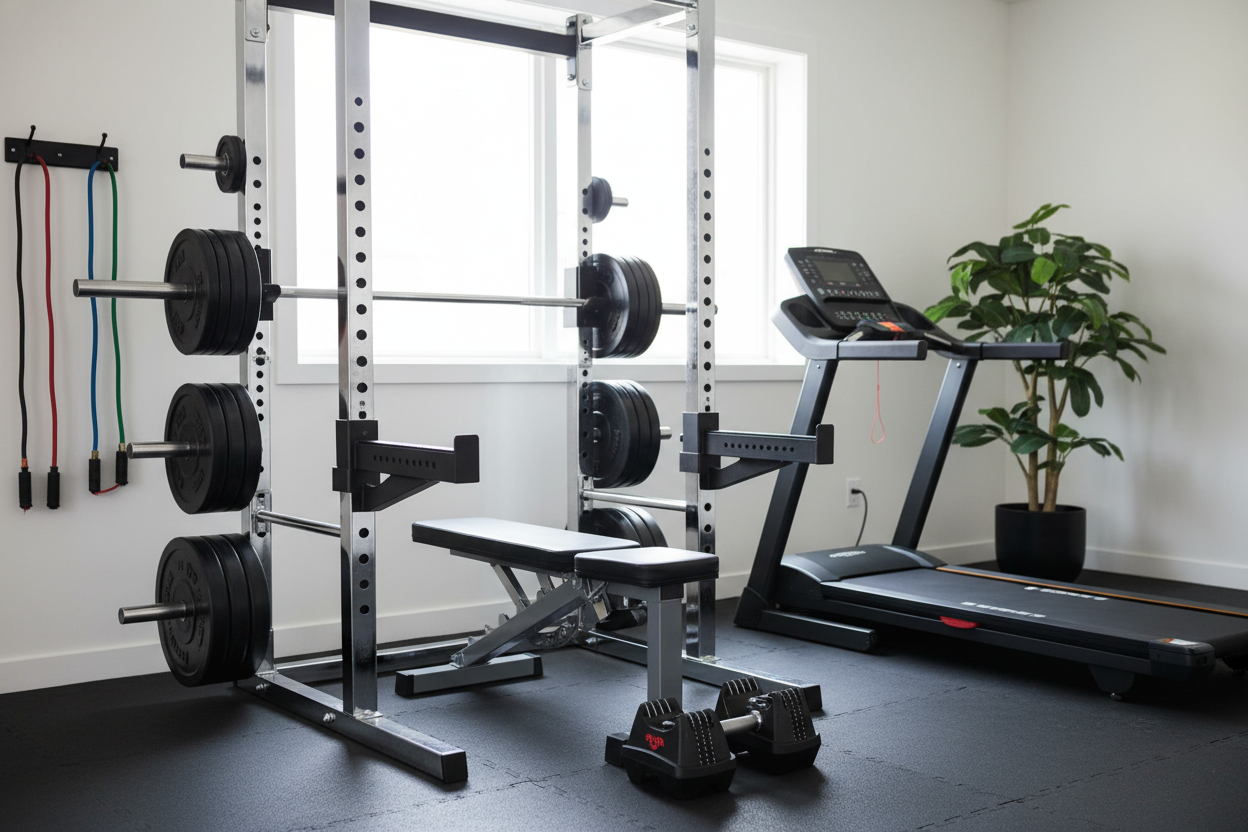
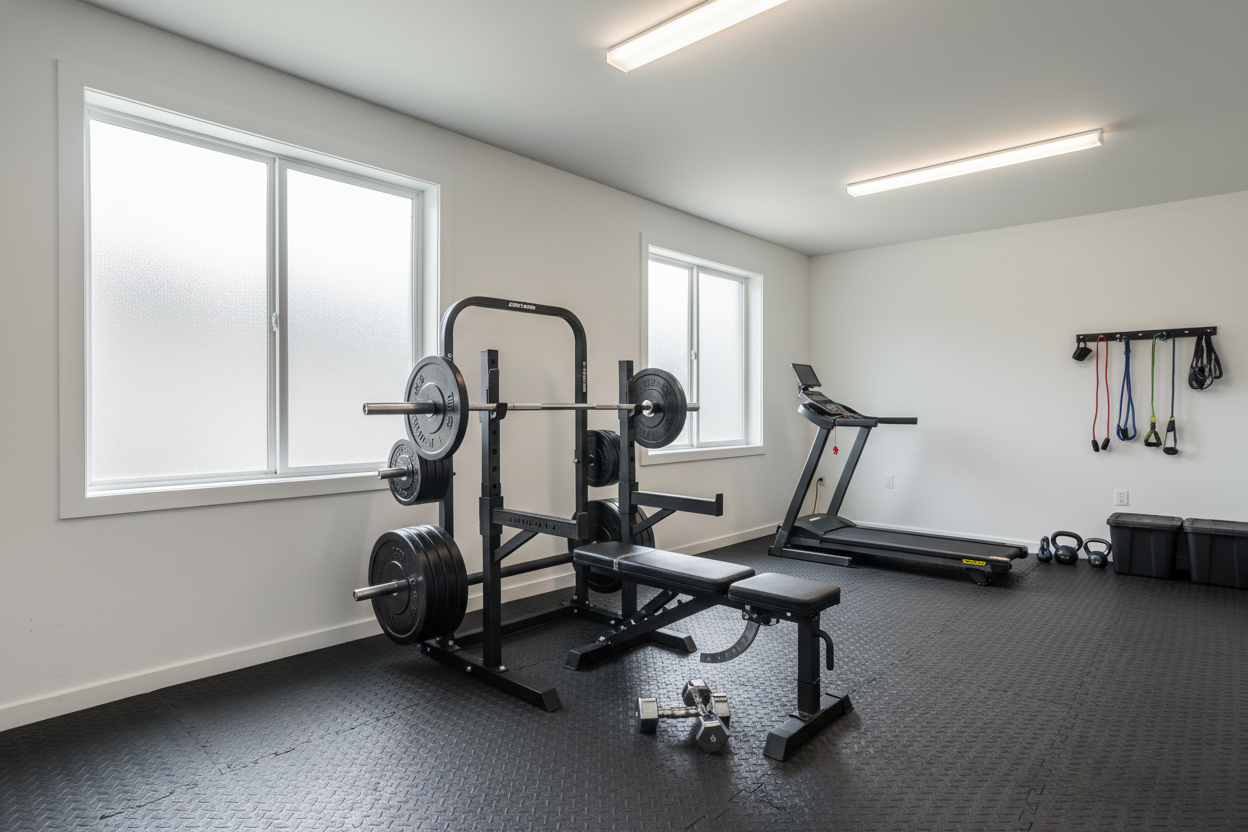
You need a sacred space. If your dumbbells are tucked under the sofa, you'll forget they exist. You need a dedicated 'training zone' that looks and feels different from the rest of the room. Unrolling a large exercise mat for home gym use is the quickest way to tell your brain 'we are working now.' Once my feet hit that rubberized surface, the phone goes on Do Not Disturb.
Don't worry if you're tight on space. You can easily fit real strength training equipment at home in 50 sq ft if you’re smart about it. A 6x8 foot area is actually more than enough for a full-body blast. The key is that the area is clearly defined. When the mat is out, you're at the gym. When it's rolled up, you're back in the living room.
Sorting Through the Types of Strength Training at Home
Don't get analysis paralysis. Most types of strength training at home fall into three buckets: bodyweight tension, kettlebell flows, or dumbbell basics. If you're a beginner, grab a pair of 25lb hex dumbbells and master the basics. If you want mobility and 'functional' power, go kettlebells.
I’ve seen too many people try to follow a complex 6-day split designed for a pro bodybuilder with a full commercial gym. At home, simplicity is your best friend. Pick one modality—just one—and commit to it for 12 weeks. Whether it's calisthenics or heavy bells, the best program is the one you don't have to think about when you're tired after work.
The 'Minimum Effective Dose' Approach to Getting Strong
Stop trying to replicate a 90-minute commercial gym session. You don't need five different variations of a bicep curl. An easy strength workout at home should focus on the big four: push, pull, hinge, and squat. If you hit those four patterns with high intensity, you're doing more than 90% of the population.
I'm a huge fan of the 20-minute 'EMOM' (Every Minute on the Minute) style. It keeps you moving, prevents you from wandering over to the fridge, and gets the job done before your brain realizes it would rather be watching TV. High tension, low time commitment. That is the secret to staying consistent when your bed is only twenty feet away.
Protecting Your Floor (And Your Joints) From Heavy Drops
I’ve seen guys crack their rental’s floor tiles because they thought a thin yoga mat was enough protection for a 50lb dumbbell. It isn't. If you're moving real weight, you need shock absorption. This isn't just about the floor; it's about your joints. Lifting barefoot on concrete or thin carpet is a one-way ticket to shin splints.
I personally use a 6X8Ft Exercise Mat Yoga Mat Gym Flooring For Home Workout because it’s thick enough to dampen the 'thud' of a dropped weight without sliding around like those cheap interlocking foam tiles. It gives you the stability of a commercial gym floor but can still be tucked away if you absolutely have to clear the space for guests.
My Honest Mistake
When I first started, I tried to deadlift 315 lbs on a thin rug over hardwood. I lost my balance on the final rep, the bar rolled, and I put a massive gouge in the floor. My security deposit vanished in about two seconds. Now, I never lift without a dedicated, non-slip surface. It’s the difference between a real training session and an expensive trip to the hardware store.
Frequently Asked Questions
Can I build real muscle with just dumbbells?
Absolutely. If you have a set of adjustables that go up to 50 or 80 lbs, you can build a pro-level physique. It’s about time under tension and progressive overload, not how many fancy machines you have access to.
Is it okay to work out on carpet?
It’s better than nothing, but it’s far from ideal. Carpet is unstable for your ankles during heavy squats and will get destroyed by sweat and equipment over time. Get a dense mat to lay over it.
How do I stop my family from interrupting me?
Set a timer and wear headphones. If the headphones are on, it means the 'gym' is open and you aren't available for chores or questions. Boundaries are physical and social.