How to Start Strength Training Over 40 Female Joints Can Actually Handle
I remember the morning I woke up and my shoulder felt like it had been chewed on by a lawnmower, despite only doing 'safe' elliptical work the day before. It is a common trap: we hit 40, things start to creak, and we retreat to the cardio section to avoid 'damaging' ourselves further. But strength training over 40 female lifters need isn't about reckless max-outs; it is about preventing the slow-motion car crash of muscle loss that makes every movement hurt.
- Muscle acts as the organic armor for your joints.
- Heavy-ish lifting increases bone density when you need it most.
- Low reps (5-8) are often easier on joints than high-rep 'burnouts' that cause form breakdown.
- Standardized movements beat fancy 'functional' circus tricks every time.
Why Your 'Safe' Cardio Routine is Actually Making Your Joints Ache
If you spend forty minutes on a treadmill but can't carry three bags of groceries without a back spasm, your routine is failing you. Most women are told to stick to low-impact cardio to protect their knees. The reality? Avoiding weightlifting women over 40 actually accelerates sarcopenia—the age-related loss of muscle mass.
When your muscles shrink, your joints take the brunt of every step you take. Your tendons and ligaments aren't designed to be primary shock absorbers; that is the job of your quads, glutes, and hamstrings. By skipping the heavy stuff, you are basically driving a car on its rims and wondering why the ride feels bumpy and painful.
The Mobility Myth: You Need Load, Not Just Stretching
I have seen women spend 30 minutes on a foam roller only to feel tight again two hours later. Stretching is a temporary neurological hack, not a permanent fix. If you want real mobility, you need to load the end ranges of your movement. Properly executed weight training routines for women over 40 force the body to build structural resilience and thicken connective tissue.
Instead of just reaching for your toes, try a goblet squat where the weight helps pull you into a deeper, stable position. If your grip or wrists are the limiting factor, using strength training accessories like lifting straps or fat grips can help you handle the necessary weight without your small joints giving out first. Load creates the adaptation that passive stretching never will.
The 3 Non-Negotiable Strength Exercises for Women Over 40
You do not need a 50-exercise circuit that leaves you gasping for air. You need to master three things: the Box Squat, the Romanian Deadlift (RDL), and the Floor Press. These are the best strength exercises for women over 40 because they have a high floor for safety and a high ceiling for progress.
The Box Squat teaches you to sit back into your hips rather than shearing your knees forward. The RDL is the king of weight training exercises for women over 40 because it builds the posterior chain—the muscles that keep your spine upright. Finally, the Floor Press is a shoulder-saver. By lying on the floor, the ground acts as a hard stop, preventing your elbows from dropping too deep and overstretching the shoulder capsule. These strength training exercises for women over 40 deliver the most bang for your buck without requiring Olympic-level mobility.
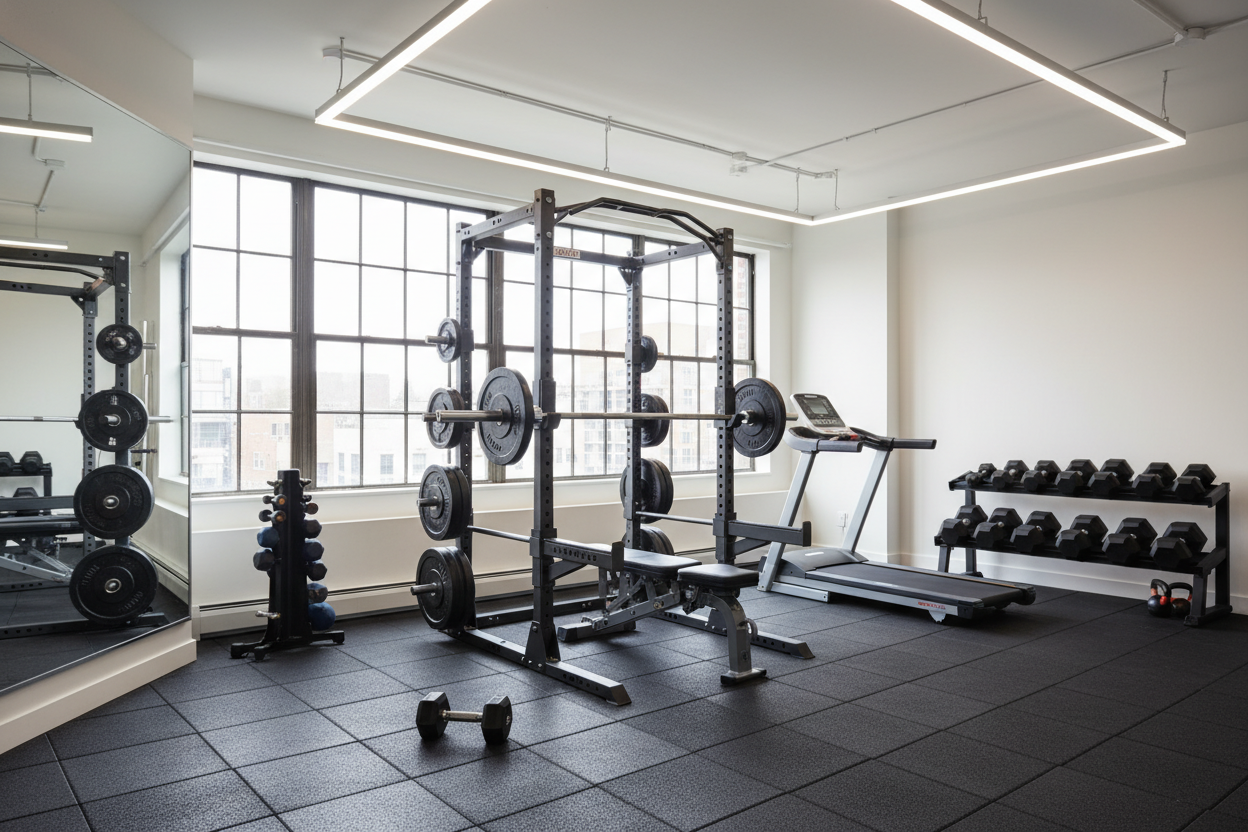
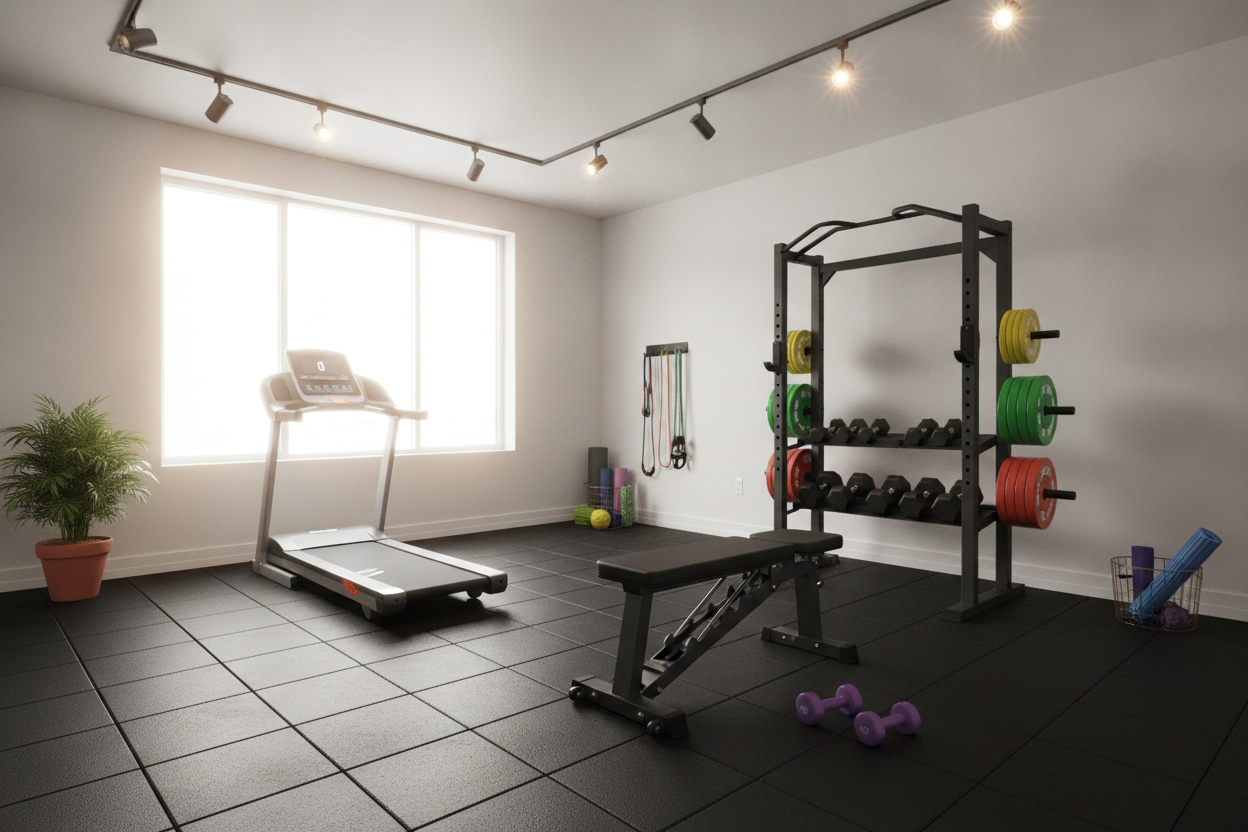
How to Set Up Your Home Gym for Achy Knees and Shoulders
When you are 22, you can lift a rusty bar in a damp basement and feel fine. At 40+, the quality of your gear matters. Start by choosing the best strength and weight training equipment that fits your specific range of motion needs. Do not buy the cheapest flat bench you find; it will likely feel like a balancing act on a 2x4.
Invest in an adjustable weight bench. Being able to press at a 15 or 30-degree incline instead of a flat 90 degrees can be the difference between a productive chest day and a week of ibuprofen. If your stabilizing muscles are currently the 'weak link' causing joint flare-ups, do not be afraid to use weight lifting machines like a leg press or a cable row. They allow you to push the muscle to failure without the risk of a barbell crushing your ego or your toes.
A Realistic 3-Day Weights Workout for Women Over 40
Stop doing 20-rep sets with pink dumbbells. High reps often lead to technical breakdown as you fatigue, which is when injuries happen. For a solid weights workout for women over 40, aim for 3 sets of 5-8 reps. This is heavy enough to build strength but short enough that you can maintain perfect form on every single rep.
A simple Monday/Wednesday/Friday split works best. Day A: Box Squats and Lat Pulldowns. Day B: RDLs and Floor Press. Day C: Step-ups and Seated Rows. This weight lifting over 40 female template allows for 48 hours of recovery between sessions, which is non-negotiable once your recovery capacity starts to slow down. Focus on adding just 2.5 lbs to the bar every two weeks—slow progress is still progress.
When to Push Through and When to Back Off
There is a massive difference between 'work pain' and 'injury pain.' Work pain is a dull ache in the muscle belly. Injury pain is sharp, hot, or localized in a joint. If it is sharp, stop immediately. If it is just a heavy grind, keep going. Learning this distinction is the key to longevity.
Building this habit now isn't just about looking good in a tank top this summer. It is about ensuring you have the bone density and balance to avoid being fragile later. You are essentially doing the prep work for strength training for women over 60. The stronger you are now, the higher your 'functional floor' will be in the decades to come.
FAQ
Will weightlifting women over 40 make me look bulky?
No. Most women do not have the testosterone levels for accidental bulk. You will just look 'toned,' which is actually just having muscle and low enough body fat to see it.
How do I know if the weight is heavy enough for weight lifting workouts for women over 40?
The last two reps of your set should feel difficult, but your form should look exactly like the first rep. If you could do 5 more reps without breaking a sweat, it is too light.
Is it too late to start if I already have joint pain?
It is actually the best time to start. Controlled resistance training is one of the few ways to strengthen the structures around the joint and reduce chronic pain over time.