I Tested Every Lazy Move: The Easiest Exercise to Do at Home
I have spent a decade obsessing over knurling patterns on 20kg barbells and the exact shore hardness of bumper plates. But recently, a friend who hasn't stepped foot in a gym since the Clinton administration asked me for the easiest exercise to do at home. He didn't want a 'fitness journey' or a high-intensity interval session; he wanted one move he could do without changing his clothes or buying a rack.
Quick Takeaways
- The best home exercise requires zero equipment and zero floor work.
- Most 'beginner' moves are either too easy to be effective or too hard on the joints.
- The Sit-to-Stand is the undisputed king of high-ROI, low-effort movements.
- Stability is key—sliding on hardwood ruins the mechanics of the move.
The Problem with Most 'Beginner' Living Room Moves
If you search for easy workouts, you get a list of junk. Arm circles? That is just waving at the wall. Bird-dogs? Most people do not have the hip mobility to do them right, and quite frankly, nobody wants to crawl around on a dusty carpet if they do not have to. These moves often fail because they are either boring or require you to get down on the floor, which is a major psychological barrier when you are just starting out.
I have seen people quit their routines simply because the thought of laying on a cold floor felt like too much work. A real exercise should build actual strength—the kind that helps you carry groceries or get out of a car—without feeling like a chore. If a move does not challenge your muscles or improve your life, it is just wasted movement.
My Strict Criteria for the Lowest Barrier to Entry
To find the winner, I set some ground rules. First, zero equipment. I am not even talking about a resistance band. Second, no getting on the ground. If you have to find a yoga mat, you have already lost the battle of 'easy.' Third, it has to be functional. It needs to work the largest muscle groups in the body: the legs and the glutes.
I tested high-knees (too much cardio), wall sits (too boring), and standing calf raises (not enough total-body impact). I wanted something that felt like a natural part of a day. After a week of testing, the winner was obvious. It is a move you already do dozens of times a day, just done with a bit more intention.
The Undisputed Champion: The Strict Chair Sit-to-Stand
The strict sit-to-stand is essentially a box squat for the real world. You find a sturdy chair—one that does not have wheels—and you sit down and stand up. That is it. But the 'strict' part is where the magic happens. You keep your chest up, your feet shoulder-width apart, and you refuse to use your hands to push off your knees or the armrests.
This move targets your quads, hamstrings, and glutes while forcing your core to stabilize your spine. I personally did 50 of these in my kitchen while waiting for coffee to brew. By the end, my legs had a genuine pump, but I was not out of breath or sweaty. It is the perfect blend of strength training and 'lazy' movement. If you can stand up from a toilet, you can do this exercise.
Building Quick Easy Workouts to Do at Home Around It
One move is great, but consistency is better. The best way to turn this into a habit is through stacking. Do five reps every time you sit down to eat, or ten reps during every commercial break. This is how you build easy to do workouts at home without ever feeling like you are actually 'working out.'
I once tried to start a 30-minute morning routine and failed after three days. It was too much friction. But when I switched to doing sit-to-stands every time I finished a Zoom call, I ended up doing 60 reps a day without trying. That is the power of a low-barrier movement. You do not need a gym membership; you just need a chair and a little bit of discipline.
Why Your Bare Floor is Making Simple Moves Harder
One thing I noticed during testing: your flooring matters. If you are doing these in socks on a hardwood floor, your feet are going to slide. This forces your knees to cave in and makes the move feel unstable and dangerous. You want your feet 'screwed' into the ground to generate power from your hips.
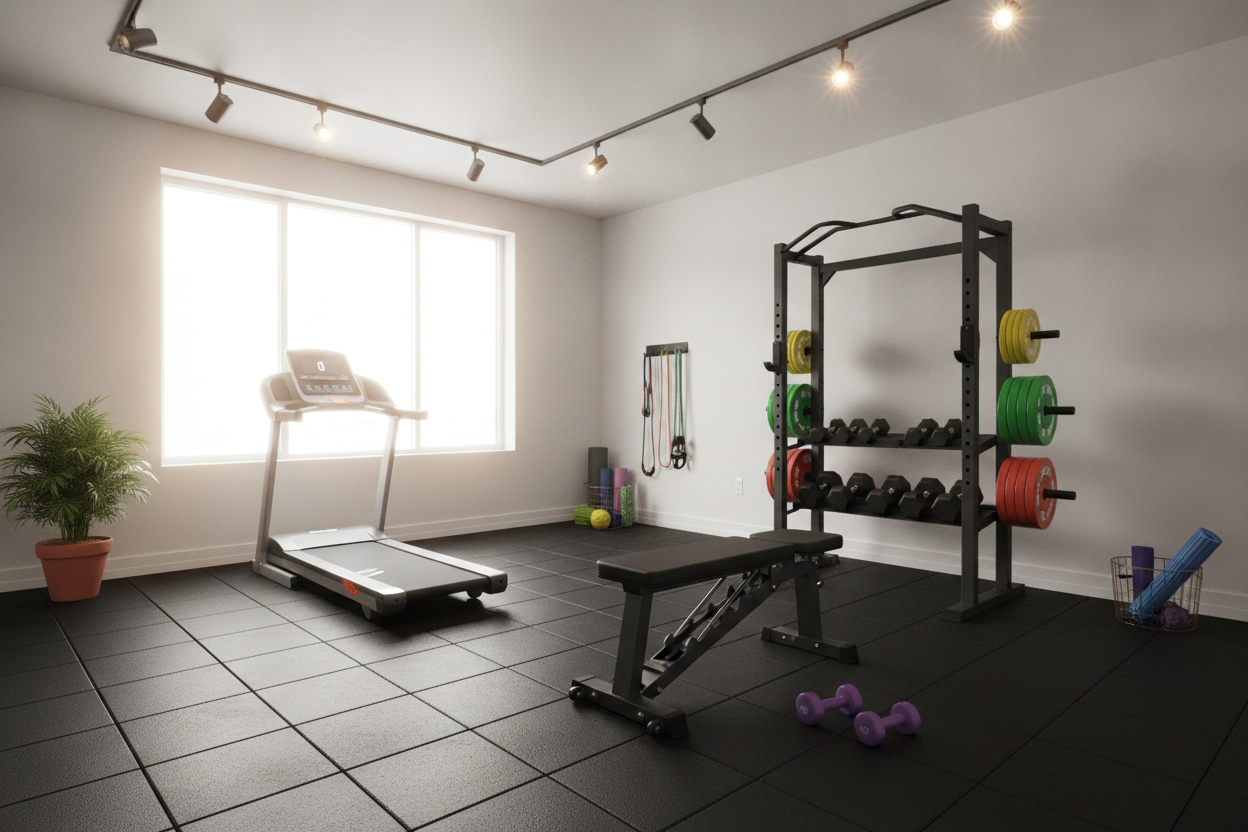
If you have a dedicated space, using a large exercise mat for home gym use provides the grip you need to stay planted. Even if you are just in the living room, put on some sneakers or go barefoot. Do not let a slippery floor be the reason you skip your reps. A solid foundation makes even the easiest moves feel more professional and effective.
FAQ
Do I need a specific type of chair?
Avoid anything with wheels or a super soft cushion. A standard dining room chair or a sturdy bench is perfect. You want a consistent height so you can track your progress.
How many reps should I start with?
Try 10 reps. If that feels easy, do 10 reps three times throughout the day. The goal is frequency, not exhaustion.
Is this better than walking?
Walking is great for your heart, but sit-to-stands build the leg strength that walking doesn't. Do both if you can, but if you only have 60 seconds, stand up and sit down 15 times.