How to Spot Real Gym Equipment Quality Before You Buy
I remember the night I bought my first power rack. It was 2 AM, I was three beers deep, and the Amazon photos made this $250 rig look like it belonged in a D1 strength room. When it arrived, the 'heavy-duty' steel felt like it was made from recycled soda cans. That was my first hard lesson in gym equipment quality: marketing teams are much better at their jobs than some manufacturers are at theirs.
Quick Takeaways
- 11-gauge steel is the standard for serious lifting; 14-gauge is for light-duty accessories.
- Weight capacity ratings on budget gear are often total fiction.
- Look for 5/8-inch or 1-inch hardware—anything smaller will wobble.
- UHMW plastic liners on J-cups are non-negotiable to protect your barbell.
Why Everything Looks Heavy-Duty Online
The fitness industry has a 'matte black' problem. Manufacturers realized a decade ago that if you spray-paint thin, cheap steel with a gritty black powder coat, it looks identical to a commercial-grade rig in a 2D photo. They use high-angle photography and professional lighting to make 2x2-inch tubing look massive. But when you get it in your garage, the lack of gym equipment good quality becomes obvious the moment you rack a heavy bar.
Vague terminology is the second red flag. If a product description uses words like 'industrial strength' or 'pro-grade' without listing the actual steel gauge or bolt size, they are hiding something. Real manufacturers brag about their specs. They tell you exactly what kind of steel they use because they know it’s a selling point. If the specs are missing, assume the worst.
The Steel Gauge Trap (And What Actually Matters)
Steel gauge is the thickness of the metal. In the world of steel, a lower number means thicker metal. 11-gauge steel is roughly 1/8-inch thick and is the gold standard for home and commercial racks. 14-gauge is significantly thinner. While 14-gauge might be fine for a plate tree, it has no business being the main upright of a squat rack where you’re dropping 400 lbs.
I eventually invested in quality gym equipment after my first budget rack literally swayed two inches to the left every time I did pull-ups. It’s not just about the rack falling down; it’s about the mental tax of not trusting your gear. If you’re worried the safety arms will shear off during a failed rep, you aren't going to train at your limit.
Don't believe the weight capacity ratings on cheap benches or racks. There is no universal standard for how these are tested. A company can claim a bench holds 1,000 lbs, but that might be a static load (dead weight placed gently). The second you sit on it with 225 lbs and move, the dynamic load changes everything. If a bench weighs 30 lbs but claims a 1,000-lb capacity, it’s a lie.
How to Spot Gym Equipment Good Quality in the Details
To find the truth, look at the small stuff. High-quality gear uses UHMW (Ultra High Molecular Weight) plastic to protect your barbell's knurling. If the J-cups are just bare metal or have thin rubber stickers that peel off after a week, it’s a sign of a lazy manufacturer. Good gear also features 'Westside' hole spacing—1-inch gaps through the bench zone—so you can set your safeties at the perfect height.
Hardware, Welds, and Upholstery
Check the bolt sizes. Quality racks use 5/8-inch or 1-inch bolts. If you see tiny 1/2-inch bolts that look like they came from an IKEA coffee table, keep scrolling. You also want to look at the welds. They should look like a stack of dimes—consistent, clean, and overlapping. Sloppy, porous welds with 'splatter' around them are a sign of rushed robotic welding or poor quality control.
For benches, the upholstery tells the story. Cheap benches use soft, open-cell foam that bottoms out the moment you lay down. You want high-density, firm foam that supports your shoulder blades during a heavy press. If the vinyl feels like a cheap shower curtain, it will rip within six months of heavy use.
Don't Ignore Your Floor
You can buy the best rack in the world, but if it’s sitting on a sloped, cracked concrete floor, it’s going to feel like junk. Proper flooring safeguards your exercise safety by providing a level, high-friction surface. Without it, your rack can 'walk' across the floor during aggressive movements.
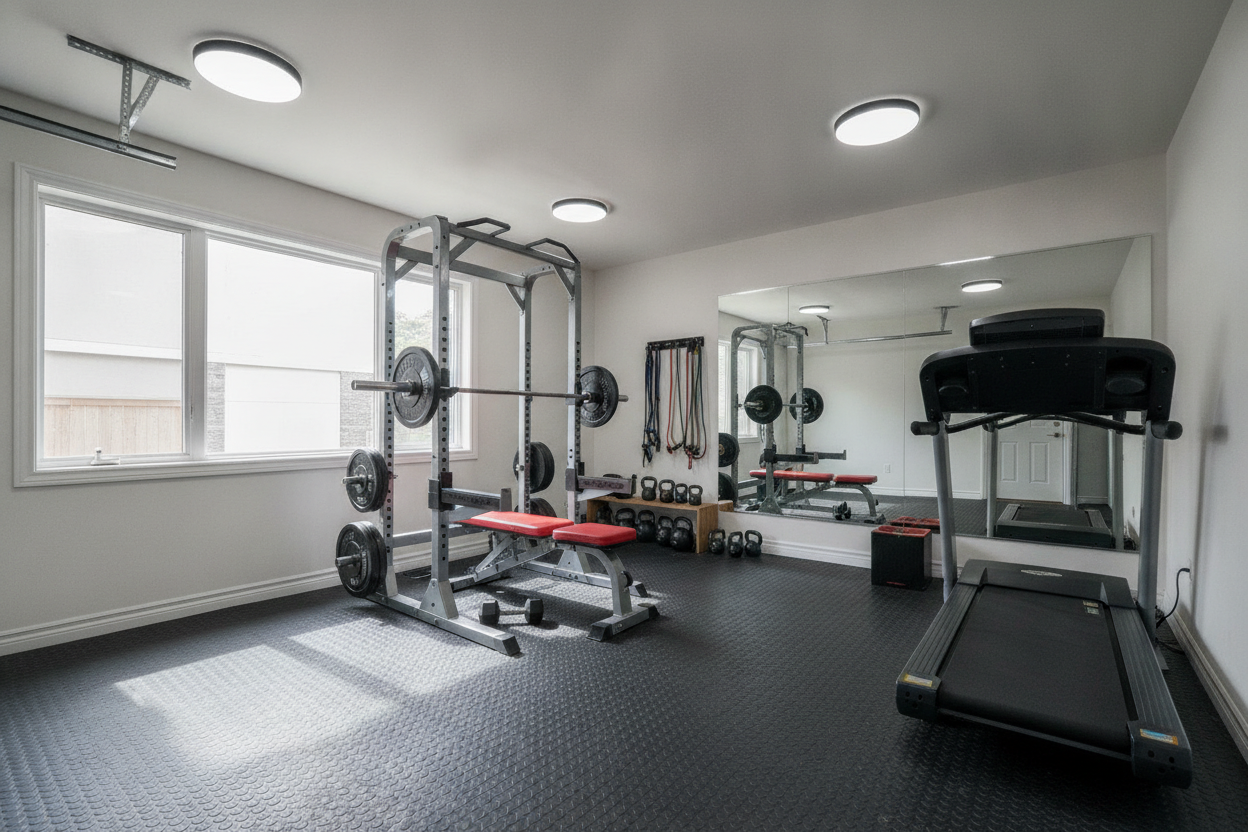
I always recommend a dedicated large home workout flooring setup. High-density rubber absorbs the shock of dropped deadlifts and keeps your rack anchored. It also saves your joints. Squatting on 3/4-inch rubber feels significantly better on the knees than squatting on raw concrete.
When It's Okay to Cheap Out (And When It's Dangerous)
You don't need a $3,000 budget to build a great gym, but you have to be smart about where you spend. Spend your money on the 'Big Three': the rack, the barbell, and the bench. These are your safety points. If a barbell snaps or a bench collapses, you're heading to the ER.
Save your money on accessories. You can find great home gym equipment deals on things like bumper plates, kettlebells, and cable attachments. A 45-lb iron plate is a 45-lb iron plate, whether it costs $50 or $150. Focus your budget on the structural items that keep the weight off your neck.
My Personal Lesson
I once bought a 'pro' adjustable bench for $120. On paper, it was perfect. In reality, the gap between the seat and the back pad was so wide that my lower back would sink into it during every set of incline press. It was miserable. I ended up spending more money to replace it six months later than if I had just bought the $300 bench from the start. Buy once, cry once.
FAQ
Is 14-gauge steel okay for a home gym?
Only for light-duty stuff like plate trees or dumbbell racks. For a power rack or a bench you plan to use for heavy compounds, stick to 11-gauge.
Why are some barbells so much more expensive?
It comes down to the steel's tensile strength and the quality of the bushings or bearings. A cheap bar will permanently bend the first time you drop it in the safeties.
How can I tell if a weld is bad from a photo?
Zoom in on the joints. If the paint looks lumpy or there are gaps where the metal meets, the weld didn't penetrate deeply enough. It’s a structural failure waiting to happen.