How to Buy Used Life Fitness Equipments Without Getting Ripped Off
I remember the first time I bought a 'budget' cable crossover from a big-box retailer. Within three months, the plastic pulleys were screaming like a banshee, and the weight stack felt like it was sliding through wet sand. That was the day I realized that if you want gear that actually survives a heavy session, you have to look at what the pros use. Hunting for used life fitness equipments is the smartest way to build a world-class home gym without taking out a second mortgage.
Quick Takeaways
- Check the cables for 'bird-nesting' or fraying; safety comes first.
- Inspect the guide rods for pitting or rust—if they aren't smooth, the workout won't be either.
- Commercial gear is heavy; you will need specialized flooring to protect your foundation.
- Buy from liquidators in bulk to save on shipping and get better leverage.
The Premium Tax: Why Do These Machines Cost So Much?
Life Fitness doesn't build toys. When you look at the specs for life fitness us, you're seeing 11-gauge steel and industrial-grade bearings designed to handle 18 hours of daily abuse in a commercial club. That durability is why a ten-year-old machine still holds 40% of its original retail value.
It’s not just about the metal, though. The biomechanics are what separate these from the pack. The converging and diverging axes on their press machines actually mimic how your joints move in real life. Understanding what the Life Fitness logo actually means helps you realize you aren't just paying for a name—you're paying for engineering that keeps your shoulders from clicking during every rep.
Spotting the Difference Between 'Used' and 'Abused'
When you find a listing for life fitness exercise machines on the secondary market, your first job is to play detective. Start with the upholstery. If the pads are cracked or taped up, that machine lived in a high-traffic gym with zero climate control. That’s a red flag for internal rust you can't see.
Run the weight stack through the full range of motion. It should feel effortless. If there is a hitch or a 'catch,' the guide rods are likely bent or the internal bushings are shot. Replacing those parts isn't just expensive; it’s a massive headache to source the specific OEM hardware for older models.
Which Pieces Are Actually Worth the Hunt?
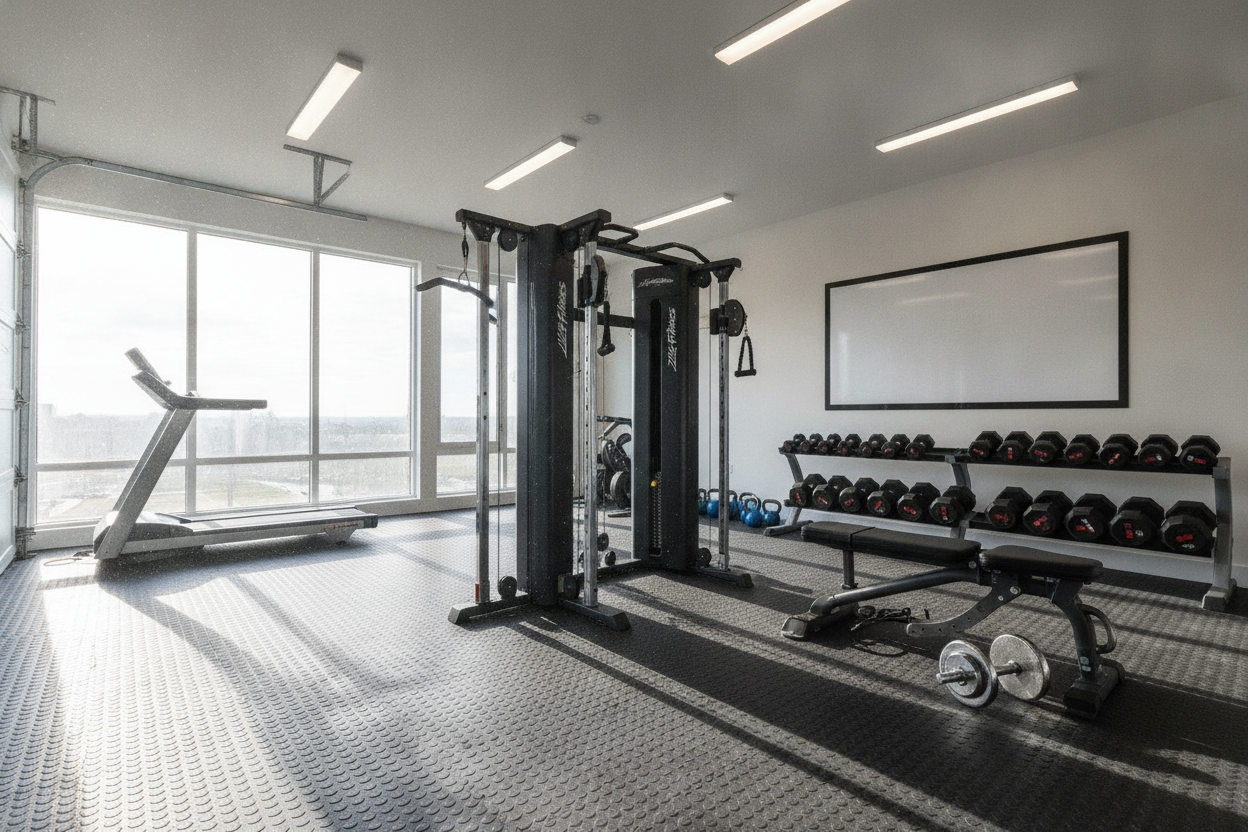
Not all life fitness workout equipment is created equal for a home setting. I’d skip the basic benches—you can get those cheaper elsewhere. Instead, hunt for the functional trainers and dual-adjustable pulleys. These are the crown jewels of any garage gym because of their versatility.
A single cable station allows you to execute a complete Life Fitness workout routine in a 4x4 foot footprint. These machines use high-tensile cables that won't snap under a 200-pound load, making them significantly safer than the cheap nylon-coated wires found on entry-level home gear.
Don't Put a 500-Pound Machine on Bare Concrete
One mistake I see constantly is guys dragging a commercial leg press into their garage and setting it right on the slab. These machines are incredibly dense. A standard commercial treadmill or selectorized stack can easily exceed 600 pounds in a tiny footprint, which is enough to crack residential concrete over time.
Before the delivery truck arrives, I highly recommend investing in a large exercise mat or high-impact rubber tiling. You need at least 3/4-inch thickness to dampen the vibration and prevent the machine from 'walking' across the floor during explosive movements. Your foundation (and your neighbors) will thank you.
How to Negotiate With Gym Liquidators
Liquidators are usually drowning in inventory. If you see a warehouse full of life fitness exercise machines, don't pay the 'Buy It Now' price. Show up with a truck, a couple of buddies, and a stack of hundred-dollar bills.
Ask about 'as-is' units that just need a new cable or a quick cleaning. Often, you can shave 30% off the price if you're willing to do the sweat equity. If you're buying a rack, try to bundle in some plates or a bar. They want the floor space back more than they want that last $100.
My Honest Experience
I once bought a Life Fitness Signature Series Row for $400 from a closing YMCA. It looked like garbage—covered in dust and old stickers. I spent a Saturday cleaning the guide rods with silicone spray and replacing one frayed cable. That machine has now outlasted three different power racks in my gym. My only regret was not buying the matching chest press when I had the chance. Quality gear is an investment, not an expense.
Frequently Asked Questions
Are older Life Fitness machines still good?
Absolutely. The frames are built to last decades. As long as the pulleys and cables are maintained, a 15-year-old commercial machine will still outperform a brand-new 'home' model every single time.
Where do I find replacement parts?
Life Fitness has a robust support site, but for older gear, check third-party fitness repair shops. Most use standard cable diameters and pulley sizes, so you don't always need to buy the expensive branded parts.
Is commercial gear too big for a garage?
Sometimes. Always measure your ceiling height, especially for pull-up bars on functional trainers. Commercial gear is often 7 to 8 feet tall, which can be a dealbreaker for low-ceiling basements.