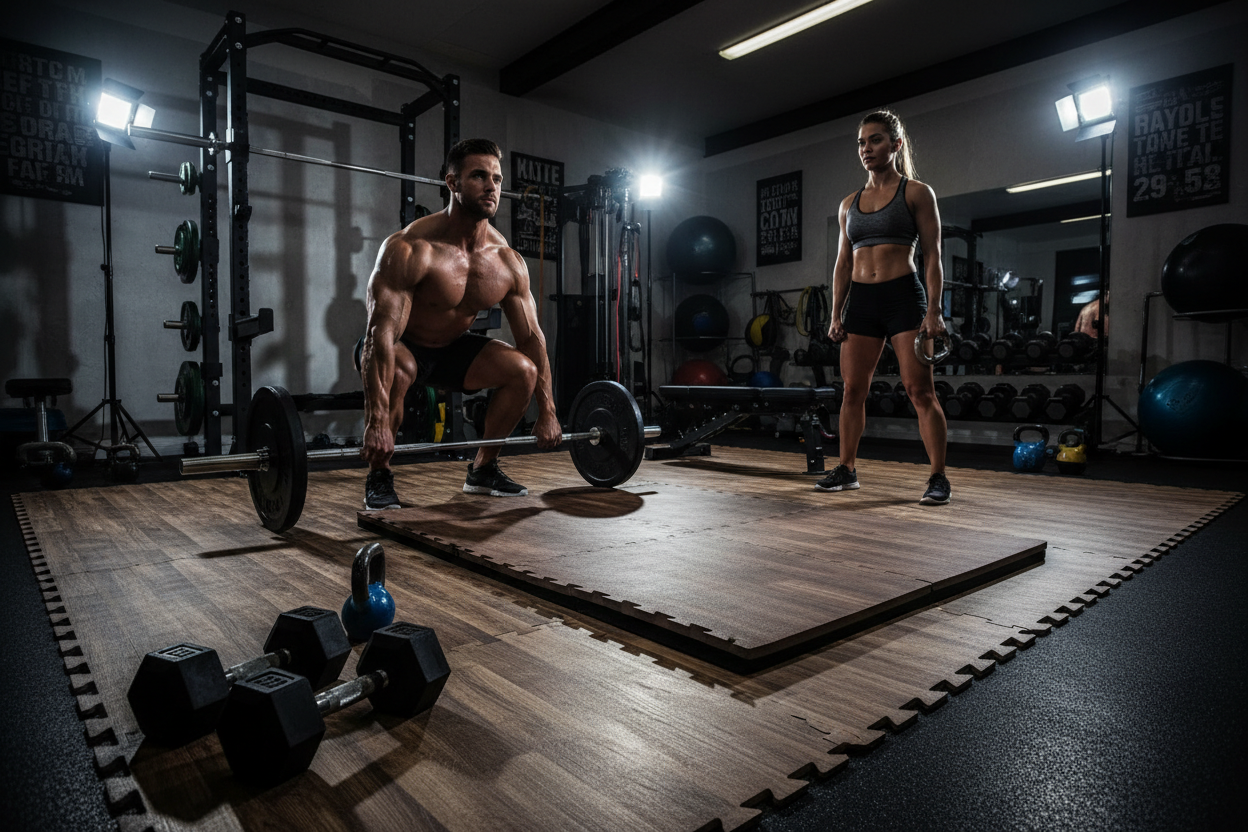
How to Build Total Power With Just Exercises for Back and Legs
Most gym-goers stick to the traditional "Bro Split"—chest on Monday, back on Tuesday, legs whenever they feel like it. But if you are looking for systemic growth and serious athletic performance, you might be organizing your week incorrectly. Combining these two major muscle groups into a single session is often called "Posterior Chain Training," and it is one of the most efficient ways to pack on mass.
When you prioritize compound exercises for back and legs, you aren't just working muscles in isolation; you are teaching your body to transfer force from the ground up. This approach triggers a massive hormonal response and builds the kind of functional strength that carries over to real life. Let's look at how to structure this without burning out.
Key Takeaways: The Posterior Chain Strategy
- Efficiency is King: Combining leg and back movements targets the largest muscle groups in the body, maximizing calorie burn and testosterone release.
- The "Hinge" is the Bridge: Movements like Deadlifts and Romanian Deadlifts (RDLs) effectively work both the hamstrings (legs) and the erectors (lower back) simultaneously.
- Order Matters: Always perform your heaviest compound lifts (like squats or deadlifts) first before moving to isolation exercises to prevent injury.
- Grip Strength is the Limiting Factor: On a leg and back day, your grip will fail before your back does. Use straps if necessary for the later movements.
Why Combine Leg and Back Day?
The concept of a leg and back workout is rooted in anatomy. Many of the best mass-builders require these two areas to work in tandem. Think about the deadlift. Is it a back exercise? Is it a leg exercise? The answer is both. It recruits the hamstrings and glutes to break the floor, while the lats and spinal erectors work isometrically to keep the torso rigid.
By grouping your back and legs, you create a high-intensity session that focuses on the entire back side of your body. This allows for more rest days during the week, which is crucial for the central nervous system (CNS) to recover from such heavy loads.
Structuring the Ultimate Leg and Back Workout Routine
You cannot simply throw random exercises together. Since these are large muscle groups, fatigue management is critical. Here is a structure that balances compressive spinal loading with hypertrophy work.
1. The Heavy Hinge (The Foundation)
Start your leg and back workout gym session with a heavy hinge movement. The Conventional Deadlift or the Trap Bar Deadlift are your best options here. These recruit the most motor units.
Coach's Tip: Keep the reps lower (3-5 range) here. You want strength, not metabolic exhaustion, right out of the gate.
2. The Vertical Pull
Immediately after compressing the spine with heavy pulls, you want to decompress it. Weighted Pull-ups or Lat Pulldowns are excellent here. This gives your lower body a break while hammering the lats.
3. The Squat Pattern
Now we move to the legs back workout portion focusing on the quads and glutes. Since your lower back is already fatigued from the deadlifts, opt for a variation that is easier on the spine. A Front Squat or a heavy Leg Press is often safer than a Back Squat at this stage in the workout.
4. The Horizontal Row
To thicken the mid-back, incorporate a row. A Chest-Supported T-Bar Row is superior here. Why? Because doing a bent-over barbell row after deadlifting is a recipe for a lower back injury. Support your chest so you can isolate the lats and rhomboids without worrying about stability.
5. The Finisher: Workout for Back Legs
Finish with a movement that targets the hamstrings (the "back legs") and the glutes. Glute-Ham Raises or Seated Leg Curls work well. This is pure hypertrophy work, so aim for higher reps (12-15).
Common Mistakes in Legs and Lower Back Workouts
The biggest error I see is volume overload. You cannot do 5 back exercises and 5 leg exercises in one session with high intensity. You will crash. A proper leg and back workout routine should be concise—5 to 6 exercises total.
Another issue is neglecting the lower back. While you don't want to overwork it, you need some direct work if your heavy compounds are lacking. Hyperextensions are a safe way to finish a legs and lower back workout to flush blood into the area without heavy spinal loading.
My Training Log: Real Talk
I want to be honest about what a heavy leg and back day actually feels like. I remember the first time I strictly adhered to a Posterior Chain program. The numbers on paper looked fine, but the physical reality was different.
The specific issue wasn't muscle soreness; it was the "CNS fog." After three heavy sets of deadlifts followed by Bulgarian split squats, I sat on the bench and literally felt my hands shaking—not from weakness, but from neural fatigue. I also learned the hard way about grip management. By the time I got to my rowing movements, the sharp knurling on the barbell felt like it was tearing my skin because my calluses were already raw from the deadlifts. I had to swallow my pride and use lifting straps for the rows, or I wouldn't have been able to complete the set. Also, driving home? Good luck. The "pump" in your lower back makes sitting in a bucket seat for 20 minutes incredibly uncomfortable. You end up shifting your weight constantly just to find relief.
Conclusion
Integrating leg and back exercises into a single session is efficient, but it is brutal. It requires smart programming and a willingness to endure high levels of systemic fatigue. However, if you respect the recovery process and prioritize form over ego, this split will build a thick, powerful physique that "bro splits" simply cannot match.
Frequently Asked Questions
Can I train back and legs on the same day if I have a bad lower back?
It depends on the severity. If you have chronic pain, heavy spinal loading (like deadlifts and squats in the same session) might be too much. However, you can modify the leg and back workout by using chest-supported rows and leg presses to minimize spinal compression while still training the muscles hard.
What is the best order for a legs back workout?
Generally, you should perform the most neurologically demanding exercise first. For most, this is the Deadlift or Squat. If you do your isolation leg and back exercises first, you will be too fatigued to maintain safe form on your heavy compound lifts.
How often should I do a leg and back day?
Because of the high demand on the central nervous system, I recommend performing this specific split no more than twice a week, with at least two rest days or upper-body days in between. Recovery is just as important as the leg and back workout routine itself.