Stop Using Weight Machines Like This (Read This First)
Walk into any commercial facility and you will see two camps: the free-weight purists and the machine enthusiasts. For years, the industry unfairly labeled using weight machines as 'cheating' or 'non-functional.' That perspective is outdated and scientifically flawed.
Machines aren't just for beginners or rehabilitation. When used correctly, they offer stability that allows you to push your muscles to absolute failure safely—something that is incredibly difficult to do with a barbell on your back. This guide strips away the bro-science and focuses on the biomechanics of machine training.
Key Takeaways for Machine Mastery
- Align Your Joints: The machine's axis of rotation (usually a red dot or bolt) must line up perfectly with your joint to prevent injury.
- Control the Eccentric: Machines reduce stabilization requirements, so you must actively control the lowering phase to maximize tension.
- Adjust for Range of Motion: Never sacrifice full range of motion for heavier weight; adjust the seat and pads until you fit the machine, not the other way around.
- Use Variable Resistance: Take advantage of cams and pulley systems that match your strength curve better than gravity alone.
The Science of Stability and Isolation
The primary benefit of using weight machines at gym setups is external stability. When you squat with a barbell, your brain limits force output to keep you from falling over. This is a safety mechanism. With a machine, that stability is provided for you.
Because you don't have to balance the load, your nervous system allows for higher motor unit recruitment in the target muscle. You can drive a leg press to true mechanical failure without worrying about your lower back collapsing or losing your balance.
Understanding Variable Resistance
One of the most overlooked advantages is the engineering behind weight machines that change the load during the exercise. This is often achieved through a 'cam' (an oddly shaped wheel the cable wraps around).
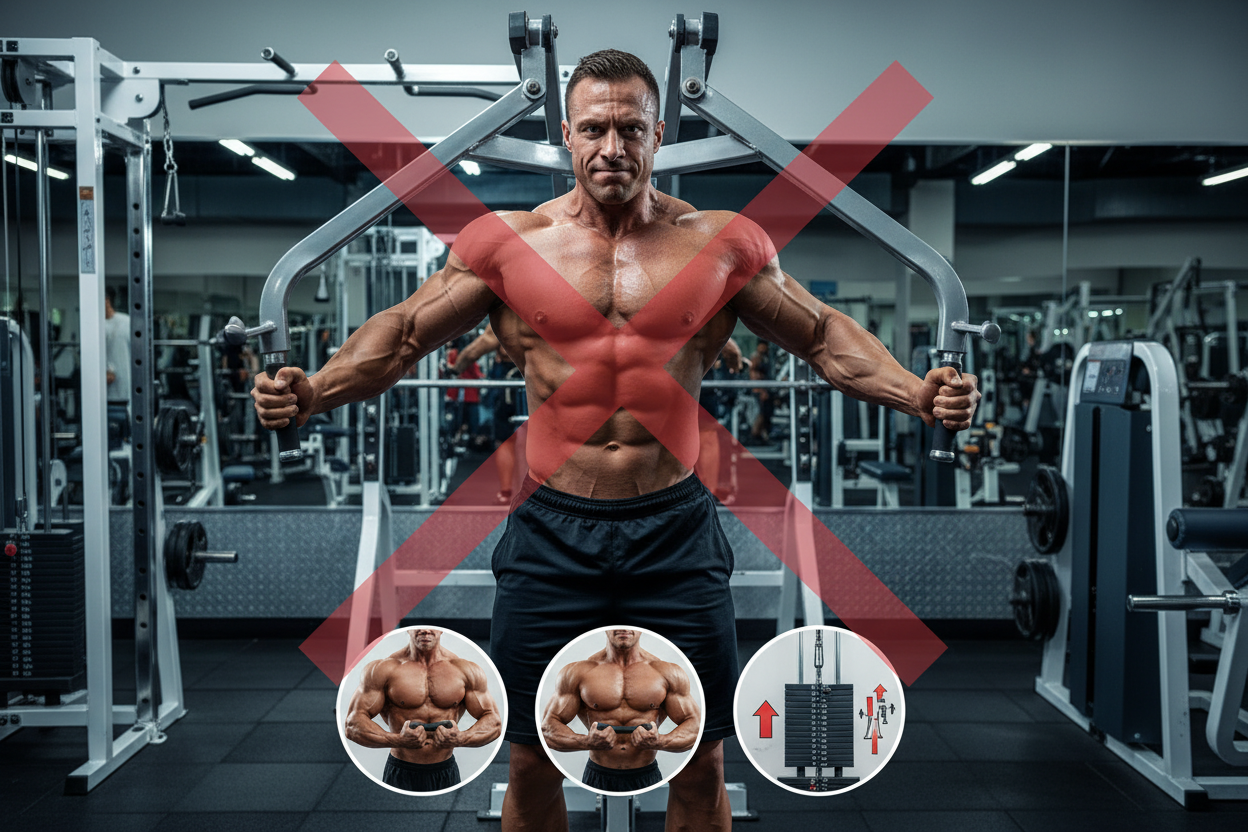
Think about a dumbbell fly. It is heavy at the bottom but offers zero resistance at the top when your arms are stacked. A well-designed pec deck machine uses a cam to keep the tension consistent, or even increase it, as you squeeze your chest muscles. This keeps the muscle under tension through the entire arc of motion, stimulating growth in ways free weights sometimes cannot.
How Much Weight to Use on Gym Machines
This is the most common question I hear from clients. Because machines have pulleys and friction, 100lbs on one brand of cable row feels different than 100lbs on another. You cannot rely on the number written on the plate.
To determine how much weight to use on gym machines, apply the 'Trial Set' method:
- Select a moderate weight: Pick a load you think you can lift 15 times.
- Perform 8 reps: If the speed of the bar/handle doesn't slow down by rep 8, it is too light.
- Adjust: Increase the weight until the last 2-3 reps of a 10-12 rep set feel like moving through mud.
If you finish your set and the stack slams down loudly because you let go, you went too heavy and lost control. If you finish and could have done 5 more reps, you went too light.
Common Execution Errors
Ignoring the Axis of Rotation
Every rotational machine (leg extension, preacher curl) has a pivot point. If your knee or elbow isn't aligned with this pivot, you create 'shear force.' This grinds the joint rather than working the muscle. Take the extra ten seconds to adjust the seat height until the red dot on the machine creates a straight line through your joint.
The 'Stack Slam'
Listen to the gym floor. That 'clank-clank' sound of weights slamming is the sound of lost gains. When the weight stack crashes down, it means you used momentum to lift it and gravity to drop it. Keep the plates separated by an inch at the bottom of the rep to maintain constant tension.
My Personal Experience with Using Weight Machines
I used to be a free-weight snob. I thought if it wasn't a barbell squat, it didn't count. That changed when I started using a pendulum squat machine regularly.
There is a specific, gritty reality to machine training that people don't mention. I remember the first time I truly dialed in a Hack Squat. It wasn't just about the burn; it was the friction. I could feel the slight vibration of the rollers on the guide rods because the machine hadn't been greased recently. It adds a weird, tactile feedback loop.
More importantly, I recall the feeling of the shoulder pads digging into my traps. It’s an uncomfortable, crushing pressure that leaves red marks on your shoulders for an hour after. But because my back was braced against the pad, I could push until my legs literally stopped responding. I failed safely. I couldn't walk right for two days, but my quad growth exploded in a way it never did when I was wasting energy trying to balance a heavy bar.
Conclusion
Machines are precision tools. They allow you to safely overload muscles, manipulate resistance curves, and train to failure without a spotter. By respecting the setup and controlling the tempo, you turn a simple cable station into a hypertrophy powerhouse. Stop worrying about 'functional' and start worrying about intensity.
Frequently Asked Questions
Are weight machines safer than free weights?
Generally, yes. Machines provide a fixed path of motion and external stability, which reduces the risk of dropping weights or moving into compromised positions. However, injury can still occur if the machine is not adjusted to fit your body dimensions correctly.
Can I build muscle using only machines?
Absolutely. Muscle growth requires mechanical tension and metabolic stress. Your muscles do not know if the resistance is coming from a barbell or a weight stack. As long as you apply progressive overload (increasing weight or reps over time), you will build muscle.
How often should I change the machines I use?
Consistency is key for tracking progress. Stick to the same machines for at least 8-12 weeks. This allows you to overcome the 'learning curve' of the movement and focus on adding load. Jumping between different brands or types of machines every week makes it impossible to track strength gains accurately.