How to Build Strength: Progressive Overload Frameworks, Movement Mechanics, and Floor Staging
Developing resilient, functional strength requires an intentional approach rooted in biomechanical principles, disciplined tension control, and an uncompromising foundation. Whether training in a commercial facility or building out an independent space, understanding how to build strength systematically ensures consistent progress while protecting physical structures and equipment alike.
Foundations of Strength: Neuromuscular Adaptation and Force Production
To understand what builds strength, lifters must differentiate pure force output from conditioning drills or aesthetic isolation work. True strength development centers on neuromuscular efficiency: the nervous system learning to recruit higher-threshold motor units, synchronize firing rates, and coordinate multi-joint stabilization under load. When evaluating ways to improve strength, the primary stimulus is progressive mechanical tension against meaningful resistance.
Understanding how to train strength involves focusing on movement quality rather than chasing sheer exhaustion. Muscle fatigue and cardiovascular distress do not necessarily equate to improved force production. Instead, productive strength sessions prioritize crisp, technically sound repetitions executed with high intent and adequate inter-set recovery to allow the nervous system to perform optimally on subsequent bouts.
Core Movement Patterns: The Best Way to Gain Strength Systematically
The human body functions as an interconnected kinetic chain rather than a collection of isolated muscles. Consequently, the best way to gain strength across the entire frame is to build programming around fundamental movement patterns that load multiple joints simultaneously:
- Squat Pattern: Bilateral and unilateral knee-dominant movements that build quadricep drive, pelvic control, and core rigidity. Integrating a structured lower-body strength training routine provides an organized framework for tracking depth and posture over time.
- Hinge Pattern: Hip-dominant mechanics targeting the posterior kinetic chain, including the glutes, hamstrings, and erector spinae. Reviewing a detailed posterior chain strengthening guide helps reinforce correct spinal alignment and hip extension mechanics.
- Upper-Body Press: Horizontal and vertical pushing variations that develop the pectoral complex, anterior deltoids, and triceps while demanding scapular stability.
- Upper-Body Pull: Horizontal rows and vertical pull-ups or pulldowns that balance pushing volume, strengthen the latissimus dorsi, and support upright posture.
- Loaded Carries: Multi-planar locomotion under load that builds grip tenacity, shoulder girdle integrity, and trunk stiffness.
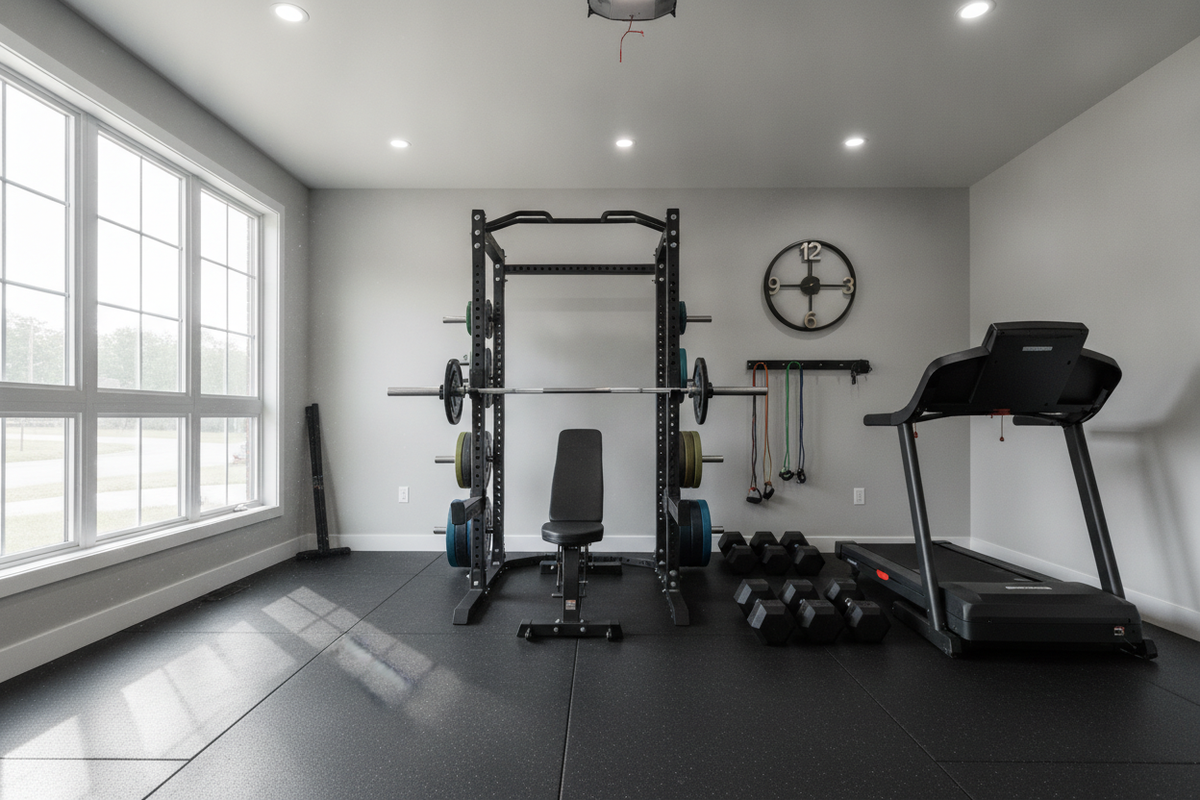
Focusing on these foundational archetypes with heavy-duty strength equipment such as barbells, racks, and adjustable benches represents the best way to increase strength efficiently without unnecessary exercise clutter.
Progressive Overload and Intensity: How to Gain Strength in Gym and Home Settings
Regardless of the setting, understanding how to gain strength in gym spaces or garage setups hinges entirely on the principle of progressive overload. Progressive overload does not merely mean loading extra weight onto a bar at every session; it encompasses multiple avenues of increasing physical demand over time.
Practical Variables for Progressive Tension
When determining what is the best way to build strength consistently, lifters can manipulate several variables:
- Load Progression: Adding modest increments of external resistance while maintaining identical movement tempo and range of motion.
- Volume Waves: Adjusting the total number of working sets per movement pattern across training blocks to accumulate capacity before peaking intensity.
- Technical Precision and Tempo: Slowing eccentric phases, pausing at mechanical disadvantage points, and eliminating momentum to raise internal muscle tension.
- Rest Period Discipline: Structuring rest intervals to ensure complete neural recovery between heavy efforts, ensuring every work set delivers maximal output.
For those configuring an independent workout space, consulting a budget home gym strength setup guide can help ensure essential tools are selected to support long-term progressive overload strategies.
Pacing Expectations: Realistic Adaptations vs. Rapid Strength Gains
Trainees often ask how to gain strength quickly, especially when entering a new training cycle. In the initial phases of strength training, rapid improvements are common. These early jumps are predominantly driven by rapid neural adaptations, where the brain improves motor unit recruitment and intermuscular coordination.
However, what is the best way to gain strength sustainably over years involves understanding the divergence between neural adaptation and structural remodeling. Connective tissues, including tendons, ligaments, and bone density, adapt at a different pace than the nervous system. Sustainable progress requires a balanced cadence that respects tissue adaptation timelines, ensuring joints remain resilient as absolute loads climb.
Platform and Subfloor Staging for Heavy Strength Training
Strength training relies on unyielding ground reaction forces. When a lifter initiates a heavy pull or drives out of the bottom of a squat, force is transmitted directly through the footwear and flooring into the subfloor. A squishy or unstable surface creates energy leakage, compromises balance, and alters joint tracking.
Establishing a designated lifting zone with dense, resilient floor protection is critical for several structural reasons:
- Footing Stability: Firm, high-density surfaces prevent lateral shifting and heel compression under heavy compressive loads.
- Subfloor Defense: Heavy iron or bumper equipment can cause cracking in concrete subfloors or warping in wooden framing if dropped or set down firmly without adequate impact dispersion.
- Equipment Preservation: Protective flooring prevents knurling abrasion, collar deformation, and plate cracking, extending the lifespan of precision barbells and plates.
- Vibration and Sound Attenuation: Quality surface staging buffers the shock waves generated during deadlifts and dropped kettlebells, minimizing noise transfer throughout residential structures.
When integrating larger apparatus like a dedicated lower-body strength apparatus, ensuring an even, non-slip base prevents uneven frame stress and unwanted floor marring.
Maintenance, Spatial Clearance, and Lifting Station Longevity
A safe, enduring strength training zone requires routine care and organized spatial staging. Lifters should maintain sufficient perimeter clearance around racks, platforms, and benches to allow unrestricted barbell pathing, safe bailing paths, and easy plate loading without bumping adjacent walls or storage units.
Flooring maintenance is equally important for maintaining optimal traction. High-density rubber or composite mats should be kept free of chalk dust accumulation, moisture, and debris by sweeping regularly and wiping down surfaces with neutral, non-abrasive cleaners. Maintaining clean surfaces ensures footwear retains maximum grip during heavy lifts, preserving both personal safety and structural equipment performance across every strength block.