Dieting and Weight Lifting Blueprint: Training Frameworks, Energy Balance, and Home Floor Staging
The Synergy of Dieting and Weight Lifting: Body Composition and Energy Architecture
Pairing structured nutrition with intentional resistance exercise provides a balanced strategy for body recomposition. When adjusting dietary intake, the primary objective is to encourage the reduction of body fat while preserving metabolically active muscle tissue. Understanding how dieting and weight lifting interact allows individuals to design sustainable routines that support long-term physical goals without excessive physical fatigue.
Preserving Functional Muscle During Caloric Adjustments
During periods of controlled nutritional intake, the body naturally seeks energy from available internal reserves. Without resistance training, a portion of that energy can come from lean muscle tissue breakdown. Engaging in consistent resistance work provides mechanical tension, signaling the body to retain functional muscle mass even when overall caloric intake is moderated. For an in-depth look at setting up progressive resistance routines, consult our foundational weight lifting guide.
Why Resistance Training Differs from Pure Aerobic Deficits
While cardiovascular training offers cardiovascular conditioning, relying exclusively on endurance cardio during a caloric deficit can sometimes accelerate the loss of lean tissue. Combining dieting and lifting weights prioritizes movement quality, structural bone density, and posture maintenance. Lifting weights applies localized stress to muscles and connective tissues, prompting adaptations that maintain muscle firmness and joint integrity.
Movement Archetypes and Volume Selection for Dieting and Weight Training
Training under a caloric deficit requires smart workload management. Because energy availability may be lower, the focus should shift toward movement efficiency and quality rather than excessive volume.
Prioritizing Compound Lifts with Controlled Density
Multi-joint exercises—such as squats, hinges, presses, and rows—engage multiple muscle groups simultaneously, delivering high training stimulus within fewer sets. This efficiency makes them ideal when energy is limited. To choose the right load and equipment for these compound movements, explore our practical weight lifting weights guide. Complementing free weights with selectorized gear from a quality weight lifting collection can also provide stabilized movement paths when systemic fatigue begins to accumulate.
Managing Rest Intervals and Perceived Exertion
When caloric energy is reduced, recovery between sets becomes critical. Rushing rest periods can lead to premature technical breakdown and compromised joint positions. Allowing adequate recovery time between heavy compound sets helps maintain lifting form, manage heart rate, and ensure consistent force production across every repetition.
Structuring a Balanced Weekly Lifting Split Under Energy Constraints
A well-planned weekly schedule balances resistance stimulus with adequate recovery, ensuring that dieting and weight training work together smoothly.
Full-Body vs. Upper-Lower Frameworks
Two primary training frameworks work exceptionally well when managing nutritional deficits:
- Full-Body Splits (2 to 3 Days per Week): Distributes training stimulus evenly across the entire body, providing full rest days between workouts to facilitate systemic recovery.
- Upper-Lower Splits (4 Days per Week): Separates movement patterns by upper and lower extremities, allowing specific muscle groups to recover while others work.
Recognizing Fatigue and Implementing Planned Deloads
Training under an energy deficit accumulates fatigue more rapidly. Monitoring indicators such as grip fatigue, sluggish bar speed, and poor sleep quality helps determine when to scale back volume. Incorporating a planned deload week—reducing total sets and intensity—gives the central nervous system and connective tissues time to recover without interrupting routine consistency.
Home Gym Floor Staging and Environmental Safety During Training
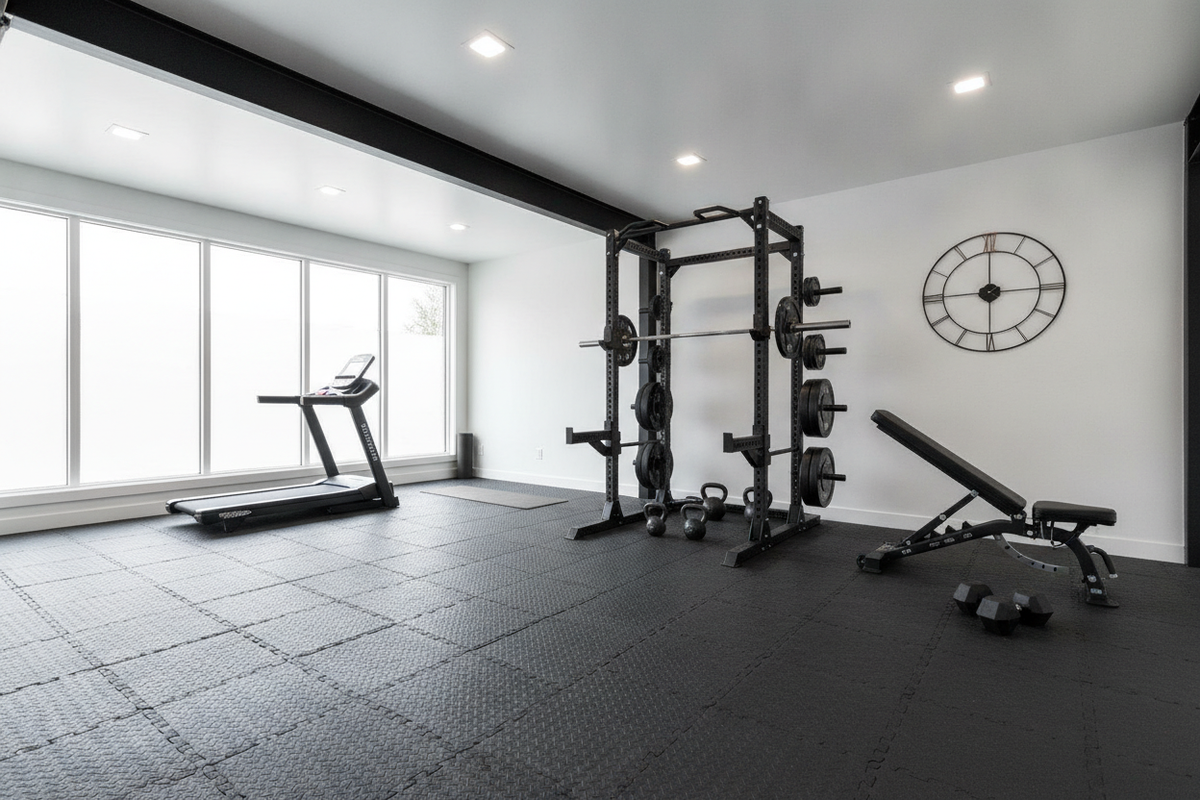
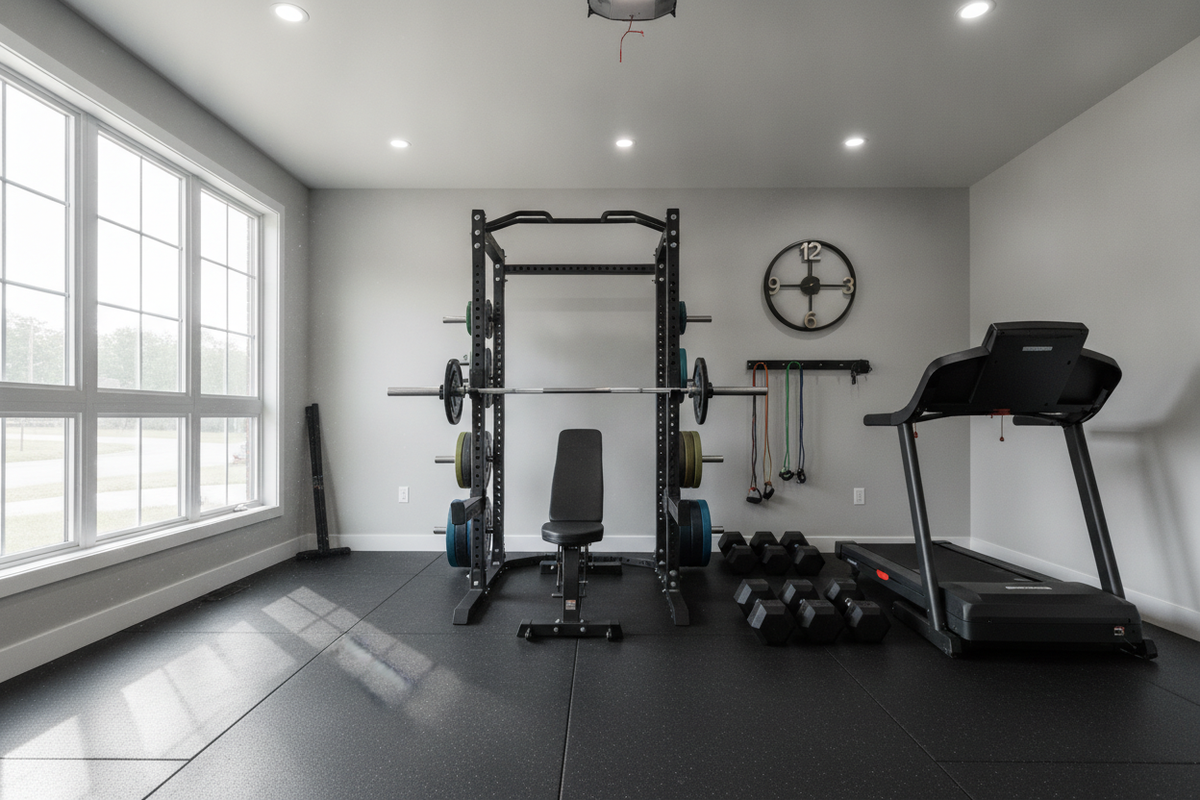
Lifting weights at home while managing dietary energy requires a safe, predictable physical environment. Proper floor staging protects your joints, supports balance, and prevents damage to home subfloors.
Ground Reaction Stability and Joint Cushioning
Lifting on unstable, overly soft surfaces like thick domestic carpet or slippery bare hardwood compromises foot drive during squats and presses. High-density rubber exercise mats provide a firm, non-slip base that promotes stable ground reaction force. The slight dampening quality also cushions joints during dynamic movements. You can discover specialized mats and supports within our curated training collection.
Subfloor Protection Against Free Weight Impact
Fatigued lifters are more likely to set weights down heavily. Staging dense protective flooring beneath power racks, adjustable benches, and dumbbell zones distributes impact forces, shielding concrete or wooden subfloors from cracking and denting over time.
Spatial Layout Planning and Equipment Maintenance
An organized workout space minimizes distractions and reduces trip hazards, which is especially important when physical energy is lower than usual.
Zoning Compact Lifting Areas
Effective room organization involves establishing clear lifting perimeters. For those working in limited footprints, our weight training guide offers strategies for zoning compact areas. Keep walkways clear of loose plates, collars, and bands to ensure smooth transitions between exercise sets.
Flooring Hygiene and Surface Longevity
Maintaining gym mat surfaces ensures consistent grip and extends mat lifespan. Regular care includes:
- Wiping surfaces down with a mild, non-corrosive cleaning solution after intense sessions.
- Sweeping away dust and grit that can erode textured non-slip finishes.
- Ensuring mat seams remain tightly aligned to prevent tripping edges.
Frequently Asked Questions About Dieting and Weight Lifting
Can you build strength while dieting and lifting weights?
Yes, particularly for beginners and intermediate lifters. Strength gains often result from improved neuromuscular coordination and efficient movement patterns, even when overall body weight is decreasing.
How many days a week should you lift when dieting?
Most individuals see strong results training between three and four days per week. This schedule allows sufficient rest days for muscle recovery and daily energy replenishment.
What type of flooring is best for home weight training?
High-density, non-porous rubber exercise mats are the preferred standard. They provide firm traction for heavy lifts, dampen sound and vibration, and protect residential subfloors from dropped equipment.