How the chest supported lateral raise Fixes Sloppy Form
I have spent way too many hours in my garage gym trying to make 25-pound dumbbells feel like 50s. If you have ever watched yourself in the mirror during a set of standing raises, you probably saw your knees dip and your hips thrust just to get the weight moving. It is ego lifting, plain and simple. The chest supported lateral raise is the cold, hard reality check your side delts actually need.
- Eliminates momentum by physically blocking your torso movement.
- Forces the side deltoid to handle 100% of the load from the start of the rep.
- Reduces lower back strain common in standing variations.
- Requires only a basic incline bench and a pair of dumbbells.
Why You're Probably Faking Your Standing Raises
Most people think they have 'cannonball shoulders,' but they are actually just really good at using their calves to launch weights. When you stand up, your body is a master of efficiency; it wants to find the easiest path. By the time you hit rep eight, that chest lateral raise you intended to do has turned into a rhythmic dance move. Using a bench supported lateral raise stops the 'body english' cold. You cannot swing when there is a steel frame and a vinyl pad in your way. It forces the medial head of the deltoid to work in isolation, which is exactly where we want the growth.
How Torso Blocking Changes the Biomechanics
When you lock your sternum against a pad, the pivot point shifts entirely to the shoulder joint. A common beginner question I hear is, do lateral raises work chest? The answer is a hard no, at least not as a prime mover. In a lateral raise chest variation, your pecs are just acting as an anchor point. They are pressed into the bench to keep you stable while your delts do the heavy lifting. All you need for this is a solid weight set and bench combo to turn a messy movement into a surgical strike on your shoulders. By removing the ability to lean back, you maintain constant tension on the muscle throughout the entire arc.
The Right Way to Set Up Your Incline Pad
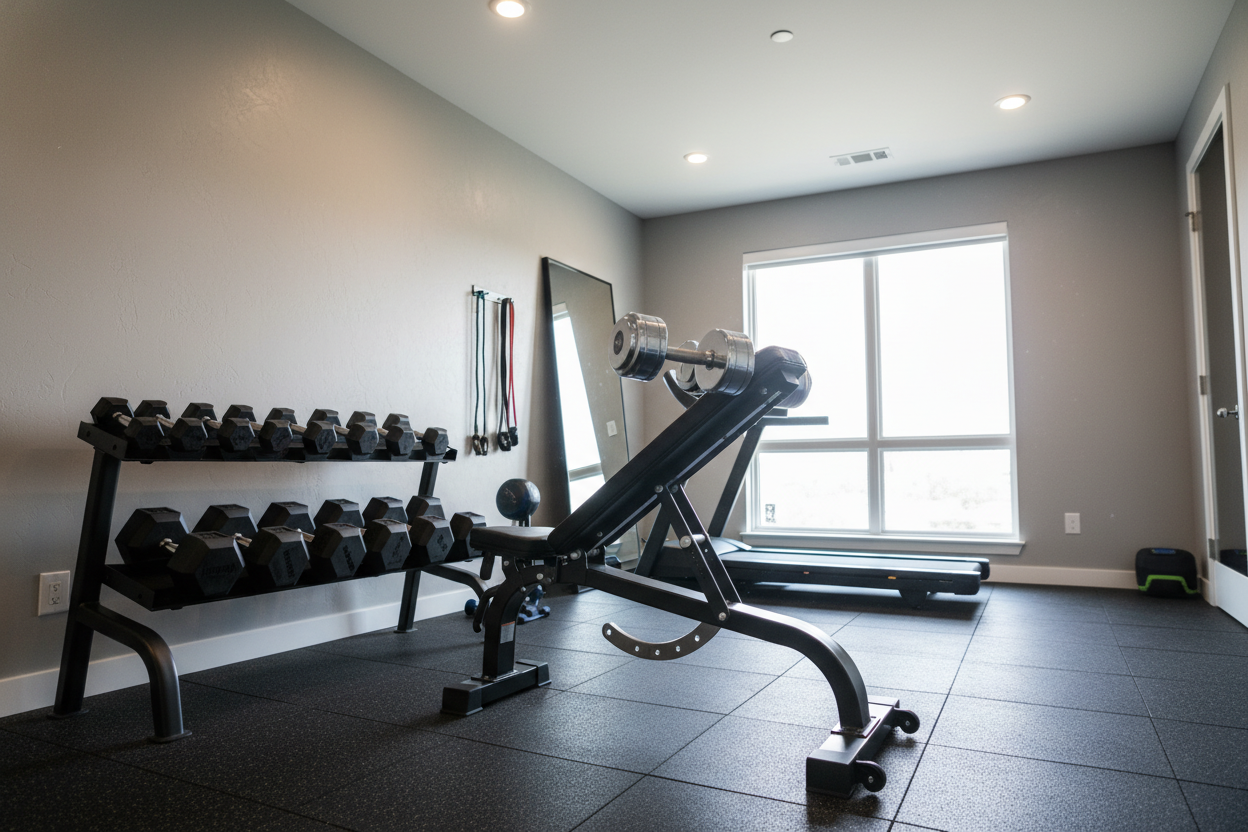
Do not just slap the bench at a random angle. If it is too high, you are basically doing a standing raise with a belly rub. If it is too low, you are shifting the load to your rear delts. I find the sweet spot for a chest supported db lateral raise is between 45 and 60 degrees. You want enough lean to let the dumbbells hang freely without hitting the bench legs, but enough support that you are not craning your neck. I use the Gxmmat Adjustable Weight Bench because the backrest is narrow enough that it does not get in the way of my arm path, but the frame is stable enough that it will not wobble when I am grinding out the last rep of a heavy set.
Don't Turn This Into a Weird Back Row
The biggest mistake I see with the supported lateral raise is 'rowing' the weight. People get tired and start pulling their elbows back toward their hips, engaging the rhomboids and traps. To keep this a chest supported dumbbell lateral raise, think about sweeping the weights out to the walls. Imagine you are drawing a wide arc, not pulling a handle. Your hands should stay in your peripheral vision the whole time. If they disappear behind your torso, you have stopped doing lateral raises for chest support and started doing a mediocre back workout.
Programming: When to Do Your Supported Raises
I do not lead with these. I save them for the end of a push day or a dedicated shoulder session. After I have finished my heavy presses or some dumbbell bench workouts for a stronger and more defined chest, my central nervous system is usually fried. That is when the chest-supported version shines. Since you are braced, you do not need to worry about your core collapsing or your form breaking down as you reach failure. It is the perfect 'finisher' to ensure you have actually exhausted the delts without involving the rest of your body.
Personal Experience: The Ego Check
I used to be the guy swinging 40s in the mirror. My shoulders looked okay, but my lower back always felt 'tight' after shoulder day. The day I swapped to the supported version, I had to drop down to 15-pound dumbbells just to finish a set of ten. It was a massive ego hit. But three months later? My side delts actually had that capped look for the first time. I realized I had not been training my shoulders for years; I had been training my ability to cheat. If you are struggling with shoulder growth, drop the weight and get on the bench.
Frequently Asked Questions
Can I do these on a flat bench?
Not effectively. You need the incline to allow your arms to hang and move through a full range of motion without the floor or the bench legs getting in the way. A 45-degree angle is the gold standard.
Should I use a neutral or palms-down grip?
I prefer a slight internal rotation—think about pouring out a pitcher of water at the top. However, if that pinches your shoulder, a neutral grip works just fine for isolating the side delt.
How heavy should I go?
Keep it light. If you cannot hold the weights at the top of the movement for a split second, the dumbbells are too heavy. This is an isolation move, not a power lift.