How I Rigged My Home Gym Leg Exercises to Feel Like a $3k Leg Press
I spent a decade in commercial gyms worshipping at the altar of the $5,000 leg press. When I moved my training to the garage, I panicked. I thought my quads would shrivel without the mechanical advantage of a 45-degree sled or a selectorized hack squat. But after two years of experimenting with home gym leg exercises, I’ve realized that my legs don't care if the resistance comes from a hydraulic machine or a heavy band—as long as the tension is there.
- Stability is the secret sauce of machine gains.
- Resistance bands allow you to mimic the strength curve of expensive equipment.
- Your floor grip is more important than your rack brand.
- Isolation is possible without a 400-pound footprint.
The Machine Trap: Why We Think We Need Commercial Gear
The reason people love the leg press isn't the weight—it's the stability. You can push your quads to absolute failure because you don't have to balance a bar on your back. In a commercial gym, you pay for that safety. At home, we often fall into the trap of thinking if we can't afford a $3,000 piece of iron, our leg workout home gym sessions are doomed to be 'second-rate.'
That’s nonsense. I’ve seen guys with 30-inch quads who haven't touched a machine in years. The stimulus is what matters. If you can create a stable environment and high mechanical tension, your muscles will grow. You just have to get a little creative with your leg gym home setup to replicate those guided paths.
Rigging the Ultimate Leg Exercises for Home Gym Setups
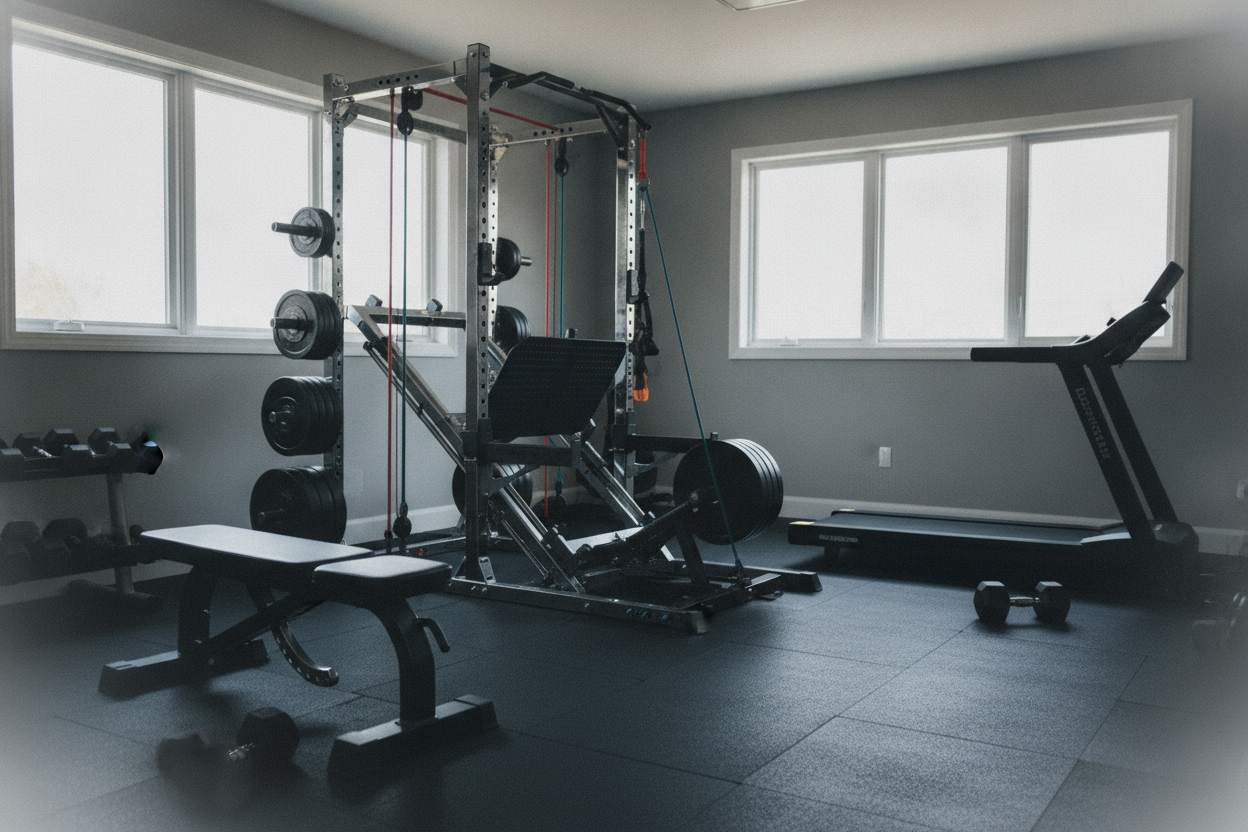
To match a machine’s resistance profile, you need to understand how machines work. Most use cams or leverage to make the weight heavier where you are strongest. I use heavy-duty resistance bands to achieve this. By anchoring a band to the base of my rack and looping it over my barbell, I can make a squat feel like a leg press—harder at the top, easier at the bottom.
If you’re just starting your transition from a big-box gym, check out this ultimate leg guide for men for a deeper look at how to structure these sessions. The goal is to remove the 'balance' factor so you can focus entirely on the muscle fibers.
The 'Poor Man's' Hack Squat
This is my favorite hack. Take a standard foam roller and place it between your lower back and a smooth wall. Hold two heavy dumbbells at your sides. As you squat, the roller moves with you, providing a guided path that feels remarkably like a hack squat machine. Because your feet are out in front of you, the shear force on the knees is reduced, and the quad isolation is through the roof. I usually aim for 3 sets of 15-20 reps here until my quads are screaming.
Recreating the Lying Leg Curl
Hamstrings are the hardest part of a home gym to train without a machine. I used to do RDLs and call it a day, but my hamstrings lacked that 'pop.' Now, I lay face down on a flat bench and clamp a single heavy dumbbell between my feet. It’s a bit of a balancing act at first, but once you get the hang of it, the isolation is brutal. For a more consistent tension, I highly recommend learning to crush leg curls home gym style using bands anchored to a low point on your power rack.
The Banded Leg Extension Hack
You don't need a dedicated leg extension station. Sit on your weight bench, loop a resistance band around the back leg of the bench, and hook the other end over your ankles. It provides a peak contraction that actually feels better than many cheap plate-loaded machines. Since the band gets tighter as your leg straightens, you get maximum tension right where the quad is shortest. I do these as a finisher for high reps until I can't stand up.
Why Your Setup Surface Makes or Breaks These Movements
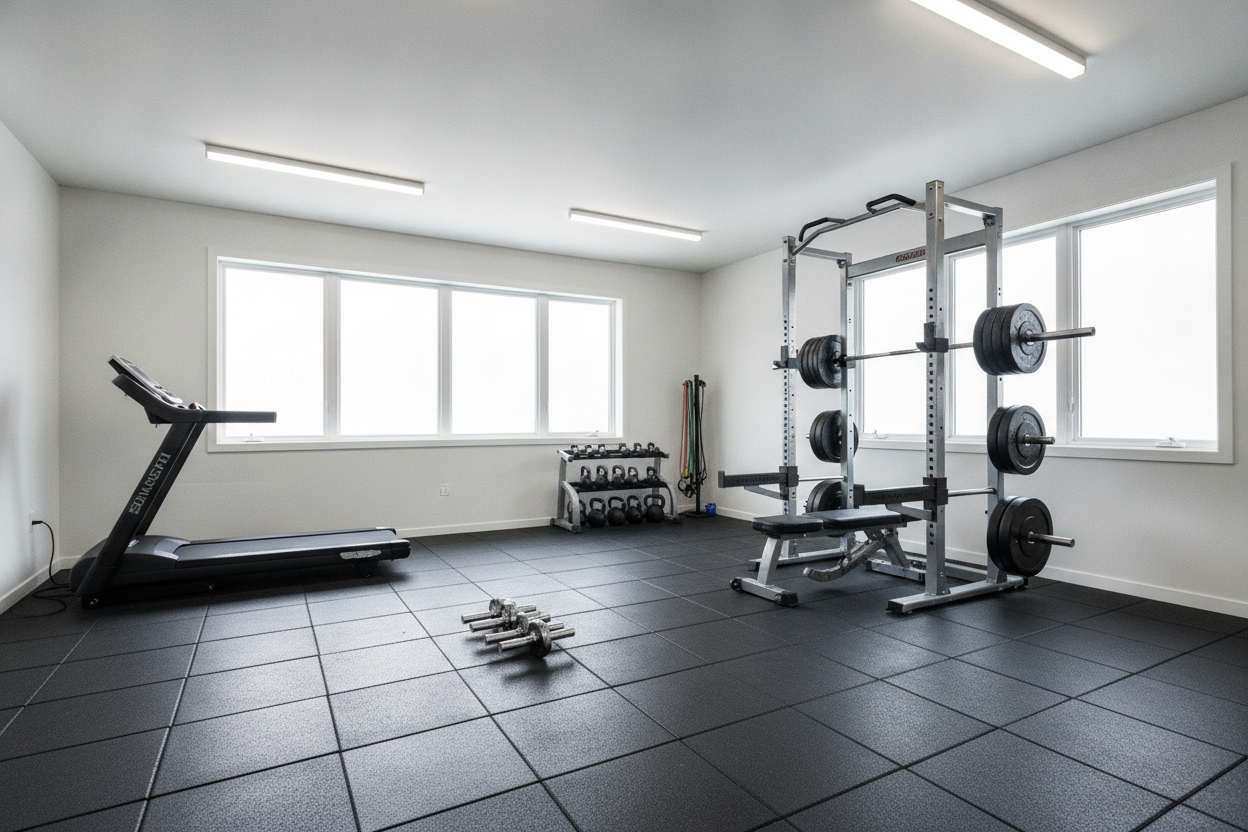
Here is the mistake I made early on: I tried doing these movements on bare concrete or cheap, thin foam tiles. When you are pushing heavy weights against a wall or anchoring bands to a bench, you need friction. If your bench slides two inches during a leg extension, the set is ruined. If your feet slip during a wall hack squat, you’re looking at a knee injury.
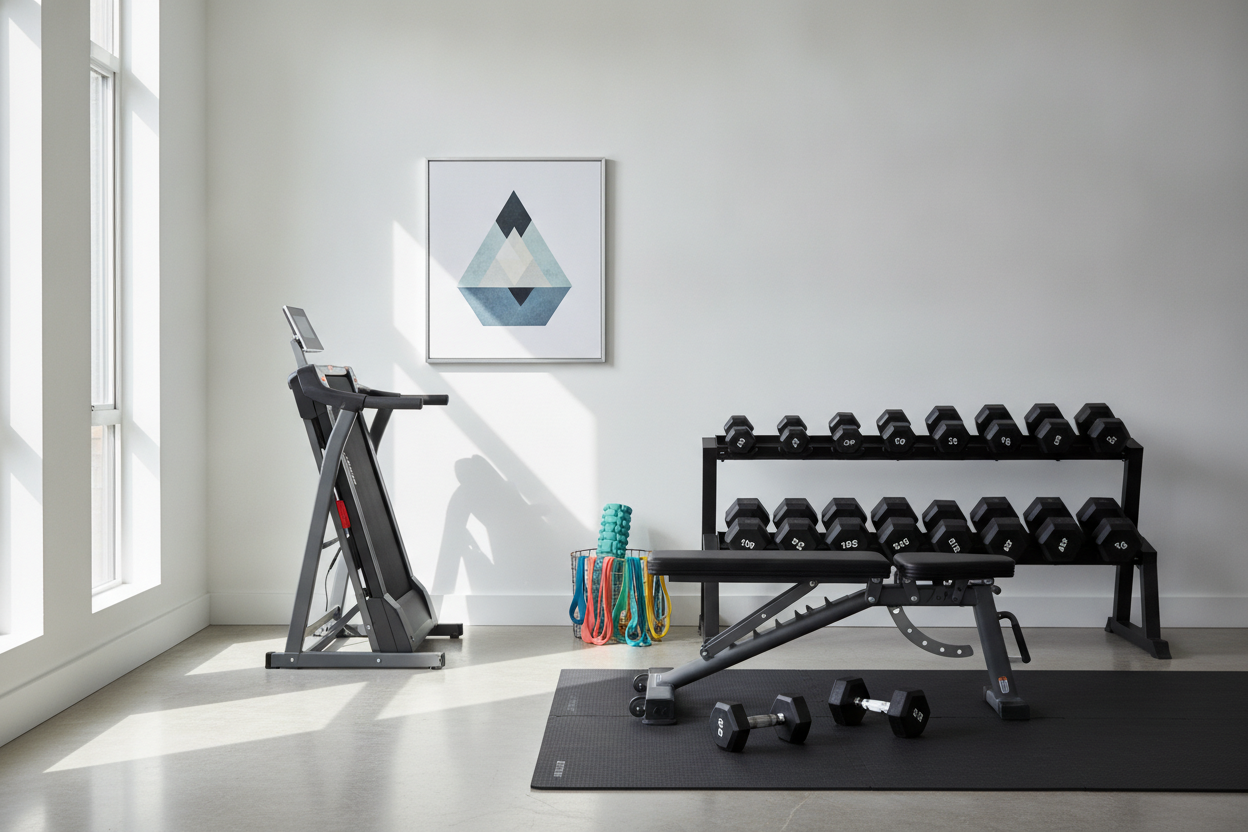
I eventually invested in a high-density 6x8ft exercise mat gym flooring, and it changed everything. It’s thick enough to dampen the sound of dropped dumbbells but firm enough that it doesn't compress when I'm squatting 300 pounds. You need that 'locked-in' feeling to safely push to failure.
Putting It Together: A Machine-Free Leg Workout Home Gym Routine
A solid routine should hit every angle. I start with a heavy compound like a Goblet Squat or RDL, then move into the 'rigged' machine movements. A typical Tuesday for me looks like this: 4 sets of Wall Hack Squats, 3 sets of Banded Leg Extensions, and 3 sets of Dumbbell Leg Curls. It’s simple, but by the end, I’m crawling to the kitchen for a protein shake.
You don't need a massive footprint. If you have a large exercise mat for home gym use, a set of dumbbells, and some bands, you have everything required to build pro-level legs. Stop scrolling through equipment catalogs and start rigging your own solutions.
FAQ
Do I need a power rack for these exercises?
Not necessarily, but it helps for anchoring bands. If you don't have one, heavy furniture or a sturdy door anchor can work for leg extensions and curls.
Are bands as effective as iron plates?
For isolation, yes. The variable resistance of a band actually matches the muscle's strength curve better than a static weight in many movements.
How do I stop my bench from sliding?
Use a high-traction rubber mat. If it still moves, wedge the bench against a wall or a heavy set of dumbbells. Stability is non-negotiable for safety.