How Hard Should an Exercise Beginner Actually Push on Day One?
I’ve seen it a hundred times. Someone decides to get back in shape, buys a pair of 5-lb neoprene dumbbells, and spends twenty minutes 'pulsing' their arms while watching Netflix. They do this for two weeks, see zero change in the mirror, and quit because exercise doesn't work for them. Being an exercise beginner doesn't mean you're made of glass. It means you're unconditioned, and those are two very different things.
Quick Takeaways
- Intensity is the signal that tells your body to change; without it, you're just burning a few calories.
- Use the '2-Reps-In-Reserve' rule to find your sweet spot.
- Master three foundational movements before worrying about complex machines.
- A stable, non-slip floor is more important than a fancy squat rack on day one.
The 'Take It Easy' Trap
The standard advice for novices is usually some version of 'just move your body a little.' While that’s fine for the first forty-eight hours, it’s a trap that leads straight to a plateau. If a workout exercise for beginners doesn't provide enough stimulus to actually challenge your muscles, your body has no reason to adapt. No adaptation means no results.
I’ve watched people spend months on an elliptical at a 'leisurely stroll' pace. They never get stronger, their heart rate never stays elevated, and eventually, the boredom kills their motivation. You don't need to vomit in a bucket, but you do need to feel like you're doing work. If you finish a set and feel like you could have done 50 more reps, you aren't training; you're just fidgeting.
Finding Your 'Goldilocks' Intensity Zone
In the garage gym world, we talk about RPE—Rate of Perceived Exertion. On a scale of 1 to 10, where 1 is sitting on the couch and 10 is a maximum effort that leaves you seeing stars, you want to live in the 7 to 8 range. This is the 'Goldilocks' zone.
How do you find it? It’s called Reps In Reserve (RIR). When you’re performing simple exercises for beginners, you should finish every set feeling like you could have done exactly two more good reps with perfect form. If you could have done five more, add weight or reps. If you couldn't have done another one without your form breaking down, back off. This builds strength without the crippling soreness that makes you quit by Wednesday.
The Core 3: Simple Exercises for Beginners
You don't need a 20-exercise circuit. You need three things: a Goblet Squat, an Incline Push-Up, and a Heavy Carry. The Goblet Squat teaches you to sit back into your hips. The Incline Push-Up (using a sturdy bench or even a kitchen counter) builds chest and tricep strength without crushing your shoulders. The Heavy Carry—literally walking with a heavy weight in each hand—builds a core that actually functions.
These movements build more real-world capability than 20 minutes on an elliptical ever will. Once you've mastered these three movements and are ready to add resistance, you'll want to check out The Definitive Guide To The Best Home Exercise Equipment For Beginners to see what actual iron you should add to your space. Mastering the basics first ensures you don't buy a $500 piece of equipment that just gathers dust.
Setting Up Your Safe Basecamp at Home
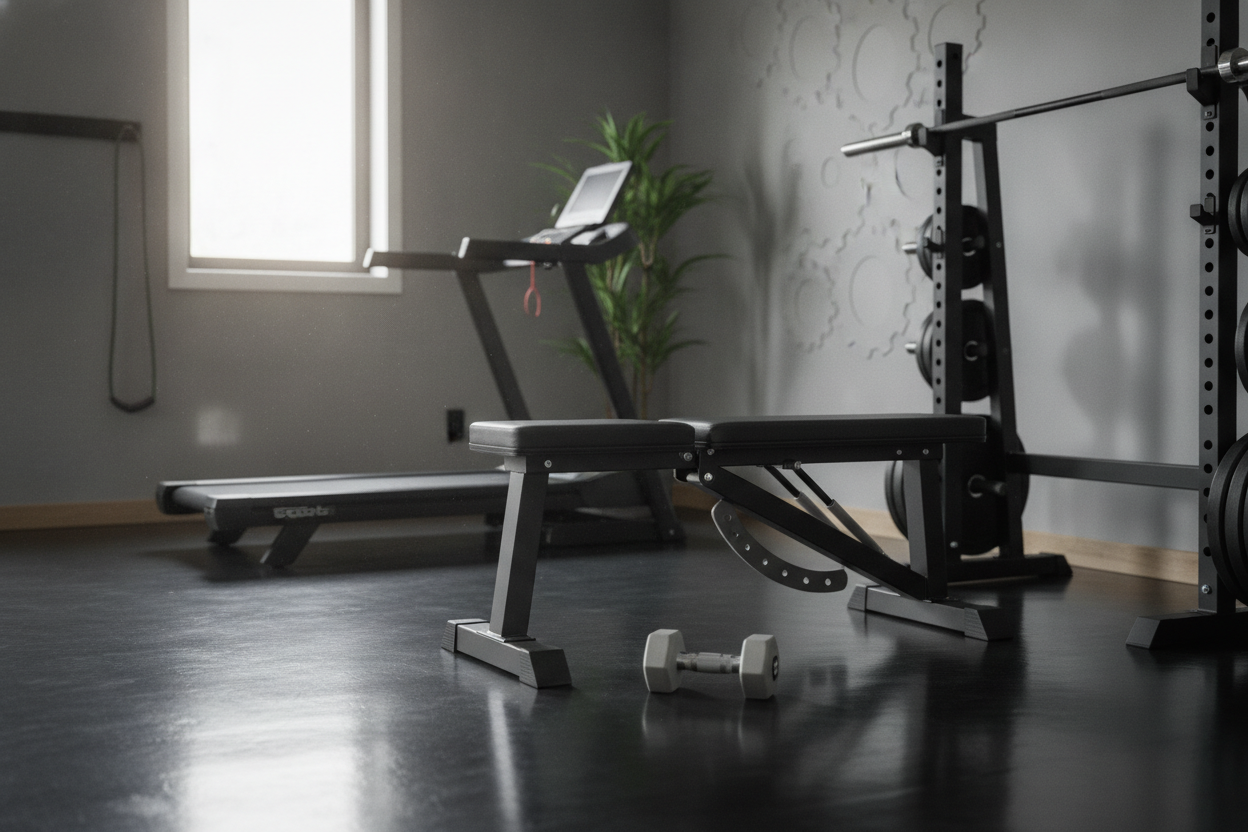
You don't need a full power rack to start pushing yourself, but you absolutely need a safe environment. I once tried to do a set of lunges on a polished hardwood floor in socks. I nearly tore my groin and lost all confidence for a week. Slipping ruins your form and makes you subconsciously hold back.
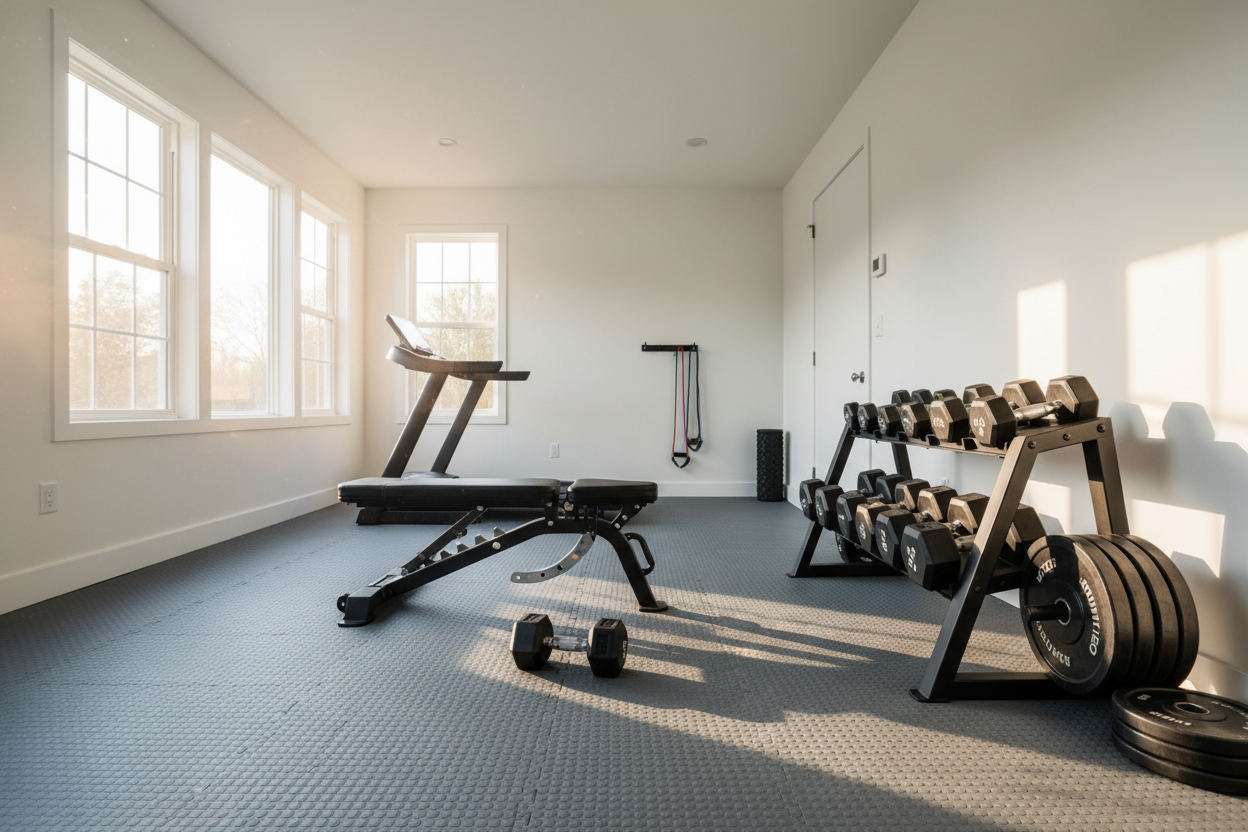
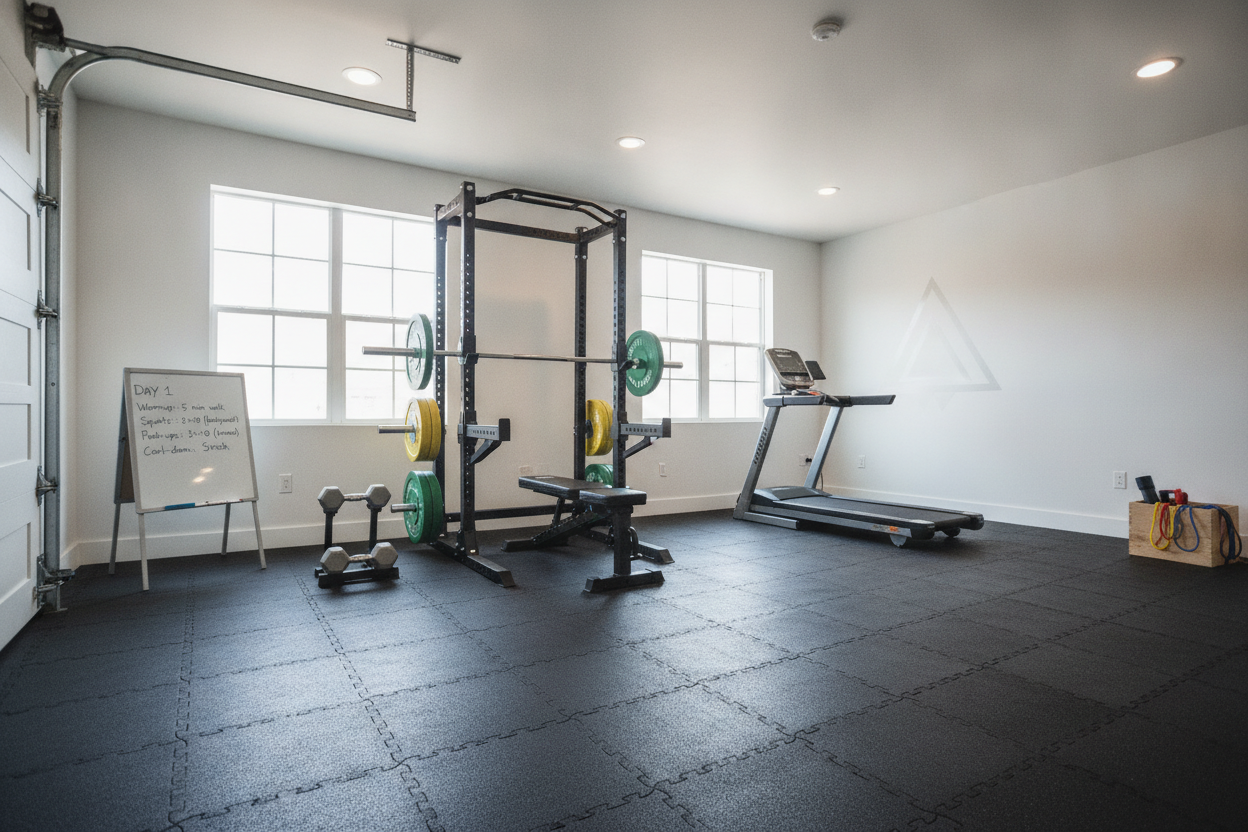
Dedicating a specific, non-slip area of the house to your new routine is the first step toward not quitting. A Large Exercise Mat For Home Gym gives you a clear boundary for where the work happens. If you're working on a larger scale or have a garage space, the 6X8Ft Exercise Mat Yoga Mat Gym Flooring For Home Workout is my specific recommendation for creating a stable basecamp over hardwood or carpet. It stays put when you're moving fast, which is more than I can say for those cheap interlocking foam tiles.
What Tomorrow Should Actually Feel Like
Expect Delayed Onset Muscle Soreness (DOMS). It usually peaks about 48 hours after a workout. You should feel a dull ache in the muscles you worked—a 'good' fatigue that tells you the body is rebuilding itself. This is normal. It means you're doing it right.
However, you need to differentiate this from 'bad' pain. If you feel a sharp, stabbing sensation in your knees, lower back, or shoulders, that’s a red flag. It usually means your form was off or you ignored your RPE and pushed into a 10/10 intensity before your joints were ready. Listen to the muscle, but respect the joints.
My Personal Take
When I started, I tried to follow a program I found in a pro bodybuilding magazine. I did 20 sets of chest on my first day. I couldn't straighten my arms for a week. It was stupid, and it nearly made me quit. My mistake wasn't working hard; it was working without a plan. Start with the 'Core 3,' keep two reps in the tank, and just keep showing up.
FAQ
How long should my first workout be?
Keep it under 30 minutes. Your goal on day one isn't to burn 1,000 calories; it's to establish a movement pattern and see how your body recovers.
Should I do cardio or weights first?
If you're looking for body composition changes, do your strength movements (like squats) first while your nervous system is fresh. Save the walking for the end.
What if I'm still sore on my next scheduled workout day?
If it's just muscle soreness, move anyway. A light warm-up usually flushes the blood into the muscle and actually makes the soreness feel better. If it's joint pain, take an extra rest day.