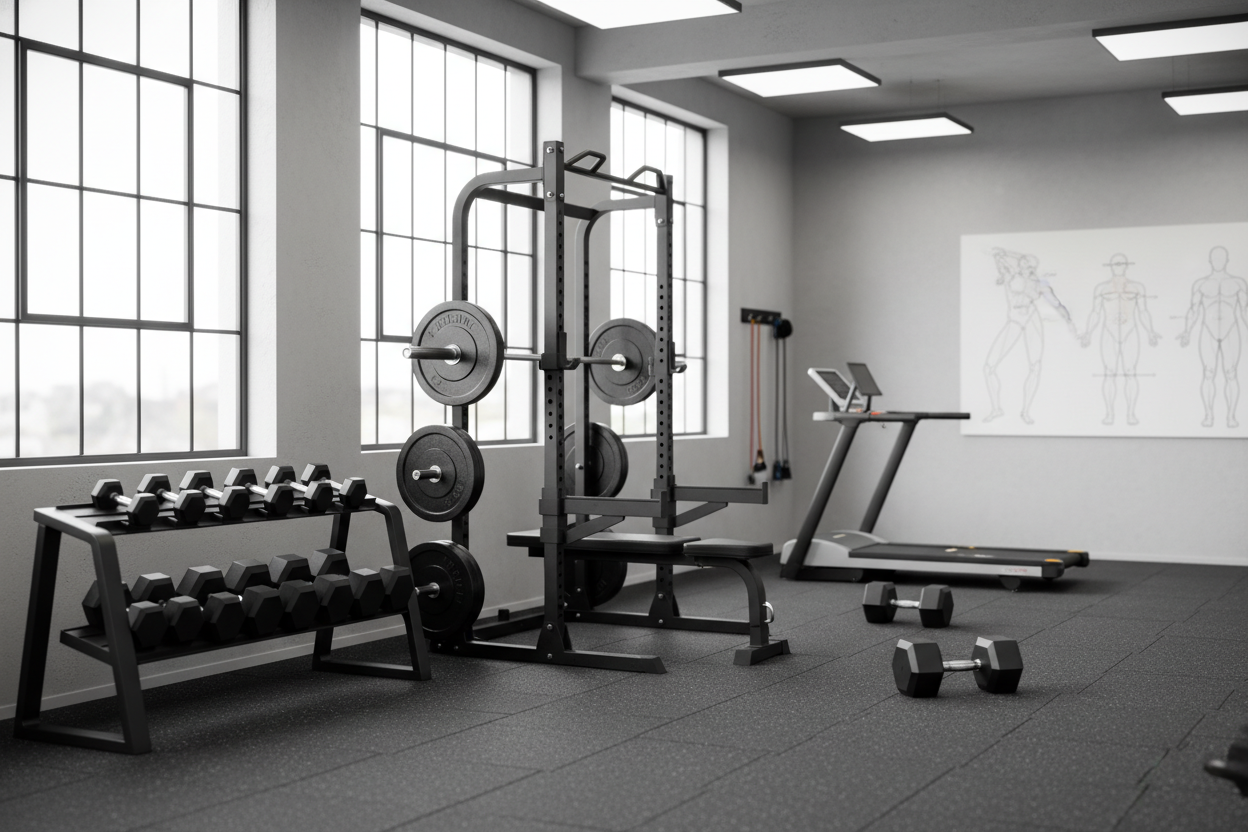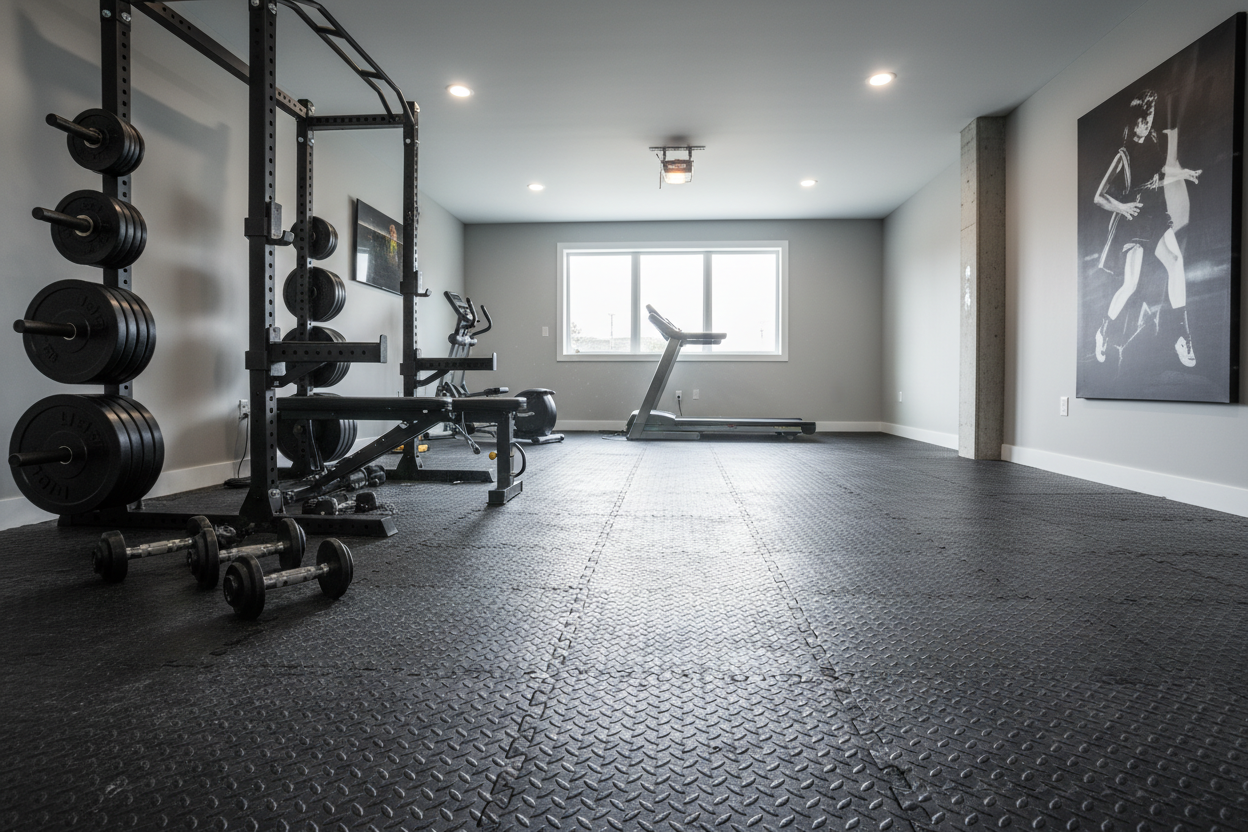
How Cheap Flooring Ruined My First Body Build Gym Setup
I remember staring at my garage floor after a failed set of squats, wondering why my 400-pound rack felt like it was sitting on a marshmallow. I’d just dropped three grand on a high-end barbell and urethane plates, but my body build gym felt like a cheap imitation of the local powerhouse. I had the gear, but I lacked the foundation.
It’s a mistake I see every single week in the home gym community. People obsess over the knurling on their power bar or the side-to-side play in their adjustable bench, but then they throw it all on top of $20 interlocking foam tiles from a big-box store. If your floor moves, your muscles can't fire at 100% capacity. Period.
Quick Takeaways
- EVA foam 'puzzle mats' are for kids' playrooms, not for heavy hypertrophy training.
- Stability is the secret sauce of the mind-muscle connection; if your feet are hunting for balance, your quads aren't growing.
- Bare concrete will destroy your joints during high-volume bodybuilding and fitness phases.
- High-density rubber (8mm+) is the industry standard for a reason.
The Day I Almost Sold My Entire Garage Setup
About three years ago, I was halfway through a high-volume leg day in my body build gym. I was chasing that skin-splitting pump that defines gym bodybuilding, but something was off. Every time I stepped back with the bar, I felt a slight 'squish' under my right heel. It was barely a quarter-inch of movement, but it was enough to kill my confidence under 315 pounds.
I spent the rest of the session frustrated. I wasn't thinking about the stretch or the contraction; I was thinking about my floor failing. That's the moment I realized that bodybuilding and fitness success at home isn't just about the iron you buy. It’s about creating an environment that mimics the rock-solid stability of a commercial floor.
I almost listed my rack on Marketplace that night. I missed the grit of the local 'iron basement' gym where the floors were heavy-duty rubber and nothing budged. If you want to train like a pro, you can't be standing on a sponge.
Why You Can't Push to Failure on Puzzle Mats
Hypertrophy requires intensity. To get that fitness and bodybuilder look, you have to take sets close to failure. When you’re grinding out those last two reps of an overhead press, your central nervous system is screaming for stability. If you’re using cheap EVA foam, that flooring is compressing unevenly under your weight.
This 'micro-instability' ruins the kinetic chain. Your brain recognizes the unstable surface and instinctively throttles your power output to prevent an injury. You think you're hitting failure, but you're actually just hitting the limit of what your ankles can stabilize on a soft surface. Moving to a large exercise mat for home gym with a high-density rating changed everything for me. Suddenly, my feet felt glued to the earth, and my numbers immediately jumped.
The Bare Concrete Penalty for Your Joints
On the flip side, some guys think 'harder is better' and just lift on the bare garage slab. Bad move. When you're deep into a body building fitness program, your volume is high. You're doing walking lunges, calf raises, and high-rep deadlifts. Concrete has zero energy return and zero shock absorption.
After a month of lifting on bare concrete, my knees felt like they were filled with crushed glass. The vibration from every plate drop travels straight through the floor and into your skeleton. For anyone serious about bodybuilding fitness, you need a material that protects your joints without sacrificing the stiffness needed for heavy loads. It’s a fine line to walk.
How to Actually Anchor Your Body Build Gym
If you want to build a real hypertrophy sanctuary, you need to stop thinking about 'mats' and start thinking about 'flooring systems.' You need a surface that is dense enough to support a 500-lb rack but grippy enough that you won't slide during wide-stance cable flies. I’ve tested everything from horse stall mats to expensive custom turf.
For most people, a 6x8ft exercise mat is the 'Goldilocks' zone. It’s large enough to fit a full power rack or a dedicated dumbbell area, and at 7mm or 8mm thick, it provides that professional bodybuilding fitness feel. It doesn't have the 'stink' of cheap recycled rubber, and it won't pull apart when you're doing lateral movements. This is the foundation that allows you to actually focus on the muscle rather than your footing.
Rebuilding the Commercial Feel Without the Commute
Once you've sorted the floor, the rest of the gym starts to fall into place. You no longer feel like you're playing 'gym' in your garage; you feel like you're in a legitimate training facility. This psychological shift is massive for fit bodybuilding progress. When the floor doesn't move, you're more likely to push that extra set of squats or try a heavier set of dumbbells.
With a solid base, you can then safely select the best fitness training equipment to round out your space. Whether it's a plate-loaded lat pulldown or a set of heavy-duty adjustable dumbbells, they all perform better on a level, dense surface. Don't let a $40 set of foam tiles be the reason you miss your fitness and bodybuilding goals this year. Build from the ground up—literally.
FAQ
Can I just use horse stall mats from a farm store?
You can, but be warned: they usually smell like a tire fire for the first six months. They are also notoriously uneven in thickness, which can make your power rack wobble. For an indoor body build gym, a dedicated high-density gym mat is a much cleaner, more precise option.
Is 1/2 inch thickness enough for heavy deadlifts?
For most garage athletes, 8mm to 10mm (about 3/8 inch) of high-density rubber is plenty, especially if you're using bumper plates. If you're pulling 500+ lbs with iron plates, you might want to look into a dedicated lifting platform or doubling up the mats in the drop zone.
How do I stop my mats from sliding on the garage floor?
If the mat is heavy enough (like a solid 6x8ft rubber mat), gravity does most of the work. If you're still getting movement, a few strips of double-sided carpet tape or a non-slip rug pad underneath will lock it down without ruining your concrete slab.