Hip Extension Exercises List: 6 Glute-Building Movements, Form Cues, and Floor Staging
Understanding Hip Extension: Mechanics, Muscle Engagement, and Training Value
Hip extension occurs when the thigh moves backward relative to the pelvis, driving the hip joint from a flexed position into alignment with the torso. This movement pattern serves as the primary engine for athletic propulsion, upright posture, and heavy lower-body compound lifts. The primary drivers of hip extension are the gluteus maximus, the hamstrings (biceps femoris, semitendinosus, and semimembranosus), and the posterior head of the adductor magnus, with the erector spinae acting as primary stabilizers along the trunk.
Developing proficiency across multiple hip extensor muscles exercises provides noticeable functional crossover. Among the key hip extension benefits are improved lockout power in foundational lifts like squats and deadlifts, enhanced pelvic stability, and balanced tension across the anterior and posterior compartments of the lower body. When executed with deliberate control, training this movement pattern strengthens the posterior chain without placing excessive mechanical strain on the lower back.
Essential Hip Extension Warm Up Routine
Before jumping into loaded sets, preparing the hip capsule and awakening dormant glute fibers establishes proper motor patterns. A structured hip extension warm up increases local blood flow and helps reinforce the distinction between true hip extension and lumbar hyperextension.
- Quadruped Rocking: Begin on all fours over a protective exercise mat to cushion knees and wrists. Shift the hips backward toward the heels while maintaining a neutral spine, then drive forward back over the wrists to prime hip flexion and extension pathways.
- Prone Hip Lift Isometric Holds: Lie face down, bend one knee to ninety degrees, and lift the thigh slightly off the floor by squeezing the glute, holding for three to five seconds per side.
- Half-Kneeling Hip Flexor Stretch: Step one foot forward into a lunge position, tuck the tailbone under slightly into a posterior pelvic tilt, and shift forward to open the hip flexors on the trailing leg. Pairing dynamic movement with a dedicated hip mobility routine ensures full extension range without compensatory spinal arching.
Comprehensive Extension Exercises List: 6 Core Movements for Glute Development
This structured extension exercises list covers the spectrum from entry-level floor work to heavy horizontal and vertical loading patterns, allowing you to tailor your workout to your specific training goals.
1. Quadruped Bent-Knee Hip Extension (Donkey Kicks)
Learning how to do hip extension exercise safely starts on the floor in a quadruped position. This bodyweight hip extension drill isolates the gluteus maximus by keeping the knee bent at a right angle, which mechanically shortens the hamstrings and shifts the majority of the work directly onto the glute.
- Setup: Position hands under shoulders and knees directly beneath hips on a padded, non-slip surface.
- Execution: Brace the core, flex the foot, and press the heel upward toward the ceiling until the thigh aligns with the torso. Avoid arching the lower back or rotating the pelvis.
- Tension Checkpoint: Pause for a deliberate squeeze at the peak of the lift before lowering slowly under control.
2. Floor Glute Bridge and Single-Leg Hip Extension Lift
The standard glute bridge and single-leg hip extension lift train hip drive in a supine position, minimizing shear forces across the spine while reinforcing pelvic control.
- Setup: Lie on your back with knees bent and feet planted flat on the floor, roughly hip-width apart.
- Execution: Drive through the midfoot and heels, raising the hips until knees, hips, and shoulders form a straight line. For advanced progression, extend one leg straight out and complete the movement unilaterally.
- Tension Checkpoint: Focus on posterior pelvic tilt at the top, contracting the glutes firmly without letting the ribs flare upward.
3. Prone Bench or Mat Hip Extension Lift (Reverse Hypers)
Prone extension exercise examples, such as bodyweight reverse hyperextensions off the edge of a bench or stability ball, place high demand on the glutes and hamstrings in the terminal range of extension while keeping the upper body anchored.
- Setup: Position the pelvis near the edge of a flat utility bench or supportive pad, gripping the sides firmly for upper-body stability.
- Execution: Keeping the legs relatively straight or slightly soft at the knees, lift both legs upward until they are parallel with the torso.
- Tension Checkpoint: Initiate the movement entirely through the glutes rather than swinging the legs with momentum.
4. Romanian Deadlift (RDL)
As one of the most effective hip extension exercises with weights, the Romanian Deadlift loads the posterior chain through a deep eccentric stretch in the sagittal plane. This pattern builds resilient hamstrings and reinforces hip hinge mechanics.
- Setup: Stand tall with feet hip-width apart, holding a barbell or pair of dumbbells in front of the thighs.
- Execution: Push the hips backward while maintaining a soft bend in the knees and a flat back, lowering the weights along the shins until reaching maximum hamstring tension. Drive the hips forward to return to standing.
- Tension Checkpoint: Keep the lats engaged to hold the load close to the center of gravity, exploring progressive at-home resistance training methods to challenge stability as your form solidifies.
5. Barbell or Dumbbell Hip Thrust
The hip thrust is widely recognized as a premier horizontal loading exercise because peak resistance aligns with full hip extension, where glute muscle activation is greatest.
- Setup: Rest the upper back against a sturdy bench positioned just below the shoulder blades, placing a padded bar or dumbbell across the hip crease.
- Execution: Plant the feet firmly, tuck the chin toward the chest, and drive the hips upward until the torso and thighs form a rigid horizontal table.
- Tension Checkpoint: Ensure the shins remain vertical at the top position to maximize direct glute loading rather than overworking the quadriceps.
6. Standing Cable or Banded Kickbacks
Standing kickbacks offer constant tension across the entire range of motion, making them an excellent accessory exercise to cap off a targeted lower-body workout.
- Setup: Attach an ankle strap to a low cable pulley or anchor a looped resistance band around a stable upright.
- Execution: Lean forward slightly at the torso to accommodate natural hip mechanics, then sweep the working leg straight back against resistance.
- Tension Checkpoint: Control the eccentric return phase carefully, preventing the resistance from snapping the leg forward abruptly.
Home Floor Staging and Equipment Protection for Hip Extension Training
Setting up your training environment properly is essential for safety, joint comfort, and floor preservation during loaded hip extension work. Dynamic floor movements, heavy hip thrust setups, and grounded hinge drills place distinct demands on your home gym surface.
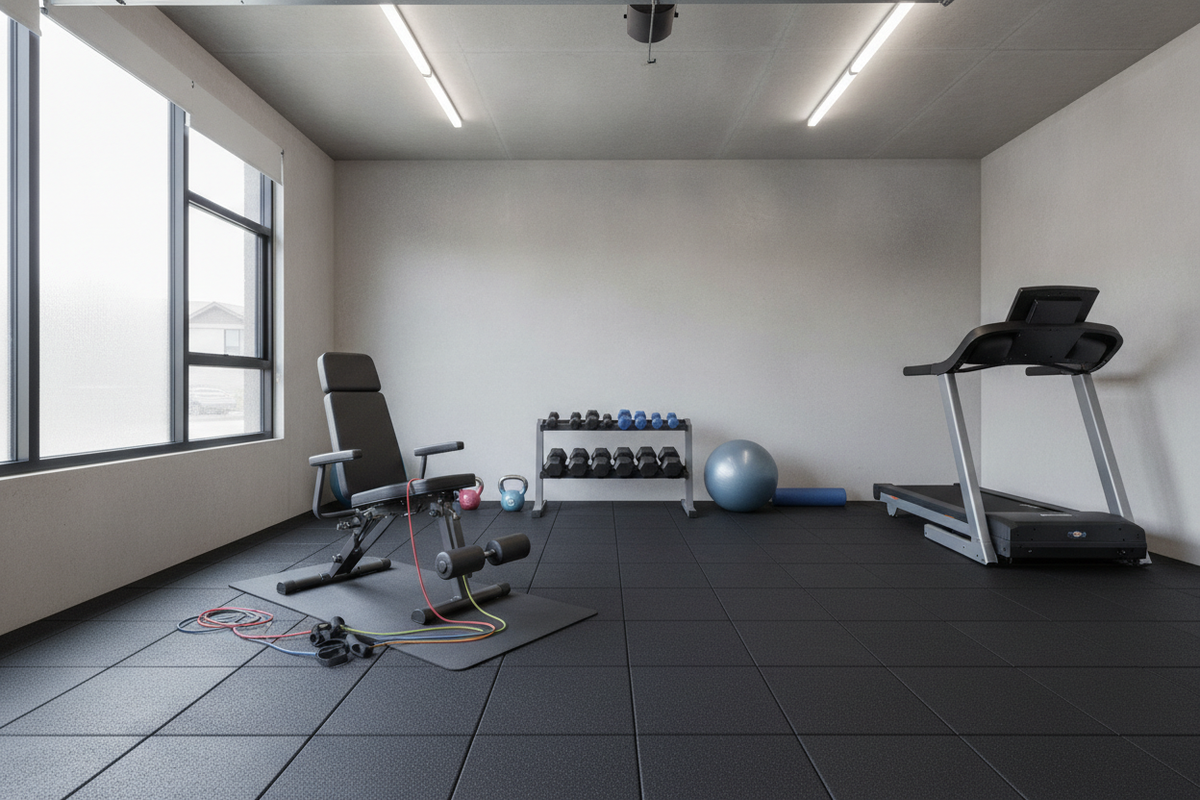
When performing floor-based lifts like quadruped kickbacks and glute bridges, high-density foam padding provides crucial relief for the knees, spine, and pelvic bones. Standard hard floors offer little cushion against concentrated body pressure, which can disrupt focus and limit training volume. Deploying a large workout floor mat ensures continuous non-slip traction and joint support without bunching up underfoot.
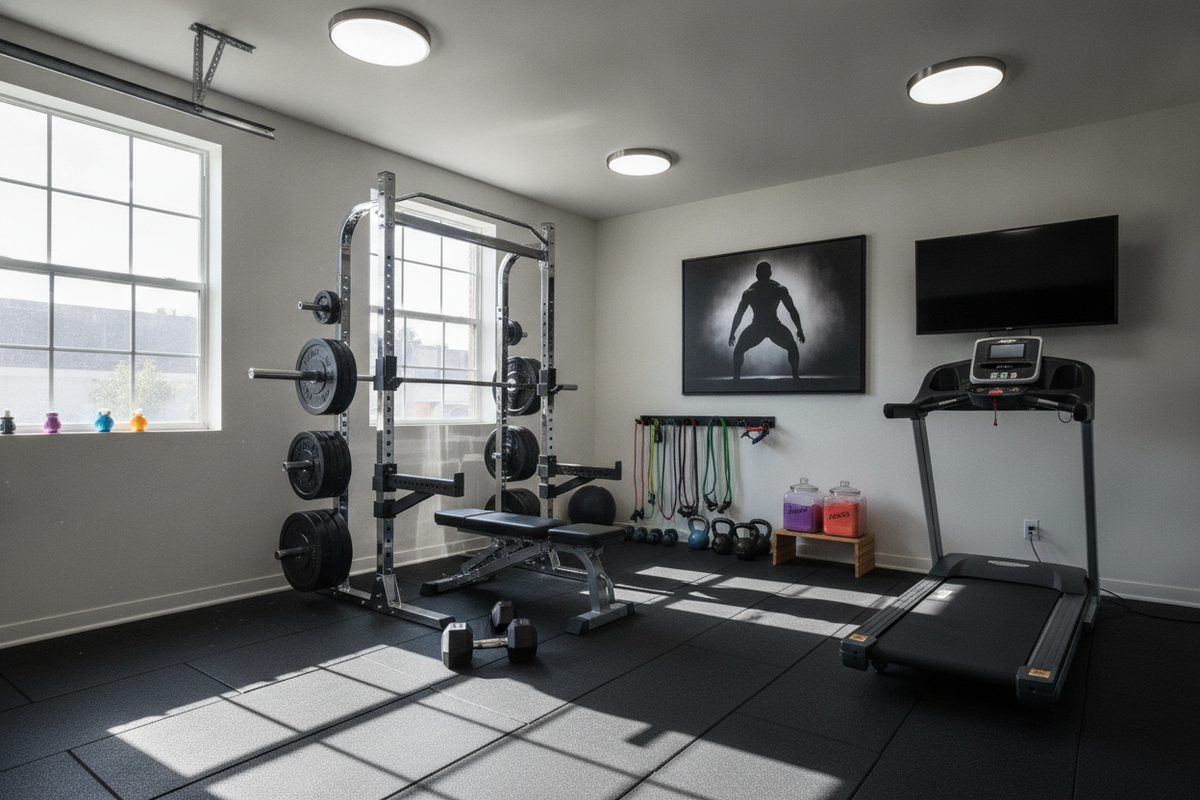
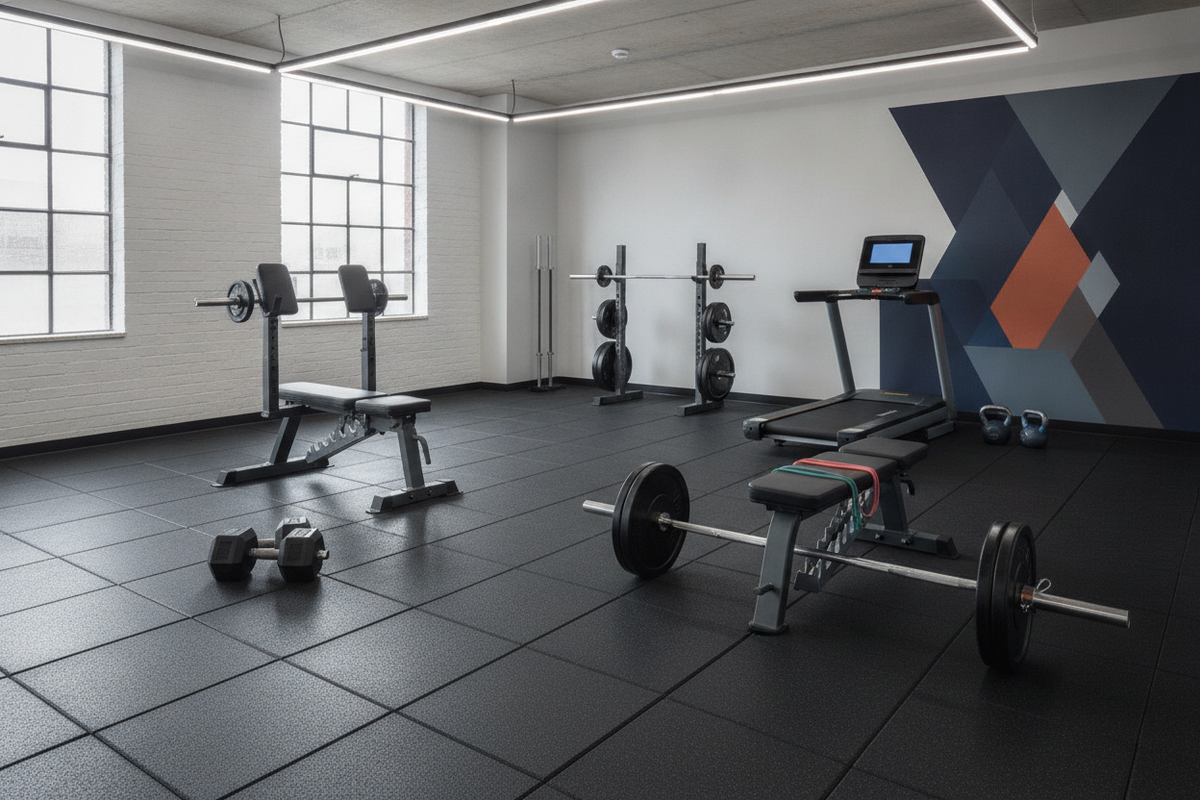
For heavy barbell hip thrusts and Romanian deadlifts, floor stability becomes even more critical. A shifting bench or sliding foot stance reduces power transfer and compromises spinal alignment during peak exertion. Installing dedicated home gym mat flooring anchors equipment securely, shields underlying hardwood or concrete from dropped weights, and creates a clean, durable staging zone for comprehensive lower-body training.
Programming Framework: Integrating Hip Extension into Weekly Training Splits
Structuring your routine requires balancing vertical hinge movements with horizontal thrusting patterns to ensure comprehensive muscular stimulation without causing systemic fatigue.
- Strength-Focused Days: Lead with compound weighted exercises such as the Romanian deadlift or heavy barbell hip thrusts for three to four sets of six to eight repetitions.
- Hypertrophy and Accessory Days: Incorporate higher-rep sets (ten to fifteen repetitions) utilizing single-leg hip extension lifts, prone reverse hypers, or banded kickbacks to accumulate targeted volume and build muscular endurance.
- Frequency: Training the hip extensors two to three times per week provides ample frequency for muscle development while allowing sufficient recovery between sessions.