Hip Abduction Exercises: Movement Frameworks, Routine Blueprints, and Home Floor Stability
Understanding Hip Abduction: Anatomy and Functional Mechanics
Hip abduction describes the motion of moving the thigh away from the central midline of the body. Biomechanically, this movement is driven primarily by the lateral hip musculature, which includes the gluteus medius, gluteus minimus, and the tensor fasciae latae. While the gluteus maximus is often the focal point for hip extension, the abductor group plays a critical role in controlling lateral pelvic stability, preventing internal knee collapse during dynamic loading, and maintaining level hips during single-leg stance phases.
A balanced lower-body training structure requires training both lateral and medial lines. Just as balancing inner thigh strength with lateral hip work establishes foundational hip joint integrity, dedicated hip abduction drills ensure that the pelvis remains level and stable throughout complex multi-joint movements like squats, lunges, and running strides.
Core Categories of Hip Abductor Exercises
Targeting the hip abductors effectively requires working through multiple body orientations and resistance angles. Structuring exercises by body position ensures comprehensive activation across both prime movers and stabilizing muscles.
Side-Lying Isolation Movements
Side-lying drills remove spinal loading and isolate the lateral glutes directly against gravity or elastic resistance. These foundational movements allow for precise control and high mind-muscle connection:
- Side-Lying Leg Raises: Lying straight on one side with the bottom leg slightly bent for balance, lift the top leg toward the ceiling while keeping the foot neutral or slightly turned downward. This orientation emphasizes the gluteus medius rather than the anterior hip flexors.
- Clamshells: With hips and knees bent at comfortable angles and heels pressed together, rotate the top knee upward while keeping the pelvis completely stationary. Adding a mini-band above the knees introduces progressive tension throughout the rotational arc.
- Side-Plank Abductions: Holding an elevated side plank from either the knee or the foot, raise the top leg. This variation challenges both the bottom hip (which holds an isometric contraction) and the top hip (which works through dynamic abduction).
Quadruped and All-Fours Variations
All-fours exercises challenge lateral hip control while demanding core stability and anti-rotational bracing:
- Fire Hydrants: From a stable quadruped position with hands beneath shoulders and knees beneath hips, abduct one leg out to the side while maintaining a fixed ninety-degree bend in the knee. The torso and lower back should remain motionless.
- Rainbow Leg Lifts: Extend one leg straight behind the body, lift it in an arching trajectory across the midline to one side, and then swing it outward in a wide lateral arc to touch down on the opposite side.
- Kneeling Lateral Kickbacks: Combine lateral abduction with a slight backward angle to engage both the upper glute fibers and the posterior hip structure.
Standing and Dynamic Resistance Patterns
Standing abduction movements bridge the gap between isolated floor drills and functional, weight-bearing athletic patterns:
- Banded Lateral Walks: Place a resistance band around the ankles or above the knees, assume an athletic quarter-squat stance, and step laterally while maintaining constant tension across the band.
- Standing Cable or Band Abductions: Anchor a band or low cable cuff to the working ankle, stand perpendicular to the anchor point, and sweep the leg out to the side in a smooth, controlled arc.
- Curtsey Lunge Recoveries: Step across and behind the lead leg into a curtsey lunge, then drive through the front heel to stand while bringing the trailing leg into a lateral abduction lift.
Technical Form Cues and Common Pitfalls to Avoid
Because the hip flexors and lower back frequently attempt to compensate for underactive abductors, strict form is essential during every repetition. When refining common technical errors in lateral workouts, focusing on subtle pelvic and foot alignment cues transforms routine movements into potent muscle-building drills.
- Avoid Pelvic Rolling: During side-lying raises and clamshells, avoid letting the top hip roll backward. Keep the pelvis stacked vertically, as if leaning flat against a wall.
- Lead with the Heel: When lifting the leg laterally, ensure the heel remains higher than the toes. Leading with the toes rotates the femur externally and shifts the workload onto the tensor fasciae latae and hip flexors.
- Maintain Core Bracing: Prevent excessive arching of the lumbar spine during quadruped fire hydrants. The movement should originate exclusively from the hip joint, not from the lower back.
- Control the Eccentric Return: Lower the leg slowly against resistance rather than letting it drop quickly between repetitions to maximize time under tension.
Structured Hip Abductor Workout Blueprints
Depending on individual training goals, hip abduction work can serve as a targeted pre-workout activation routine, a dedicated strength circuit, or a localized conditioning finisher.
1. Dynamic Pre-Workout Activation (5–7 Minutes)
- Banded Clamshells: 2 sets of 15 repetitions per side
- Side-Lying Leg Raises: 2 sets of 12 repetitions per side
- Banded Lateral Walks: 2 sets of 10 steps in each direction
2. Standalone Hip & Pelvic Strength Routine (15–20 Minutes)
- Side-Plank Abductions: 3 sets of 10 repetitions per side
- Quadruped Fire Hydrants: 3 sets of 12–15 repetitions per side
- Standing Banded Lateral Raises: 3 sets of 15 repetitions per side
- Rainbow Leg Lifts: 3 sets of 10 full arcs per side
Flooring and Space Setup for Hip Abduction Workouts
Executing hip abduction movements comfortably and effectively depends heavily on your training surface. Floor-based drills place direct contact pressure on the lateral hip bone, knees, and wrists. Practicing these movements on thin yoga mats or hard residential subfloors can lead to joint discomfort that disrupts focus and compromises form.
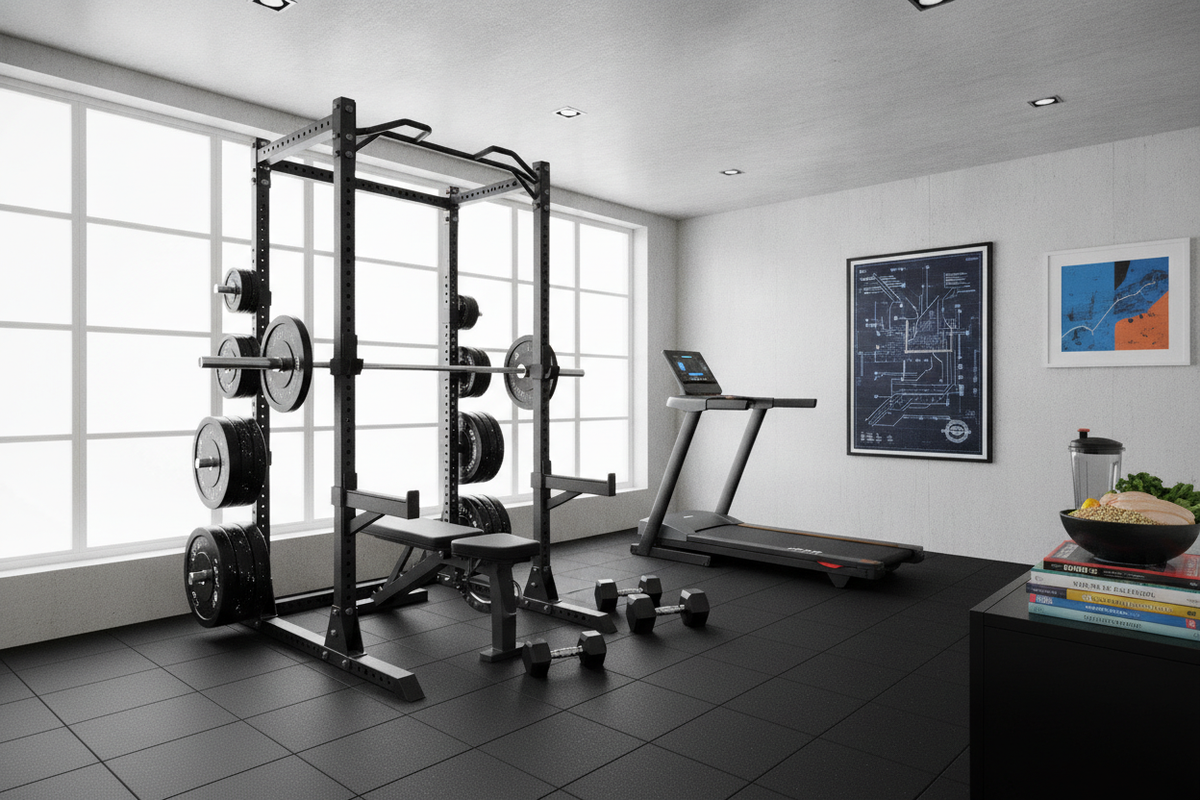
Investing in spacious home gym workout mats provides high-density foam cushioning that dampens pressure points during side-lying and quadruped positions. Moreover, standing dynamic drills like banded monster walks require a non-slip, textured surface that will not bunch, slide, or wrinkle as you exert lateral force across the floor.
Maintenance and Equipment Placement for Home Gyms
To establish a smooth training environment for lower-body work, arrange your floor space so that dynamic lateral movements have unrestricted clearance. Laying down a large protective exercise mat creates a dedicated training zone capable of handling both expansive floor routines and standing banded drills without constant equipment repositioning.
Keep resistance bands stored in an accessible organizer to alternate easily between light, medium, and heavy tensions. Regular floor maintenance—such as wiping down mats with mild soap and warm water after sweaty sessions—preserves surface traction and keeps your home workout space hygienic, resilient, and ready for regular use.