Gym Machines for Glutes Names: The Definitive Lower-Body Equipment Guide, Biomechanical Vectors, and Floor Staging
Stepping onto a crowded commercial gym floor or planning a dedicated home training space can feel overwhelming when faced with rows of specialized lower-body equipment. While most lifters easily recognize standard squat racks or treadmills, pinpointing specific gym machines for glutes names often requires deciphering distinct engineering labels, manufacturer brand names, and colloquial gym slang. Understanding the proper glute machine name for each station helps athletes navigate the gym floor efficiently, configure mechanical adjustments accurately, and target the hip musculature through precise movement vectors.
When outfitting a commercial space or a dedicated garage training zone, browsing a curated lower body strength machine collection helps clarify footprints and functional capabilities. Whether your focus is horizontal hip extension, deep multi-joint pressing, or lateral hip abduction, knowing how to identify and stage these stations ensures balanced posterior-chain development and long-term joint comfort.
Core Biomechanical Planes: How Glute Machines Differ by Loading Vector
Glute-focused equipment operates across distinct planes of motion to challenge the gluteus maximus, gluteus medius, and gluteus minimus. Understanding these mechanics makes selecting the right station intuitive:
- Horizontal Loading Vector: Stations such as dedicated hip thrust units apply resistance perpendicular to the torso at full hip extension. This creates peak tension at the top of the contraction where the gluteus maximus is in a shortened position.
- Axial and Diagonal Loading Vectors: Incline leg presses and hack machines apply force along a diagonal track, challenging the hips and knees through deep flexion under loaded stretching tension.
- Lateral and Rotational Vectors: Abduction machines and multi-angle cable pulleys challenge the hips in the frontal plane, isolating the gluteus medius and minimus for hip stability and pelvic alignment.
The 5 Essential Gym Machines for Glutes: Names and Movement Blueprints
For lifters looking to isolate specific leg and hip angles, exploring a specialized leg machine selection ensures you find the right mechanical leverage for your training goals. Below are the five primary machines found in modern fitness facilities.
1. The Glute Drive (Dedicated Hip Thrust Machine)
The Glute Drive—also commonly labeled as a plate-loaded hip thrust machine, pelvic thrust station, or hip thrust bench—is engineered specifically to mimic the barbell hip thrust without the awkward setup of balancing a free barbell across the pelvis. It features a pivoting back pad, an adjustable padded waist belt or secure clamping arm, and a wide non-slip footplate.
By securing the load directly over the hips, the machine directs resistance horizontally through the pelvis. Lifters adjust the footplate stance to achieve a vertical shin angle at peak extension, keeping the mechanical tension centered squarely on the posterior chain.
2. The 45-Degree Incline Leg Press (High and Wide Foot Placement)
While often treated primarily as a quad developer, the 45-degree incline leg press sled becomes a powerful hip extension builder through footplate modification. Setting the feet high and moderately wide on the platform increases hip flexion depth while reducing forward knee travel over the toes.
This structural setup places a significant eccentric stretch on the gluteus maximus at the bottom of the sled travel. Safety catches should be locked in place to establish an active range of motion that prevents pelvic tucking or lumbar rounding off the backrest.
3. The Seated Hip Abductor Machine (Outer Thigh / Upper Glute)
The seated hip abductor machine—frequently positioned alongside the adductor unit on commercial floors—isolates the outer hip musculature in the transverse and frontal planes. The lifter sits with padded swing arms resting against the lateral aspect of the knees or lower thighs.
Opening the legs outward against the selectorized weight stack directly loads the gluteus medius and minimus. Adjusting the backrest tilt or leaning slightly forward from the hips shifts tension across the upper glute fibers, enhancing hip control and lateral hip strength.
4. The Dual-Pulley Cable Tower / Functional Trainer (Kickbacks & Pull-Throughs)
The cable column or functional trainer is one of the most versatile stations for glute training. Equipped with an ankle cuff, the low pulley transforms into a dedicated standing glute kickback station, allowing lifters to direct hip extension straight back or diagonally outward.
Alternatively, attaching a rope handle to the low pulley enables cable pull-throughs, which guide the user through a horizontal hip hinge pattern with continuous tension throughout the entire concentric drive.
5. The 45-Degree Hyperextension Bench & Glute-Ham Developer (GHD)
Often referred to simply as the back extension bench or Roman chair, the 45-degree hyperextension apparatus trains hip extension against gravity. To bias the glutes over the lower back, the pelvic support pad should be set just below the hip crease to allow unrestricted hip flexion.
Pairing this with a slightly rounded upper back and externally flared feet shifts mechanical work away from the spinal erectors and places it directly onto the glutes and upper hamstrings as the torso rises.
Equipment Staging and Subfloor Protection for Heavy Glute Stations
Glute machines often accommodate substantial plate loading and generate intense downward force during heavy drives and presses. Staging this equipment properly safeguards both the machinery and the underlying floor:
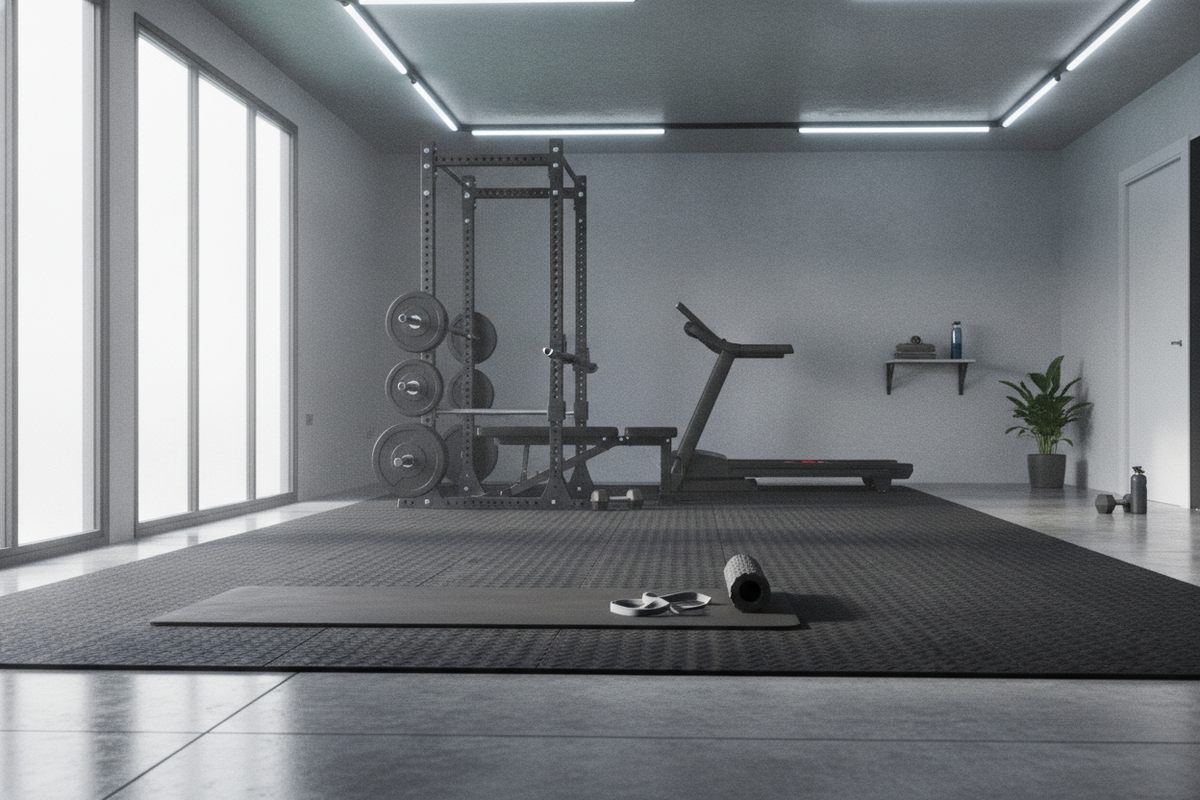
- High-Density Floor Matting: Place resilient, high-density rubber tiles or vulcanized roll matting beneath plate-loaded hip thrusts, leg presses, and cable towers. This prevents metal frame footings from gouging concrete, hardwood, or laminate subflooring.
- Footplate Stability and Grip: Heavy leg pressing and thrusting require firm traction underfoot. Ensure equipment footplates and surrounding walkways remain clean and dry to eliminate foot slippage during maximal effort drives.
- Spatial Clearance: Maintain adequate clearance around pivot arms, weight horns, and selectorized weight stacks. Unobstructed pathways allow users to load plates and disengage safety catches without spatial constriction.
While glute drives target posterior hip extension, integrating a dual-function leg extension and curl machine creates balanced quadricep and hamstring support across your weekly split.
Programming Blueprint: Structuring a Balanced Glute Machine Rotation
A balanced lower-body routine incorporates varied loading vectors rather than relying on a single movement pattern. Structuring machine selection across multiple sessions ensures comprehensive development:
- Primary Heavy Extension: Begin sessions with a compound horizontal or diagonal drive, such as the dedicated Glute Drive or the 45-degree leg press with high foot placement.
- Frontal-Plane Isolation: Follow with the seated hip abductor machine or standing cable abduction to isolate the gluteus medius and stabilize the pelvic girdle.
- Hinge and Stretch Movement: Conclude with cable pull-throughs or 45-degree hyperextensions to load the posterior chain through deep eccentric lengthening.
Just as understanding lower-body station names demystifies leg day, consulting our arm exercise machine names guide simplifies upper-body pushing and pulling routines. To further build your gym vocabulary across major compound stations, pair this lower-body breakdown with our chest exercise machine names reference.
Equipment Care, Surface Maintenance, and Footwear Traction
Proper maintenance of glute training stations ensures reliable performance and longevity. Upholstery pads on hip thrust machines and abductor units should be wiped down regularly with non-abrasive fitness equipment cleaners to remove sweat and oils without degrading the vinyl coating.
For cable stations and selectorized weight stacks, routine inspection and lubrication of guide rods with silicone-based sprays maintain smooth travel and consistent resistance. When lifting on these stations, pairing flat, stable footwear with slip-resistant gym flooring delivers the foundational stability needed for confident, heavy lower-body training.