Gym Machine List: Build Your Perfect Setup Without Wasting Money
Building a home gym is an exciting milestone, but staring at a blank garage or basement can quickly become overwhelming. With thousands of pieces of equipment on the market, it is easy to suffer from analysis paralysis or, worse, blow your budget on gear you rarely use.
That is why having a strategic gym machine list is your best defense against wasted space and money. Whether you are chasing powerlifting PRs or just trying to stay active between Zoom calls, this guide will help you navigate the noise and decide exactly what deserves a spot on your rubber flooring.
Key Takeaways
- Prioritize multi-functional equipment like functional trainers or power racks to maximize limited square footage.
- Your baseline workout machines list should align strictly with your primary training goals, not commercial gym standards.
- Always measure ceiling height and operational clearance before buying—especially for overhead lifting and cardio units.
- Invest heavily in your primary touchpoints (barbells, benches) and save on secondary accessory machines.
Decoding the Equipment Landscape
When you look at all workout machines available today, they generally fall into two categories: versatile foundational pieces and specialized accessory stations. Knowing the difference is crucial for home gym owners.
Essential Strength Stations
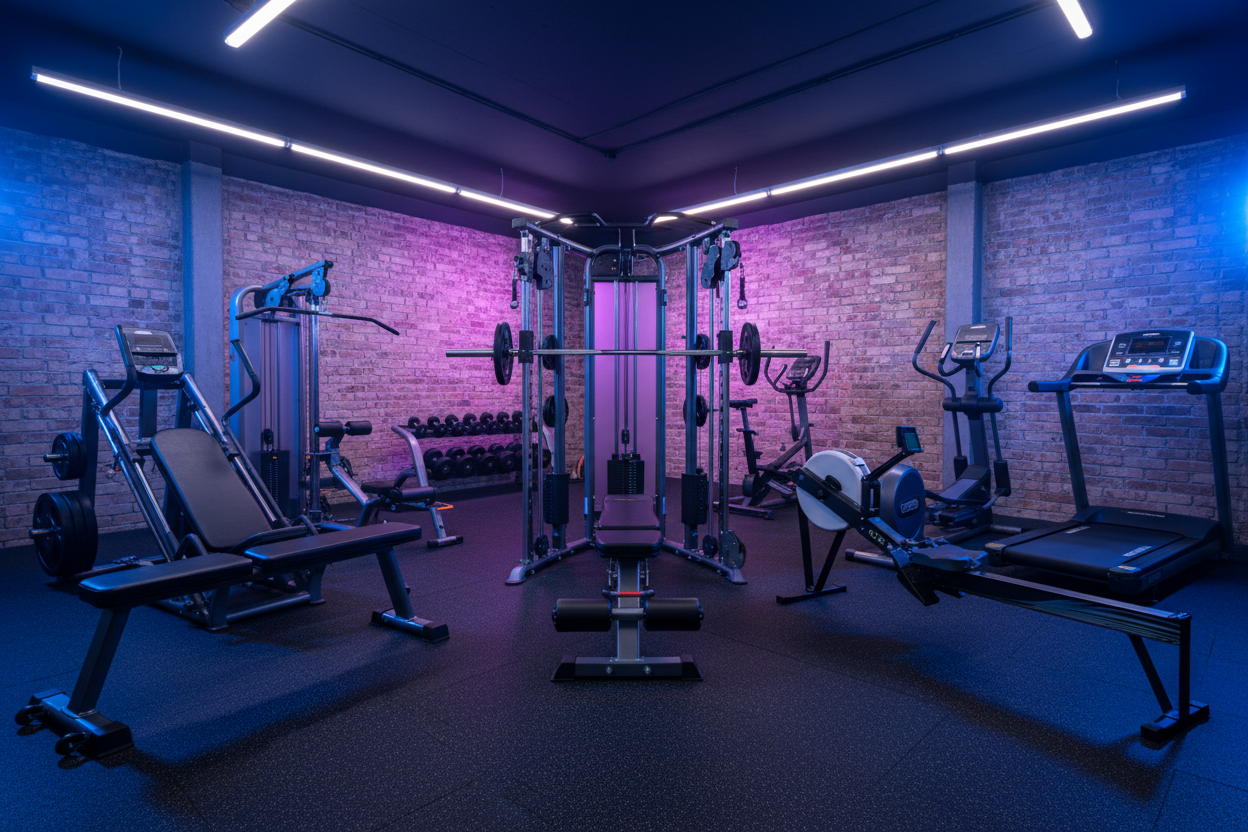
For most North American home gyms, the anchor piece should be a power rack or a high-quality functional trainer. A power rack allows for heavy compound movements (squats, bench presses, deadlifts) safely. If your training leans more toward bodybuilding or rehab, a dual-pulley functional trainer offers endless cable variations without needing ten different single-station machines.
Cardio Must-Haves
You do not need a massive row of treadmills. Pick one low-impact, high-yield cardio machine. Air bikes, concept rowers, or compact folding treadmills are the holy trinity of home cardio. They offer brutal efficiency while keeping a relatively small footprint.
Space Planning for North American Homes
A common mistake is buying gear based on product dimensions without accounting for active footprint—the space needed to actually use the machine safely.
Garage vs. Spare Bedroom Setups
If you are setting up in a two-car garage, you likely have the luxury of depth but might battle sloped floors or moisture. Here, heavy-duty powder-coated steel machines thrive. If you are in a spare bedroom or basement, ceiling height is your biggest enemy. Standard racks are often 80 to 90 inches tall. Always leave at least 12 inches of clearance above your rack for pull-ups, and ensure your floor joists can handle the dynamic load of dropped weights.
From Our Gym: Honest Take
When I first built out my two-car garage gym, I was obsessed with replicating a commercial facility. I bought a massive 45-degree leg press that ate up an 8-by-4-foot chunk of prime real estate. While the machine was incredibly smooth, I quickly realized it was a one-trick pony. After six months, it became a very expensive storage shelf for my gym bags. I eventually sold it and replaced it with a versatile functional trainer and a heavy-duty adjustable bench. The lesson? Unless you are a competitive bodybuilder, avoid single-use machines in a home environment. Stick to a curated equipment list that offers multiple movement patterns per square foot.
Frequently Asked Questions
What is the most versatile gym machine for a home setup?
A functional trainer (cable crossover) or a power rack with a high/low pulley attachment. These allow you to perform hundreds of exercises, targeting every muscle group, without needing a massive facility.
How much space do I need for a basic gym machine list?
A minimal setup (rack, bench, barbell, and one cardio piece) requires roughly a 10x10 foot space (100 square feet). This allows enough room for a standard 7-foot barbell and the active clearance required to load plates on the sides.
Are commercial-grade machines worth the extra cost?
It depends on the piece. For high-wear items like barbells, benches, and functional trainer cables, commercial or prosumer grade is worth the investment for safety and longevity. For secondary items, mid-tier home-grade options are usually perfectly fine.