Gym Equipment Names and How to Identify Them
Stepping onto a busy gym floor can feel overwhelming when rows of steel towers, pulleys, and padded benches look unfamiliar. Knowing standard gym equipment names helps eliminate guesswork, letting you focus on your workout plan instead of wondering what each station does. Whether you train in commercial gyms or are organizing a personal space, understanding common equipment names helps you select the right tool for each exercise.
Fitness centers generally group their gear into dedicated functional zones. By categorizing gear into free weights, selectorized stations, plate-loaded stations, and cardio equipment, you can navigate any facility with ease. If you are outfitting a personal workout area, browsing a dedicated strength equipment collection or reviewing our essential gym gear buying breakdown can help you decide which essentials fit your routine.
Gym Equipment Names for Free Weights and Basic Stations
The free weight section is often the core of strength training. Unlike machines that steer your motion along a fixed track, free weights require you to stabilize the load yourself, engaging multiple muscle groups and stabilizer muscles across varied planes.
Barbell Exercises, Dumbbells, and Weight Plates
A barbell is a long metal bar designed to hold circular weight plates on both sleeves. Barbells form the foundation for staple barbell exercises such as deadlifts, overhead presses, and classic flat or incline bench presses. You will also see specialty bars, such as an EZ curl bar with angled grips that provide wrist comfort during arm training.
Dumbbells are handheld weights used in pairs or singly. Because each arm moves independently, dumbbells help identify and address strength imbalances between limbs while promoting balanced upper body strength. Nearby, weight trees and horizontal racks keep loose plates and dumbbells organized across the gym floor.
The Squat Rack and Power Cage
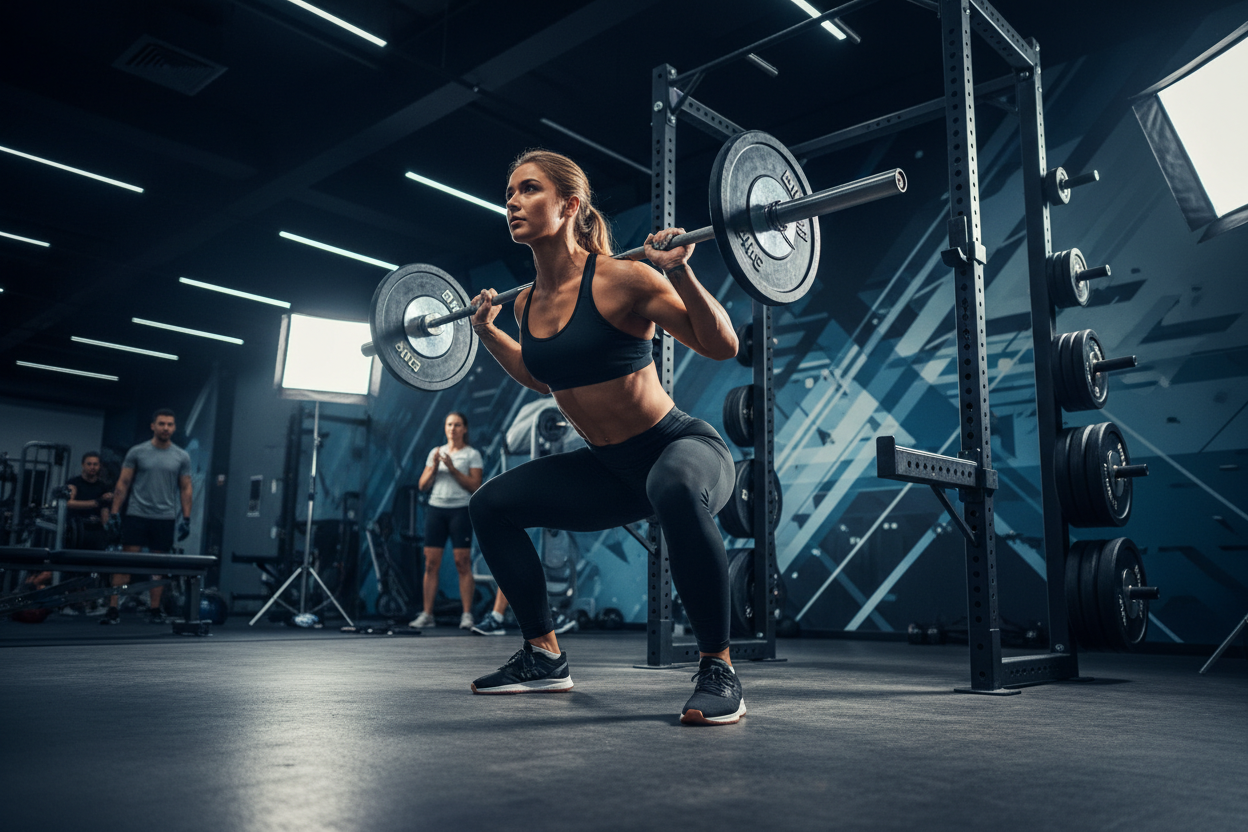
The squat rack and power cage are central stations for lower body and pressing work. A power cage features four upright posts with adjustable horizontal safety bars. If you are completing heavy squats or bench presses without a training partner, safety catches within the cage offer security. Squat stands offer a smaller footprint with two uprights, making them practical for compact training zones.
Pull Up Bar and Body Weight Exercises
A sturdy pull up bar provides one of the most practical setups for body weight exercises. Using an overhead bar for pull ups and chin ups challenges the back, shoulders, and core without requiring complex mechanics. Many setups feature multi-grip configurations, allowing wide, narrow, or neutral hand placements to target different angles of the upper body.
Upper Body Exercise Equipment and Cable Machines
Selectorized gym machines feature pinned weight stacks, making it simple to choose a resistance level without manually lifting heavy iron plates onto sleeves. These tools allow lifters to isolate specific areas and practice strict proper form.
Chest Press Machine and Shoulder Press Machine
The chest press machine replicates the horizontal pressing path of a barbell or dumbbell bench press while keeping your movement path steady. You sit upright or slightly reclined with handles positioned at mid-chest height. It provides steady resistance for the pectoral muscles and triceps without requiring you to balance loose weight overhead.
Similarly, the shoulder press machine guides your arms overhead along a vertical arc. This station directs tension into the deltoids while back padding supports upright posture, making it useful for building pressing strength safely.
Lat Pulldown Machine and Bicep Curl Machine
The lat pulldown machine features an overhead cable and an adjustable thigh pad that locks your lower body in place. Gripping the bar and pulling down toward the collarbone simulates a pull-up, recruiting the latissimus dorsi across the back. It is an approachable alternative for anyone still building capacity for unassisted pull ups.
To isolate the arms, a bicep curl machine positions the upper arms flat against a padded, angled preacher bench. This setup minimizes shoulder sway and lower body momentum, keeping the tension centered on the biceps throughout each repetition. You can compare additional upper-body stations in our detailed arm exercise machine guide.
Functional Trainer and Cable Crossover Towers
A functional trainer consists of two opposing cable towers with adjustable pulley heights and interchangeable handles. Because cables generate constant resistance regardless of gravity's angle, you can perform chest flyes, woodchoppers, triceps pushdowns, and lateral raises with smooth tension through the entire range of motion.
Lower Body Gym Equipment Names
Lower body machines allow you to train the legs with high volume and focused tension without placing continuous axial load directly down your spine.
Leg Press Machine and Hack Squats
The leg press machine typically positions the user in an angled seat facing upward toward a sliding footplate. By pushing the sled away, you work the quadriceps, hamstrings, and glutes. Adjusting foot placement higher or wider alters muscle emphasis across the lower body. A hack squat machine positions the lifter standing on a slanted platform with padded shoulder rests, guiding the hips down into a deep knee bend that concentrates tension on the front of the thighs.
Leg Curl Machine and Leg Extension Machine
The leg curl machine comes in seated or lying (prone) variations designed to isolate the hamstrings. By curling a padded lever behind the ankles toward the glutes, you work the knee flexors directly. In my own workouts, I found that taking the time to tightly lock the thigh restraint pad down on a seated leg curl made an immediate difference in preventing the hips from lifting and keeping tension strictly on the hamstrings.
Right beside it, you will often find the leg extension machine. Here, the pad rests against the front of the lower shins. Extending your legs outward until straight isolates the quadriceps, building strength around the front of the knees.
Calf Raise Machine
A dedicated calf raise machine exists in seated or standing formats. Seated models place a padded lever across the lower thighs to work the soleus muscle, while standing models rest pads on the shoulders so you can push up through the balls of your feet to target the gastrocnemius.
Cardio Equipment and Conditioning Stations
Cardio machines support conditioning, warm-ups, recovery, and high intensity interval training. Many facilities place them along windows or dedicated endurance rows.
Rowing Machine for Full Body Conditioning
The rowing machine engages the legs, core, back, and arms in a coordinated drive-and-recovery cycle. Because each stroke demands continuous effort from both the upper body and lower body, it delivers an efficient, low-impact full body cardio workout that develops aerobic capacity and muscle endurance without joint pounding.
Stationary Bike, Treadmill, and Elliptical Trainer
A stationary bike provides accessible cardiovascular exercise with minimal joint stress. Upright bikes mimic standard road cycling, while recumbent bikes provide a wide bucket seat and back support for easier lower back comfort.
The elliptical trainer offers a gliding pedal motion paired with moving arm handles, distributing effort across multiple muscle groups without repeated foot strikes. Treadmills remain the standard choice for walking, jogging, and incline intervals, featuring shock-absorbing decks under the belt.
Battle Ropes and Medicine Balls
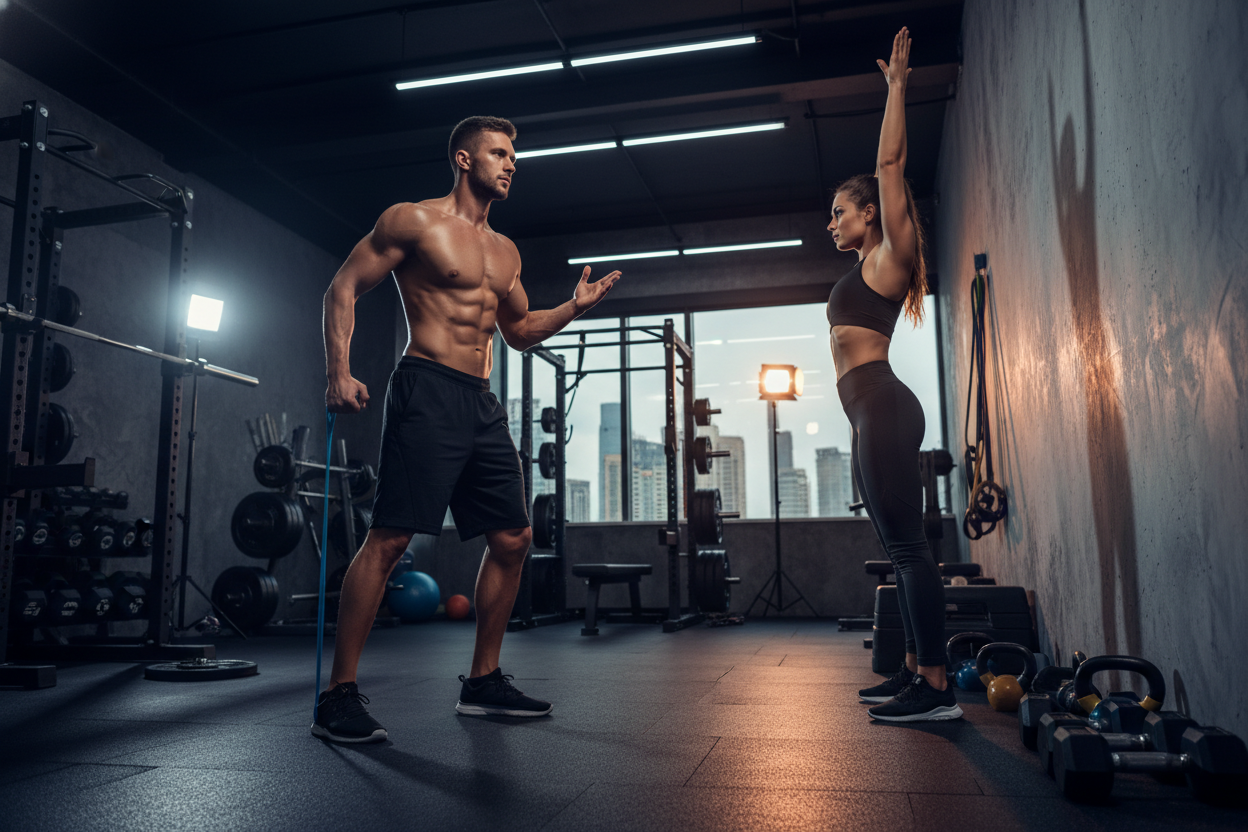
Beyond traditional cardio machines, functional conditioning tools add variety to endurance workouts. Thick battle ropes anchored to a wall or heavy rig challenge grip strength, core stability, and upper body endurance during alternating waves or slams. Padded medicine balls and weighted slam balls let you train explosive power through rotational throws and overhead slams onto resilient gym flooring.
Organizing Exercise Equipment for Your Goals
Recognizing gym equipment names allows you to read training templates easily and choose stations that match your experience level. Beginners often benefit from starting with selectorized gym machines to learn movement mechanics before progressing to barbell exercises, dumbbells, and resistance bands.
For a deeper visual reference covering machinery designs, explore our illustrated gym equipment guide. When building out a home setup, checking curated home gym equipment deals helps you assemble versatile pieces that fit your floor plan and training needs.