Gym Equipment Names Explained: What You Actually Need to Buy
Stepping into the world of fitness often feels like learning a new language. If you are trying to build out a garage or basement setup, getting familiar with proper gym equipment names is the first step to avoiding costly purchasing mistakes. Whether you are dealing with limited floor space, a strict budget, or a plateau in your training, knowing exactly what to search for ensures you get the right gear for your goals.
In this guide, we will decode the industry jargon, translate commercial-grade terminology into practical home gym equipment names, and help you decide which pieces actually deserve a spot in your workout space.
Key Takeaways
- Power Racks: The safest, most versatile centerpiece for heavy barbell training in a home setting.
- Adjustable Dumbbells: The ultimate space-saving free weights for apartment setups and small rooms.
- Functional Trainers: Dual-cable machines that offer endless accessory movements but require a larger footprint.
- Ergometers: The technical term for rowing machines and ski trainers that track work output.
Decoding the Essentials: What Belongs in Your Space?
The Foundation: Power Racks vs. Squat Stands
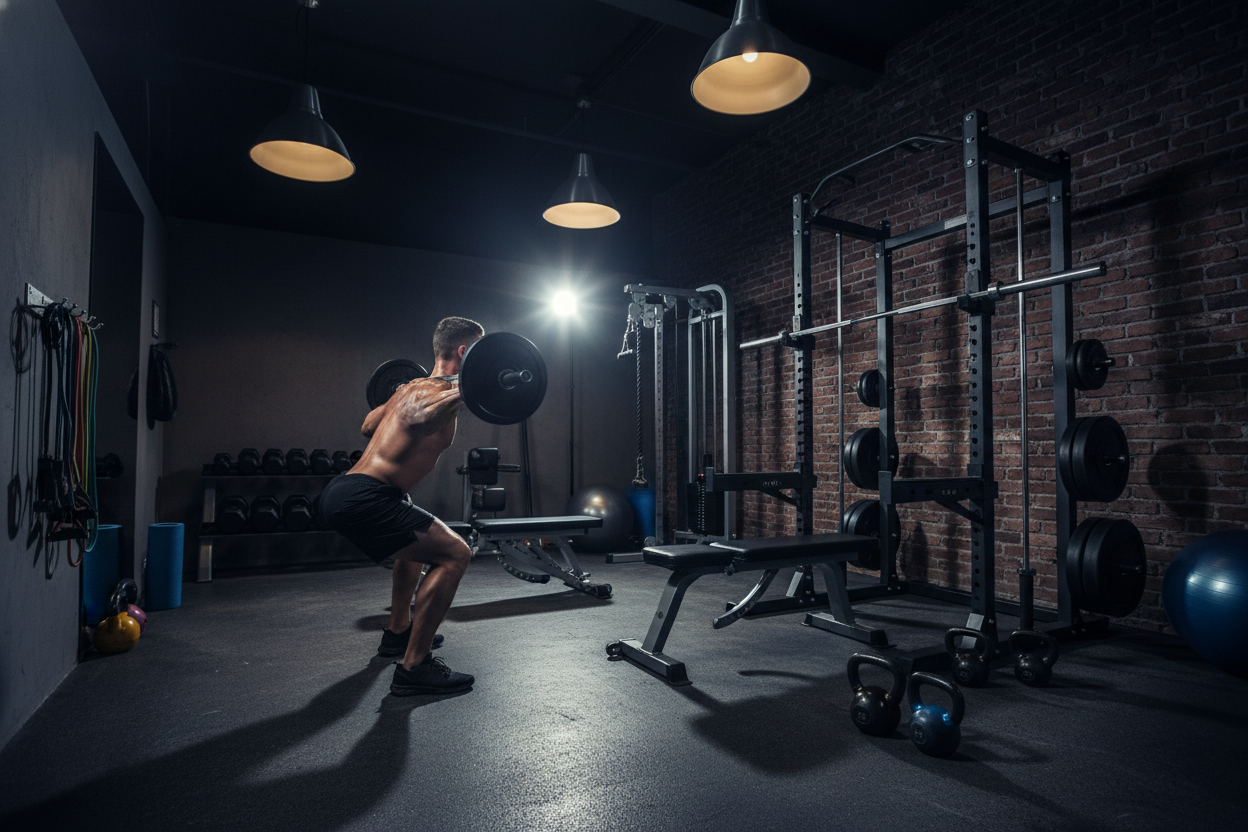
When researching gym equipment names for home, the power rack (often called a power cage) should be at the top of your list. Characterized by four vertical uprights, it provides maximum safety with adjustable spotter pins for solo lifting. If you are working with a low-clearance basement, a squat stand (two uprights) or a half-rack might be the better play, though you sacrifice some stability and internal lifting space.
Free Weights: Dumbbells, Kettlebells, and Barbells
Free weights are the bread and butter of strength training. While commercial gyms have massive racks of fixed dumbbells, home gym owners usually opt for adjustable dumbbells to save space. You will also frequently encounter the 'Olympic barbell'—a 45-pound, 7-foot bar with rotating 2-inch sleeves designed for heavy, dynamic lifting. Do not confuse this with standard 1-inch bars, which have a much lower weight capacity and tend to warp under pressure.
Maximizing Your Footprint and Budget
Identifying Cable Machines and Functional Trainers
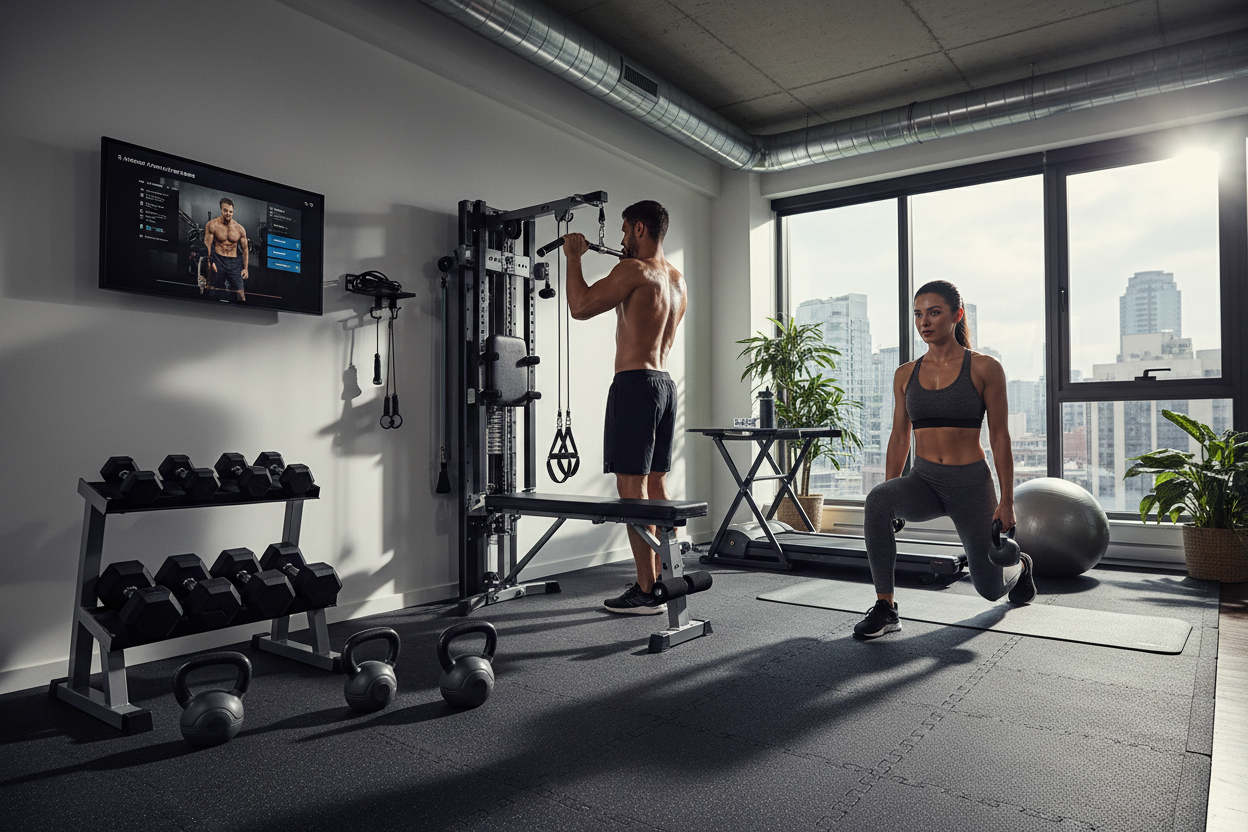
A 'functional trainer' is essentially a dual-adjustable pulley system. It is one of the most highly sought-after pieces of equipment because it provides constant tension through hundreds of movement paths. However, they demand significant width (often 60 inches or more). If you are tight on space, look for 'plate-loaded cable towers' that attach directly to the uprights of your power rack, saving both money and floor space.
Cardio Jargon: Ergometers and Air Bikes
Cardio equipment terminology can be surprisingly technical. An 'ergometer' (often shortened to 'erg') refers to machines like rowers or ski trainers that measure the exact physical work performed by the user. 'Air bikes' or 'fan bikes' use wind resistance that scales with your effort. They are perfect for brutal HIIT sessions in a garage gym, though they are notoriously loud and might not be ideal for shared living spaces.
From Our Gym: Honest Take
When I first started outfitting our 400-square-foot testing facility, I got completely lost in the weeds of equipment terminology. I almost purchased a 'Smith machine' thinking it was interchangeable with a 'power rack'—a rookie mistake that would have locked me into a fixed barbell path instead of allowing natural, free-weight squats.
Knowing exactly what to search for saved us thousands of dollars and precious square footage. For instance, searching specifically for a 'wall-mounted folding rack' instead of a generic 'squat rack' allowed us to actually park a car in the garage when not lifting. One specific piece of advice: pay close attention to barbell specs. I recently tested a multi-purpose Olympic bar with passive knurling. While it was great for high-rep power cleans without tearing up my hands, my chalked grip noticeably slipped during 400-pound deadlifts. Always match the specific equipment design to your primary training style.
Frequently Asked Questions
What are the most essential home gym equipment names to know?
For a foundational setup, you should familiarize yourself with power racks, adjustable flat/incline benches, Olympic barbells, bumper plates, and adjustable dumbbells. These five core pieces allow you to perform almost every major compound movement safely.
Is a Smith machine better than a power rack?
Not necessarily; they serve different purposes. A Smith machine features a barbell fixed to steel guide rails, which is excellent for muscle isolation and bodybuilding. However, a power rack allows for natural, free-weight movement paths, which is generally superior for building overall strength and core stability.
How much space do I need for a functional trainer?
Most standalone functional trainers require a footprint of at least 5 feet wide by 4 feet deep. More importantly, you need an additional 3 to 4 feet of clearance in front of the machine to actually step out and perform cable flyes or presses. Always measure your functional workout space, not just the machine's static footprint.