Gym Equipment Names and What You Actually Need
Stepping into a fitness facility or browsing an online catalog can quickly become overwhelming. Knowing standard gym equipment names helps you navigate workouts, understand exercise instructions, and select the right tools for your personal goals. Whether you want to outfit a corner of a room or simply understand what equipment is at a gym, identifying gear by its proper name is the ideal starting point.
Understanding equipment categories allows lifters to make practical investments rather than buying single-purpose items that gather dust. For a deeper breakdown of visual styles and designs, you can explore our gym equipment names and pictures guide.
Understanding Gym Equipment Names and Categories
Gym gear broadly falls into three practical groups: free weights, resistance machines, and conditioning tools. Each group serves a distinct purpose in developing fitness, supporting strength training, or building muscle endurance. When learning these equipment names, it helps to understand how each piece manages load, supports proper form, and engages multiple muscle groups.
Free Weights and Core Strength Training Equipment
Free weights represent the most adaptable foundation of any workout area. Unlike stationary machines, they allow natural movement through space, requiring stabilizer muscles to balance the load throughout every repetition.
Barbells, Weight Plates, and Benches
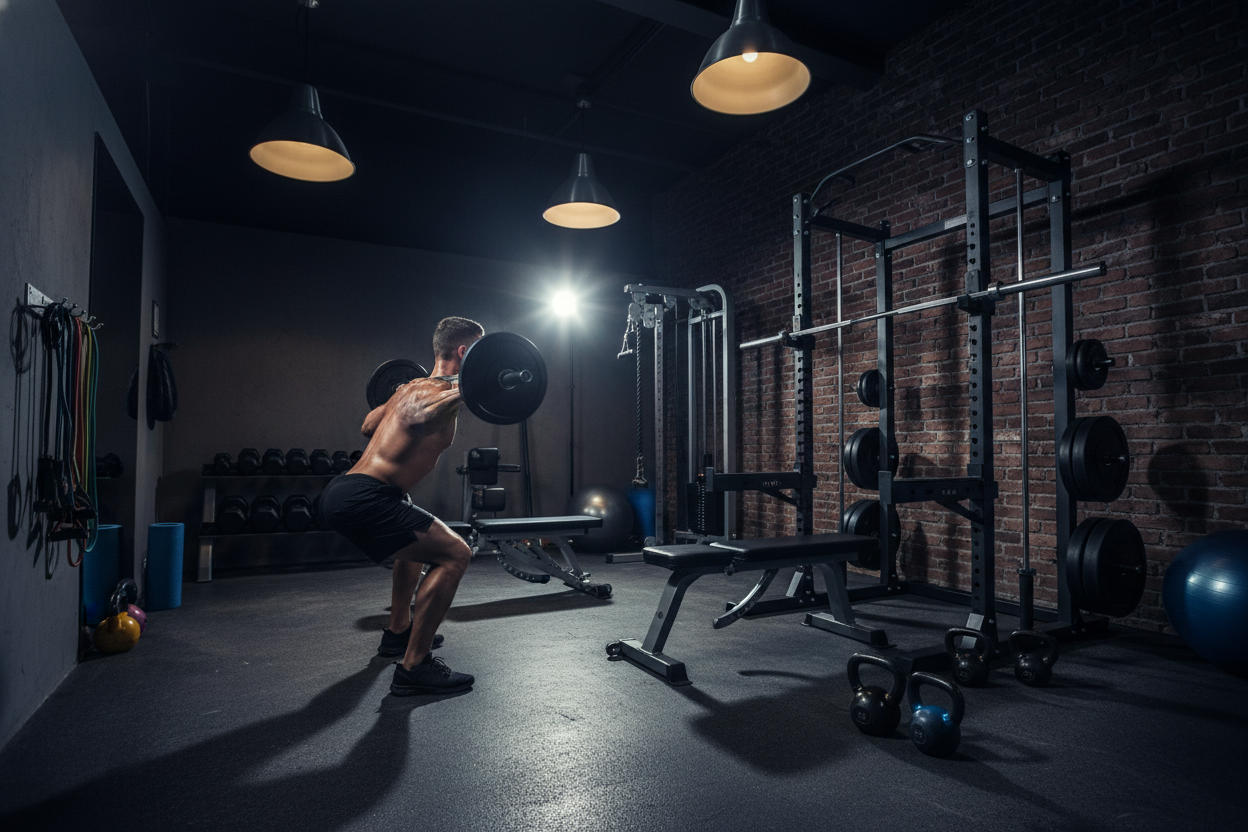
The barbell is a primary driver for heavy resistance training. When paired with standard weight plates, a barbell supports foundational barbell exercises like squats, deadlifts, and overhead presses. Adding an adjustable flat and incline bench unlocks versatile bench presses, which build foundational upper body strength across the chest, shoulders, and triceps.
To perform heavy lifts without a spotter, lifters rely on a squat stand or rack. A sturdy rack holds your barbell at resting height and catches misloaded lifts, allowing you to train multiple muscle groups safely. You can browse our dedicated strength equipment collection to see how racks, benches, and bars fit together.
Dumbbells and Kettlebells
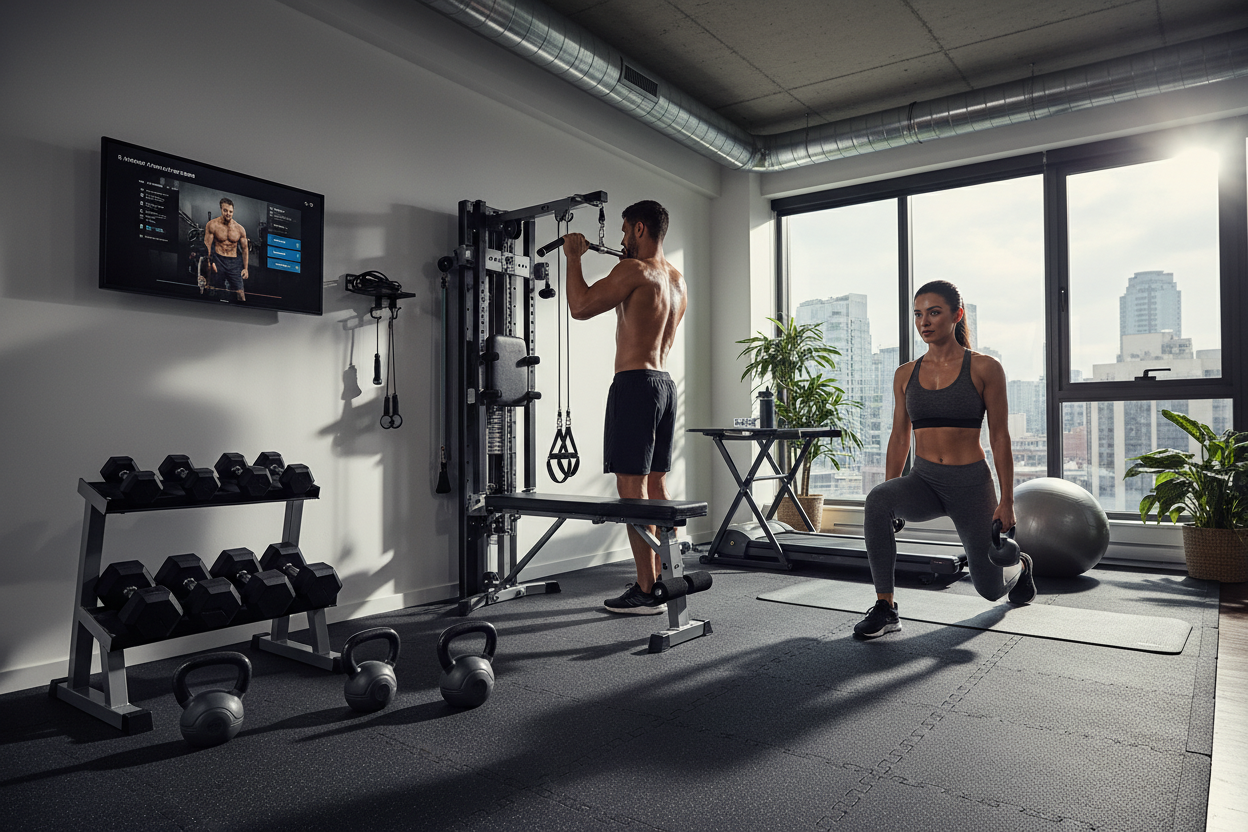
Dumbbells are standard handheld weights available in fixed or adjustable formats. They let lifters work each side of the body independently, correcting strength imbalances across the upper body and lower body. Kettlebells, with their offset handle design, excel at dynamic swinging movements, conditioning, and unilateral carries. Along with medicine balls, these tools round out traditional free-weight routines by challenging grip, balance, and core stability.
Resistance Machines and Cable Exercise Equipment
Selectorized units and plate-loaded frames guide movement along a fixed track. These gym machines provide direct resistance while helping lifters maintain proper form without needing to balance a free-floating bar.
The Versatile Functional Trainer
A functional trainer uses dual adjustable pulleys linked to dedicated weight stacks. By repositioning the cable pulleys from floor level to overhead, you can execute pressing, pulling, rotating, and chopping patterns. Cable tension stays continuous through the movement, making it an exceptional centerpiece for targeting various muscle groups in a compact footprint.
Targeted Gym Machines for Upper Body and Lower Body
In commercial facilities, single-station selectorized machines isolate specific joints. For pushing movements, a chest press machine and a shoulder press machine deliver steady resistance without requiring shoulder stabilization. For back development, a lat pulldown machine simulates overhead pulling motions, helping lifters build vertical pulling capacity before moving to bodyweight variations. To focus on isolated arm work, an isolated arm exercise machine overview highlights options like the dedicated bicep curl machine.
Lower-body stations help isolate the legs when compound lifts feel fatiguing. A leg press machine works the quadriceps, glutes, and hamstrings under heavy resistance while stabilizing the spine. For direct knee flexion and extension, lifters pair a leg extension machine with a leg curl machine. Adding a seated or standing calf raise machine finishes lower-leg development without loading the lower back.
Bodyweight Gear and the Essential Pull Up Bar
Bodyweight movements remain central to progressive fitness. A wall-mounted or rack-mounted pull up bar builds substantial back, arm, and core capacity. Practicing strict pull ups challenges grip and lat engagement across an unrestricted range of motion. For lifters working up to their first bodyweight repetition, elastic resistance bands looped around the bar offer gentle assistance at the bottom of the movement.
You can also use resistance bands on the floor for warm-ups, mobility work, and supplemental resistance alongside traditional bench presses or squats. Parallel dip bars, suspension straps, and simple floor mats support accessible body weight exercises that require minimal space and upkeep.
Cardio Equipment and Conditioning Tools
Aerobic conditioning pieces keep heart rates elevated, encourage active recovery, and support interval training. Understanding the distinction among cardio machines helps you select the right stimulus for your workout space.
The Rowing Machine and Stationary Bike
A rowing machine provides a low-impact, full body cardio workout by engaging the legs, hips, back, and arms on every drive. Because resistance responds to pulling cadence and damper settings, rowing machines adapt seamlessly to steady aerobic pacing or sprint intervals. A smooth stationary bike or air-resistance bike offers lower-body conditioning that protects joints while delivering intense cardio intervals. For low-impact gliding routines, an elliptical trainer offers smooth leg and arm engagement without heavy foot strikes.
High-Energy Battle Ropes and Functional Accessories
Anchored battle ropes have become staple tools for upper-body conditioning and metabolic conditioning. Creating waves and slams with heavy battle ropes builds shoulder stamina, grip strength, and core power during high intensity interval training. Because ropes can be coiled away against a wall when finished, they keep floor space open for other movements.
Choosing What You Actually Need for Your Gym Floor
Outfitting a home training area does not require buying every piece found in a commercial health club. Prioritizing versatile tools that target multiple muscle groups delivers the highest training return per square foot.
- Start with multipurpose free weights: An adjustable bench, a set of adjustable dumbbells, and elastic resistance bands cover hundreds of upper and lower body movements.
- Add a lifting station: If space allows, a compact squat stand or rack paired with a barbell, weight plates, and a solid pull up bar supports foundational barbell exercises.
- Layer conditioning tools: Compact tools like a single rowing machine, jump rope, or set of battle ropes provide intense cardio conditioning without cluttering your floor.
In my experience planning training layouts, prioritizing multipurpose gear prevents crowding and keeps workout transitions smooth. Before making major investments, review verified current gym equipment deals and consult our comprehensive exercise equipment glossary to confirm that each selected piece matches your training priorities.
Frequently Asked Questions
What are the names of gym equipment most commonly used for strength?
The most common strength training equipment names include the barbell, adjustable bench, squat rack, dumbbells, kettlebells, pull up bar, and cable functional trainer. These tools allow lifters to perform major compound lifts as well as isolation work.
What is the difference between a leg extension machine and a leg curl machine?
A leg extension machine targets the quadriceps on the front of the thigh by having the user straighten the knee against resistance. A leg curl machine targets the hamstrings on the back of the thigh by having the user bend the knee against a padded lever.
Can I build an effective routine with only body weight exercises and bands?
Yes. Pairing pull-up bars, dip bars, and resistance bands provides enough scalable tension to build upper-body pulling and pressing strength without large machines or heavy plates on your gym floor.