Grow Muscle Naturally: Progressive Overload Framework, Split Design, and Home Floor Staging
Developing a strong, capable physique through standard training principles relies on understanding basic movement mechanics, progressive tension, and consistent recovery habits. Lifters frequently consider whether you can build muscle naturally to a meaningful extent while training in a home setting. A structured routine based on systematic physical challenge, steady progressive loading over time, balanced nutrition, and regular rest can reliably help lifters develop muscle mass naturally.
Core Principles of Natural Muscle Growth
To establish how to build body naturally, lifters generally focus on mechanical tension during resistance exercises. When muscle groups contract against external loads through a controlled range of motion, that mechanical stress encourages long-term muscular adaptation. A naturally built physique develops through consistent, well-executed repetitions performed with deliberate technique across weeks and months.
Progressive overload serves as a primary conceptual framework for this process. Instead of frequently altering exercise selections, lifters generally benefit from refining basic movement patterns and introducing incremental training demands. This progression can take several practical forms:
- Load Progression: Adding manageable resistance to free weights or machines while maintaining strict posture.
- Repetition Management: Completing additional clean repetitions within a target set before increasing resistance.
- Controlled Tempo: Slowing the eccentric lowering phase to maintain focused tension across target muscles.
- Rest Period Consistency: Keeping rest intervals structured to preserve workout density and effort.
When working to grow muscle naturally, keeping a personal training log helps lifters monitor changes in movement quality, load, and repetition volume across workouts.
Essential Compound Movement Patterns for Full-Body Development
Multi-joint compound movements engage multiple muscle groups within a single exercise pattern, offering a practical core for lifters exploring how build body naturally. Organizing weekly workouts around basic movement categories supports balanced physical development across the upper and lower body.
Lower-Body Foundations
Squat and hip-hinge patterns engage the quadriceps, glutes, hamstrings, and lower back. Movements like goblet squats, barbell back squats, and Romanian deadlifts allow lifters to train lower-body musculature across broad ranges of motion. Selecting balanced leg exercises provides a dependable base for overall physical strength; lifters can explore specific lower-body movement variations in our build muscle body guide.
Upper-Body Horizontal and Vertical Movements
Balanced upper-body training incorporates both pressing and pulling patterns. Horizontal pushing movements, such as dumbbell bench presses or floor push-ups, engage the chest and triceps, while overhead pressing emphasizes shoulder stability and deltoid development. Pairing these pushing exercises with horizontal barbell rows and vertical pull-ups helps support shoulder posture and upper back control. Those seeking structured upper-body exercise groupings can consult our build mass body guide.
Structuring Balanced Training Splits and Session Frequency
Organizing training frequency and set volume helps lifters balance exercise stimulus with necessary downtime. Distributing work for major muscle groups across two or three weekly sessions offers regular training opportunities while keeping individual workout fatigue manageable.
Two common scheduling frameworks fit home-based resistance training routines:
- Upper/Lower Splits: Alternating upper-body and lower-body training across four weekly sessions provides dedicated focus for each area while leaving rest days in between.
- Full-Body Rotations: Completing three non-consecutive full-body sessions per week allows frequent movement practice across all major muscle groups. Lifters can examine full-body programming concepts in our body build muscle guide as well as our body muscle mass guide.
Regardless of split design, ending working sets one to two repetitions before total muscular failure helps maintain proper lifting form and reduces unnecessary joint strain.
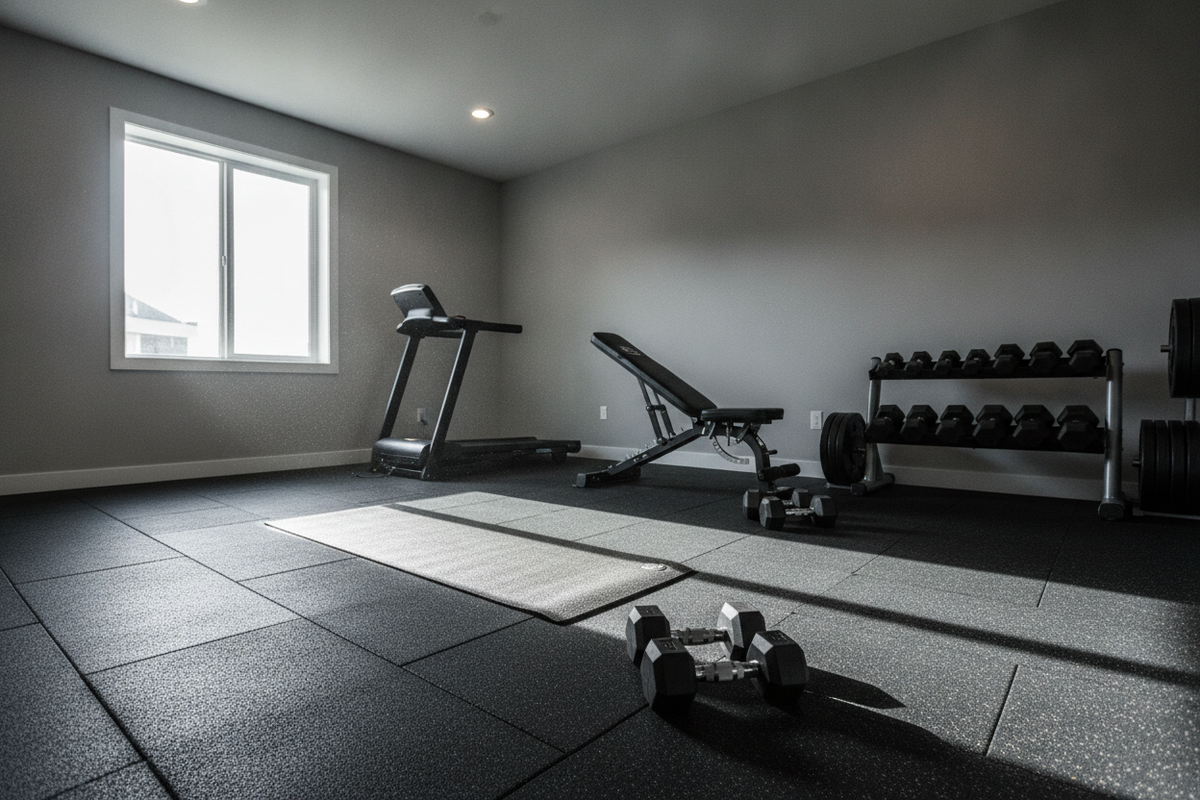
Home Gym Floor Staging: Subfloor Defense and Lifting Footing
When organizing a home training space to explore how to strengthen muscles naturally, the floor surface directly affects footing, balance, and general room preservation. Heavy bilateral lifts, lunges, and standing presses require a firm, flat base that provides reliable traction underfoot.
Standard domestic flooring materials like carpet, tile, or polished hardwood are not ideally suited for dedicated strength training. Soft carpeting can compress unevenly underfoot, which may disrupt balance during loaded squats, while hard tile can crack if equipment makes direct contact. High-density rubber gym mats provide a supportive, non-slip platform suitable for free weight training while shielding subfloors from everyday wear.
A well-planned home lifting floor offers several functional advantages:
- Traction and Stance Security: Textured matting helps prevent foot slipping during wide squats or split stances.
- Surface Shielding: Dense mats disperse downward force and protect underlying floors from scratches and scuffs.
- Noise and Vibration Moderation: Dense rubber helps dampen vibration and ambient sound from floor contact, which is helpful in residential living areas. Lifters outfitting compact living spaces can review additional considerations in our body build muscle guide.
Recovery Management, Rest Intervals, and Mat Care Protocols
Resistance training provides the physical stimulus, while subsequent rest and nutrition support the recovery process. Lifters interested in how to build body naturally benefit from maintaining foundational daily habits:
- Restful Sleep: Prioritizing regular, restful sleep schedules allows physical and mental recovery between demanding workouts.
- Balanced Nutrition: Eating sufficient whole foods, adequate protein, and balanced carbohydrates supports daily energy needs and muscle repair.
- Daily Hydration: Drinking sufficient water throughout the day assists general physical comfort and workout readiness.
- Planned Recovery Weeks: Periodically reducing lifting intensity or weekly volume provides joints and muscles a chance to refresh.
Maintaining clean gym flooring is another straightforward practice that supports an inviting workout space. Periodically wipe rubber mats with a mild soap-and-water solution to clear away dust, sweat, and residue. Avoiding harsh chemicals or abrasive brushes preserves the mat surface texture, providing a clean and dependable footing area for ongoing natural training progress.