Gluteus Minimus Anatomy and Training Guide: Targeted Exercises, Functional Biomechanics, and Mat Staging
Deep beneath the prominent exterior contours of the hip lies the gluteus minimus, the smallest and deepest of the three primary gluteal muscles. While the gluteus maximus provides raw hip extension power and the gluteus medius controls broad lateral stabilization, the gluteus minimus serves as a critical structural stabilizer for the femoral head within the acetabulum. Building a strong, balanced lower body requires understanding the architecture of the deep lateral hip, how to recruit it through specific movement angles, and how to stage floor exercises to protect bony contact points.
Gluteus Minimus Anatomy: Deep Lateral Hip Architecture and Structural Location
The gluteus minimus is positioned directly beneath the gluteus medius along the lateral aspect of the pelvis. Its fan-shaped structure spreads across the outer surface of the ilium, providing a low-profile anchor between the pelvis and the femur.
Origin, Insertion, and Innervation of the Smallest Gluteal Muscle
The origin of the gluteus minimus spans the external surface of the ilium between the anterior and inferior gluteal lines, as well as the margin of the greater sciatic notch. The muscle fibers converge downward and laterally into a narrow, flat tendon. This tendon attaches to the anterior border of the greater trochanter of the femur. Innervation is supplied by the superior gluteal nerve, arising from lumbar and sacral nerve roots, which also innervates the gluteus medius and tensor fasciae latae.
The Gluteal Triad: Gluteus Maximus vs. Medius vs. Minimus
The gluteal complex functions as an integrated structural unit, but each layer exhibits distinct mechanical responsibilities:
- Gluteus Maximus: The largest, most superficial muscle responsible for powerful hip extension, external rotation, and posterior pelvic tilt. For a broader look at lower-body musculature, see our thigh muscle anatomy guide.
- Gluteus Medius: Sitting immediately beneath the maximus and superficial to the minimus, it provides broad frontal-plane hip abduction and controls pelvic leveling during standing.
- Gluteus Minimus: The deepest layer, oriented to assist with hip abduction while placing greater mechanical emphasis on internal rotation and stabilizing the femoral head snugly against the pelvic socket.
Functional Biomechanics: What Does the Gluteus Minimus Do?
The primary mechanical action of the gluteus minimus is hip abduction—drawing the thigh away from the midline of the body. In addition, its anterior fiber orientation enables internal (medial) rotation of the hip when the leg is extended. Beyond moving the limb freely in space, the muscle plays a foundational role in closed-chain mechanics where the foot is anchored to the floor.
Dynamic Pelvic Leveling and Gait Stabilization
Whenever you stand on one leg, walk, run, or step forward, the gluteus minimus works alongside the gluteus medius to stabilize the pelvis. In single-leg stance, the stance-side gluteus minimus contracts isometrically and concentrically to prevent the opposite side of the pelvis from dropping downward. Much like the deep rotator cuff stabilizes the humerus within the shoulder girdle—as detailed in our muscles movement anatomy guide—the gluteus minimus acts as an essential dynamic stabilizer for the hip joint.
Signs and Movement Compensations of a Weak Gluteus Minimus
When the deep lateral hip muscles lack sufficient strength or endurance, movement compensations frequently manifest during loaded compound lifts and unilateral movement patterns:
- Knee Valgus Collapse: Inward buckling of the knee during squats, lunges, and jump landings due to insufficient hip abduction torque.
- Lateral Pelvic Drop: Noticeable dipping of the non-weight-bearing hip during single-leg drills or running strides.
- Overactive Tensor Fasciae Latae (TFL): Excessive recruitment of the anterior hip flexor and IT band complex to compensate for weak deep abductors.
5 Targeted Gluteus Minimus Exercises for Lower-Body Stability
Targeting the gluteus minimus requires deliberate execution angles, slow tempo, and controlled pelvic positioning to prevent larger surrounding muscles from dominating the movement.
1. Side-Lying Hip Abduction with Internal Rotation Bias
Side-lying leg raises isolate the deep lateral hip when modified to favor internal rotation. Lie on your side on a cushioned exercise mat with your bottom leg bent for stability and your top leg fully straight. Rotate your top foot slightly downward so the heel points upward toward the ceiling. Keeping your pelvis tilted subtly forward, slowly raise the top leg along a smooth upward and backward trajectory. Hold at the top for a brief pause, then lower with control without letting the hip roll backward.
2. Standing Single-Leg Hip Hikes (Pelvic Drops)
Stand with one foot on a sturdy, low platform or aerobic step, allowing the opposite leg to hang freely off the edge. Keeping both legs straight, slowly lower the free hip toward the floor by letting the pelvis tilt. Engage the gluteus minimus and medius of the stance leg to pull the pelvis back upward past level. This drill reinforces closed-chain pelvic leveling and eccentric hip control.
3. Quadruped Fire Hydrant with Angled Extension
Position yourself on hands and knees on a supportive mat with your wrists beneath your shoulders and knees under your hips. Maintain a rigid, neutral spine. Lift one knee out to the side at a forty-five-degree angle between direct lateral abduction and backward extension. Pause at the peak contraction without rotating your lumbar spine or tilting your rib cage, then lower under control.
4. Side Plank with Top-Leg Abduction
Set up in a standard forearm side plank with your elbow directly below your shoulder and your feet stacked or staggered. Engage the bottom-side lateral hip to keep the pelvis elevated in a rigid line. Simultaneously lift the top leg upward into controlled abduction. This variation provides simultaneous isometric stabilization on the bottom hip and dynamic concentric work on the top hip.
5. Curtsy Deficit Lunge with Controlled Lateral Deceleration
Step backward and diagonally behind your lead leg, descending under strict control while keeping your front knee tracking in line with your mid-foot. The front hip must decelerate internal rotation and adduction forces under load, actively engaging the deep abductors before driving back up to the starting position.
Home Gym Floor Staging and Surface Protection for Deep Hip Training
Performing floor-based hip isolation and unilateral balance drills requires thoughtful home gym staging. The surface beneath your body directly affects joint comfort, stability, and movement execution.
Cushioning the Greater Trochanter During Side-Lying Work
Side-lying hip abduction places direct pressure on the lateral hip bone and the underlying trochanteric bursa. Performing these drills on hard concrete or thin carpeting can cause discomfort that disrupts focus and form. A high-density, shock-absorbing exercise mat provides a cushioned buffer that distributes pressure evenly while maintaining the firm support necessary to keep the pelvis aligned.
Traction, Subfloor Density, and Unilateral Balance Anchoring
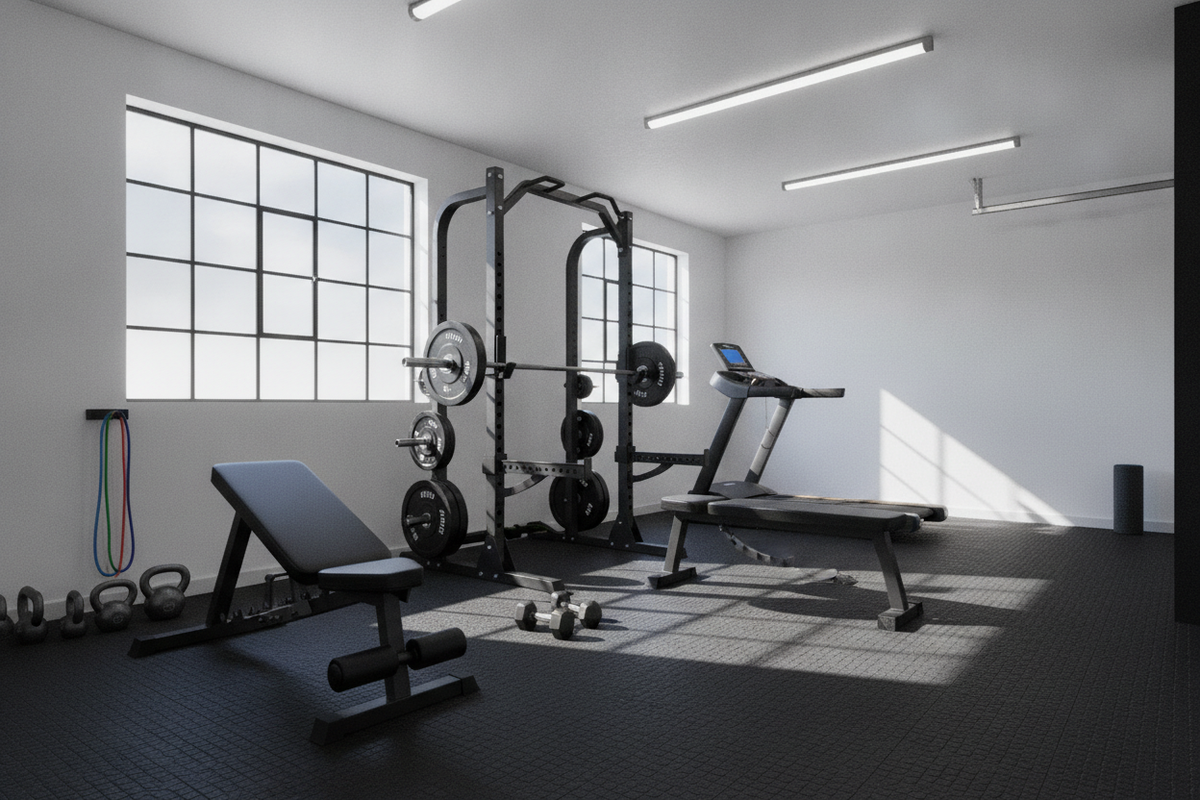
Standing single-leg exercises, lunges, and dynamic planks require a stable, slip-resistant surface. Soft, squishy surfaces compress unevenly under unilateral load, destabilizing the ankle and knee. Staging your training space with firm, textured rubber gym flooring ensures consistent foot traction and a solid foundation for optimal force transfer during balance and strength exercises.
Programming Architecture and Progressive Overload Strategies
Integrating deep hip training into your weekly routine creates a well-rounded foundation for athletic movement and heavy compound lifting:
- Warm-Up and Activation: Perform side-lying abductions and quadruped fire hydrants for controlled sets before squats and deadlifts to prime pelvic stability.
- Unilateral Strength Blocks: Include standing hip hikes and deficit curtsy lunges as secondary accessory exercises during lower-body workouts.
- Progression Over Time: Increase difficulty by incorporating resistance bands, ankle weights, or tempo pauses before adding external load, ensuring movement mechanics remain precise.