
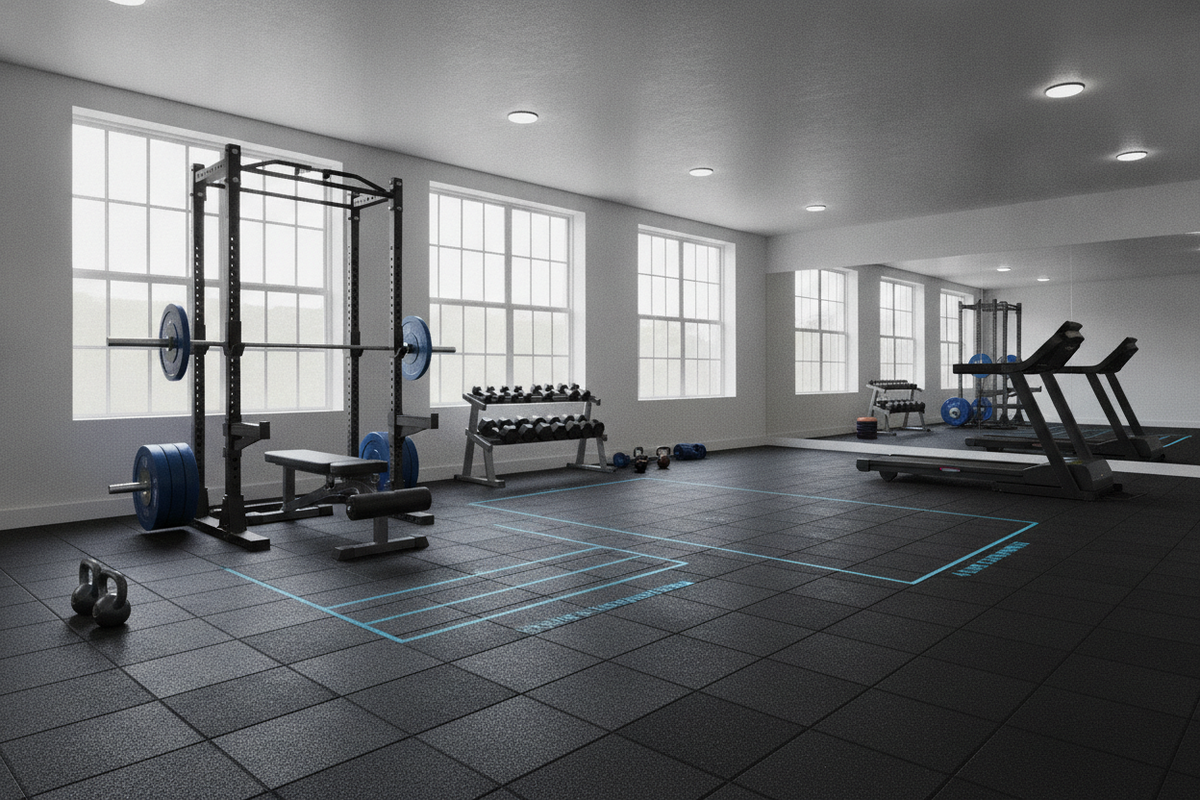
Glute Exercises Weightlifting: 4 Core Loading Blueprints, Biomechanical Tension, and Dedicated Floor Staging
Executing structured glute exercises weightlifting protocols requires a deliberate balance between movement mechanics, progressive loading, and a stable lifting surface. Developing the posterior chain through free weights demands high mechanical tension across varying force vectors. Whether configuring a dedicated training corner or working in a full-scale gym, understanding joint angles, barbell pathing, and foundational setup makes every repetition more effective. For a deeper look at long-term hypertrophy frameworks, explore our glute exercise weightlifting guide.
Biomechanical Foundations: Loading Vectors in Glute Weightlifting
The gluteus maximus serves as the primary hip extensor and external rotator. In weightlifting, muscle recruitment shifts significantly depending on whether the primary resistance is horizontal (anteroposterior) or vertical (axial). Maximizing muscular development requires targeting both tension curves:
- Horizontal Loading (Shortened Position): Movements like the hip thrust load the glutes most heavily where the hip reaches full extension, creating peak tension when the muscle fibers are contracted.
- Vertical / Axial Loading (Lengthened Position): Movements such as Romanian deadlifts and deep lunges generate peak tension during eccentric stretch, challenging the hamstrings and gluteal fibers under elongated states.
Prioritizing stable footing and controlled eccentrics ensures that the mechanical work stays directly on the target musculature rather than shifting into passive spinal structures or excessive quad dominance.
The 4 Essential Glute Exercises with Weights
To design an efficient lower-body routine, lifters rely on foundational multi-joint patterns. Our comprehensive building glutes booty guide outlines how these multi-joint lifts work together across full-body splits. Below are four central movements that form the core of weighted glute training.
1. Barbell Hip Thrust: Peak Shortened-Position Contraction
Regarded by many strength coaches as one of the best barbell exercises for glutes, the hip thrust places maximum mechanical tension directly at hip lockout without requiring spinal loading.
- Bench Setup: Position a sturdy weight bench just below the lower edge of the shoulder blades. Ensure the bench base is securely anchored against a wall or resting on non-slip matting to avoid shifting backward.
- Foot Placement: Set feet shoulder-width apart. At the top of the extension, your shins should be perpendicular to the floor with knees stacked directly above the ankles.
- Pelvic Mechanics: Maintain a slight posterior pelvic tilt at the top of the movement, keeping the ribcage down and chin tucked to avoid hyperextending the lumbar spine.
2. Romanian Deadlift (RDL): Deep Lengthened-Position Tension
The Romanian deadlift is an essential hinge pattern among the best glute exercises weights routines, emphasizing hip flexion depth and deep eccentric stretch.
- The Hinge Cue: Initiate the movement by pushing the hips backward toward the wall rather than squatting down. Keep a soft bend in the knees throughout the descent.
- Barbell Path: Keep the barbell or dumbbells skimming close along the thighs and shins to minimize shear force on the lower back.
- Range of Motion: Lower only until the hips stop moving backward. Reversing the movement immediately maintains continuous tension through the glute-hamstring junction.
3. Bulgarian Split Squat: Unilateral Stability and Hip Flexion Depth
Unilateral lifting corrects bilateral strength imbalances and allows for deep hip flexion under load, making it a staple for anyone learning how to grow glutes at home with weights.
- Torso Angle: Maintain a slight forward torso lean over the front leg. This slight angle directs mechanical load directly onto the gluteus maximus rather than the quadriceps.
- Foot Elevation: Rest the rear foot on a bench or block roughly knee height. Keep the majority of your body weight anchored through the front midfoot and heel.
- Descent: Drop the hips down and back in a diagonal path, stopping when the front femur is parallel to the floor or slightly below.
4. Deficit Reverse Lunge: Extended Range of Motion Under Load
Performing reverse lunges from a slight elevation increases the functional range of motion, providing a heightened stretch at the bottom of each repetition.
- Elevation Setup: Stand on a secure platform or weight plate roughly two to three inches high.
- Step Mechanics: Step backward onto a level, cushioned surface, dropping the rear knee gently toward the floor without slamming.
- Drive Phase: Drive firmly through the elevated front foot to return to the starting position, maintaining hip stability and preventing knee collapse.
Equipment Placement and Protective Floor Staging for Heavy Glute Workouts
Lifting heavy barbells, dumbbells, or loading plates requires proper floor staging to maintain safety, protect home subfloors, and provide high-traction footing during explosive hip extension. Setting up a dedicated gym workout product like a high-density, shock-absorbing mat creates a reliable foundation for both lifter and equipment.
- Bench Anchoring: During heavy hip thrusts, the back bench is subjected to intense horizontal shearing forces. High-density rubber or textured foam surfaces prevent bench feet from sliding during sets.
- Drop and Loading Protection: Loading large plates onto a barbell or lowering heavy dumbbells after an intense split-squat set requires dense padding to protect tiles, hardwood, or concrete subfloors from cracking.
- Stance Traction: Sweaty or slick flooring compromises footing during wide-stance deadlifts and split squats. Textured, sweat-resistant surfaces ensure the feet remain planted without micro-slips.
Programming Architecture: Integrating Weightlifting Glute Work into Training Splits
Balancing volume and intensity prevents overtraining while promoting steady mechanical overload. Lifters can pair free-weight compound exercises with specialized movements found within a broader weight lifting collection to achieve balanced muscular recruitment across the training week.
- Primary Heavy Compound Day: Focus on barbell hip thrusts and Romanian deadlifts within moderate rep ranges (6–10 reps), emphasizing progressive resistance and strict eccentric control.
- Unilateral & Hypertrophy Day: Focus on Bulgarian split squats, deficit lunges, and cable or band accessories within higher rep ranges (10–15 reps), emphasizing mind-muscle connection and range of motion.
- Recovery Windows: Allow adequate rest between intense lower-body training sessions to support muscle tissue remodeling and joint recovery.
Floor Maintenance and Grip Care in High-Load Lifting Zones
Maintaining clean equipment and matting surfaces preserves traction and prolongs the lifespan of your training gear. Residue from gym chalk, shoes, and perspiration can accumulate over time, reducing surface grip.
- Routine Surface Cleaning: Wipe down mats and bench padding with a mild, non-bleach cleaning solution after intense lifting sessions to prevent moisture buildup and preserve texture.
- Chalk Management: If using lifting chalk for deadlifts, vacuum or sweep loose powder regularly to ensure it does not create a slippery layer underfoot.
- Equipment Inspection: Periodically inspect bench rubber foot caps and barbell collar clamps to verify that everything remains tightly fastened before beginning heavy sets.


