Glute Burnout Blueprint: 6 High-Tension Finisher Variations, Kinetic Cues, and Floor Mat Staging
Understanding the Role of a Glute Burnout in Hypertrophy
After completing demanding compound lower-body lifts, integrating a dedicated glute burnout sequence serves as an effective method to fully exhaust muscle fibers without loading the axial skeleton. Heavy barbell squats and deadlifts recruit substantial musculature, yet lower back fatigue or grip limitations often prompt lifters to terminate sets before the glutes reach comprehensive fatigue. Incorporating a deliberate glute finisher guide strategy ensures that remaining motor units receive sufficient stimulus through continuous metabolic tension and mechanical isolation.
Unlike primary strength movements that focus on progressive overload through heavy external resistance, a finisher prioritizes constant muscular engagement, end-range peak contractions, and minimal transition pauses. This shift in training density encourages local fatigue within the gluteus maximus, medius, and minimus while sparing joint structures from excessive mechanical wear.
Biomechanics of Metabolic Tension and Posterior Chain Engagement
Executing an effective glute burnout exercise relies on strict movement mechanics rather than swinging momentum. The gluteal muscles achieve their shortest anatomical length during full hip extension. Maximizing tension in this shortened position requires a deliberate posterior pelvic tilt at lock-out, which prevents compensatory hyperextension of the lumbar spine.
To maintain continuous metabolic accumulation, lifters should avoid resting at the bottom of each repetition. Pairing controlled eccentric tempos with brief isometric pauses at full contraction maintains muscular strain throughout the set. Lifters interested in detailed biomechanical pathways can also review our exercise glute guide to understand how targeted hip extension mechanics drive hypertrophy across different movement planes.
6 High-Tension Glute Burnout Variations
These floor-based variations provide varied angles of resistance, combining sagittal hip extension with transversal and frontal hip abduction to stimulate all portions of the glute complex.
1. Isometric Pulse Glute Bridge Burnout
The standard glute bridge burnout gains intensity when performed with micro-pulses at the peak of extension. Lie supine with feet planted hip-width apart and knees bent. Drive through the heels to achieve complete hip extension, establishing a rigid line from knees to shoulders. Rather than lowering fully between reps, pulse within the top two inches of the range, maintaining unbroken tension on the gluteus maximus.
2. Elevated Single-Leg Frog Pump Finisher
Frog pumps position the hips in external rotation and slight abduction, shifting emphasis toward the upper glute fibers while minimizing hamstring takeover. By placing the soles of the feet together and keeping the knees flared outward, press the hips upward rapidly. Executing this movement with an elevated upper back or focused high-cadence pulses delivers concentrated metabolic burn.
3. Banded Abduction Hip Thrust Holds
Position a mini loop band just above the knees to introduce lateral resistance. As you drive into hip extension, actively push the knees outward against the band's elastic tension. Combine full extension reps with sustained isometric holds at the top position to challenge both hip extenders and lateral stabilizers simultaneously.
4. Quadruped Donkey Kick Iso-Holds
From a stable quadruped position on your hands and knees, elevate one leg toward the ceiling while maintaining a ninety-degree knee angle. Drive the heel upward until the glute is fully contracted, taking care not to rotate the pelvis or arch the lower back. Holding the peak contraction for a brief pause on each repetition reinforces mind-muscle connection and unilateral stability.
5. Prone Frog Hyperextensions
Lying prone on a padded workout surface, bend the knees out wide and bring the heels together. Contract the glutes to lift the thighs slightly off the ground, driving the soles of your feet toward the ceiling. Because the quads are deactivated in this position, the glutes must perform the majority of hip extension work directly.
6. Staggered-Stance B-Stance Bridge Burnout
The B-stance bridge provides a bridge between bilateral and unilateral work. Position one foot flat beneath the knee as the working leg, while placing the opposite foot slightly forward on its heel as a kickstand for balance. Drive primarily through the working heel, allowing that glute to handle the dominant load while maintaining pelvic levelness.
Home Gym Floor Staging and Joint Protection for Floor-Based Finishers
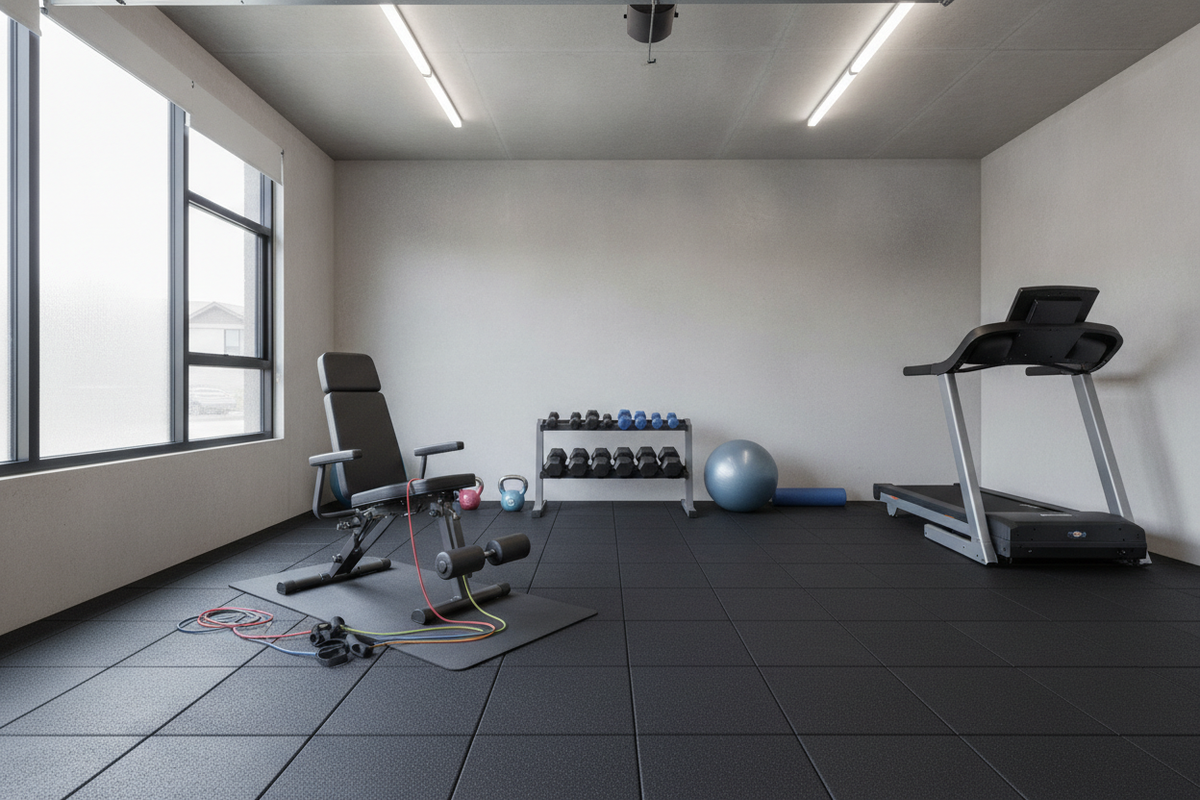
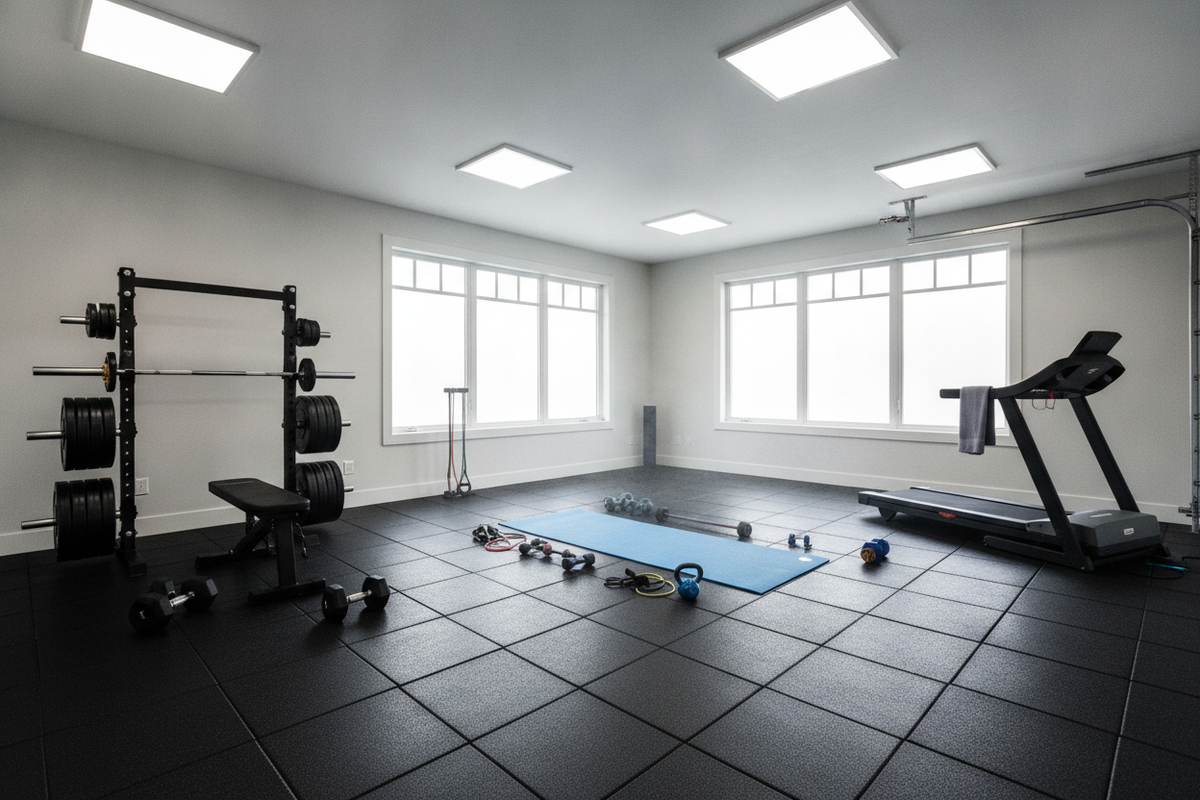
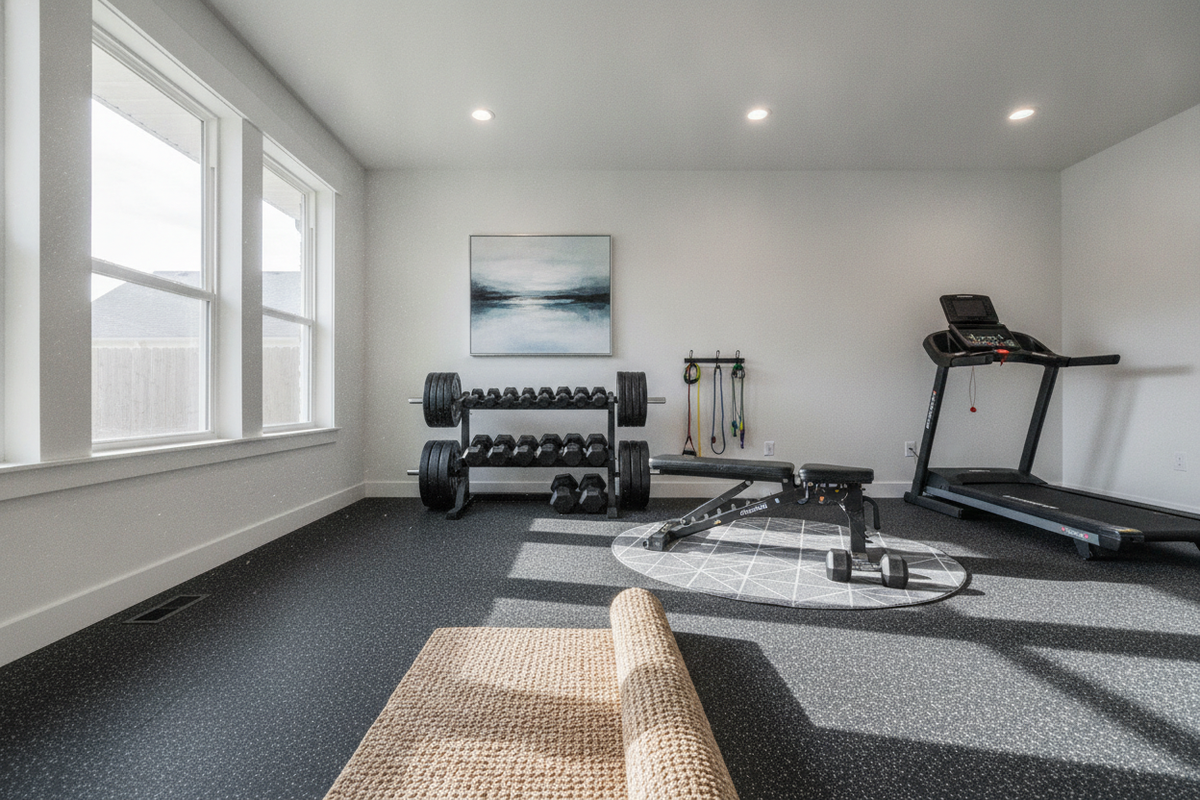
Floor-based finisher sequences place sustained pressure on points of contact, including the knees, elbows, heels, and spine. Performing high-rep floor work on hard concrete or thin carpeting can create discomfort that interrupts set quality. Staging your training space with equipment from an exercise collection provides a dedicated, high-density barrier that cushions sensitive contact points during quadruped kicks and supine bridging.
Textured floor surfaces also prevent foot slippage during aggressive heel drive in bridges and thrusts. When feet slide forward during high-rep sets, the mechanical load inadvertently shifts to the hamstrings. A slip-resistant, supportive foundation keeps the kinetic chain anchored and the target muscles isolated.
Sequencing and Programming Your Glute Burnout Routine
To implement these finishers effectively without impeding recovery, keep movement density high and rest intervals brief. Select two to three complementary exercises at the conclusion of your lower-body training session:
- Exercise Selection: Pair one bilateral hip extension movement (such as a pulsed bridge) with one abduction-biased drill (such as banded thrust holds) and a unilateral variation.
- Set Structure: Perform two to three sets per movement, working close to muscular fatigue rather than adhering to rigid rep targets.
- Tempo and Pacing: Prioritize smooth transitions and controlled tempos over rapid, uncontrolled flailing.
- Rest Periods: Limit rest between movements to encourage metabolic accumulation while preserving exercise form.
Optimizing Equipment Layout and Mat Maintenance in Home Gyms
Creating an efficient layout allows seamless transitions between standing strength work and floor-based finishers. Utilizing a spacious floor setup from an exercise collection ensures sufficient room for sprawling quadruped movements and banded floor variations without feeling confined. For expansive training zones, selecting a dedicated exercise product helps define a permanent, slip-resistant perimeter that accommodates multiple training implements.
High-density foam and rubber surfaces also withstand vigorous friction from athletic shoes and resistance bands. Regularly wiping down workout mats with mild soap and water removes sweat and chalk residue, preserving surface traction and prolonging equipment lifespan across years of intense training sessions.