Getting Sweaty Isn't Strength Exercise Training (Here's What Is)
I remember the first time I walked into a commercial gym and saw a guy doing 'squats' on a BOSU ball while holding a 10-pound kettlebell. He was sweating buckets, his heart rate was through the roof, and he looked like he was working harder than anyone else in the room. But here is the cold, hard truth: he wasn't doing strength exercise training. He was just doing a fancy balance act that made him tired. I've spent a decade in garage gyms, testing everything from $1,000 barbells to cheap Craigslist racks, and I've learned that if you want to actually change your physique, you have to stop chasing the 'burn' and start chasing the load. Most strength fitness exercises you see on social media are designed to look cool, not to make you capable of moving heavy objects.
Quick Takeaways
- Fatigue is a side effect, not the goal of strength training.
- Progressive overload—adding weight or reps over time—is the only metric that matters.
- The most effective routines are usually the most 'boring' ones.
- You need a solid foundation (rack, bar, plates) before you buy the fancy gadgets.
The Difference Between 'Working Out' and Getting Strong
We've been lied to by the fitness industry. We've been told that if we aren't gasping for air in a puddle of our own sweat, we didn't work hard enough. That might be true for a HIIT class or a bootcamp, but it’s a terrible way to approach fitness strength exercises. Real strength training exercise is about adaptation, not exhaustion. When you lift a heavy barbell, you aren't just burning calories; you're sending a signal to your central nervous system and your muscle fibers that the current status quo isn't good enough. You're telling your body it needs to build more tissue and denser bone to survive the next session.
This requires a completely different mindset. In a typical 'workout,' you move fast and keep rest periods short to keep your heart rate up. In actual strength training, you might rest for three to five minutes between sets. Why? Because you need your ATP stores to replenish so you can move that heavy load again with perfect form. If you're too tired to maintain tension, you're no longer training for strength; you're just doing cardio with a weight in your hand. I’ve seen guys bench 315 lbs who barely break a sweat during their session, yet they are significantly more 'fit' in terms of raw power than the person doing burpees until they puke. You have to decide if you want to be 'tired' or if you want to be 'strong.'
Stop Doing Random 'Muscle Confusion' Workouts
The 'muscle confusion' trend is the greatest marketing trick ever played on lifters. The idea that you need to change your routine every week to 'keep the body guessing' is total nonsense. Your muscles don't have brains; they don't get 'bored.' They respond to mechanical tension. If you're constantly swapping out your exercises of strength for the latest influencer-approved variation, you'll never get good at the movements that actually move the needle. You'll spend all your energy learning the balance and coordination of a new movement instead of actually loading the muscle.
I’ve tested hundreds of pieces of gear, and the best results always come from the basics. You should be able to count the number of movements in your program on one hand. Squats, hinges, presses, and pulls. That’s it. When you stop overthinking your strength exercises, you allow yourself to actually master the technique. Mastery leads to confidence, and confidence leads to adding another 5-pound plate to the bar. If you're doing 20 different types of lunges, you're not confusing your muscles—you're just confusing your progress. Stick to the staples, get incredibly strong at them, and ignore the noise. The guy with the 500-lb deadlift didn't get there by doing 'variations'; he got there by deadlifting.
My 4-Day Daily Strength Training Routine
The best strength training workouts are the ones you can actually stick to for six months straight. I follow a simple 4-day split that focuses on heavy compounds. It’s not flashy, and it won't get a lot of likes on Instagram, but it works. This daily strength training routine is built around the idea of 'low volume, high intensity.' I'm not doing 10 sets of 10; I'm doing 3 to 5 sets of 3 to 5 reps. This allows for maximum weight on the bar while maintaining enough recovery time to come back and do it again 48 hours later.
Upper Body: Push and Pull Dynamics
On upper body days, I focus on balancing strength and resistance exercises. For every pressing movement (like a bench press or overhead press), I perform a pulling movement (like a barbell row or pull-up). This 1:1 ratio is non-negotiable for shoulder health. If you only focus on the 'mirror muscles' in the front, you're going to end up with rounded shoulders and a nagging impingement that keeps you out of the gym for months. I prefer using a 28.5mm multi-purpose bar for these because the whip is minimal, giving me a more stable platform for heavy rows. Don't neglect the lats; a thick back provides the stability you need to press heavier weights.
Lower Body: Heavy Hinges and Squats
Lower body days are where the real work happens. These are the exercises that improve strength across your entire kinetic chain. I start with either a back squat or a conventional deadlift. There is no substitute for these. I’ve tried the 'functional' alternatives, and they just don't provide the same systemic stimulus. One thing I've learned the hard way: don't cheap out on your flooring. If you're worried about cracking the concrete in your garage, you'll subconsciously hold back on your deadlifts. Get a dedicated exercise mat for your home workout or build a platform. Being able to set the weight down firmly without fear of damage changes the way you approach the lift. It allows you to focus entirely on the hinge rather than the floor.
The Gear You Actually Need for This
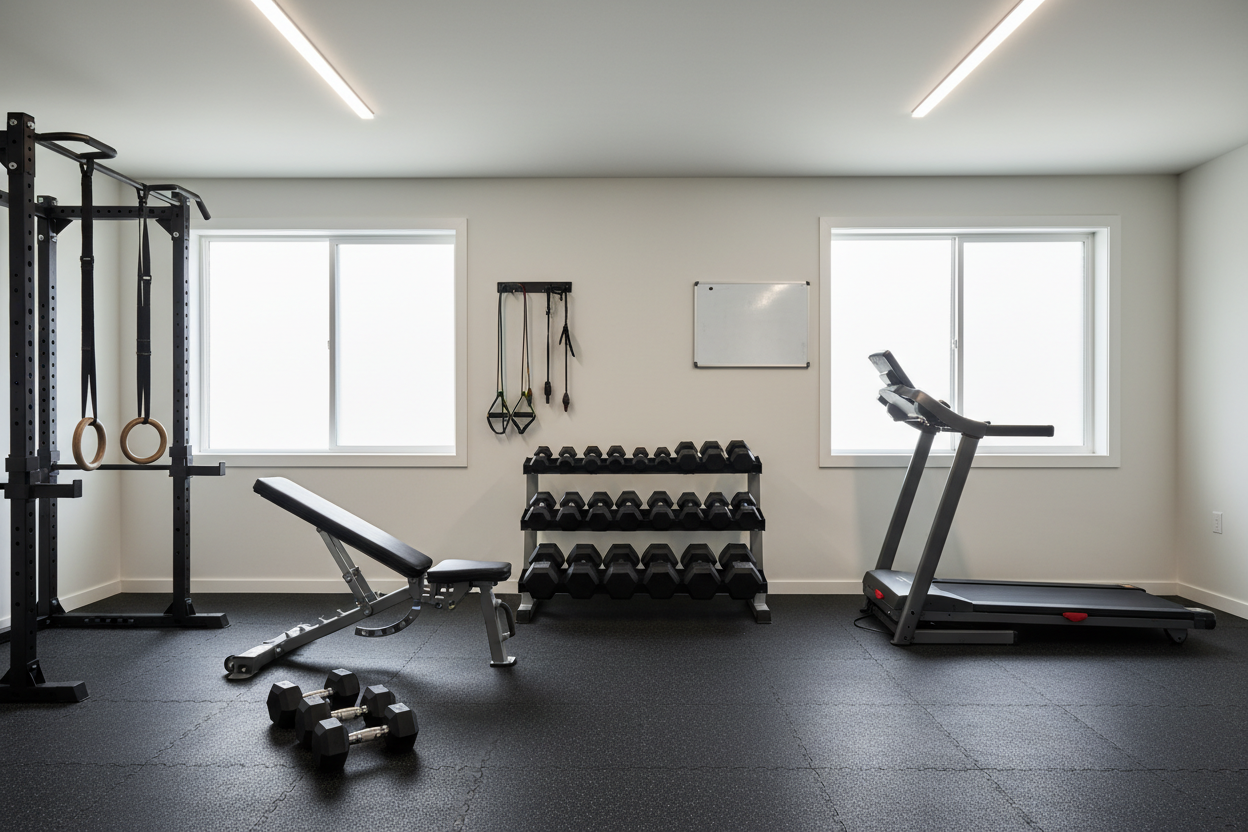
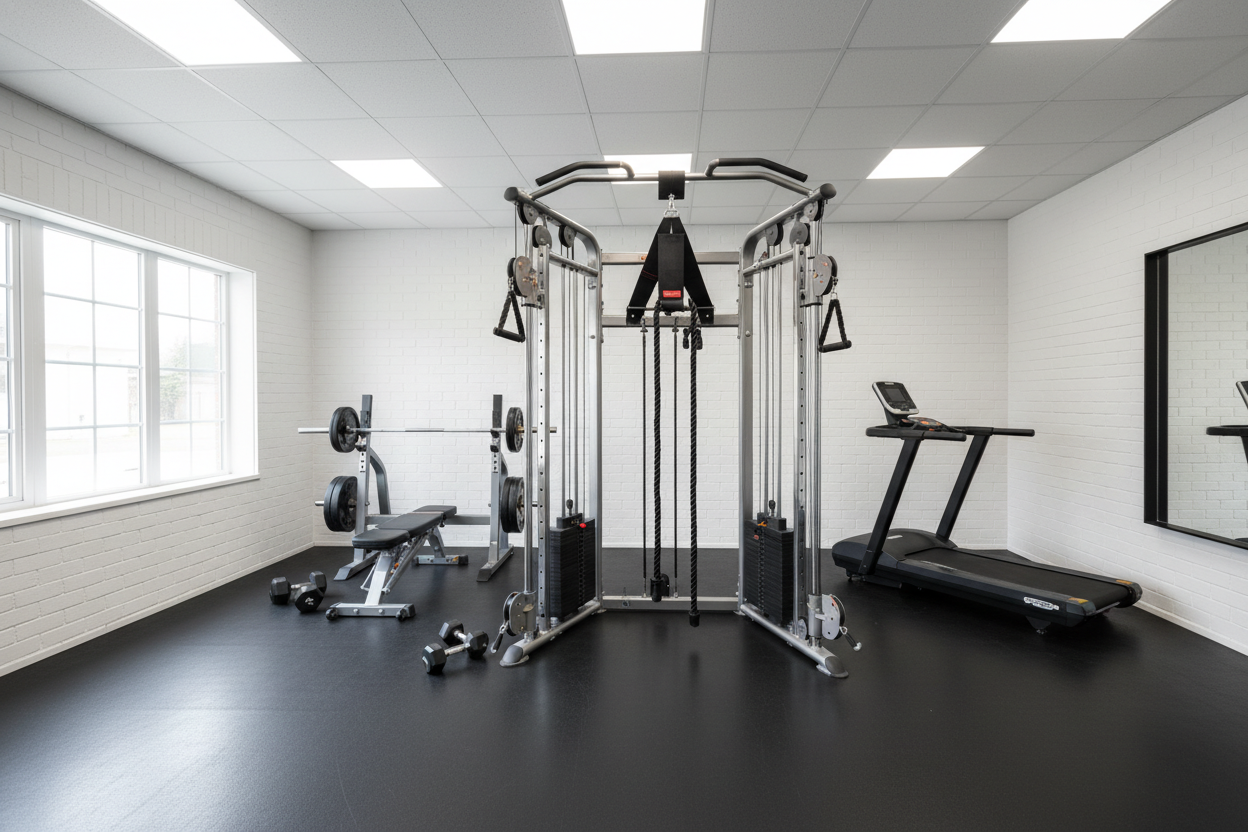
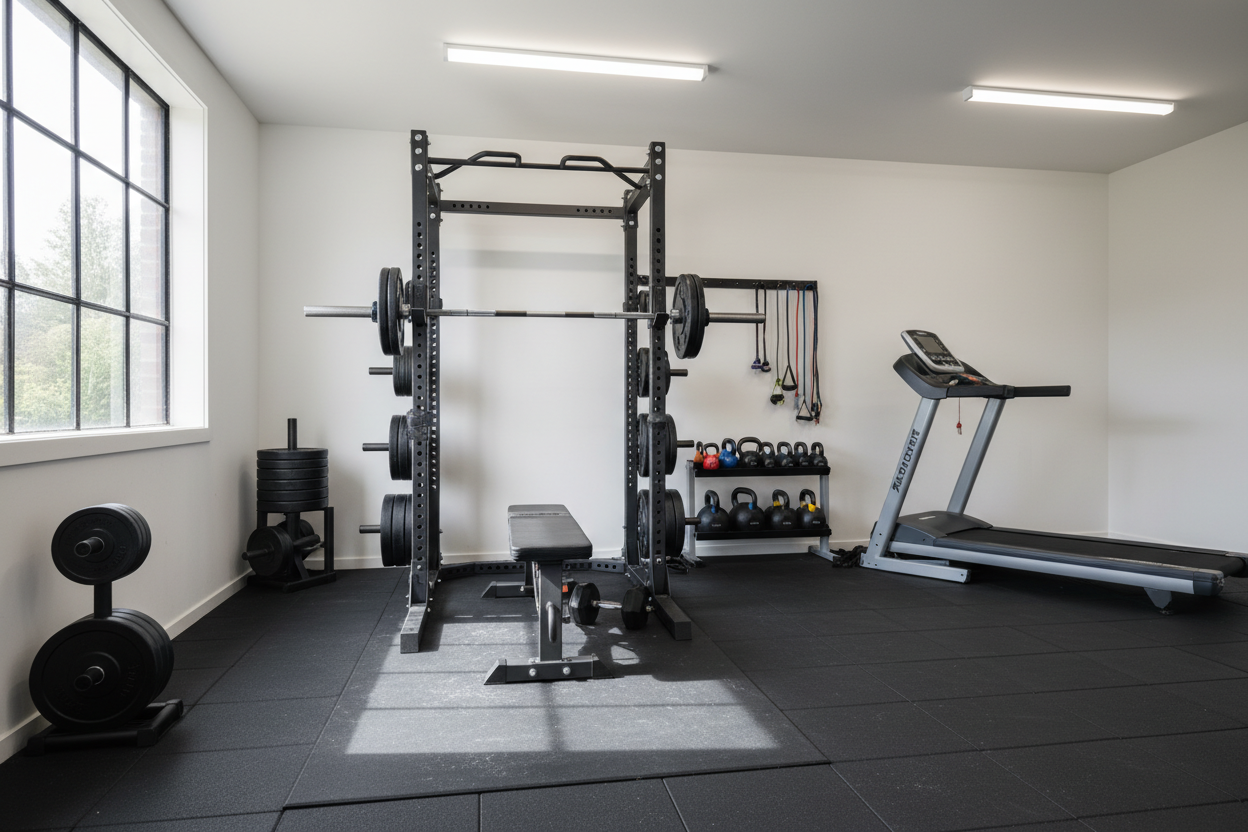
You don't need a $3,000 cable crossover machine or a vibrating platform to get strong. In fact, most of that stuff just takes up space in your garage. To perform a proper exercise for training, you need three things: a rack, a barbell, and plates. I always recommend 11-gauge steel for a rack—anything less feels shaky once you get over 300 lbs. Look for 3x3 uprights if you want the most accessory compatibility. For the barbell, don't buy the $50 'beater bar' from a big-box store. A bar with a 190,000 PSI tensile strength and decent knurling will last you a lifetime and save your wrists from the 'clank' of poor sleeve rotation.
When you're ready to invest, look for reliable strength equipment that has been tested in real-world conditions. You want plates that have a consistent diameter so you aren't pulling from a deficit on one side. If you're building a space from scratch, read a comprehensive guide on equipment for resistance training to avoid buying gear you'll grow out of in six months. I also suggest picking up a few strength training accessories like a 10mm lever belt or a pair of figure-8 lifting straps. These aren't 'cheating'; they are tools that allow you to push your muscles to failure when your grip or core stability might otherwise give out first.
How to Know If Your Program Is Actually Working
The only metric that matters in an exercise for strength training is the logbook. Are you lifting more weight than you were last month? Are you doing more reps with the same weight? If the answer is no, your program is failing, regardless of how sore you feel or how many calories your Apple Watch says you burned. I spent two years 'exercising' without 'training.' I was doing all the right moves, but I wasn't tracking my numbers. I stayed the same size and the same strength level because I wasn't forcing the overload. Don't make that mistake. Buy a notebook, write down your sets and reps, and make it your mission to beat those numbers every single week.
Personal Experience: My Biggest Mistake
My biggest mistake was thinking I could 'cardio' my way to a better physique. I was running 20 miles a week and doing light-weight, high-rep circuits. I was 'fit' by most standards, but I looked like a stiff breeze would knock me over. It wasn't until I cut the cardio in half and focused on moving 400 lbs off the floor that my body actually changed. I had to learn to embrace the boredom of the barbell. It’s not always fun, and it’s rarely 'exciting,' but the results of consistent, heavy training are undeniable. I once bought a cheap rack that shook every time I racked 225 lbs. I was terrified to push myself. Replacing that with a heavy-duty power rack was the single best investment I ever made for my progress.
FAQ
Do I need to do cardio if I'm strength training?
Yes, for heart health, but don't let it interfere with your recovery. A 20-minute walk or light incline treadmill session is plenty. If you're running marathons, your strength will suffer. Pick a priority.
How long should a strength session last?
Usually 60 to 90 minutes. This accounts for the longer rest periods needed between heavy sets. If you're in and out in 30 minutes, you're likely not resting enough or not lifting heavy enough.
Can I get strong with just dumbbells?
You can get 'stronger,' but you'll eventually hit a ceiling. It’s hard to load a dumbbell squat as heavy as a barbell squat, and most home gyms don't have dumbbells that go up to 150 lbs. Barbells are the gold standard for a reason.