Get Stronger Starting Today: 5 Practical Training Habits, Movement Blueprints, and Home Floor Staging
Introduction: Why Immediate Strength Is About Efficiency, Not Just Muscle Size
Many lifters assume that developing noticeable strength requires waiting months for structural muscle growth. While progressive hypertrophy remains a foundational goal of long-term resistance training, true strength output is governed heavily by neuromuscular recruitment, mechanical efficiency, and stable leverage. You can get stronger starting today simply by removing the mechanical inefficiencies, balance disruptions, and force leaks that drain your lifting power.
When you initiate a heavy compound movement, your nervous system coordinates motor units across multiple joints. If your footing wobbles, your midsection buckles, or your grip slips, the body downregulates power production to protect joints from compromise. By refining your setup mechanics, actively tensioning the kinetic chain, and preparing a stable training surface, you can experience an immediate jump in performance during your next training session.
5 Actionable Adjustments to Get Stronger Starting Today
Applying strategic mechanical adjustments transforms how your body expresses force. Integrating these five training habits will immediately tighten your movement patterns and improve force transfer across both upper and lower body exercises.
1. Master Active Tension and Controlled Eccentrics
Lifting heavy weight is not merely about moving an implement from point A to point B; it requires generating maximum muscular tension before the lift even starts. Muscular irradiation—the phenomenon where contracting one muscle group forcefully stimulates surrounding muscles—creates rigid full-body stability.
Before you unrack a bar, pull a kettlebell from the floor, or lower into a push-up, consciously squeeze your hands into the implement, pack your lats, and flex your glutes. When descending into the eccentric phase of an exercise, avoid dropping passively. Control the downward tempo with deliberate resistance. This controlled descent keeps tension loaded in the working tissues and primes your body to rebound smoothly into the concentric phase without losing alignment.
2. Lock Down Kinetic Chain Bracing and Midsection Rigidity
A soft core acts like a loose spring, dissipating the ground force generated by your legs before it ever reaches your upper body. Creating a rigid torso demands proper diaphragmatic breathing and 360-degree intra-abdominal pressure rather than merely sucking in your stomach.
Take air deep into your lower belly and expand your sides and lower back outward, locking your rib cage down over your pelvis. Maintaining this midsection stiffness protects the lumbar spine and channels force directly through the torso. Incorporating standing core stabilization strategies, as detailed in this stronger guide for abdominal engagement, builds the functional trunk rigidity needed to support heavy loads during overhead presses and squats.
3. Maximize Ground Force Transmission with Stable Footing
Your connection to the floor dictates how effectively you can drive loads upward. In any standing lift, force must travel from the ground through your feet, legs, and spine. If your feet are shifting or rolling inwards, you lose mechanical advantage immediately.
Establish the tripod foot position by distributing weight evenly across the base of your big toe, the base of your pinky toe, and the center of your heel. Actively grip the floor with your toes and create a slight rotational torque through your hips—screwing your feet into the surface without physically moving them. This torque seats the femurs into the hip sockets, stabilizes the knees, and creates a solid platform for heavy squats, lunges, and pulls.
4. Address Hidden Asymmetries with Unilateral Progressions
Bilateral compound movements can mask subtle strength and stability differences between limbs. When one side compensates for the other, overall force output plateaus and joint irritation can develop over time. Integrating unilateral variations resolves these hidden imbalances and strengthens secondary stabilizer muscles.
Incorporate split squats, single-leg hinges, and single-arm presses to identify and correct movement asymmetries. Prioritize balance, control, and clean joint alignment over heavy loading during single-limb work. For bodyweight routines and progressive lower-body drills, reviewing a dedicated get stronger guide can help you master unilateral control without relying on cumbersome equipment setups.
5. Utilize Frequent Neural Priming (Greasing the Groove)
Strength is a motor skill that improves with quality practice. Rather than constantly training to muscular failure—which produces deep systemic fatigue—frequent sub-maximal practice grooves crisp motor pathways and sharpens movement efficiency.
Perform occasional, perfectly executed repetitions of a challenging bodyweight or free-weight pattern spread throughout your day or week. By stopping each set well before form breaks down, you train the central nervous system to recruit motor units faster and more efficiently. When you later attempt heavier efforts, the movement pathway feels natural and solid.
Home Gym Floor Staging: Optimizing Your Surface for Maximum Force Output
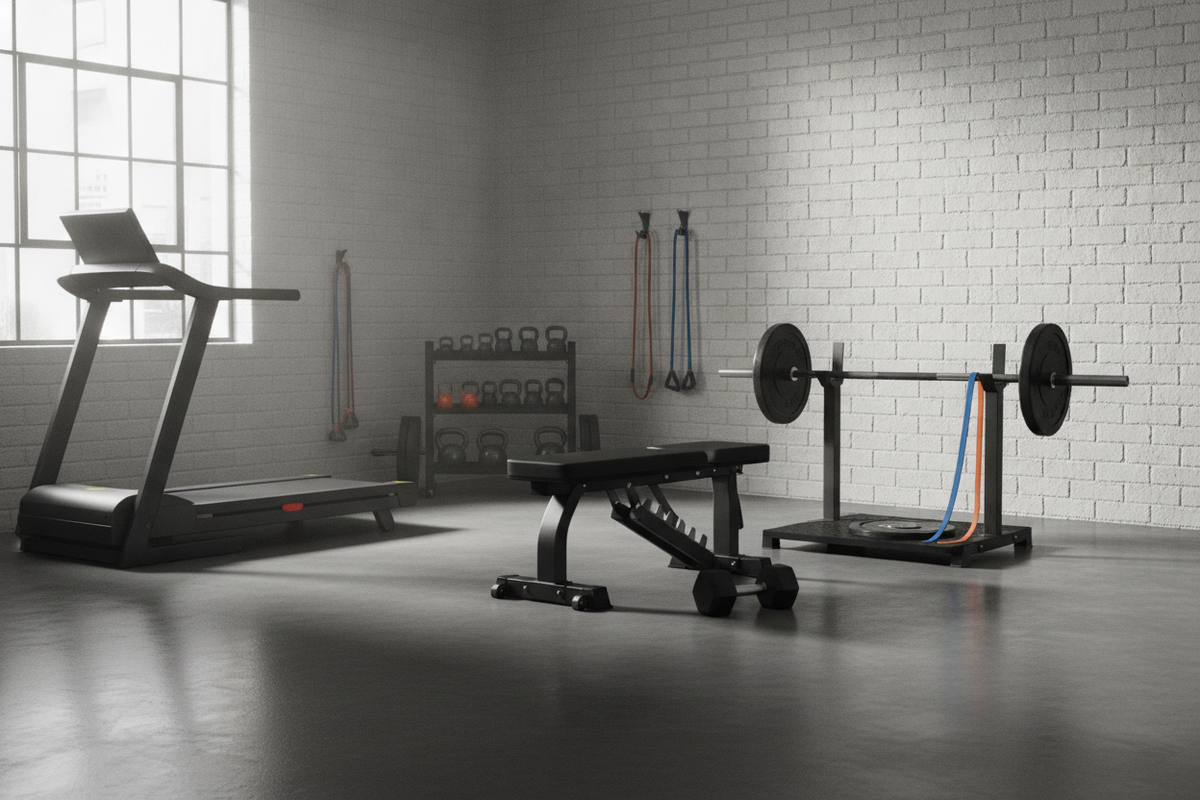
A frequently overlooked factor when attempting to get stronger today is the training surface beneath your feet. Heavy resistance training relies on ground reaction forces; a soft, uneven, or slippery floor saps power and destabilizes the kinetic chain.
- High-Density Traction: Residential carpeting and slippery hardwood floors create shifting footbeds that reduce stability during maximum efforts. High-density rubber mats provide a firm, non-compressible foundation that lets you root your feet securely without sinking.
- Subfloor and Joint Protection: Staging a dedicated exercise mat area cushions heavy dumbbell drops, protects delicate home flooring, and provides joint support during floor-based pressing and hinge work. Establishing a clean, dedicated zone using techniques from this stronger guide ensures your training space supports intense daily workouts.
- Multi-Planar Movement Area: Ensure your mat layout provides ample clearance in every direction. Unobstructed room allows you to transition smoothly between compound barbell setups, kettlebell carries, and unilateral split-stance movements without hesitating or stepping off the edge.
Common Setup and Execution Mistakes That Drain Strength
Even motivated lifters often introduce subtle errors into their routines that compromise strength output. Avoiding these common setup pitfalls will keep your power output consistent across every workout:
- Lifting on Inadequate Surfaces: Setting up on loose area rugs or squishy foam tiles leads to balance instability and wasted energy during heavy lifts.
- Rushing the Setup Phase: Approaching the bar without setting foot placement, establishing intra-abdominal pressure, or engaging the lats causes form breakdowns early in the set.
- Neglecting Mat Maintenance: Dust, chalk buildup, and sweat can reduce floor traction over time. Regularly cleaning your rubber flooring preserves the grip needed for solid balance and safe foot positioning.
- Overtraining to Failure: Chasing muscular exhaustion on every set accumulates fatigue faster than neural adaptations can occur, blunting your ability to express pure strength.
Conclusion: Building a Repeatable Foundation for Lifelong Power
The journey of getting stronger starting today does not require complicated workout splits or prolonged adaptation cycles. By taking command of active full-body tension, perfecting your ground contact, locking down core bracing, and training on a firm, supportive surface, you create the optimal environment for immediate strength expression. Treat each repetition as a deliberate skill, set up your home space with intention, and build a consistent physical foundation that serves your fitness goals for years to come.