Transforming Your Garage Into the Perfect Home Gym
That empty garage space holds more potential than just storing holiday decorations and old bicycles. For countless fitness enthusiasts, it represents the perfect canvas for creating a personalized workout sanctuary. The journey from cluttered storage to functional fitness space is more accessible than you might think, offering the ultimate convenience of having your gym just steps away from your living space.
Why Your Garage is the Ideal Fitness Space
Garages naturally provide several advantages that make them superior to spare bedrooms or basement corners for home gyms. The concrete flooring can handle heavy weights without structural concerns, while the open layout accommodates dynamic movements. Most garages have sufficient ceiling height for overhead presses, pull-ups, and even rope work. The separation from your main living area creates a mental boundary—when you step into your garage gym, you're there to work, minimizing household distractions.
Ventilation is another often-overlooked benefit. Unlike basements, garages typically offer easy access to fresh air through windows or by simply raising the garage door. This becomes particularly valuable during intense conditioning sessions when you need that extra oxygen flow. The ability to open up the space to the outdoors can transform your workout experience entirely.
Planning Your Garage Gym Layout
Before purchasing a single piece of equipment, take precise measurements of your available space. Account for not just floor space but also ceiling height and potential obstructions like water heaters or support beams. Create a simple floor plan that designates zones for different types of training: a strength area for barbell work, a cardio section, and perhaps a dedicated space for mobility or yoga.
Consider traffic flow within the space. You'll want clear pathways between equipment stations to move safely between exercises. If you plan to use your garage for vehicle parking as well, think about equipment that can be easily moved or stored vertically. Foldable racks, wall-mounted storage, and equipment with wheels can make dual-purpose garages completely feasible.
Essential Equipment for Every Budget
The foundation of any effective garage gym starts with the floor. Interlocking rubber tiles or horse stall mats provide crucial protection for both your equipment and the concrete beneath. These surfaces absorb impact, reduce noise, and create a safer training environment.
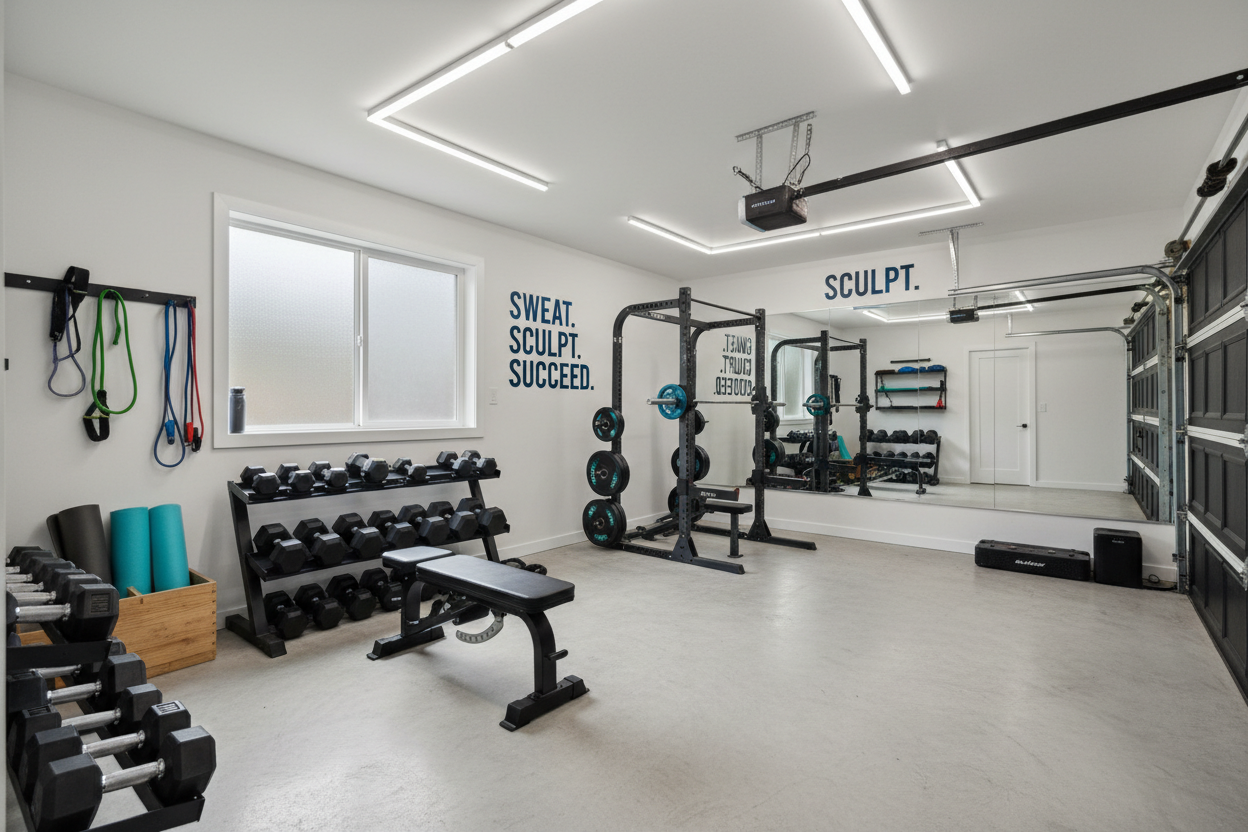
For strength training, a power rack or squat stand forms the centerpiece of most effective setups. This single piece of equipment enables squats, bench presses, pull-ups, and countless other exercises safely. Pair this with an Olympic barbell and weight plates, and you have the foundation for building serious strength.
Adjustable dumbbells offer remarkable versatility in a compact form, while kettlebells provide endless conditioning possibilities. For cardiovascular training, a simple jump rope delivers incredible value, while concepts like assault bikes or rowers represent larger investments that pay dividends in workout quality.
Creating an Effective Training Environment
Temperature control represents one of the biggest challenges for garage gyms. In colder climates, a small space heater can take the edge off winter workouts, while in hot climates, a quality fan becomes essential. Proper lighting transforms the space from a dim storage area to an inviting training environment. Bright LED shop lights are affordable and provide excellent illumination for early morning or evening sessions.
Music plays a crucial role in workout motivation. A simple Bluetooth speaker can connect to your phone or other devices, allowing you to curate the perfect soundtrack for your training. Mirrors, while not essential, can help with checking exercise form and make the space feel larger.
Maximizing Small Garage Spaces
Limited square footage doesn't mean limited training potential. The key to small garage gym success lies in vertical storage and multi-functional equipment. Wall-mounted racks for barbells, weight plates, and resistance bands keep floors clear while making equipment easily accessible. Pull-up bars that mount to wall studs require minimal space while delivering maximum value.
Consider a foldable weight bench that can be stored against the wall when not in use. Resistance bands offer incredible versatility in a compact form, while gymnastics rings can be hung from ceiling joists for a full-body training tool that stores easily. The strategic approach to small spaces often results in more creative and efficient workouts.
Learning From My Garage Gym Journey
When I first decided to convert half of my two-car garage, I made the common mistake of prioritizing quantity over quality. I filled the space with inexpensive equipment that quickly showed its limitations. The turning point came when I invested in a few key quality pieces: a solid power rack, professional-grade barbell, and proper flooring.
The single biggest improvement to my training experience wasn't a piece of equipment at all—it was organization. Installing a wall-mounted storage system transformed my workouts from frustrating searches for matching dumbbells to seamless transitions between exercises. I learned that planning for storage is as important as selecting the equipment itself.
Another valuable lesson came from understanding my local climate. My garage faces west, which meant afternoon summer workouts became unbearable until I installed proper ventilation. A simple ceiling fan and strategic use of the garage door during cooler hours made all the difference. During winter, I discovered that my barbell became uncomfortably cold until I started storing it inside the house between sessions.
Maintaining Your Garage Gym Sanctuary
Regular maintenance ensures your equipment remains safe and functional. Wipe down surfaces after each use to prevent sweat damage and check for signs of wear on bars and cables. Periodically inspect your flooring for shifting or damage that could create tripping hazards. Keeping your space organized not only makes workouts more efficient but also helps you notice when equipment needs attention.
Your garage gym should evolve with your fitness journey. As your goals change, so might your equipment needs. The flexibility to modify your space is one of the greatest advantages over commercial gym memberships. Whether you're training for strength, conditioning, or general health, your garage can be adapted to support your current objectives.
Transforming your garage into a functional home gym represents one of the most rewarding projects for any fitness enthusiast. The convenience, personalization, and long-term value create an environment where consistency becomes natural. With thoughtful planning and strategic equipment selection, you can create a space that supports your health goals for years to come.