Flat Belly Exercises at the Gym: The Truth About Core Training
If you have ever spent thirty minutes on a mat doing endless crunches while staring at the fluorescent ceiling lights, you already know the frustration. The truth is, building a strong, defined core requires more than just floor work. When you leverage commercial-grade equipment, your flat belly exercises at the gym become significantly more effective, allowing for progressive overload and deeper muscle engagement.
In this guide, we will break down exactly how to structure your core training, which machines actually provide a return on your time investment, and how to stop wasting energy on movements that do not move the needle.
Key Takeaways
- Ditch the endless high-rep crunches in favor of weighted, low-rep core movements.
- Compound lifts like heavy squats and deadlifts are the unsung heroes of a flat stomach gym workout.
- Cable machines and power towers offer superior constant tension compared to standard floor exercises.
- Diet and overall body fat percentage dictate abdominal visibility, while resistance training dictates muscle thickness and tone.
The Foundation of a Flat Stomach Gym Workout
Most gym-goers make the mistake of treating abs differently than other muscle groups. To build a toned midsection, you need to apply the same principles of resistance and progressive overload that you would to your chest or legs.
Compound Movements Over Isolation
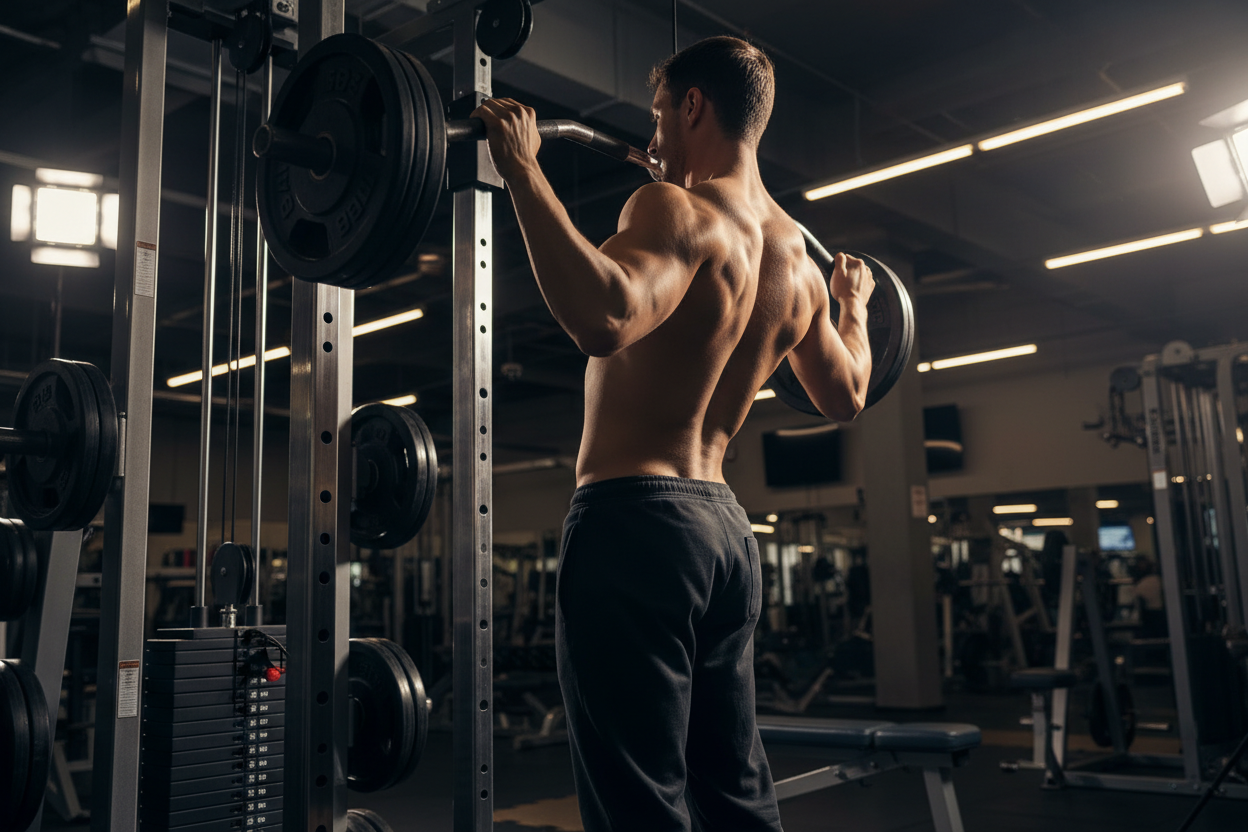
Before you even step foot near the ab machines, look at the free weight section. Heavy squats, overhead presses, and deadlifts require massive core stabilization. Integrating these into your routine acts as a full-body primer, making any specific flat stomach exercises at gym significantly more effective by pre-exhausting the stabilizing muscles.
Top Equipment-Based Core Movements
When you have access to a fully equipped facility, you should take advantage of the tools that provide constant tension. Here are the movements that actually deliver results.
The Cable Woodchopper
The cable machine is arguably the most versatile piece of equipment for core training. Cable woodchoppers target the obliques and the deep transverse abdominis. By adjusting the weight stack, you can easily track your progress. This is a premier gym exercise for flat tummy development because it trains the core to resist rotation—its primary biomechanical function.
Hanging Leg Raises on the Power Tower
The Captain's Chair or a standard pull-up bar allows for hanging leg raises. Unlike lying leg raises, hanging variations force your core to stabilize your entire body weight against gravity. It is a staple flat stomach workout at gym that targets the lower rectus abdominis while simultaneously building grip and lat strength.
Structuring Your Routine
Throwing a few sit-ups at the end of a workout is not a strategy. Intentional programming is what separates a mediocre midsection from a strong, functional core.
Frequency and Progressive Overload
Treat your core like any other muscle. Training it directly two to three times a week is optimal. Instead of doing fifty reps of a bodyweight movement, find flat stomach exercises gym setups that allow you to fail in the 10-to-15 rep range. Add weight to your kneeling cable crunches or hold a dumbbell between your feet during leg raises to force adaptation.
From Our Gym: Honest Take
We test a lot of equipment in our facility, from dedicated ab crunch machines to simple pull-up rigs. When I first started programming core work on our commercial half-rack, I noticed a massive difference just by switching my exercises from the floor to the bar. At 6'2", doing hanging leg raises required me to ensure our rack had at least 90 inches of height clearance—something most people forget to check when buying a home gym rack.
I also realized that dedicated seated ab machines, while popular, often locked my spine into a rigid, unnatural path. I got far better deep-core activation by simply attaching a triceps rope to the high pulley of our functional trainer and performing heavy kneeling cable crunches. The constant tension from the cables beats the jerky momentum of most seated ab machines every single time.
Frequently Asked Questions
Do I need machines for a flat stomach workout at gym?
No, dedicated ab machines are not strictly necessary, but cable pulleys and pull-up bars are highly beneficial. They allow you to easily add resistance and change angles, which accelerates muscle growth compared to bodyweight alone.
How often should I train abs at the gym?
Aim for 2 to 3 dedicated core sessions per week. Your abdominal muscles need 48 hours to recover, just like your chest or back. Quality, resistance, and full range of motion matter much more than daily frequency.
Can I spot-reduce belly fat with these exercises?
Unfortunately, no. While these exercises will build a thick, strong, and defined muscular foundation, revealing that flat belly requires a caloric deficit to reduce overall body fat.