Fastest Workouts Blueprint: 5 High-Density Training Structures, Transition Efficiency, and Home Floor Staging
The Anatomy of Fast Workouts: Training Density Over Session Length
Structuring an express fitness routine generally involves organizing movement patterns to make practical use of available minutes. Rather than hurrying through individual movement tempos or skipping foundational prep work, high-density routines focus on organizing work intervals efficiently. In general training principles, workout density describes structuring active work in relation to total session duration. By organizing stations intentionally and reducing idle gaps between movements, home exercisers can maintain engaging, productive sessions within limited timeframes.
A helpful approach for organizing time-efficient sessions involves alternating between non-competing muscle groups. Rotating between complementary movement patterns—such as pairing an overhead press with a pull-up, or a hinge pattern with a quadriceps-dominant squat—permits one area to rest while an alternate pattern performs work. This design helps minimize prolonged pauses while keeping movement quality consistent across sets. Consulting a comprehensive workout resource can assist in selecting balanced exercise combinations that suit short home training blocks.
The physical layout of the workout space also plays a direct role in session flow. Cluttered floors and scattered gear create avoidable friction points that take away from active movement time. Setting up a dedicated, unified floor space helps ensure smooth progression between standing exercises, seated core work, and prone positions without needing constant mat adjustments or equipment searches.
5 High-Density Workout Blueprints for Tight Schedules
Pre-planned structural frameworks help eliminate guesswork when workout time is constrained. The following five blueprint concepts organize functional movement patterns into straightforward sequences suitable for home training environments:
- Blueprint 1: The Antagonistic Upper-Body Push-Pull Complex — Alternate between horizontal pressing and horizontal pulling exercises, followed by vertical pressing and vertical pulling patterns. This alternating upper-body structure keeps movement continuous while distributing physical effort across complementary muscle groups. For additional upper-body layout ideas, reviewing a dedicated fast workout guide offers practical sequencing concepts for pressing variations.
- Blueprint 2: The Lower-Body Vector Compound Sequence — Cycle between knee-dominant squat movements and hip-hinge patterns, concluding each sequence with a brief isometric squat hold or glute bridge hold to maintain steady engagement without requiring complicated equipment setups.
- Blueprint 3: The Full-Body Unilateral Matrix — Move through single-leg split squats, single-arm rows, lateral lunges, and suitcase carries. Unilateral exercises encourage balanced side-to-side development and engage stabilizing muscles across dynamic movement planes.
- Blueprint 4: The Bodyweight Core and Dynamic Conditioning Flow — Connect plank variations, hollow body positions, mountain climbers, and bear crawls into a smooth rotational circuit on a stable mat surface, focusing on continuous core control and coordinated tempo.
- Blueprint 5: The Single-Implement Loaded Carry and Squat Ladder — Use a single dumbbell or kettlebell to move through goblet squats, offset carries, overhead holds, and suitcase deadlifts, keeping gear changes to a minimum throughout the sequence.
Movement Mechanics: Executing Rapid Transitions Without Form Breakdown
When training within condensed timeframes, maintaining deliberate posture and controlled movement execution remains essential. Moving quickly between exercise stations should never come at the expense of sound technique, controlled foot placement, or steady breathing cadence.
To follow a disciplined workout fast guide approach, focus on controlled deceleration during directional shifts. When transitioning from upright standing exercises down to mat-level drills, lower the body under control rather than dropping abruptly onto joints. A firm, supportive floor surface provides dependable traction and impact dampening, supporting smooth shifts into kneeling, seated, or prone exercises.
Steady breathing and conscious trunk bracing also support fluid transitions between stations. Taking controlled breaths during repositioning helps reset posture before initiating subsequent compound lifts or dynamic bodyweight sets.
Home Floor Staging: Eliminating Transition Friction and Protecting Surfaces
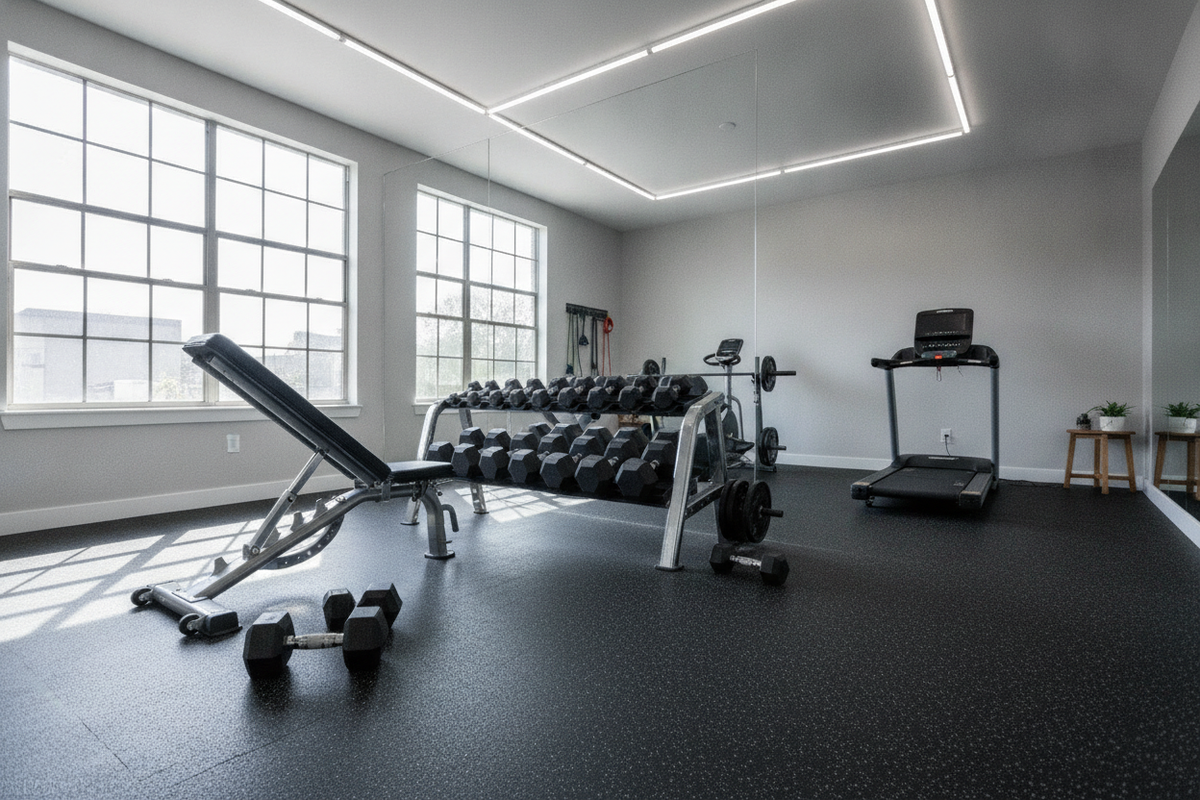
How a training room is organized directly affects pacing and convenience. An unorganized workout space often leads to wasted time spent hunting for weights or moving mats around. Pre-staging the workout floor helps ensure each exercise switch takes only a few seconds.
A versatile foundation for express home training is an expansive, high-density mat. Using a large-format workout product establishes a unified area where resistance equipment, bodyweight training, and post-session cool-downs can occur on a single stable surface. Dividing the mat area into dedicated functional zones helps streamline movement:
- Dynamic Movement Zone: A central open section reserved for footwork drills, dynamic mobility, and bodyweight exercises that benefits from a non-slip, stable texture.
- Loaded Implement Zone: A designated mat perimeter where dumbbells, kettlebells, or resistance bands remain organized and within arm's reach between sets.
- Ground-Based Recovery Zone: A clean, cushioned section set aside for floor core exercises, mobility work, and stretching.
High-density gym flooring also helps protect residential subfloors from routine equipment contact and reduces surface vibration, creating a clean and functional setup for compact home training.
Weekly Programming Integration: Balancing Intensity and Recovery
Incorporating express workouts into a sustainable weekly routine works best when structured with balance in mind. Rotating movement patterns across the week helps maintain consistent habits without overworking the same movement pathways on consecutive days.
A practical weekly plan might alternate between full-body density sessions and focused upper- or lower-body days, leaving adequate space between similar training patterns. Scheduling lower-intensity active mobility sessions or gentle mat-based stretching on alternate days supports overall movement quality and habit consistency.
Setting up equipment and floor space before beginning the timer further supports a seamless start, allowing lifters to maintain steady momentum from the first repetition through to the final stretch.