Exercises Moves Explained: Master Your Home Gym
Setting up a home gym is only half the battle; knowing exactly what to do with your gear is where the real results happen. If you have hit a plateau or feel lost staring at your new adjustable dumbbells, you aren't alone. Mastering the core exercises moves is the secret to unlocking your home gym's true potential.
Whether you are training in a cramped apartment corner or a fully decked-out two-car garage, we will break down exactly how to structure your training so you stop guessing, avoid injury, and start building real strength.
Key Takeaways
- Focusing on foundational compound lifts yields the best ROI for your time and equipment investment.
- Adapting specific exercise workout moves to your available space is critical for garage and basement gym setups.
- Quality over quantity: mastering a few key fitness moves prevents joint strain and ensures progressive overload.
- Your equipment dictates your variations, but the core movement patterns always remain the same.
Foundational Workout Movement Patterns
Before you buy another specialized attachment or cardio machine, you need to ensure your routine covers the basics. Every effective workout movement falls into a few primary categories. By building your home gym around these patterns, you save money and maximize results.
The Core Five
Human biomechanics are relatively simple. Your routine should include a push (bench press, overhead press), a pull (rows, pull-ups), a squat (goblet or barbell), a hinge (deadlifts, kettlebell swings), and a loaded carry. When planning your workouts moves, checking off these five boxes guarantees a balanced physique and prevents overtraining one specific muscle group.
Adapting for Limited Space
Not everyone has room for a commercial-grade functional trainer. Learning proper exercising moves early on allows you to swap equipment seamlessly based on your square footage. If you lack the ceiling height for standing overhead presses, seated dumbbell variations or barbell Z-presses are perfect alternatives that require significantly less vertical clearance.
Matching Equipment to Your Routine
Your gear should serve your training style, not the other way around. Here is how to pair your home gym setup with the right movements.
Dumbbells and Kettlebells
If you are working with adjustable dumbbells or a few kettlebells, unilateral (single-arm or single-leg) training is your best friend. Bulgarian split squats and single-arm rows require less total weight to challenge the muscle, making them ideal for budget or space-constrained setups.
Power Racks and Barbells
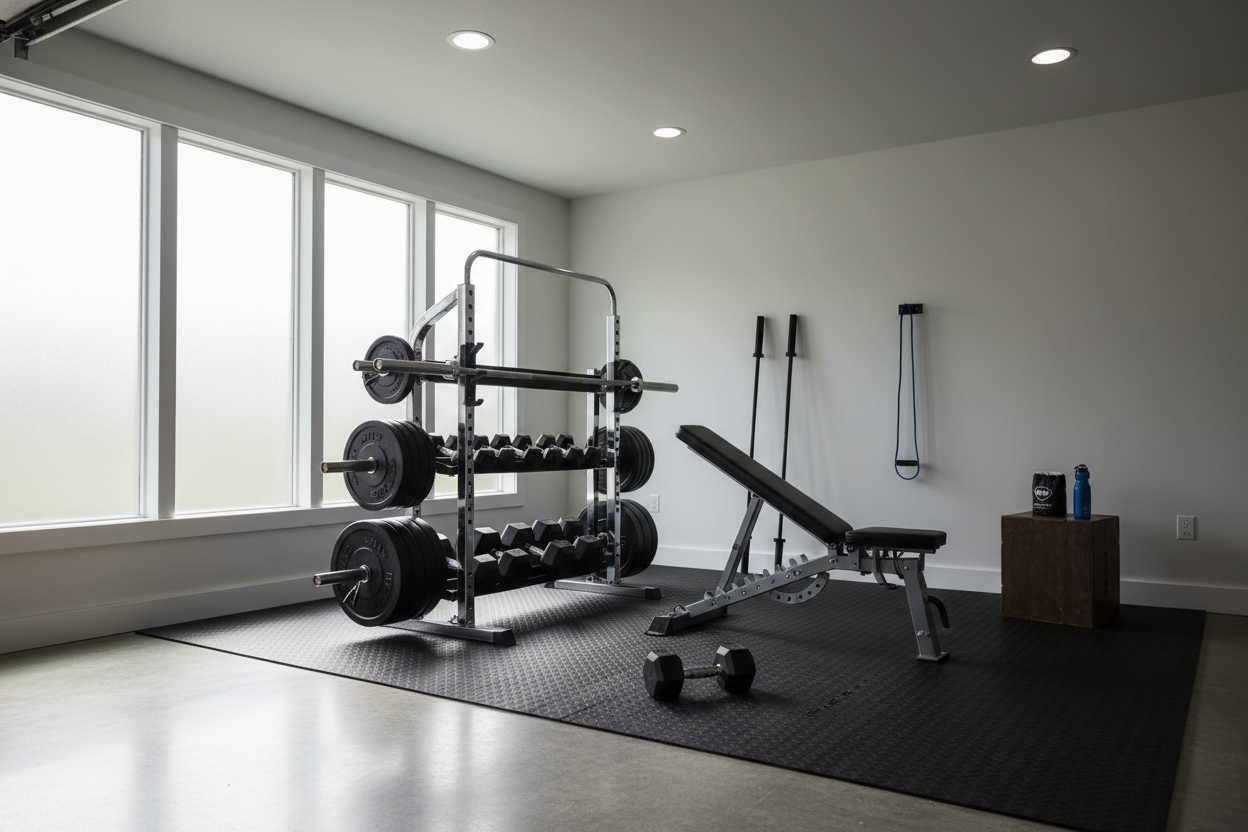
For those with a dedicated rack, heavy bilateral lifts are the priority. A quality power rack allows you to safely execute heavy squats and bench presses without a spotter. Always check the weight capacity and J-cup quality before investing, as these components take the brunt of the wear and tear during heavy lifting.
From Our Gym: Honest Take
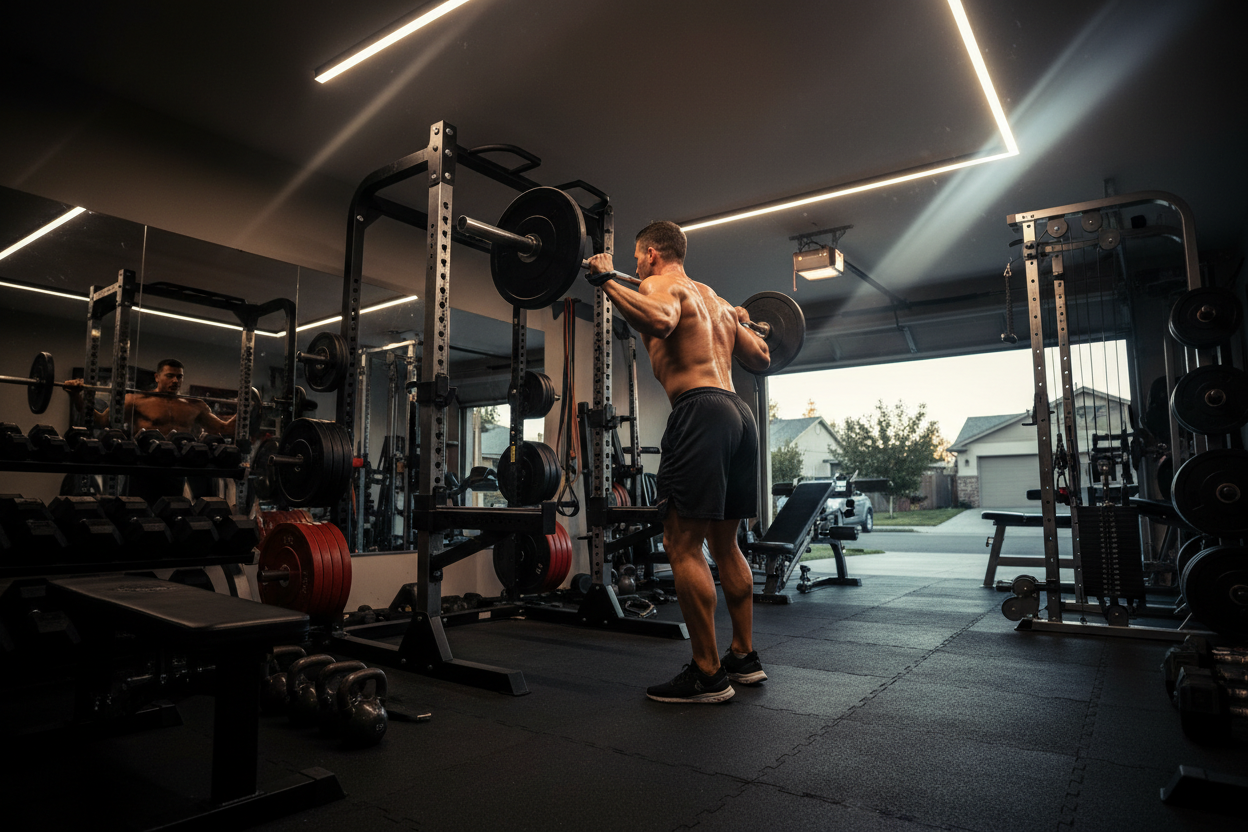
When I first set up my garage gym, I tried to replicate every isolation machine from my old commercial facility. It was a cluttered, expensive disaster. I quickly realized that focusing on a few foundational exercises moves with a high-quality barbell and rack was far more effective.
Here is a specific detail most product pages will not tell you: at 6'2, I needed at least 48 inches of clearance above my rack for standing overhead presses. I had to learn that the hard way after scraping my ceiling drywall with my bumper plates. Now, I program my workouts around basic barbell math and my available ceiling height, and it has completely transformed my training consistency.
Frequently Asked Questions
How many exercises moves should I do per workout?
For most home gym owners, 4 to 6 movements per session is the sweet spot. Start with a heavy compound lift, follow up with 2 to 3 accessory movements, and finish with core or conditioning work.
Can I build muscle with just bodyweight fitness moves?
Yes, you can build a solid foundation with calisthenics. However, as you get stronger, investing in resistance equipment like a weighted vest, dumbbells, or a barbell becomes necessary to achieve progressive overload.
How much space do I need for a full-body routine?
An 8x8 foot space is generally enough to accommodate a standard power rack, an adjustable bench, and enough floor space for deadlifts. Always measure your ceiling height before buying a rack to ensure you can perform overhead lifts!