Exercises From Home: The Static-to-Dynamic Beginner Guide
I remember sitting on the edge of my coffee table, staring at a 10-minute high-intensity workout video, feeling completely defeated before I even started. As a personal trainer, I see this constantly. Clients want to start working out in their cramped apartments or spare bedrooms, but standard routines leave their knees aching and lungs burning after just two minutes. You do not need to jump around to get fit. If you are looking for effective exercises from home, the secret is slowing down. We are going to use a 'Static-to-Dynamic' approach to build your strength safely.
Quick Takeaways
- Start with isometric holds to build joint stability without pain.
- Transition to dynamic movements only after mastering the static positions.
- A supportive, high-traction floor is your most important piece of equipment.
- Keep your initial workouts under 25 minutes to prevent burnout.
Why Most Beginners Struggle With Bodyweight Training
Most people fail their new workout for at home because they try to do too much, too fast. Jumping straight into standard dynamic movements like full push-ups, deep squats, or lunges often leads to joint pain and frustration. Your nervous system simply has not mapped out those movement patterns yet.
When you lack neuromuscular control, your joints take the brunt of the force instead of your muscles. This is why a basic fitness routine at home needs to start from a place of stability. Waking up dormant muscles requires tension, not necessarily movement. By removing the dynamic phase initially, you eliminate the friction of poor form and reduce the risk of injury.
The Static-to-Dynamic Strategy Explained
The static-to-dynamic methodology is exactly what it sounds like. We start by holding static, or isometric, positions to safely wake up your muscles before adding any movement. Think of it as turning on the power supply before trying to run a heavy machine. When you hold a position, your brain builds a strong connection to the targeted muscle group.
This is the foundation of all effective fitness routines for beginners at home. Once you can hold a position with perfect alignment for 30 to 45 seconds, your body is ready to handle motion. Mastering simple at home exercises this way guarantees that when you finally do move, your muscles are doing the work, not your ligaments.
It transforms a frustrating experience into the best exercise at home because you actually feel the right muscles burning. You build confidence alongside physical strength, proving to yourself that your body is capable of handling resistance.
Creating Your Foundation: Space and Surface
Before you drop into your first plank, you need to assess your floor. Trying to hold static positions on slippery hardwood or plush living room carpet is a recipe for rolled wrists and tweaked lower backs. A stable floor is required for proper joint alignment.
For your easy workout home routine, clear a designated area that gives you at least a 6x6 foot clearance. I always tell my clients to invest in a dedicated large exercise mat for home gym setups. It protects your joints from hard subfloors while providing the grip needed to hold isometric tension without sliding.
When you progress from static planks to dynamic lateral movements, a 6x8ft exercise mat offers the perfect size footprint. It defines your workout space, dampens the noise for your downstairs neighbors, and ensures your simple work out stays safe and grounded.
Phase 1: The Isometric Baseline Routine
This basic home workout routine for beginners consists entirely of static holds. Before starting, I highly recommend running through a quick stretching workout at home to open up your hips and shoulders.
Once you are warm, we move to the holds. First is the Wall Sit. Press your back flat against a wall, slide down until your thighs are parallel to the floor, and hold for 30 seconds. This easy at home exercise fires up your quads and glutes without stressing your knees.
Next, perform an Incline Plank. Place your hands on a sturdy chair or couch, keep your body in a straight line, and brace your core for 30 seconds. Finally, do a Glute Bridge Hold. Lie on your back, push your hips to the ceiling, and squeeze your glutes for 30 seconds.
Run through this routine of exercise at home three times. It sounds incredibly basic, but if you focus on squeezing the target muscles, you will be sweating by the end of the third round.
Phase 2: Transitioning to Dynamic Movement
After two weeks of mastering the isometric baseline, your joints are prepared for motion. Now we convert those static holds into easy workout exercises at home.
The Wall Sit becomes a standard bodyweight squat. Step away from the wall, push your hips back, and lower yourself with the exact same muscle tension you built during the static hold. Aim for 3 sets of 10 smooth reps. The Incline Plank transitions into an incline push-up. Slowly lower your chest to the chair and press back up. This basic exercise to do at home builds upper body strength without the shoulder impingement common in floor push-ups.
Finally, turn the Glute Bridge Hold into dynamic glute bridge repetitions. Lower your hips to an inch above the floor and drive back up. These simple workout exercises at home bridge the gap between zero activity and full-fledged calisthenics.
Advancing Your Routine: When to Add Equipment
Bodyweight mastery is crucial, but eventually, you will need external resistance to keep progressing. How do you know when you are ready? If you can perform 3 sets of 15 strict bodyweight squats and 15 incline push-ups without your form breaking down, it is time to upgrade your daily home exercises.
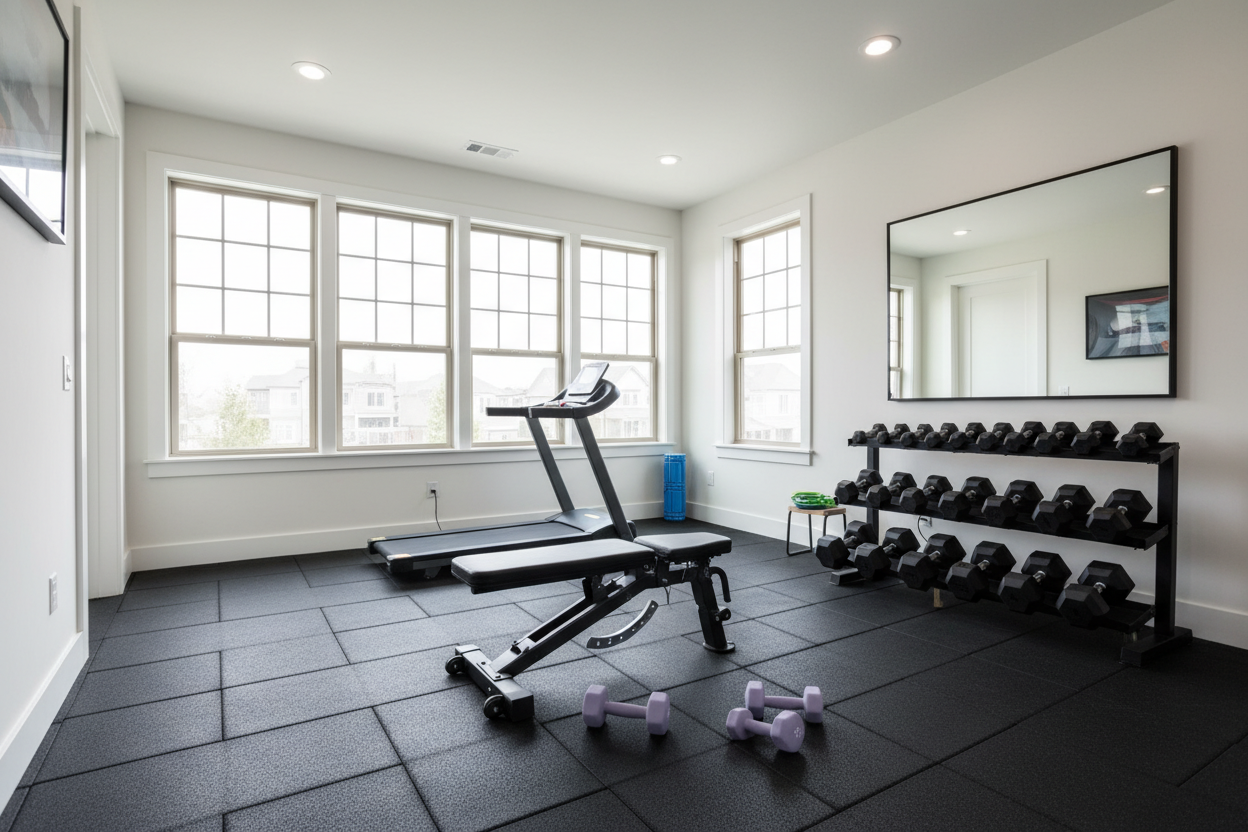
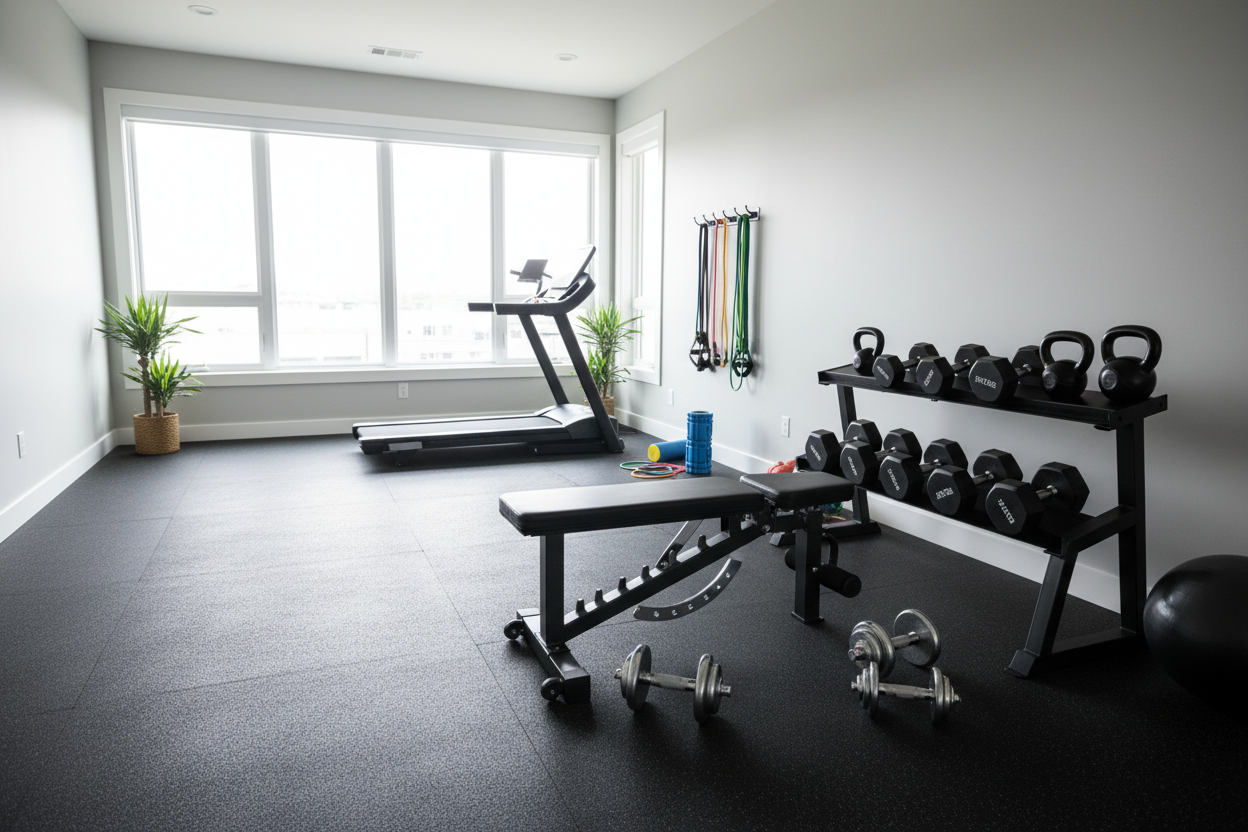
Adding equipment does not mean you need a massive cable tower. A simple pair of adjustable dumbbells ranging from 5 to 52.5 lbs can easily fit into a closet. For those who have graduated from bodyweight movements and want to invest in hardware, exploring at home exercise machines can provide structured resistance.
Integrating light weights into your good workout routines for beginners at home ensures continuous muscle adaptation.
Your Simple Weekly Schedule
Consistency beats intensity every single time. You do not need to train seven days a week. In fact, doing so will likely lead to burnout. Here is how to structure your simple exercise routines to do at home.
Work out on Monday, Wednesday, and Friday. Keep Tuesday and Thursday reserved for light walking or gentle mobility work. On your training days, spend 5 minutes warming up, 15 minutes executing your static holds or dynamic movements, and 5 minutes cooling down.
This 25-minute daily exercise routine for beginners at home is highly effective and completely sustainable. Over time, this rhythm becomes a non-negotiable habit.
Personal Experience: Testing the Static-to-Dynamic Method
I have tested dozens of workout protocols on myself and my clients. When I tested this static-to-dynamic approach using a heavy-duty 8x8 foot mat in my own garage gym, the results were undeniable. Clients who previously complained of knee pain during squats were suddenly executing perfect reps after just three weeks of wall sits. The one honest downside? It can feel a bit boring at first. Holding a plank for 45 seconds lacks the adrenaline rush of a high-intensity interval class. But that temporary boredom is a fair trade for pain-free joints and long-term progress.
Frequently Asked Questions
How long should I stick to static holds before moving?
I recommend a minimum of two weeks. Once you can hold all positions for 45 seconds without shaking or losing form, you are ready for dynamic movements.
Do I need to wear shoes for these exercises?
If you are working out on a high-quality, thick exercise mat, barefoot or grip socks are perfectly fine and actually help strengthen your feet. On hard floors, wear supportive trainers.
What if the wall sit hurts my knees?
Slide slightly higher up the wall. You do not need to be at a perfect 90-degree angle to reap the benefits. Find a height where your muscles burn but your joints feel fine.