Beginner Fitness Plans: Why Soreness is a Red Flag
I vividly remember a client, Sarah, who came to me after trying three different online programs. Every single time, she would crush day one, wake up the next morning unable to walk down her stairs without wincing, and quit by day four. It breaks my heart because this cycle is entirely preventable. When you are just starting out, beginner fitness plans should never leave you feeling crushed, broken, or exhausted. In fact, if you feel debilitatingly sore the next day, you went too hard.
As a personal trainer who has built and tested dozens of home gym setups for clients, I see the same mistake constantly. People assume that sweat and pain are the only indicators of a successful session. But when you are building a new habit from scratch, your primary goal is consistency, not intensity. You need a routine that leaves you feeling energized so you actually want to do it again tomorrow.
Quick Takeaways for Pain-Free Training
- Stop every set with 3 to 4 reps still in the tank (RPE 6-7).
- Focus on neurological adaptation, not muscle damage.
- Invest in proper flooring to eliminate joint pain during floor work.
- Train daily, but keep sessions under 20 minutes to build the habit.
- Never train to failure during your first six weeks.
The Biggest Trap in Early Fitness Training
The 'no pain, no gain' mantra is the absolute worst advice ever given to new trainees. When looking at working out plans for beginners, almost all of them push for exhaustion right out of the gate. You are instructed to do three sets of fifteen squats until your legs shake, or push-ups until you collapse on the floor. Why? Because old-school bodybuilding culture convinced trainers that sweat and fatigue equal value. But chasing exhaustion is the fastest way to guarantee you will quit.
When you start workout regimens for beginners, your goal is not to build massive, tearing muscle fibers in week one. Your goal is simply to not hate week two. Heavy fatigue creates a massive recovery debt that a beginner's body is not equipped to handle. Your tendons, ligaments, and central nervous system need time to adapt to new loads.
If you jump into a workout planner for beginners that treats you like an advanced athlete, your body responds with systemic inflammation. You feel lethargic, your appetite fluctuates wildly, and your sleep quality plummets. This is why a simple workout plan for beginners must be intentionally dialed back. You are laying a foundation, not trying to build the entire house in a single afternoon.
What Are Zero-Soreness Beginner Fitness Plans?
So, what makes good workout programs for beginners actually stick? The answer lies in the zero-soreness protocol. This approach relies heavily on sub-maximal training. Instead of trying to break your muscles down, you are simply teaching your brain and nervous system how to fire muscle fibers efficiently. This process is called neuromuscular adaptation.
You absolutely do not need to tear muscle fibers to trigger this adaptation. I always tell my new clients to find a workout routine at home for beginners that focuses purely on movement habituation. You want to finish your 15 or 20-minute session feeling more activated and mobile than when you started.
Think of it like learning to play the piano. You wouldn't practice until your fingers bled on the first day. You would practice the scales for twenty minutes, build the motor pathways, and come back fresh the next day. Workouts for starters should be treated the exact same way. By keeping the intensity low, you can practice the movements more frequently. This high-frequency, low-intensity approach cements the habit faster than doing one brutal, hour-long session a week.
The Psychology of Quitting and DOMS
Let's talk about the actual biology of Delayed Onset Muscle Soreness (DOMS). When you dive headfirst into intense exercise regimens for beginners, DOMS usually hits its peak 24 to 48 hours later. Neurologically, your brain is highly protective. When it registers that severe, lingering discomfort, it immediately associates the workout with physical trauma.
You are literally wiring your brain to view your simple workout routines as a punishment. Subconscious resistance starts to build up almost immediately. Suddenly, you find yourself making excuses. You 'don't have time' to train today, or you feel 'too stressed' to hit the gym. This isn't laziness; it is your central nervous system trying to protect you from perceived harm.
By utilizing a good beginner workout schedule that avoids DOMS, you bypass this psychological resistance entirely. When your basic workout routine for beginners feels like a light, invigorating stretching and activation session, your brain begins to crave it. It becomes a stress-reliever rather than a stress-inducer.
Structuring Your Pain-Free Workout Beginner Plan
To build a proper workout beginner plan, you need to understand the Rate of Perceived Exertion (RPE) scale. It runs from 1 to 10. A 10 means absolute failure—you couldn't do another rep if your life depended on it. An 8 means you have about two reps left in the tank.
For the first four to six weeks of any simple workout regimen, you should never exceed an RPE of 6 or 7. That means stopping every single set when you know you could easily crank out 3 or 4 more reps with perfect form. For example, if you are lifting a 15 lb dumbbell and you know you could do 12 reps before failing, you deliberately stop at 8.
This restraint is the secret sauce of a successful workout routine starting out. It keeps your heart rate manageable, prevents form breakdown, and ensures you wake up the next day feeling completely normal. If you need help visualizing these specific movements without pushing yourself to failure, I highly recommend checking out a dedicated beginner workout hub to get your form dialed in first before adding any heavy resistance.
Creating a Frictionless Training Environment
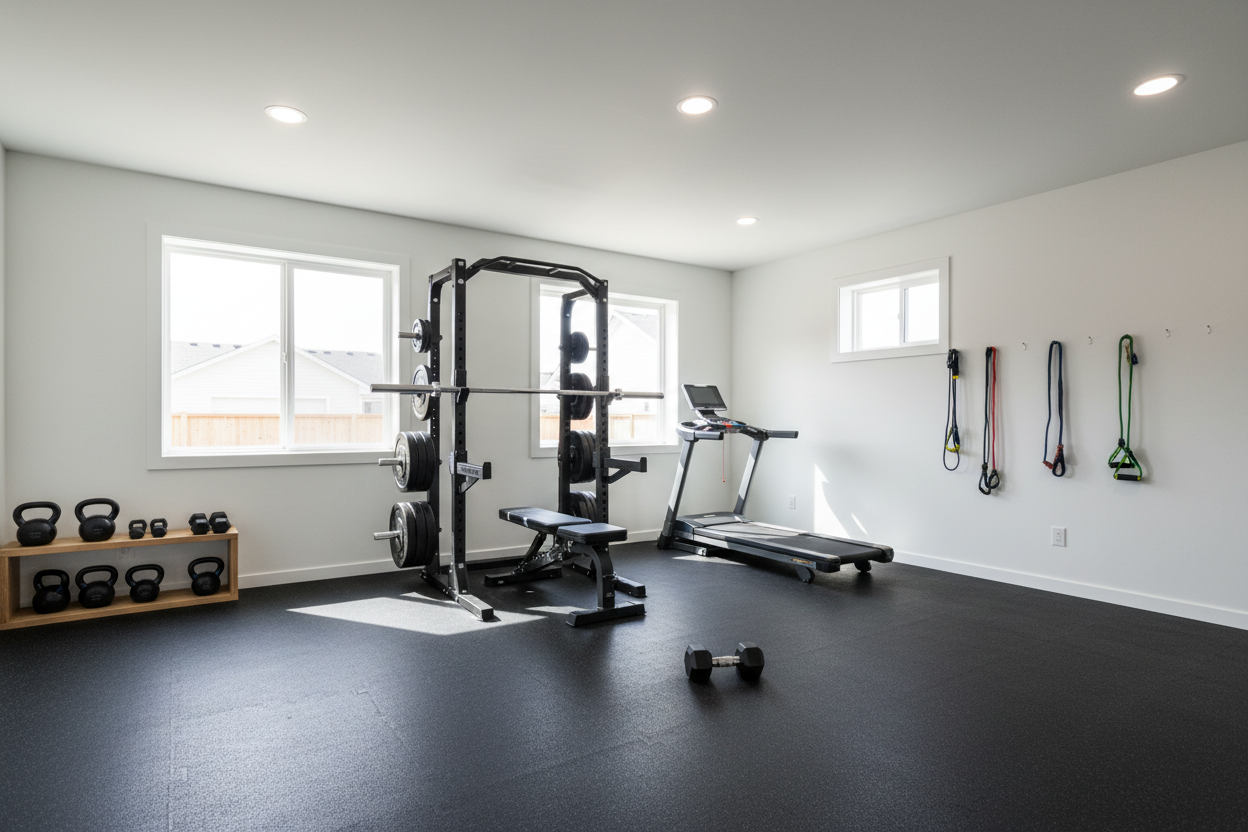
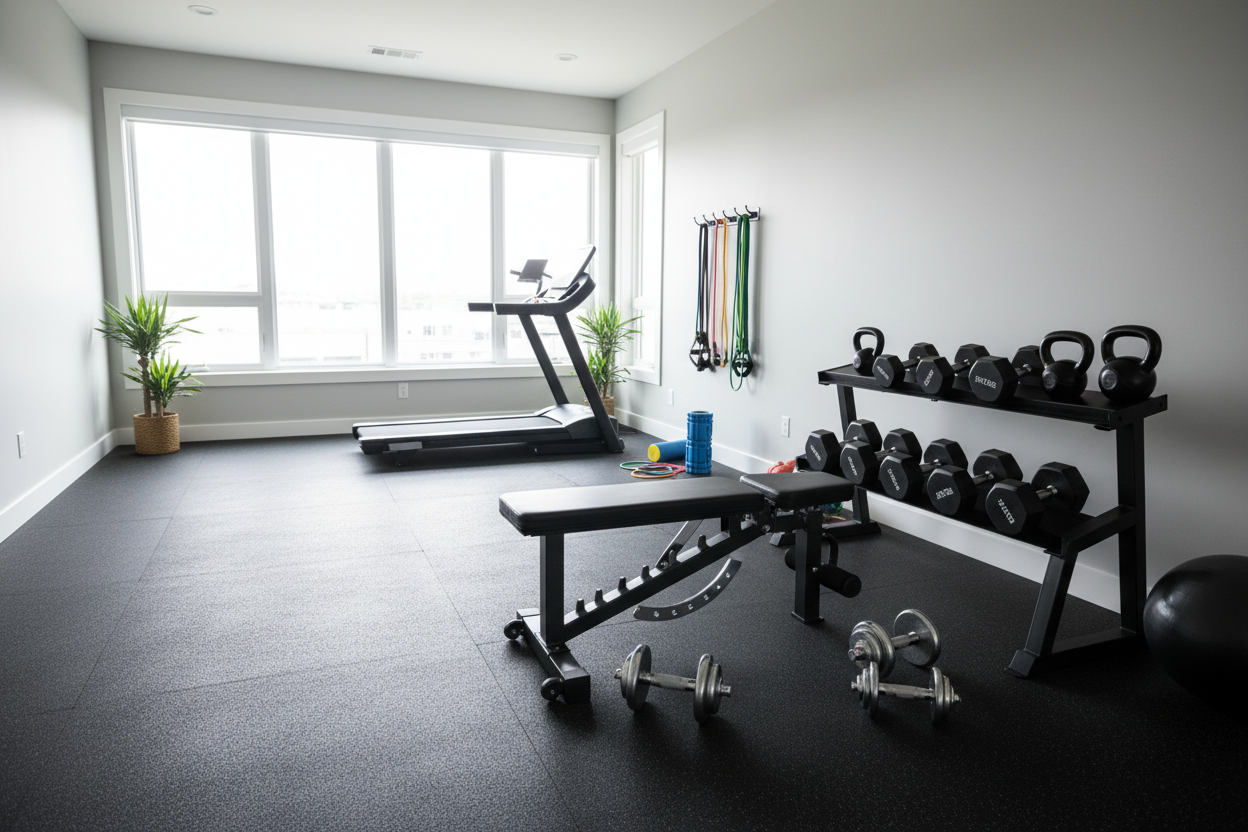
As a trainer who has built everything from cramped apartment setups to massive garage gyms, I can confidently say that physical comfort dictates consistency. When doing basic beginner workouts, you shouldn't feel your kneecaps grinding into cold concrete or hardwood floors. People constantly mistake sharp joint pain for muscle fatigue, which instantly ruins a simple beginners workout.
I recently tested a highly rated large home gym exercise mat in a client's tiny 6x6 foot spare room. The 7mm thickness completely eliminated her wrist and knee pain during bird-dogs, planks, and kneeling push-ups. We even dropped a 50 lb adjustable dumbbell on it from knee height, and the floor underneath was perfectly protected. My one honest downside with thick, high-density mats? They can make balancing on one leg feel slightly mushy, so I recommend doing your single-leg deadlifts on the bare floor for better foot stability.
A Daily Beginner Workout Schedule (Example)
Here is a concrete, easy to follow workout plan utilizing the zero-soreness rule. It is designed to take about 15 to 20 minutes, requiring minimal equipment. Perform this daily beginner workout schedule 4 to 5 times a week.
- Bodyweight Glute Bridges: 2 sets of 10 reps. Squeeze at the top, but stop while it still feels effortless.
- Incline Push-ups: 2 sets of 8 reps. Place your hands on a kitchen counter or sturdy chair to reduce the load.
- Assisted Bodyweight Squats: 2 sets of 8 reps. Hold onto a doorway or heavy table for balance, going only as deep as your mobility allows comfortably.
- Dumbbell Rows: 2 sets of 8 reps per arm using a light 10 lb weight.
- Dead Bugs: 2 sets of 10 reps per side to gently activate the core.
Rest for 60 seconds between every set. This basic workout routine for beginners leaves you fresh and mobile. If you prefer to use machines instead of free weights, you can easily apply this exact same RPE 6 philosophy to a workout plan for beginners at gym, keeping the weight light and the reps manageable.
When to Finally Push for Fatigue
So, when do you finally transition from a basic starter workout to intermediate training? I usually tell my clients to wait until around week six. By then, the daily routine is cemented. You put your gym shoes on automatically without debating it in your head. More importantly, your joints, tendons, and ligaments have physically adapted to bearing a load.
That is the precise moment when you can start pushing your best workout plans for beginners into the RPE 8 or 9 territory. You can start leaving only 1 or 2 reps in the tank, intentionally seeking that muscle fatigue to trigger hypertrophy (muscle growth). Because you spent six weeks building an unbreakable habit and a pain-free foundation, the eventual introduction of muscle soreness won't derail your progress—it will just feel like the next logical step.
What is a good beginner exercise routine?
A good routine focuses on fundamental movement patterns like the squat, hinge, push, and pull. It uses light resistance and stops well short of muscle failure, prioritizing perfect form and habit building over sheer exhaustion.
How often should I do a basic exercise routine for beginners?
If you strictly follow the zero-soreness rule and keep the intensity low, you can safely train 4 to 6 days a week. Because you aren't accumulating heavy muscle damage, your body doesn't require 48 hours of deep recovery between sessions.
Are very beginner workouts effective for weight loss?
Yes, but indirectly. Sub-maximal workouts build your metabolic engine and establish the daily habit required to sustain long-term energy expenditure. They keep you moving consistently, while your nutrition and diet will handle the primary drivers of weight loss.