Exercise in Gym Environments: A Trainer's Guide
I still remember the frantic text I received from a client last year. He was standing just inside the turnstiles of a massive commercial facility at 5:30 PM on a Monday, completely frozen. People were slamming 45-pound plates, fighting over cable attachments, and grunting through heavy sets. He asked me, "Where do I even start?" As a personal trainer who builds custom home gyms for a living, I actually encourage my clients to start their fitness habit in these chaotic commercial spaces. Navigating exercise in gym environments helps you learn what equipment you actually like before dropping thousands of dollars on a personal setup.
Before you build your own sanctuary, you need to learn the ropes. The noise, the crowds, and the endless rows of iron can feel paralyzing, but with a solid plan, you can tune out the distractions and get to work.
- Stick to fundamental movement patterns (squat, hinge, push, pull) instead of flashy machines.
- Track your numbers to avoid decision fatigue and wandering aimlessly on the floor.
- Use commercial facilities to test-drive equipment styles before buying your own gear.
- Keep your routine simple: an alternating two-day split is enough for 90% of beginners.
The Overwhelm of Your First Gymnasium Workout
Stepping onto the floor for your first gymnasium workout is incredibly intimidating. You are surrounded by hundreds of identical-looking machines with confusing diagrams and tangled pulleys. It is completely normal to feel a massive spike in anxiety when you just want a simple workout in a gym but feel like every regular member is watching your every move.
Most beginners cope with this anxiety by walking straight to the treadmill. They spend 45 minutes walking at a steep incline, staring longingly at the weight room, too nervous to cross the invisible barrier. But using a commercial gym to exercise strictly on cardio equipment is a massive waste of your monthly membership fee and your body's potential.
The trick to overcoming this fear is having a concrete plan. When you know exactly what you are doing, the background noise fades away. You stop worrying about the powerlifter chalking up for a 405-pound deadlift and focus entirely on your own fitness exercise in gym spaces. I tell my clients to put their headphones in, pull their hats down low, and treat the space like a laboratory. You are here to experiment, learn your body's mechanics, and figure out what a good gym workout exercise actually feels like.
What Should I Do at the Gym? Sticking to the Basics
The most common question I get from beginners is, "what should I do at the gym?" It sounds like a simple question, but the fitness industry has overcomplicated the answer to sell programs. You do not need to do unilateral bosu-ball squats or complex cable crossovers. You need to stick to the absolute basics.
When deciding what to workout at the gym, focus heavily on compound movements. These are exercises that work multiple muscle groups at once. Think of the big functional patterns: pushing, pulling, squatting, and hinging. If you can hit these four foundational patterns during your gym workouts, you are already doing better than half the people wandering the floor.
I see a lot of decision fatigue in crowded commercial spaces. It is incredibly similar to the programming struggles people face at home when trying to figure out what workout to do with limited equipment. The solution in both environments is restriction. You must limit your options to force action.
Pick one barbell or dumbbell variation for your lower body, one pushing movement for your upper body, and one pulling movement. That is it. Do not wander around testing every machine with an open seat. What workout should I do at the gym? The one you can memorize and execute with confidence. When you restrict your choices, you eliminate the hesitation that keeps you hovering around the water fountain, pretending to check your phone.
Effective Gym Exercises to Build Your Foundation
Let us get specific about the exercises to do at the gym. Over the years, I have tested hundreds of routines, and the most effective gym exercises always come back to free weights. Machines force your body into fixed paths, but free weights require you to stabilize the load, building better functional strength and joint health.
Here are a few gym exercise examples that should form the core of your routine:
Goblet Squats: Grab a single dumbbell (start with 15 to 25 pounds) and hold it vertically against your chest. Squat down until your elbows touch the inside of your knees. This is one of the best in gym exercises for learning proper depth while keeping your torso upright.
Dumbbell Bench Press: Lie flat on a bench and press two dumbbells straight up. I always recommend testing different benches at your commercial facility. I once tested a highly-rated commercial adjustable bench that felt incredibly sturdy and boasted a 1,000-pound weight capacity, but the gap between the seat and back pad was a massive two inches wide. It pinched my lower back terribly on heavy sets. Testing gear like this helps you learn what to avoid later.
Seated Cable Rows: This is a phenomenal pulling movement. Keep your chest tall and pull the handle to your belly button. It is a staple workout exercise at gym facilities because it builds the upper back strength needed for good posture.
Dumbbell Romanian Deadlifts: Hold two dumbbells in front of your thighs and push your hips backward until you feel a deep stretch in your hamstrings.
If you are looking up a quick jim exercise online, you will likely find endless variations of these four movements. Pick the ones that feel best on your joints. These are the things to work out at the gym that will actually change your physique and build a resilient body.
Structuring the Perfect Workout to Do at Gym Facilities
Knowing the movements is only half the battle. You also need to know how to organize them into a cohesive workout to do at gym spaces. Without a rigid structure, you will end up doing three sets of biceps curls, some half-hearted crunches, and calling it a day.
To maximize your time, I recommend a simple A/B split. This means you have two different full-body workouts (Workout A and Workout B) that you alternate every time you train. If you train three days a week (Monday, Wednesday, Friday), week one would look like A-B-A, and week two would be B-A-B.
When deciding what exercises to do at the gym for Workout A, you might choose the Goblet Squat, Dumbbell Bench Press, and a Lat Pulldown. For Workout B, you could swap those for the Romanian Deadlift, Overhead Dumbbell Press, and Seated Cable Row. This alternating method provides great workout ideas at gym facilities because it hits every muscle group frequently without burning out your central nervous system.
This exact structure is what I use for my clients who train at home. In fact, learning how to run a two-day alternating home gym setup while you are still at a commercial facility is the smartest move you can make. It teaches you how to program your at the gym workouts efficiently before you ever buy a single piece of equipment.
Keep your rep ranges simple. Aim for 3 sets of 8 to 12 repetitions for each movement. Rest for 60 to 90 seconds between sets. This straightforward approach removes the guesswork of what gym workouts should I do and ensures you are applying progressive overload—the true driver of muscle growth.
From Commercial Facility to Your Future Home Gym
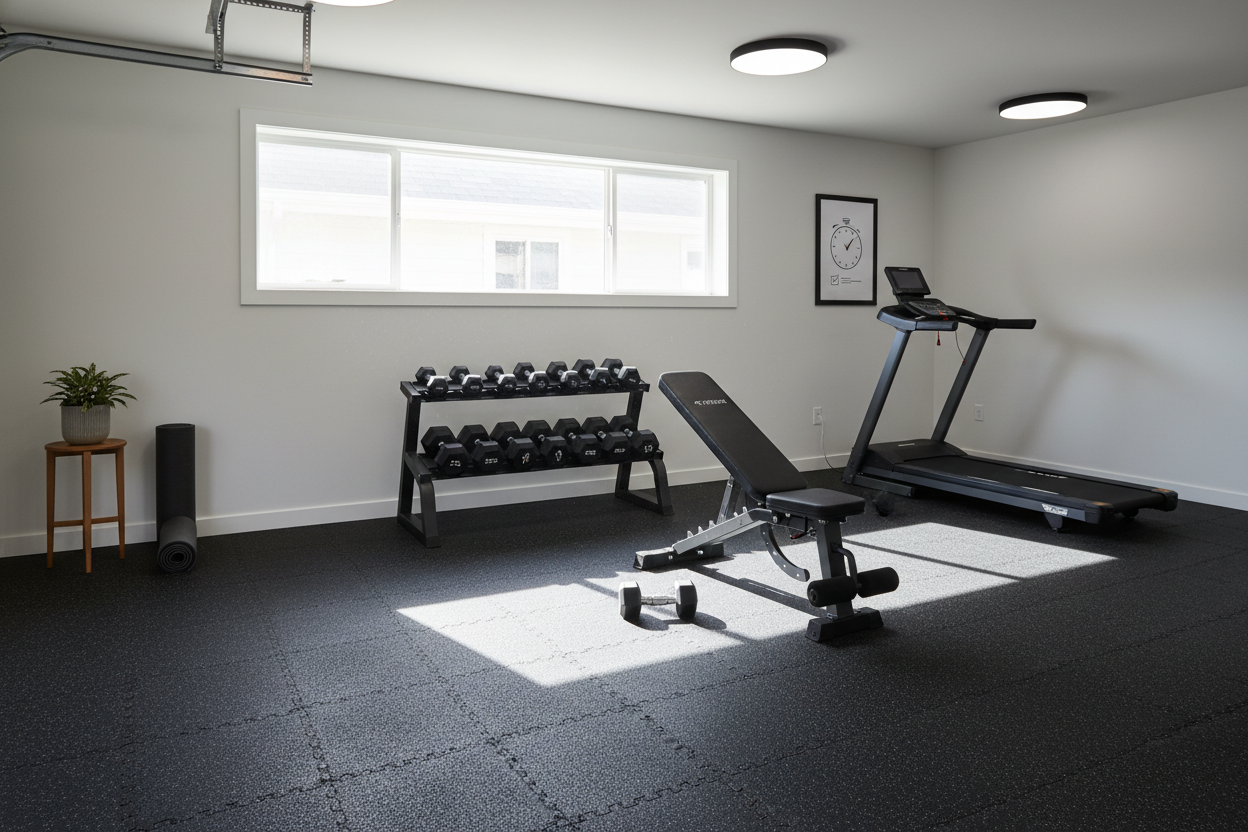
Eventually, the 20-minute commute, the January crowds, and the waiting for equipment will start to wear on you. That is usually when my clients call me to build their home gym. But the time they spent learning proper gym techniques in a commercial setting is never wasted.
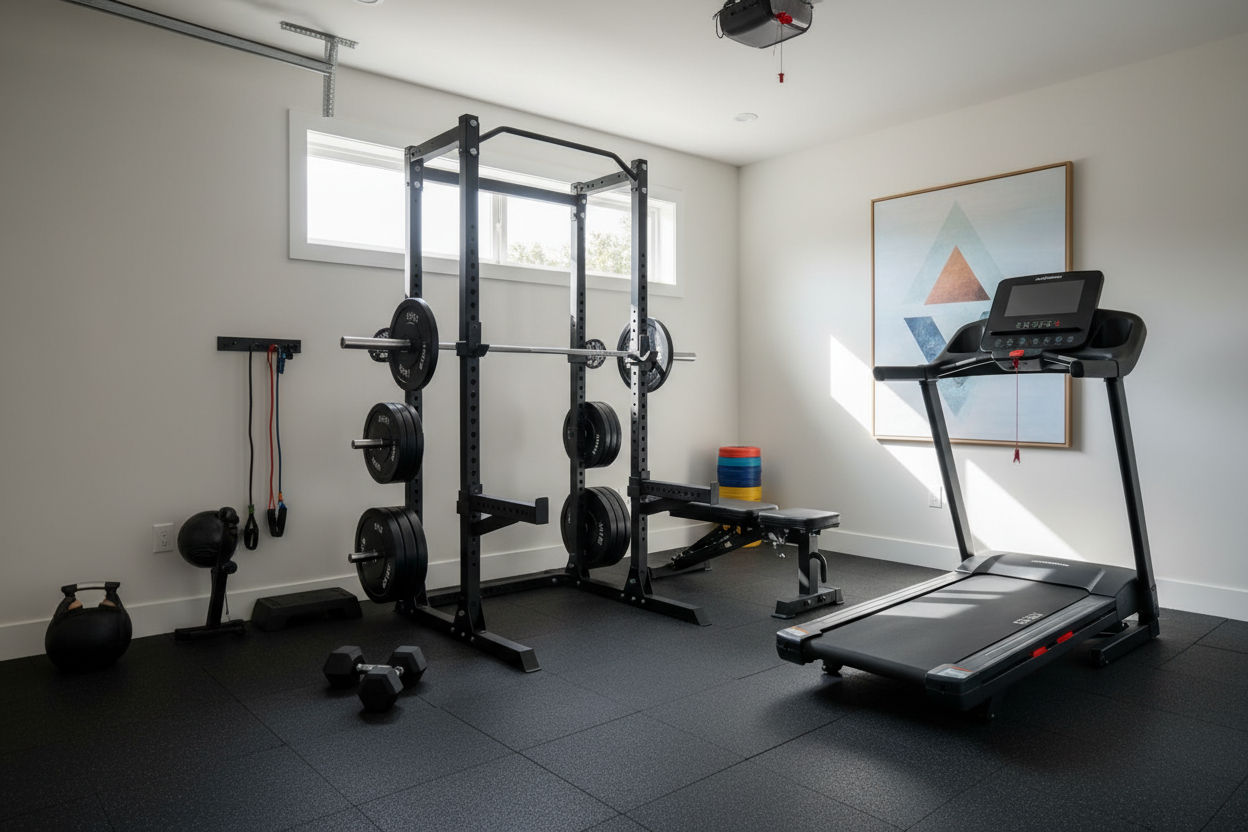
When you spend six months figuring out what to exercise at the gym, you learn a lot about your personal preferences. You might discover that you hate barbell squats but love using heavy dumbbells for Bulgarian split squats. That single realization saves you from buying a massive $1,000 power rack and an Olympic barbell that will just collect dust in your garage.
Instead, you can invest in a premium set of adjustable dumbbells (like the 5 to 80-pound sets that replace 15 pairs of traditional weights and fit in a 2x2 foot space) and a high-quality adjustable bench. By testing new gym exercises in a commercial facility, you effectively audit your future home gym needs.
Use your current gym workout for fitness as a testing ground. Pay attention to the knurling (the grip texture) on the barbells. Notice whether you prefer thick or thin pull-up bars. These small details will guide your purchasing decisions down the road, ensuring your eventual home setup is perfectly tailored to how you actually train.
What is the best workout to do in gym for beginners?
The best routine focuses on full-body compound movements using free weights. Stick to a simple A/B split, training three days a week, focusing on pushing, pulling, squatting, and hinging.
How long should my in the gym workouts last?
A highly effective session can be completed in 45 to 60 minutes. If you are resting 60 to 90 seconds between sets and focusing on 3 to 4 main exercises, you do not need to spend two hours on the floor.
What exercises should I do at the gym if it is too crowded?
Grab a single pair of dumbbells and find an empty 6x6 foot space. You can perform a complete full-body routine with goblet squats, floor presses, bent-over rows, and Romanian deadlifts without ever needing a bench or a machine.