Why A Beginners Workout Fails: The Micro-Session Fix
I remember walking into a client's cramped 500-square-foot apartment a few years ago. She was a nurse working 12-hour shifts, and she had just bought a massive, intimidating 12-week fitness program. She was exhausted before she even put on her sneakers. The reality is, trying to jam a full 45-minute sweat session into an already chaotic day is the exact reason most people quit by week two. When you are just starting out, your nervous system and your schedule simply aren't primed for that kind of load.
That is why I completely changed my approach. Instead of forcing massive blocks of exercise, I teach my clients how to 'micro-dose' their fitness. It turns a beginners workout from a looming daily threat into a series of manageable, 15-minute exercise snacks. You never hit that wall of dread, and you never wake up so sore you can't walk down the stairs.
Quick Takeaways
- Ditch the 45-minute standard: Break your routine into three 10-to-15-minute chunks.
- Focus on consistency over intensity during the first 30 days.
- Leave your equipment out permanently to achieve a zero-friction setup.
- Morning mobility, afternoon strength, and evening stretching create a balanced daily load.
The Problem With the Standard 45-Minute Session
As a personal trainer, I see the same cycle every January. A new client decides it is time to get in shape, blocks out a full hour every evening, and goes all out. They do 45 minutes of high-intensity interval training, sweat through their shirt, and wake up the next day with severe delayed onset muscle soreness (DOMS). By day three, the mere thought of putting on gym clothes causes psychological burnout.
The human body adapts to stress, but it requires the right dose. A standard 45-minute routine places massive metabolic stress on unconditioned muscles. Your joints, tendons, and central nervous system are not used to handling repetitive impact or sustained tension for that long. When you push an untrained body for nearly an hour, form inevitably breaks down around the 25-minute mark. That is exactly when injuries happen.
Beyond the physical toll, there is a massive mental hurdle. Finding a continuous 45-minute block of free time is tough. Add in 10 minutes to change clothes, 15 minutes to shower, and suddenly your workout demands over an hour of your day. For a busy parent or someone working long hours, that time commitment is a massive barrier. The standard long-form session sets new trainees up for failure by demanding too much time and inflicting too much pain right out of the gate.
What is Workout Micro-Dosing?
Workout micro-dosing flips the traditional fitness model upside down. Instead of viewing exercise as a singular, grueling event, we treat it like meals. You wouldn't eat all your daily calories in one massive sitting, so why force all your physical activity into a single window? By breaking a workout for beginners into three manageable 10-to-15 minute chunks distributed across the morning, noon, and evening, we completely eliminate the dread factor.
This approach relies on the principle of accumulated volume. Your muscles do not care if you do 30 squats at 6 AM or split them into sets of 10 throughout the day. The total mechanical tension remains the same, but the perceived exertion drops drastically. You never reach the point of total exhaustion, which means your form stays crisp and your recovery is rapid.
I started implementing this with clients who swore they hated exercise. We shifted the goal from 'getting a massive sweat' to simply 'moving with intention' a few times a day. It is the secret to finding a beginner workout routine at home that actually sticks. You do not need to psych yourself up for a 10-minute session. You just drop in, do the work, and move on with your day. This micro-dosing strategy bypasses the brain's natural resistance to hard work, slowly building the habit of daily movement without triggering your fight-or-flight response.
Structuring Your Micro-Session Workout Starter
To make this work, you need a specific framework. Randomly doing jumping jacks whenever you remember isn't going to build strength or improve mobility. Your daily micro-session workout starter should follow a logical progression that matches your body's natural energy rhythms.
We divide the day into three phases: activation, exertion, and decompression. This ensures you are warming up stiff joints early in the day, challenging your muscles when your core temperature is highest, and down-regulating your nervous system before bed. Here is exactly how I program this daily split for my new clients.
Morning: Mobility and Core Activation
Your morning session is not about building muscle or burning fat. It is about waking up your central nervous system and lubricating joints that have been stagnant for eight hours. I cap this at exactly 10 minutes.
Start with two minutes of cat-cow stretches to mobilize the thoracic spine. Move into three minutes of bird-dogs, focusing on bracing the abdominal wall and keeping the hips square to the floor. This fires up the core stabilizers. Finish with three sets of 15 glute bridges. Most people sit at a desk all day, which leads to dormant glutes and tight hip flexors. Squeezing the glutes first thing in the morning re-establishes the mind-muscle connection. You shouldn't even break a sweat during this phase. You can do it in your pajamas right next to your bed.
Afternoon: The Strength Circuit
The midday window is where we build actual strength. Your body temperature naturally peaks in the late afternoon, making your muscles more pliable and ready for resistance. We dedicate 15 minutes to a basic bodyweight circuit.
Set a timer and perform three rounds of the following: 10 bodyweight squats, 8 push-ups (elevate your hands on a sturdy chair or couch if needed), and 15 seconds of a forearm plank. Rest 60 seconds between rounds. The key here is zero setup time. If you have a durable exercise mat flooring permanently laid out in your home office or living room, you just step away from your desk, knock out the circuit, and get right back to work. No driving to a gym, no waiting for a squat rack. Just 15 minutes of focused, moderate-intensity effort.
Evening: Decompression and Stretching
The final 10-minute block happens about an hour before sleep. High-intensity exercise late at night spikes cortisol and ruins sleep architecture, so we do the exact opposite. This is a dedicated cooldown routine to relieve tension and shift your body into a parasympathetic (rest and digest) state.
Spend three minutes in a deep child's pose, focusing on expansive diaphragmatic breathing. Inhale for four seconds, hold for two, and exhale for six. Next, move into the 90/90 hip stretch, spending two minutes on each side to undo the damage of sitting in an office chair. Finish with a simple lying hamstring stretch using a towel or resistance band. This micro-session serves as a physical boundary between the stress of the workday and your restorative sleep.
Building a Workout Routine Schedule for Beginners
Now that you have the daily blueprint, we need to map it across a full week. Doing the exact same strength circuit seven days a week will eventually lead to repetitive stress, even in short bursts. A proper schedule balances work and recovery.
For the first four weeks, I recommend a simple alternating schedule. Monday, Wednesday, and Friday are your 'Full Micro' days. On these days, you execute all three sessions: morning mobility, afternoon strength, and evening stretching.
Tuesday and Thursday are your active recovery days. You keep the morning mobility and evening decompression, but you drop the afternoon strength circuit. Instead, use that 15-minute midday block for a brisk walk outside. This keeps the habit loop intact without overloading your muscles.
Weekends should be entirely flexible. Saturday might just be a 20-minute walk with the dog, and Sunday can be a complete rest day. If you want a more detailed breakdown of how to sequence your active and rest days, I highly suggest checking out this workout routine schedule for beginners. It outlines exactly how to scale up the volume once your body adapts to the initial 30 days.
Setting Up Your Frictionless Environment
The absolute biggest killer of a home fitness routine is setup time. If you have to drag a heavy mat out of the closet, unroll it, move the coffee table, and dig your dumbbells out from under the bed, you will talk yourself out of the workout before you even start.
I learned this firsthand when I was testing equipment for my own garage gym setup. I had a pair of adjustable dumbbells that ranged from 5 to 52.5 pounds. They were incredibly space-efficient, but the locking mechanism was sticky and required me to perfectly align the plates every single time. That tiny bit of friction was enough to make me skip my accessory lifts entirely. The honest downside to adjustable gear is that if it isn't seamless, it becomes a barrier.
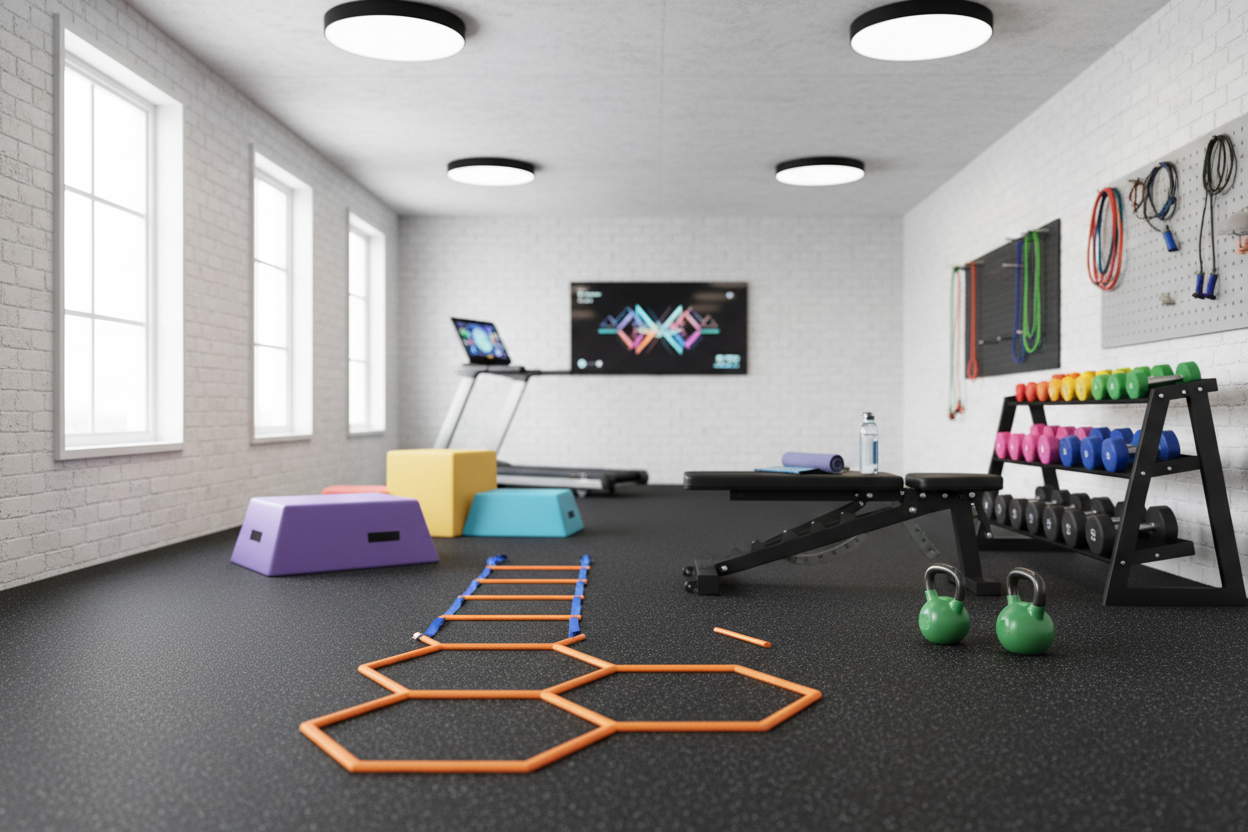
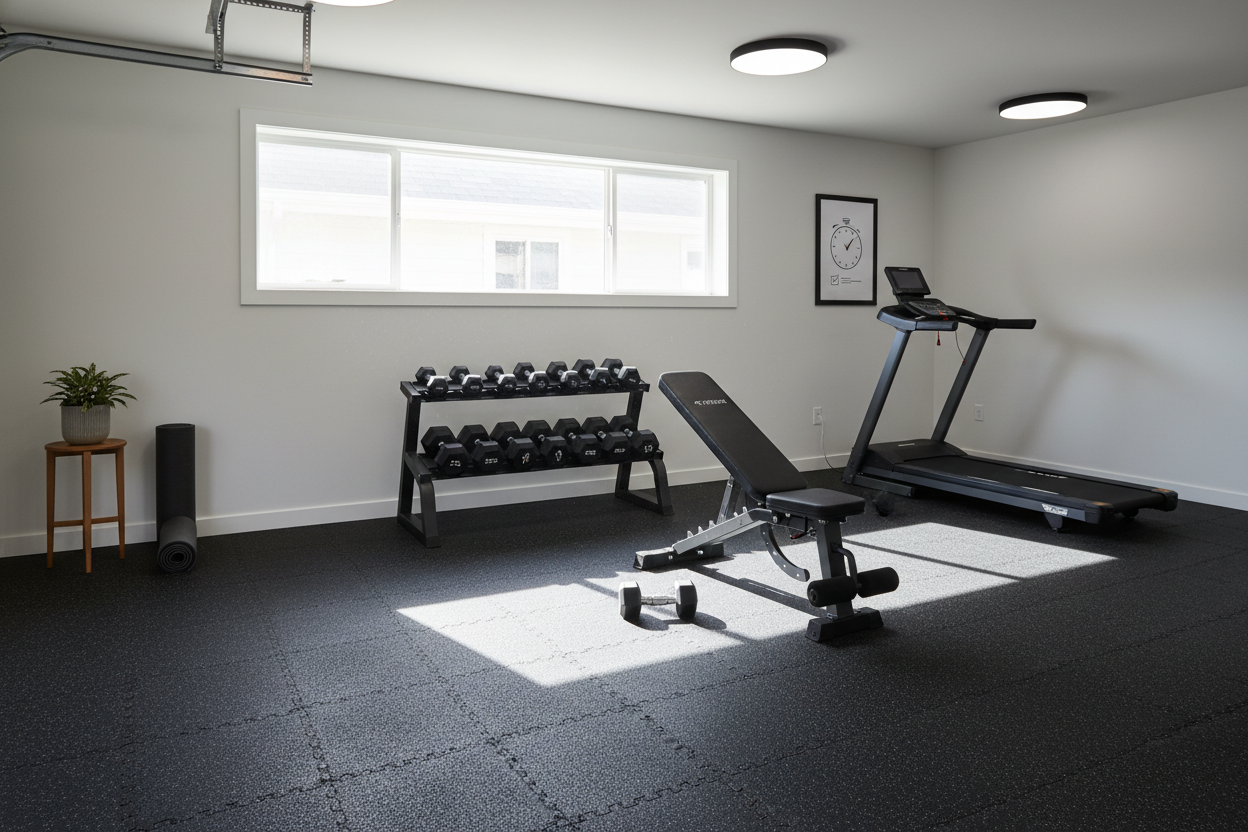
To succeed with micro-sessions, your environment must be frictionless. Your workout space should be permanently established. Keep your mat unrolled. Leave your resistance bands hanging on the doorknob. If you need ideas on how to organize this without ruining your living room aesthetic, a comprehensive workout hub can provide great layout variations. When the equipment is already waiting for you, dropping in for a 10-minute session becomes second nature.
Frequently Asked Questions
Will 15-minute workouts actually build muscle?
Yes, especially for new trainees. Muscle growth requires mechanical tension and progressive overload. If you consistently challenge your muscles during those 15-minute blocks and slowly increase the difficulty (more reps or harder variations), your body will adapt and build strength.
Do I need to warm up before the afternoon strength circuit?
Since the afternoon circuit is short, a brief 2-minute dynamic warmup is plenty. Do 20 jumping jacks and a few arm circles to get the blood flowing. Because you already did your morning mobility routine, your joints won't be completely cold.
What if I miss my midday session?
Don't stress and don't try to double up in the evening. Just let it go and pick up the routine the next day. The entire point of the micro-dosing method is to remove guilt and pressure from your fitness routine.