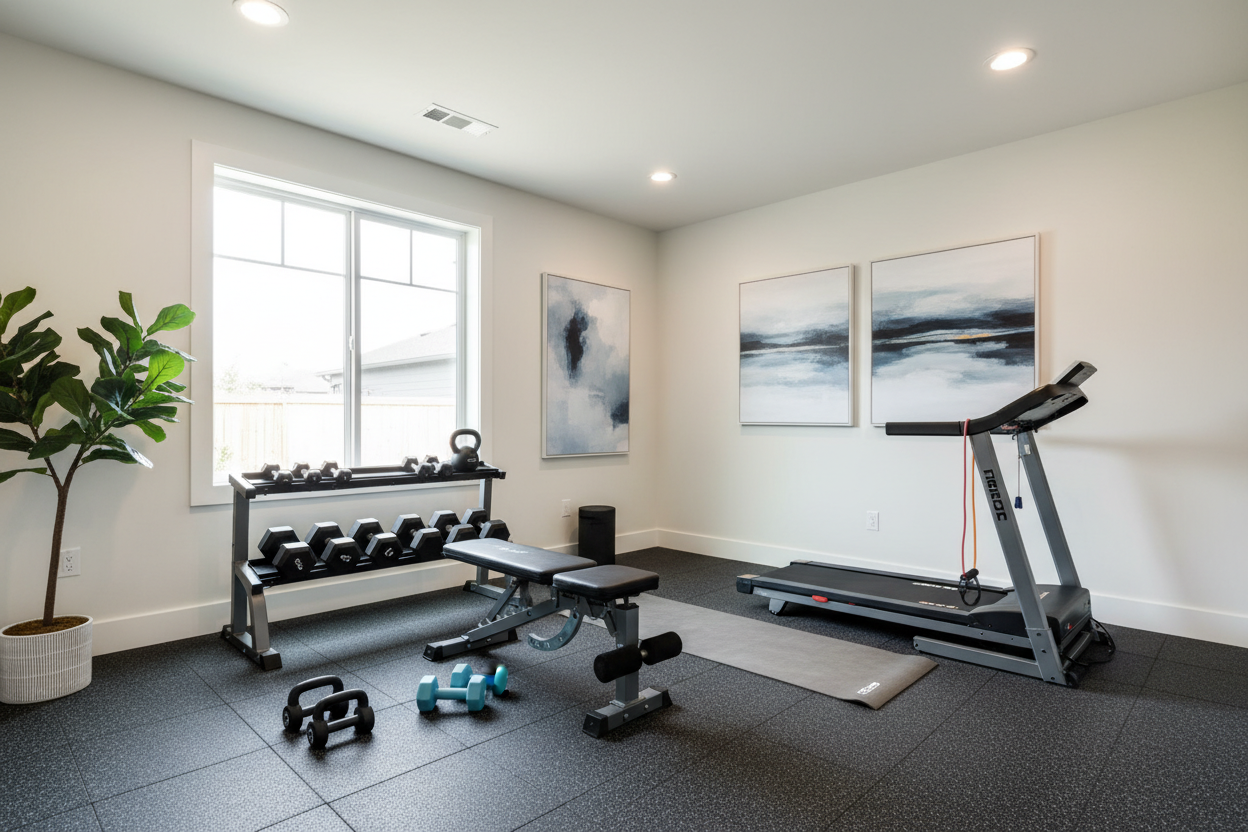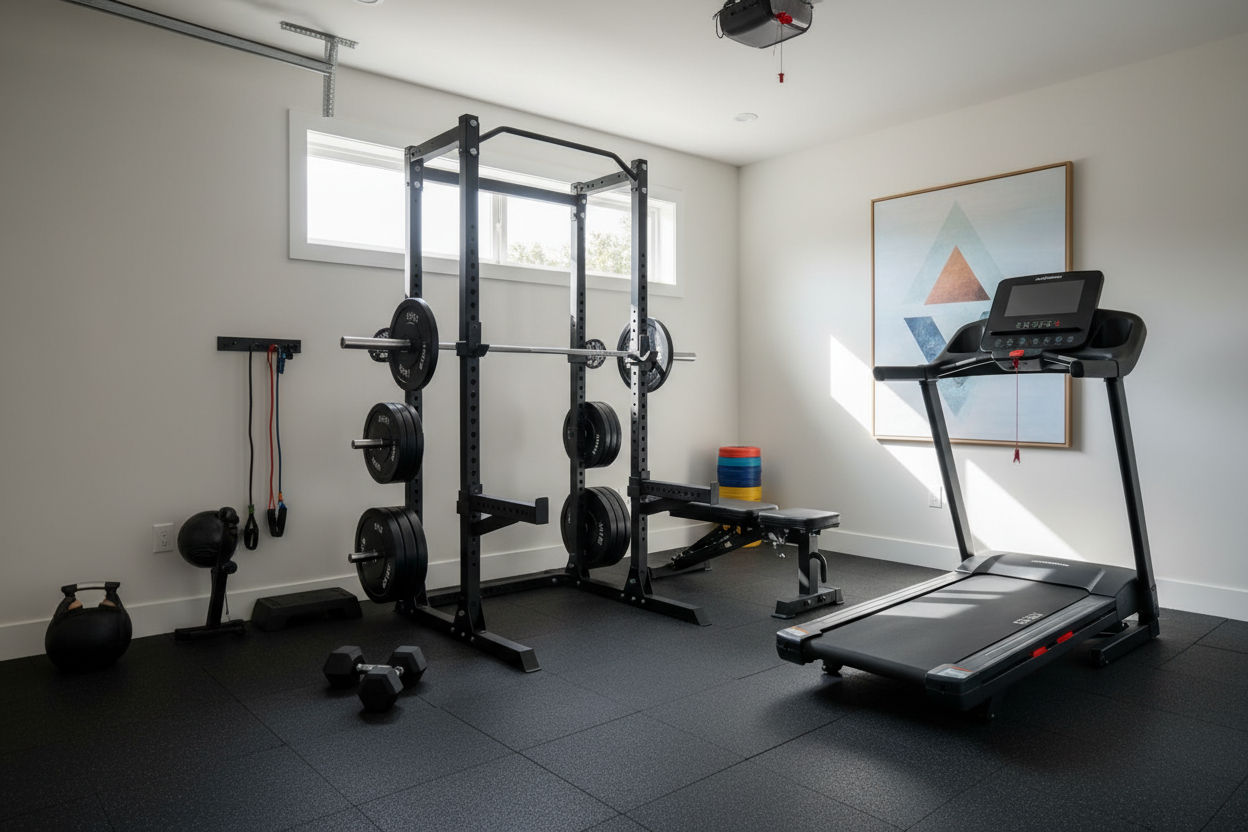
Full Body Workout Home Guide: The PHA Protocol
I remember staring at my 10x10 spare bedroom back in 2020, realizing my usual five-day body-part split was dead. I had two adjustable dumbbells, a flat bench, and zero space for a squat rack. Trying to blast chest one day and legs the next with limited weight just left me frustrated. That is when I pivoted my entire approach to training clients and myself. If you want a highly effective full body workout home routine, you have to stop training like a stage-ready bodybuilder. Instead, you need a strategy that maximizes the gear you actually have while pushing your cardiovascular system.
Quick Takeaways
- Traditional body-part splits require too much specialized equipment for standard residential spaces.
- Peripheral Heart Action (PHA) training alternates upper and lower body movements to maximize cardiovascular output.
- You only need 3 non-consecutive days a week to stimulate muscle growth and burn fat.
- Adjustable dumbbells and a stable floor surface are the baseline requirements for a PHA circuit.
Why Traditional Splits Fail the Home Gym Owner
Most fitness programs online assume you have access to a commercial facility. They prescribe leg extensions, cable crossovers, and seated calf raises. When you try to replicate that in a spare bedroom, you quickly realize the limitations of your equipment. A traditional 'chest day' requires a heavy barbell, multiple bench angles, and cable machines to fully exhaust the pectorals.
If you only have a pair of 50-pound adjustable dumbbells, your chest day is going to feel incredibly underwhelming. You simply cannot generate the necessary mechanical tension to force adaptation when you isolate small muscle groups with limited weight. This is the exact trap I see most home gym owners fall into. They buy a basic setup, try to run a bro-split, and plateau within a month.
A residential setting demands a holistic approach. Instead of trying to destroy one muscle group with 20 sets, you should aim to stimulate every major muscle group multiple times a week. This increases overall training frequency and volume without requiring massive weight stacks. It also forces your body to work as a single, coordinated unit, which translates much better to real-world strength.
The Science of Peripheral Heart Action (PHA)
Peripheral Heart Action (PHA) training sounds complicated, but the premise is dead simple. Instead of doing three sets of squats and resting, you pair a lower body movement with an upper body movement. You do a set of squats, immediately walk over to your bench, and do a set of overhead presses.
This forces your heart to pump blood rapidly from your legs up to your shoulders, and then back down again. The cardiovascular demand is massive. It creates an incredible metabolic effect, allowing you to burn significantly more calories than a standard weightlifting session.
More importantly for the home gym user, it manages localized fatigue. Because you are resting your legs while working your shoulders, you do not need as much absolute weight to make the exercise feel challenging. Your heart rate is already at 140 beats per minute when you pick up the dumbbells for the upper body movement. This makes PHA the blueprint for a good full body workout at home. You get the muscle-building benefits of resistance training combined with the cardiovascular conditioning of a high-intensity interval session, all without needing a treadmill or a massive barbell setup.
Structuring Your Full Body Exercises Home Routine
Building a PHA circuit is about smart pairings. You want to avoid pairing exercises that heavily tax the same stabilizing muscles. For example, pairing heavy Romanian Deadlifts (RDLs) with bent-over rows is a bad idea because your lower back will give out before your lats or hamstrings do.
Here is a reliable blueprint I use for clients looking for effective full body exercises home programming. We run two distinct circuits per session. Circuit A might pair a Goblet Squat with a Dumbbell Flat Bench Press. You hit 10 to 12 reps of squats, rest 30 seconds, and hit 10 to 12 reps of presses. Repeat that four times.
Circuit B shifts the focus to the posterior chain. Think Dumbbell RDLs paired with a Neutral Grip Pull-Up or a chest-supported row. Again, four rounds of 10 to 12 reps. Because you are moving quickly between standing and floor-based movements, stability is critical. I always have clients lay down a durable 6x8ft exercise mat to provide a spacious, non-slip surface. You do not want to be sliding around on hardwood floors when transitioning from heavy lunges to push-ups.
Finish the workout with a core isolation movement paired with an arm isolation movement. A plank paired with bicep curls works perfectly. The entire session takes about 45 minutes, but because your rest periods are strictly managed, you will accumulate a massive amount of volume.
Equipment Considerations for PHA Circuits
You do not need a commercial setup to make PHA work, but you do need gear that allows for rapid weight changes. I have personally tested dozens of setups in my own garage. Adjustable dumbbells ranging from 5 to 52.5 pounds are the gold standard here.
However, I have to be honest about the downside. Some dial-based adjustable dumbbells can be clunky during fast transitions, and the internal mechanisms are fragile. If you drop them after a grueling set of chest presses, they will break. This is why floor protection is non-negotiable. A large exercise mat is vital for absorbing the shock of rapid dumbbell drops during high-intensity transition phases, saving both your equipment and your flooring.
If you have the floor space and budget, you can integrate multi-functional equipment. Using a full body workout machine like a functional trainer or a compact Smith machine allows you to quickly swap between heavy lower body pushes and upper body pulls without fussing with weight plates. Just keep your footprint in mind. A typical functional trainer requires about a 6x6 foot area to operate comfortably.
Programming Your Weekly Schedule
Because a PHA session taxes both your muscular system and your central nervous system (CNS), you cannot run this every single day. The systemic fatigue is simply too high. I program this for clients exactly three days a week, always on non-consecutive days.
Monday, Wednesday, and Friday are the standard split. This gives your CNS a full 48 hours to recover between bouts. On your off days, stick to active recovery. A 30-minute brisk walk, some light mobility work, or easy cycling is perfect. Do not try to sneak in extra heavy lifting days; you will only short-circuit the recovery process.
As you progress, you can manipulate the variables. Instead of adding weight, try reducing the rest period between the upper and lower body movements from 30 seconds to 15 seconds. This form of progressive overload is highly effective in a home setting where your maximum weight is capped.
Next Steps for Your Home Training Journey
Start light. The biggest mistake you can make is grabbing your normal working weight for your first PHA circuit. The cardiovascular demand will crush you before the muscle fatigue does. Drop your weights by about 20 percent for the first two weeks until your conditioning catches up.
Focus entirely on mastering the transitions and keeping your form pristine when your heart rate spikes. Once you can comfortably clear the circuits without your form breaking down, start bumping the resistance back up. As your strength capacity outgrows your initial dumbbell setup, you might want to look into the best at home exercise machines to safely handle heavier loads. Keep the intensity high, respect your rest days, and the results will follow.
Frequently Asked Questions
Can I build muscle with PHA training?
Yes. As long as you take the exercises close to muscular failure and eat in a slight caloric surplus, PHA will stimulate hypertrophy just like traditional lifting.
How long should a PHA workout last?
A properly structured session should take between 40 and 50 minutes. If it takes longer, you are likely resting too much between circuits.
Do I need a barbell for this routine?
No. Dumbbells, kettlebells, or resistance bands are actually preferred for PHA because they require less setup time between exercises, keeping your heart rate elevated.