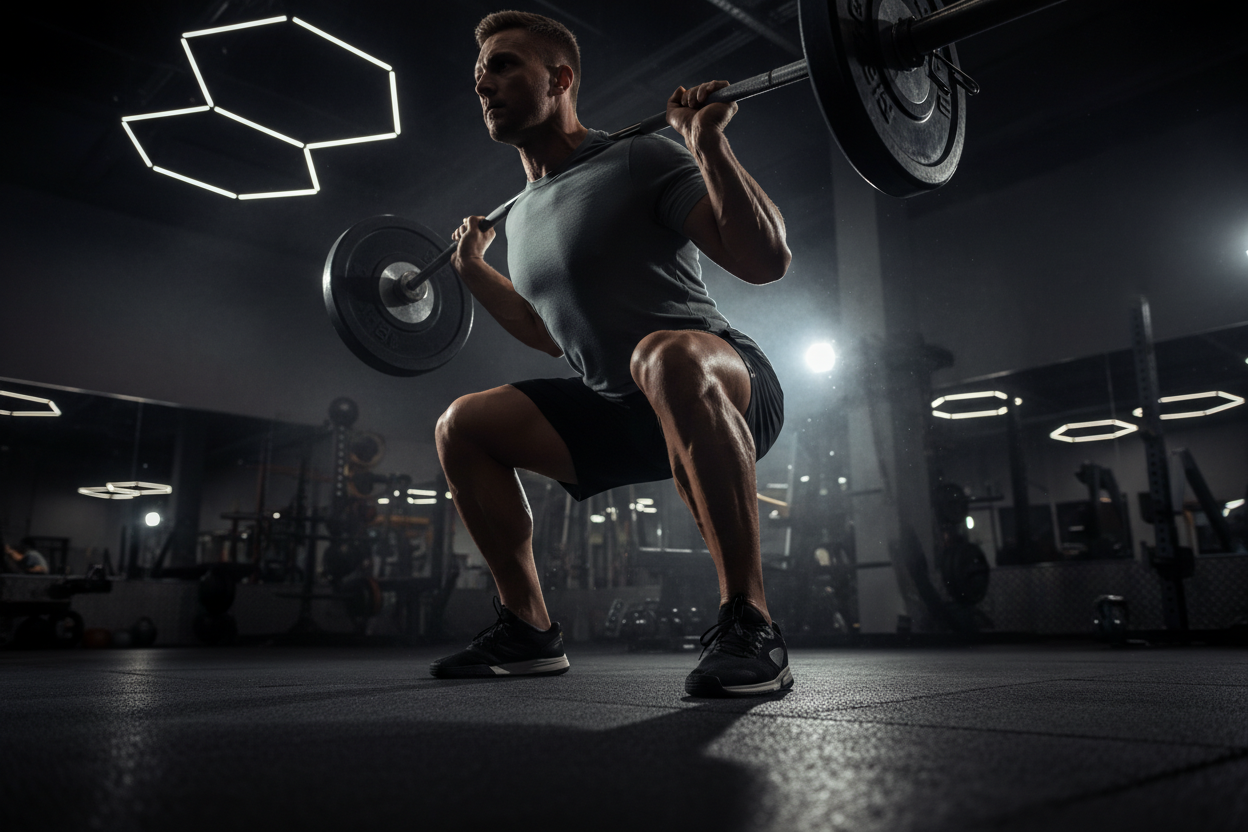
Exercise for Front of Thighs: The Definitive Guide to Quad Training
Leg training is often the most dreaded day of the week, yet it is arguably the most critical for a balanced physique and athletic power. When you specifically want to develop the quadriceps—the large muscle group on the anterior chain—selecting the right exercise for front of thighs is the difference between massive growth and nagging knee pain.
Many lifters mistakenly believe that general leg movements are enough. However, if your goal is aesthetic definition (like the coveted "teardrop" muscle) or functional explosive power, you need a strategy that specifically targets the four heads of the quadriceps. This guide cuts through the noise to give you the most effective protocols for front thigh development.
Key Takeaways: Quick Summary
- Compound movements are king: The barbell squat (specifically the front squat) remains the primary driver for front thigh mass.
- Anatomy matters: To hit the Rectus Femoris (the middle muscle), you must incorporate leg extensions or movements where the hip is not flexed.
- Time under tension: Front thigh muscles respond exceptionally well to controlled tempos and higher rep ranges (12-20).
- Home options exist: You don't need machines; sissy squats and step-ups are effective front thigh workout at home alternatives.
Understanding the Front Thigh Muscle
Before we load the bar, you need to understand what you are working. The "quads" are comprised of four muscles. Three of them (Vastus Lateralis, Medialis, and Intermedius) only cross the knee joint. Their main job is knee extension—straightening your leg.
The fourth muscle, the Rectus Femoris, crosses both the hip and the knee. This is why a standard squat doesn't fully maximize this specific head. To build a complete front thigh workout, you need exercises that stabilize the hips while extending the knee.
The Heavy Hitters: Best Exercise for Front of Thighs
If you have access to a gym, these movements should form the core of your routine. They offer the highest return on investment for hypertrophy and strength.
1. The Barbell Front Squat
While the back squat is popular, the front squat is superior for the front of legs. By placing the barbell across your anterior deltoids, you force your torso to stay upright. This shift decreases the load on your lower back and glutes, placing nearly all the tension directly on the quadriceps.
2. The Leg Press (Low Foot Placement)
Foot placement dictates muscle recruitment. Placing your feet lower on the platform increases knee flexion (bending) while reducing hip flexion. This mechanical shift makes it a premier exercise for front thigh muscle isolation without the systemic fatigue of a squat.
3. Bulgarian Split Squats
This unilateral movement corrects imbalances. If one thigh is smaller or weaker than the other, this is the fix. Keep your torso upright to bias the load toward the front leg's quad rather than the glute.
Front Thigh Workout at Home
You do not need a leg extension machine to torch your quads. With bodyweight or simple dumbbells, you can execute a highly effective front thigh muscle workout in your living room.
The "Sissy" Squat
Don't let the name fool you. This is an old-school bodybuilding secret and arguably the best exercise for front thighs when you have limited equipment. By locking your feet and leaning your torso backward while bending your knees, you create a massive stretch across the front of the thigh. This isolates the quads almost exclusively.
Heels-Elevated Goblet Squats
Place a book or a small block under your heels. This artificial ankle mobility allows your knees to travel further forward over your toes safely. That extra range of motion stretches the front thigh muscle fibers under load, triggering growth.
Common Mistakes in Front Thigh Exercises
Even with the best programming, form errors can kill your progress. Avoid these pitfalls:
- Cutting Depth: Partial reps result in partial growth. The vastus medialis (the teardrop) is most active at the very bottom of the squat.
- Ignoring Tempo: Bouncing out of the hole uses elastic energy, not muscle tension. Slow down the eccentric (lowering) phase to 3 seconds.
- Hip Hinging: If you lean too far forward during a front thigh exercises session, you turn it into a lower back and hamstring workout. Keep the chest up.
My Training Log: Real Talk
I want to share a specific reality about training the front of the thighs that studies don't mention. A few years ago, I switched from low-bar back squats to exclusively doing Front Squats and "Spanish Squats" (a banded variation) for 12 weeks to bring up my lagging quads.
The first thing I noticed wasn't the growth—it was the specific, nauseating burn in the vastus medialis. There is a distinct difference between the "heavy" feeling of a back squat and the searing, localized pain of a targeted front thigh workout. I specifically remember the feeling of the heavy resistance band digging into the creases of my knees during the Spanish Squats. It pinched my skin and left red marks, but the isolation was unlike anything else. I could feel the muscle fibers trembling even when I was standing still between sets. If you aren't feeling that shaky instability when walking down the stairs post-workout, you probably haven't hit the anterior chain hard enough.
Conclusion
Building impressive legs requires more than just moving weight from point A to point B. It requires intent. Whether you are doing a front thigh workout at home or loading up the leg press, focus on knee flexion and keeping an upright torso. Implement these strategies consistently, and your quads will have no choice but to grow.
Frequently Asked Questions
What is the single best exercise for front of thighs?
While "best" is subjective, the Barbell Front Squat is widely considered the king of front thigh development. It allows for heavy loading while mechanically forcing the quadriceps to do the majority of the work due to the upright torso position.
Can I build front thigh muscles without weights?
Yes. Exercises like Sissy Squats, pistol squats, and lunges can build significant muscle if you push close to failure. For home workouts, increasing the time under tension (slowing down the rep) can compensate for the lack of heavy external weight.
Why do my knees hurt when doing front thigh exercises?
Knee pain often stems from poor mobility or muscle imbalances. If your ankles are tight, your knees take extra stress. Ensure you warm up thoroughly and consider using a heels-elevated position to improve mechanics. If pain persists, switch to low-impact movements like Spanish Squats.