How to Build Strong Legs With Just Bodyweight Squat Variations
Most people believe the only way to build impressive legs is by loading a barbell until it bends. While heavy iron has its place, it isn't the only path to strength. In fact, relying solely on external load often masks imbalances and mobility restrictions that limit your true potential.
By manipulating leverage, tempo, and range of motion through specific bodyweight squat variations, you can stimulate hypertrophy and build functional strength that translates directly to athletic performance. This guide cuts through the noise to show you how to progress without a single weight plate.
Key Takeaways: Mastering the Squat
- Tension over Load: Without weights, you must create mechanical tension by slowing down your tempo (e.g., 3 seconds down, 1 second up).
- Unilateral Dominance: Single-leg variations are the primary driver for strength gains when bodyweight is your only tool.
- Range of Motion: Bodyweight training allows for deeper ranges of motion (ROM) than heavy loading, improving joint health.
- Frequency: You can train these variations with higher frequency than heavy back squats due to lower central nervous system fatigue.
Why Bodyweight Squats Are Not "Too Easy"
If you think air squats are just a warm-up, you aren't doing them right. The effectiveness of types of bodyweight squats comes down to intent. When you remove the heavy load, you strip away the ego. This forces you to focus on the quality of movement.
To build muscle without weights, we rely on metabolic stress and mechanical tension. By utilizing pauses, 1.5 reps, and single-leg instability, we can mimic the intensity of a heavy lift. This approach recruits stabilizer muscles that often go dormant during bilateral machine work.
The Foundational Variations
1. The Tempo Air Squat
Before getting fancy, perfect the standard. The mistake most make here is bouncing out of the hole. Instead, lower yourself for a count of four, pause for one second at the bottom, and drive up.
This tempo forces the quadriceps to maintain tension throughout the movement, preventing you from relying on the stretch reflex of your tendons.
2. The Cossack Squat (Lateral Lunge)
Most body weight squat variations occur in the sagittal plane (forward/backward). The Cossack squat challenges the frontal plane (side-to-side). It is exceptional for opening up tight hips and strengthening the adductors.
Keep one leg straight while squatting deep onto the other. Keep the heel of the squatting leg glued to the floor. If your heel lifts, your ankle mobility needs work.
Advanced Strength Builders
3. The Bulgarian Split Squat
This is arguably the most effective leg builder in the calisthenics arsenal. It isolates the front leg while placing the rear leg in a stretch, challenging balance and strength simultaneously.
To target the glutes, lean your torso slightly forward. To target the quads, keep your torso upright. The burn here is distinct because there is nowhere to hide; your lead leg must handle the entire load.
4. The 1.5 Rep Squat
This technique increases time under tension significantly. Squat all the way down, rise halfway up, drop back down to the bottom, and then stand up fully. That is one rep.
This variation creates a massive pump by keeping the muscle under constant tension and removing the "lockout" break at the top for longer periods.
My Training Log: Real Talk
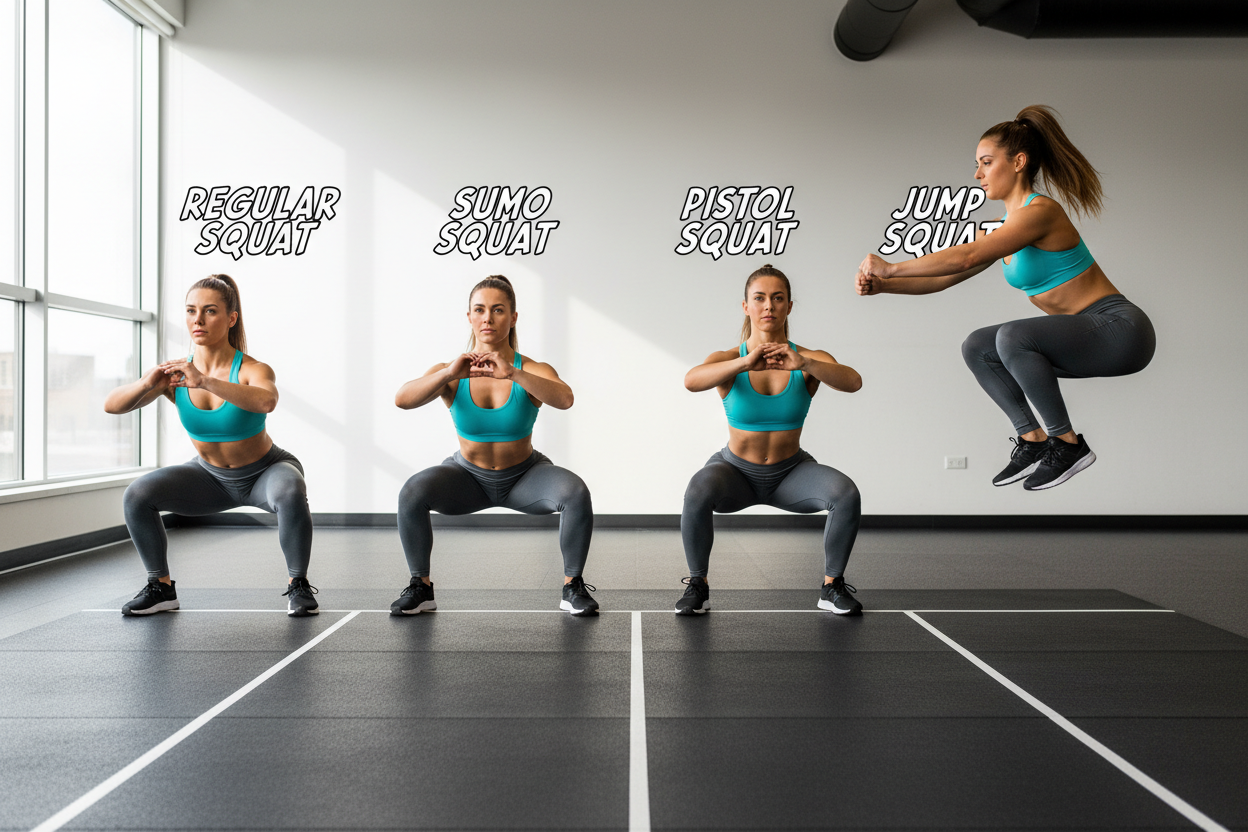
I want to be transparent about my own transition to these movements. A few years ago, I was stuck in a hotel room without a gym for three weeks. I thought, "I squat 315 lbs; bodyweight stuff will be a breeze." I decided to attempt Pistol Squats.
I didn't just fail; I was humbled. It wasn't my quad strength that gave out—it was a specific, sharp cramp deep in my hip flexor that I had never felt under a barbell. I also kept rolling onto the outside edge of my foot, losing balance and toppling sideways into the hotel dresser. That specific wobble proved my stabilizers were weak, despite my heavy gym lifts. It took me two weeks of holding onto a doorframe just to get a clean rep without my non-working leg hitting the floor. Don't underestimate the learning curve.
Conclusion
Building legs without weights isn't about doing 500 mindless reps. It is about choosing the right bodyweight squat variations that challenge your balance, mobility, and strength thresholds. Start with the tempo work, master the lateral movement, and eventually progress to unilateral exercises. Treat every rep with the same respect you would give a heavy barbell.
Frequently Asked Questions
Can you actually build muscle with just bodyweight squats?
Yes, but only if you apply progressive overload. Since you cannot add weight, you must progress by moving to more difficult variations (like single-leg squats), increasing time under tension, or reducing rest periods to stimulate hypertrophy.
How often should I do bodyweight squat variations?
Because bodyweight training places less stress on the central nervous system than heavy lifting, you can train legs more frequently. A schedule of 3 to 4 times per week is effective for most people, provided you allow for recovery.
Why do my knees hurt during bodyweight squats?
Knee pain often stems from poor hip mobility or ankle stiffness, forcing the knee to compensate. Ensure your knees track in line with your toes and do not cave inward (valgus collapse). If pain persists, reduce the range of motion and focus on tempo.