How Much Muscle Can You Gain in a Month? Realistic Guide
When people step into a gym or build a training corner at home, one question always comes up: how much muscle can you gain in a month? Many popular routines promise rapid physical transformations, but genuine biological muscle growth behaves quite differently. Developing actual lean muscle mass takes structured effort, patience, and smart recovery rather than shortcut formulas.
Understanding how much muscle mass you can realistically build over four weeks helps set productive goals. Instead of chasing impossible transformations, focusing on sustainable strength training and mechanical tension will keep your long-term fitness journey on track.
How Much Muscle Can You Gain in a Month?
For most individuals engaged in consistent resistance training, average muscle gain sits at a steady, modest pace. When people ask how much muscle can you gain in a month, the answer depends heavily on lifting experience, nutrition, and rest habits. Someone new to the weight room can experience notable early adaptations, often referred to as newbie gains, because their body is responding to unfamiliar physical demands.
As you accumulate training years, the body adapts, leading to slower progress. The actual amount of new muscle tissue created within four weeks is measured in fractions of a person's overall scale change. A large portion of sudden short-term weight gain is not pure contractile fiber; it often consists of increased water retention, muscle glycogen stores, and digestive mass that accompany higher calorie consumption.
Factors That Shape Muscle Gain and Lean Mass
Multiple variables influence the actual rate of muscle growth across four weeks of training. While individual genetics dictate biological ceilings, everyday training choices determine how closely you approach your potential.
Experience Level: Beginners vs Advanced Lifters
Your background with resistance training plays the dominant role in how quickly you build lean mass:
- Beginners: Untrained lifters experience rapid neuromuscular coordination and cellular changes. A novice can build more absolute muscle mass in their first few months than during any other period.
- Intermediate and Advanced Lifters: After consistent lifting, the body becomes highly efficient. Advanced lifters must work considerably harder for incremental additions to their skeletal muscle mass.
Recognizing where you land on this spectrum helps prevent discouragement when the pace naturally steadies over time. You can learn more about these shifting expectations in our guide to realistic monthly muscle growth.
Training Stimulus and Progressive Overload
To stimulate muscle protein synthesis, your workouts must challenge the target tissues. This requires systematic progressive overload—gradually adding resistance, repetitions, or total training volume over time. Providing sufficient mechanical tension forces the body to adapt by reinforcing muscle fibers, while balanced metabolic stress from moderate-rep accessory work helps round out a program.
Working each major muscle group through a full range of motion delivers the best stimulus. Balancing compound lifts for both the lower body and upper body ensures balanced skeletal muscle mass development across your entire frame.
Nutrition to Fuel Muscle Growth
Workouts provide the growth signal, but food provides the building blocks. To maximize muscle growth and support new muscle tissue, your diet must deliver adequate protein intake alongside enough total calories to support recovery. Without sufficient dietary amino acids, the body cannot repair micro-tears created during intense resistance training sessions.
Recovery and Stress Management
Muscles do not grow during exercise; they grow while you rest. Quality sleep and effective everyday stress management keep cortisol levels balanced, allowing muscle protein synthesis to outpace tissue breakdown. Skipping sleep or overtraining quickly halts the muscle building process regardless of workout intensity.
How to Gain Muscle Mass with the Right Equipment
Achieving predictable muscle growth requires equipment that accommodates progressive resistance without compromising form. For at-home lifters, having dependable gear allows you to train close to muscular fatigue safely.
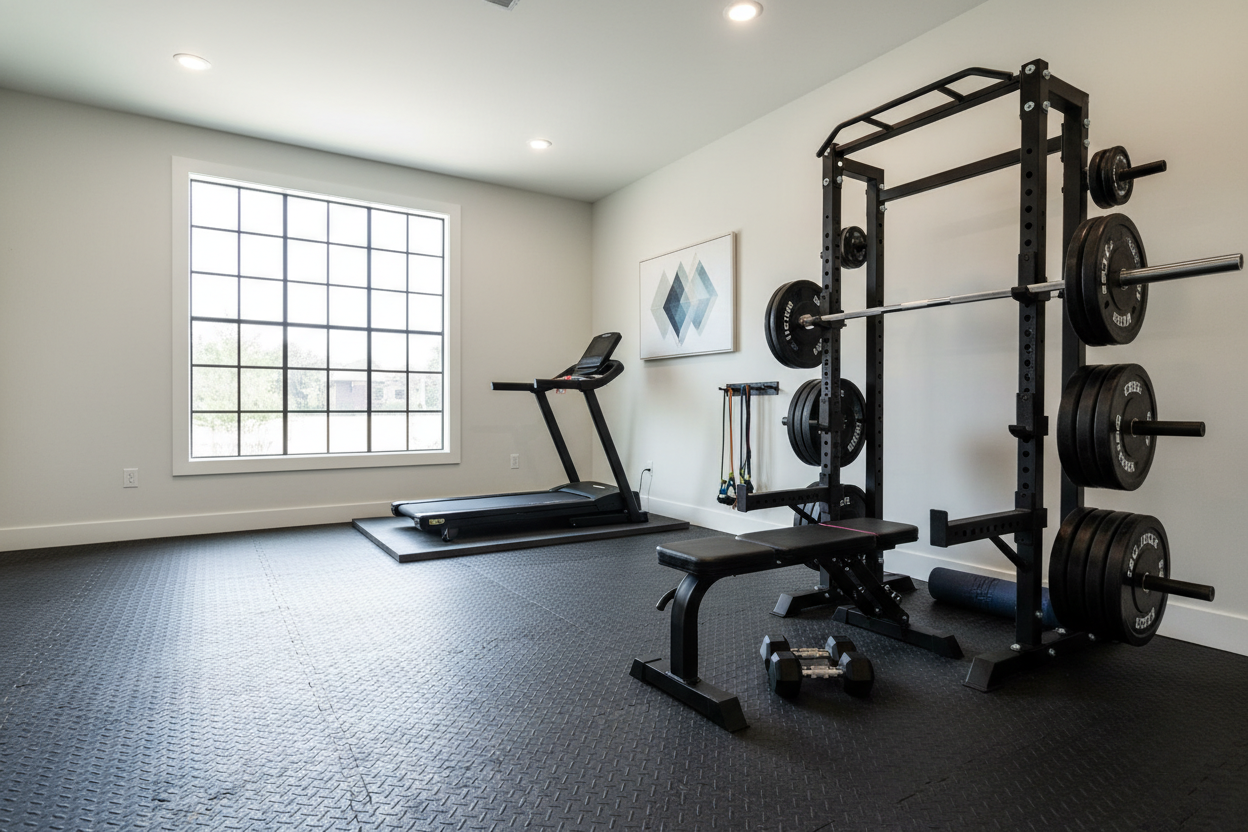
A solid foundation like a power rack and bench package lets you perform heavy barbell squats, presses, and pull-ups without needing a spotter. When targeting individual muscle groups or working through isolation movements, dedicated cable and weight machines help maintain steady mechanical tension throughout an exercise's entire range of motion.
Focusing on lower-body development presents unique demands, as outlined in our leg muscle training guide. Consistently loading large muscle groups produces the systemic stimulus needed to gain muscle mass across the whole body.
Tracking Real Muscle Growth vs Scale Weight
Relying solely on the bathroom scale often creates confusion. Rapid weight gain is rarely pure lean body mass. Water intake, carbohydrate storage, and sodium balance create daily shifts in total body weight that mask true muscular adaptation.
To evaluate whether you are truly building muscle over a month, rely on practical markers:
- Performance Logs: Tracking your resistance training loads reveals true adaptation. If your working weights or repetitions increase consistently with clean technique, muscle tissue is adapting.
- Circumference Measurements: Taking body measurements across your arms, chest, thighs, and waist gives a clearer snapshot of changes in lean mass versus fat accumulation.
- Clothing Fit: Subtle changes in how shirts fit across your upper body often reveal genuine physical shifts long before dramatic scale jumps appear.
For a detailed breakdown of realistic long-term expectations, consult our yearly muscle development expectations guide.
Frequently Asked Questions
Can you gain 1 lb of muscle in a month?
Yes. Gaining a modest amount of lean mass within thirty days is an achievable goal for many lifters, especially those in their first year of structured strength training who maintain consistent nutrition and adequate rest.
How long does it take to gain 10 lbs of muscle?
Building genuine lean body mass takes substantial time. While total scale weight can fluctuate quickly, putting on ten pounds of pure skeletal muscle mass typically requires several months to a year or more of dedicated resistance training and progressive overload.
Is 10 lbs of muscle noticeable?
Yes. Ten pounds of genuine lean tissue significantly changes your posture, muscle density, and how your frame carries clothing, as muscle is denser than body fat.
Is 3 pounds of muscle in a month good?
Gaining significant lean mass in a single month represents an exceptional rate of progress that generally happens only during initial beginner phases or when returning to training after an extended break.