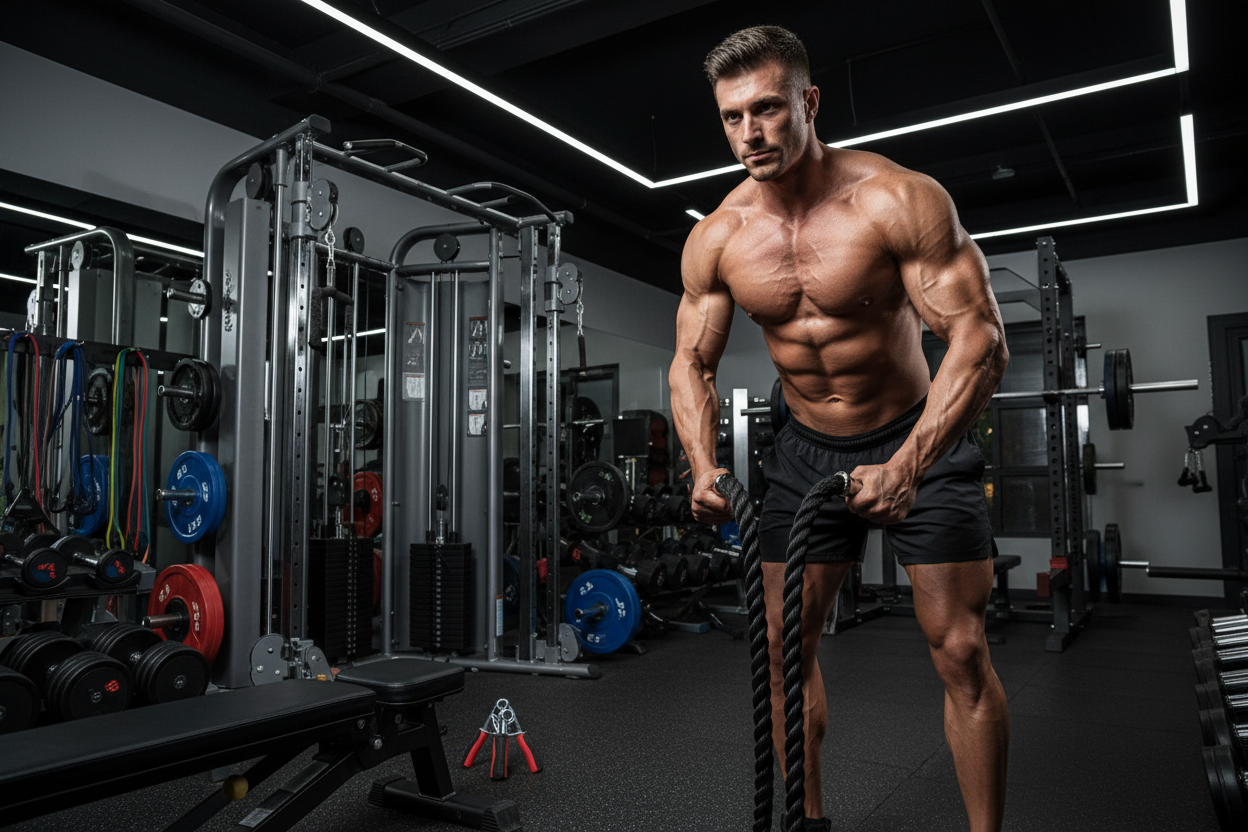
Equipment for Arms: The Definitive Guide to Upper Body Growth
You have likely seen the infomercials promising massive biceps with five minutes of work using a spring-loaded plastic gadget. The fitness industry is notorious for selling false hope, especially when it comes to arm training. If you want to fill out your sleeves, you need to separate the gimmicks from the gear that actually alters your biomechanics for hypertrophy.
Choosing the right equipment for arms isn't about buying the most expensive machine; it is about understanding leverage, tension, and the strength curve. Whether you are outfitting a garage gym or navigating a commercial facility, the tools you choose dictate the stimulus your muscles receive.
Key Takeaways: The Essentials
- Free Weights Rule for Mass: Dumbbells and EZ bars remain superior for recruiting stabilizer muscles and allowing natural wrist rotation.
- Cables Provide Constant Tension: Unlike dumbbells, cables keep the muscle under load throughout the entire range of motion, crucial for the peak contraction.
- Grip Diameter Matters: Thicker handles (Fat Gripz or thick bars) increase forearm activation but may limit the total load you can lift for biceps.
- Biomechanics Over Brand: The best equipment aligns with your joint's natural path, reducing elbow strain while maximizing muscle fiber recruitment.
The Hierarchy of Upper Arm Exercise Equipment
Not all tools are created equal. To build a complete set of arms—hitting the long head, short head, brachialis, and triceps—you need a mix of resistance profiles.
1. The EZ Curl Bar: Protecting the Wrists
If you have ever done heavy barbell curls with a straight bar, you might have felt a sharp pain in your wrists or forearms. This is because a fully supinated (palms up) grip on a straight bar forces the wrists into an unnatural position for many lifters.
The EZ Curl bar is a staple piece of upper arm exercise equipment because the cambered shape allows for a semi-supinated grip. This shifts the load slightly, but more importantly, it saves your joints, allowing you to lift heavier loads over time without injury. It is indispensable for skull crushers and heavy standing curls.
2. Adjustable Dumbbells: The Versatility King
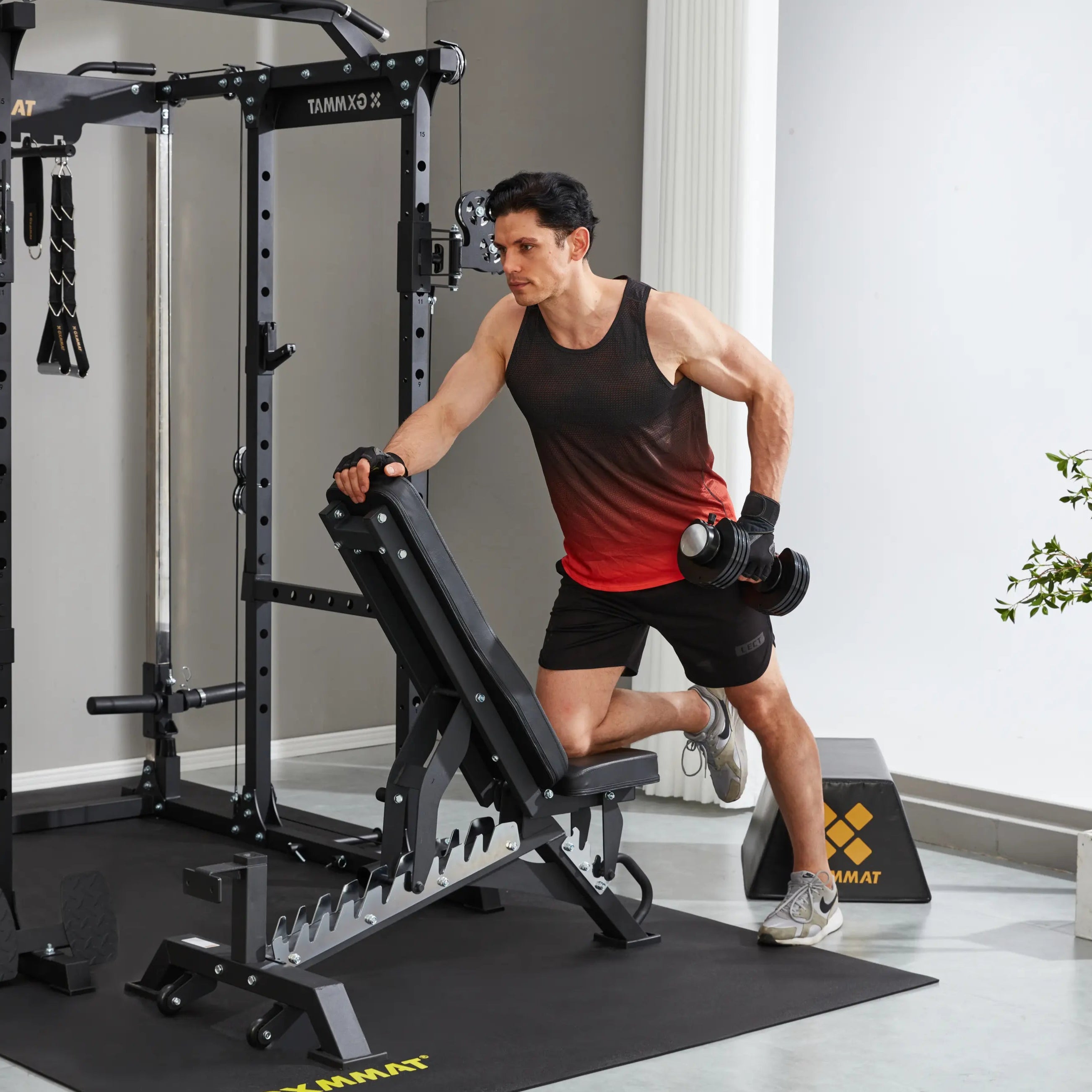
Dumbbells offer something bars cannot: unilateral training. Most people have a dominant arm. When using a barbell, the stronger arm often takes over, leaving the weaker side lagging. Dumbbells force each arm to carry its own weight.
Furthermore, dumbbells allow for active supination. You can start a curl with a neutral (hammer) grip and twist your pinky upward at the top. This twisting motion is a primary function of the biceps brachii, something you simply cannot do with fixed machines.
3. Cable Stations: Mastering the Strength Curve
Gravity has a flaw: it only pulls down. When you curl a dumbbell, there is almost no tension on the bicep at the very bottom or the very top of the movement. The tension peaks only when your forearm is parallel to the floor.
Cable machines solve this. By adjusting the pulley height, you can manipulate the line of pull. This ensures your muscles are fighting resistance from the first inch of the rep to the last. If you are looking for arm exercise machines for sale, a functional trainer or a simple high-low pulley system is often a better investment than a dedicated bicep curl machine.
Exercise Tools for Arms You Might Overlook
The Arm Blaster
Popularized in the Golden Era of bodybuilding, this curved piece of aluminum hangs around your neck and locks your elbows against your torso. It looks archaic, but it enforces strict form. It prevents you from swinging your elbows forward (shoulder flexion) to cheat the weight up. It isolates the bicep by completely removing momentum.
Resistance Bands
While often dismissed as warm-up gear, high-quality resistance bands create "accommodating resistance." As you stretch the band, it gets harder. This matches the strength curve of the triceps during a press-down, where you are naturally stronger near the lockout. Adding bands to your heavy lifts can break through stubborn plateaus.
Common Mistakes When Buying Gear
A major error is purchasing multi-function machines that do everything poorly. Cheap home gyms often have poor pulley ratios, meaning 50lbs feels like 30lbs due to friction and drag. When sourcing exercise tools for arms, prioritize build quality and smooth bearings over bells and whistles.
Another mistake is ignoring the triceps. The triceps make up roughly two-thirds of your upper arm mass. Investing solely in curling gear will leave your arms looking small. Ensure your setup includes a way to perform dips or overhead extensions.
My Training Log: Real Talk
I need to be honest about the "Arm Blaster" I mentioned earlier. On paper, it is the perfect isolation tool. In reality? It hurts. I remember buying one specifically to fix my cheating form on barbell curls.
The first time I used it with decent weight, the metal plate dug so hard into my diaphragm that I could barely breathe at the bottom of the rep. And the strap? It sawed into the back of my neck because the padding was cheap foam. However, the pump was undeniable. I couldn't lift my arms to wash my hair afterward.
Another detail regarding cable machines: I once trained at a hotel gym with a poorly maintained cable stack. Every rep had this gritty, stuttering feeling—like the weight was getting stuck every three inches. It completely ruined the mind-muscle connection because I was focused on the friction rather than the contraction. If you are buying a cable machine for a home gym, do not buy the cheapest option on Amazon. If the carriage doesn't glide on the guide rods, it is useless for hypertrophy.
Conclusion
Building impressive arms requires consistency, but the right equipment acts as a force multiplier. By combining the raw loading potential of free weights with the constant tension of cables, you ensure every fiber is stimulated. Don't get distracted by shiny gadgets; stick to the tools that respect biomechanics and allow for progressive overload.
Frequently Asked Questions
Do I really need machines to build big arms?
No, you can build significant mass with just dumbbells and a barbell. However, machines and cables provide constant tension and stability that free weights lack, which can help optimize growth and refine the muscle once you have built a foundation of strength.
What is the single best piece of home equipment for arms?
If you have limited space, adjustable dumbbells are the best investment. They allow you to perform curls, hammer curls, tricep extensions, and kickbacks without the footprint of a barbell or cable tower.
Are thick grip tools effective for arm size?
Thick grips (or fat bars) are excellent for forearm development and grip strength. However, because your grip is often the weak link, you may have to use less weight on bicep curls, which could reduce the stimulus on the upper arm itself. Use them as a finisher, not for your primary heavy lifts.