Lipped Rubber Mat: Why Your Home Gym Floor Needs One
If you have ever finished a grueling indoor rowing session only to find a pool of sweat—or worse, a leaky water bottle—seeping into your expensive basement flooring, you know the panic. Protecting your foundation is just as critical as maintaining your equipment. A lipped rubber mat is the unsung hero of home gym protection, designed specifically to contain spills, sweat, and debris before they cause permanent damage.
In this guide, we break down exactly why these specialized mats are essential, how to choose the right size for your specific equipment, and what separates a high-quality mat from a cheap alternative.
Key Takeaways
- Ultimate Containment: Raised edges trap moisture, chalk, and dirt, preventing damage to subfloors.
- Material Quality: Heavy-duty rubber outperforms a standard large plastic mat with lip in durability and grip.
- Versatile Sizing: Options range from standard treadmill sizes to an extra large rubber mat with lip for multi-machine setups.
- Easy Maintenance: A quick wipe-down is all it takes to keep your gym sanitary and odor-free.
Choosing the Right Mat for Your Home Gym
Material Matters: Rubber vs. Plastic
When shopping for floor protection, you will likely encounter both rubber and plastic options. While a large plastic mat with lip might seem like a budget-friendly choice, it often cracks under the weight of heavy equipment like power racks or treadmills. High-density rubber mats with lip offer superior shock absorption, acoustic dampening, and slip resistance. They will not warp under pressure, making them the superior long-term investment for serious lifters.
Sizing for Your Equipment
Equipment footprints vary wildly. A stationary bike requires far less coverage than an elliptical or a functional trainer. For standard cardio machines, a large rubber mat with lip usually provides ample coverage. However, if you are setting up a dedicated stretching zone or housing a sprawling cable machine, you will want an extra large rubber mat with lip to ensure every drop of sweat and dropped accessory stays contained. If your space has unique dimensions, you might even consider investing in a custom rubber mat with lip to perfectly hug the contours of your garage or spare bedroom.
Space Planning and Placement Strategies
Cardio Zones and Heavy Sweaters
Cardio equipment is notorious for generating mess. Placing a large rubber tray with lip under your assault bike or rower acts as a catch-all for sweat, spilled pre-workout, and chain oil. Ensure you leave at least a two-inch border between the base of your machine and the raised edge of the mat. This prevents the equipment from sitting unevenly on the lip, which can cause instability during intense intervals.
Free Weight and Lifting Areas
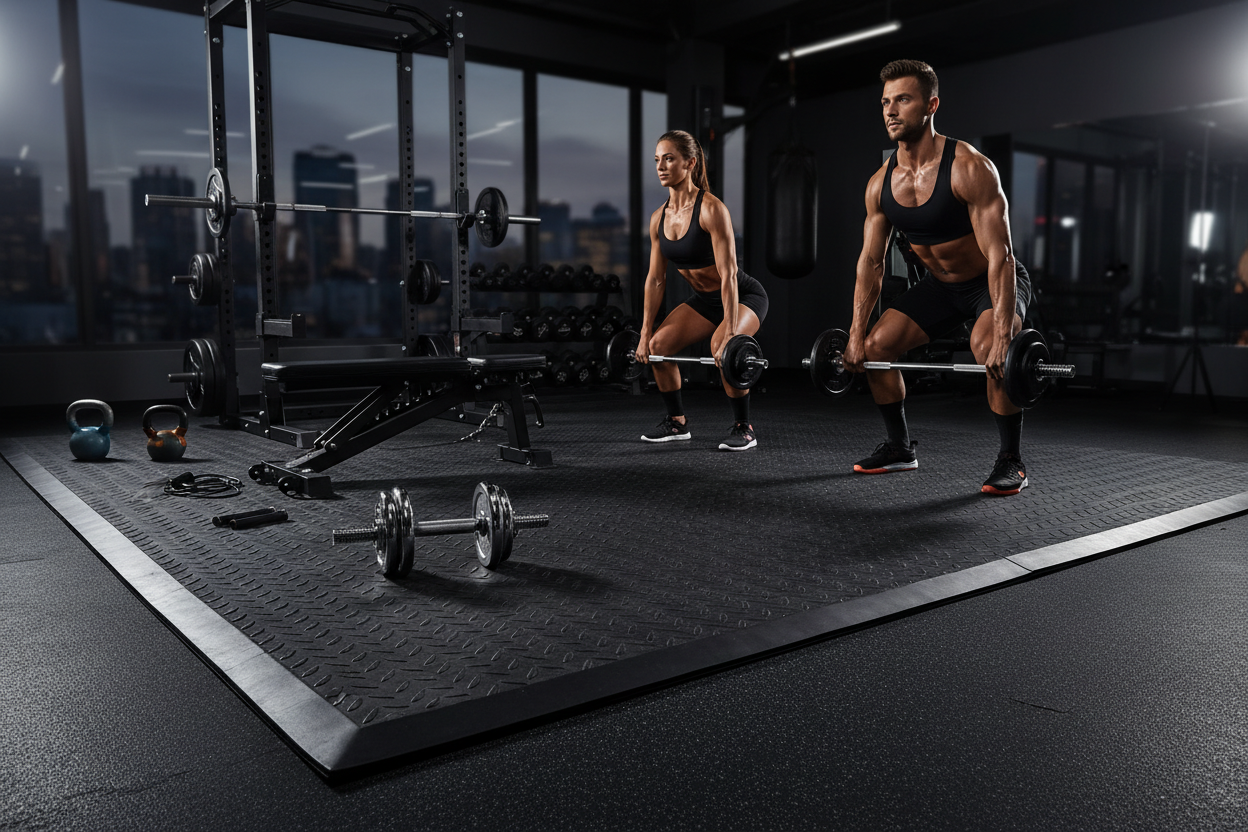
While flat stall mats are standard for lifting platforms, placing a large rubber floor mat with lip in your chalk prep or hydration station is a game-changer. It keeps fine chalk dust and accidental shaker bottle spills completely isolated from your main lifting area. Because it is a completely waterproof mat with lip, cleanup takes seconds rather than requiring a full gym sweep.
From Our Gym: Honest Take
We test a lot of flooring options in our facility, and honestly, I was initially skeptical about needing raised edges. That changed during a brutal summer training block in my un-air-conditioned garage gym. I had a standard flat mat under my indoor cycle, and sweat was constantly migrating off the edges, pooling near my drywall and creating a slipping hazard. Switching to a lipped mat completely solved the issue. The 1-inch raised border trapped everything. One minor caveat: if you drag heavy benches across the gym frequently, you have to be careful not to catch the lip and trip or tear the edge. But for stationary equipment, it is an absolute lifesaver. After two years of heavy use, the vulcanized rubber still looks brand new after a quick mop.
Frequently Asked Questions
Is a lipped mat safe to use on hardwood floors?
Yes, high-quality rubber mats provide excellent protection for hardwood floors. They prevent scratches from equipment vibration and stop moisture from seeping into the wood grain. Just ensure the floor is completely clean before laying the mat down to prevent trapped debris from causing micro-scratches.
How much space do I need for a large rubber mat?
Always measure your equipment footprint at its widest and longest points, then add at least 4 to 6 inches to both dimensions. This ensures the machine sits completely flat inside the mat borders without resting on the raised lip.
How do I clean a lipped rubber mat?
Because these mats contain spills perfectly, cleaning is incredibly simple. Use a mild soap and warm water solution with a mop or rag. Avoid harsh chemicals like bleach, which can degrade the rubber over time. Let it air dry completely before your next workout.