Build Serious Back Width Using the Gravitron Machine
Let’s be honest: the pull-up bar can be the most humbling piece of equipment in the gym. You hang there, struggle for a rep or two, and eventually drop down defeated. This is where the gravitron machine changes the game.
It isn't just a crutch for beginners; it is a legitimate hypertrophy tool that allows you to overload your back muscles without your grip or core failing first. Whether you are eyeing a vintage StairMaster model or a sleek new Nautilus unit, understanding how to leverage this machine is the fastest way to bridge the gap between lat pulldowns and unassisted calisthenics.
Key Takeaways
- Counter-Intuitive Weight: Unlike most gym gear, selecting more weight on the stack makes the exercise easier because it acts as a counterbalance.
- Volume King: The Gravitron allows you to train to failure safely, making it superior for hypertrophy compared to struggling through 1-2 sloppy bodyweight reps.
- Two Primary Moves: It is designed primarily as a gravitron pull-up machine and a dip station, targeting the lats and triceps respectively.
- Eccentric Focus: It provides a stable platform to focus on the "negative" portion of the lift, which is crucial for strength building.
The Mechanics: How the Gravitron Works
If you have never used a gravitron workout machine, the mechanics can be confusing. On a cable row, moving the pin down the stack makes it heavier. On the Gravitron, moving the pin down makes it lighter relative to your effort.
This is a counterbalance system. If you weigh 180 lbs and you set the machine to 100 lbs, you are effectively lifting 80 lbs of your own body weight. This allows you to perform the gravitron exercise with strict form, full range of motion, and controlled tempo—three things that usually vanish when beginners attempt standard pull-ups.
The Exercises: More Than Just Pull-Ups
The Assisted Pull-Up
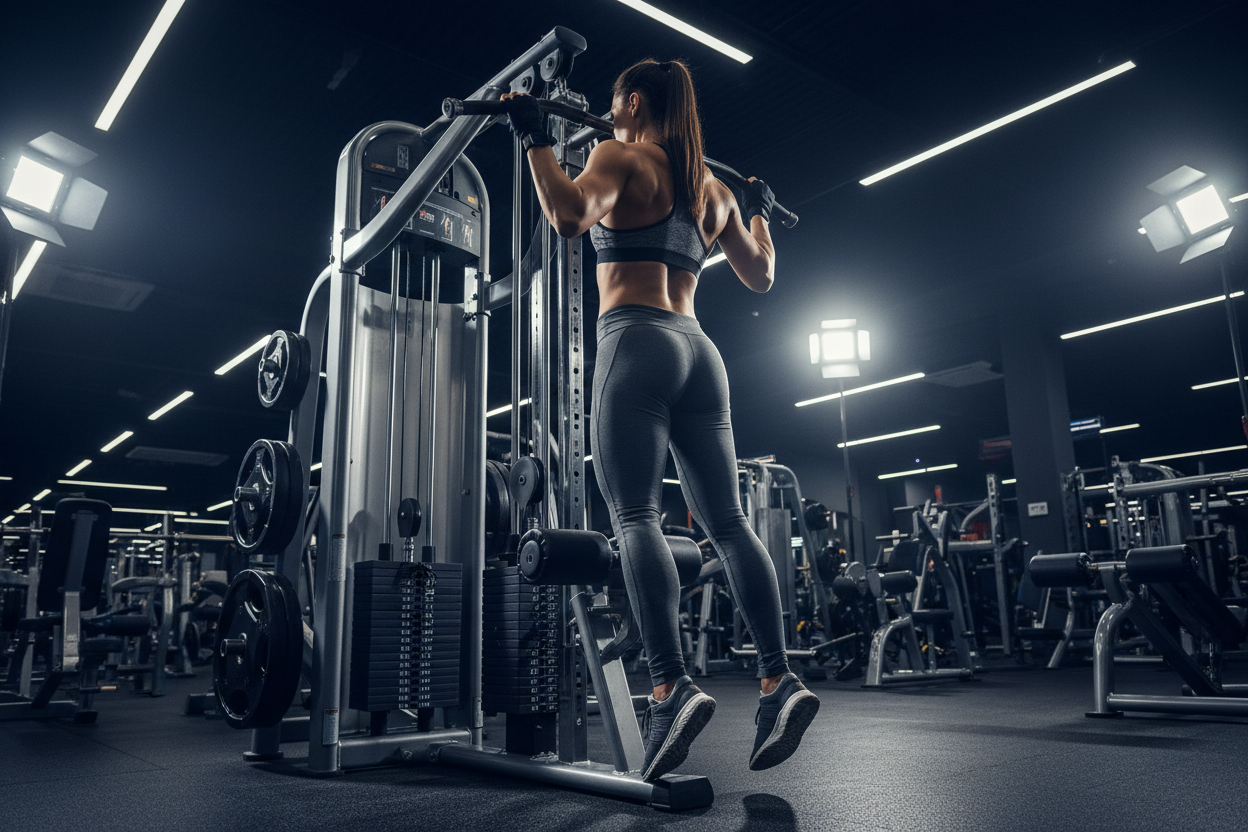
This is the bread and butter of the gravitron workout. By kneeling on the padded platform, you can manipulate your grip width to target different areas of the back. A wide grip hits the upper lats for width, while a neutral (palms facing) grip targets the lower lats and biceps.
Make sure you fully extend at the bottom. Many users shortchange the movement, but the Gravitron is the safest place to get a deep stretch in the lats without shoulder strain.
The Assisted Dip
Most units, especially the classic StairMaster Gravitron 2000, have rotatable handles for dips. This turns the machine into a tricep and chest builder. Keep your torso upright to hit the triceps, or lean forward slightly to engage the lower chest.
Common Mistakes to Avoid
Even though it's a machine, you can still mess it up. The biggest error I see in the gravitron gym setting is momentum usage. Bouncing at the bottom of the rep uses the spring-loaded energy of the weight stack to launch you back up. This robs your muscles of tension.
Another issue is dismounting. Never just step off the pad while it is at the bottom. The counterweight will slam the stack down (loudly) and the knee pad will shoot up, potentially hitting your chin. Always ride the pad to the top slowly before stepping off.
My Personal Experience with the Gravitron Machine
I have a love-hate relationship with the Nautilus Gravitron. Years ago, when I was rehabbing a shoulder injury, I couldn't hang from a bar without pain. I had to swallow my pride and use the assisted machine.
Here is the unpolished truth about these machines, specifically the older Gravitron 2000 models you find in gritty bodybuilding gyms: the knee pads are often slippery. I remember specifically wearing track pants one leg day and sliding around on the vinyl pad mid-rep, which completely threw off my lat engagement. I learned quickly to wipe that pad down thoroughly before starting, or the sweat from the previous user makes it feel like you're kneeling on ice.
Also, the chain drive on the older StairMaster units has a very distinct, jerky feeling if you go too fast. It taught me to slow my reps down to a 3-second negative just to keep the movement smooth. That accidental tempo change actually exploded my back growth more than the heavy reps ever did.
Conclusion
The stairmaster gravitron and its modern cousins are not "easy buttons." They are tools for volume and technique. Use them to build the requisite strength for bodyweight movements, or use them at the end of a back day to burnout your lats safely. Respect the machine, control the negative, and the results will follow.
Frequently Asked Questions
Is the Gravitron better than lat pulldowns?
They serve different purposes. The gravitron machine exercise mimics the functional movement pattern of a pull-up, engaging more core stabilizers than a seated lat pulldown. However, lat pulldowns are easier to isolate specific muscles.
How much weight should I use on the Gravitron?
Start with a weight that allows you to perform 10-12 reps with perfect form. Remember, on a gravitron pull-up machine, selecting more weight on the stack makes the lift easier. Aim to reduce the assistance weight by 5-10 lbs every few weeks.
Can the Gravitron help me do real pull-ups?
Absolutely. It is the best transition tool available. By slowly reducing the assistance over time (progressive overload), you eventually reach a point where the counterweight is zero, meaning you are ready for the real thing.