DOMS: How Long Muscle Soreness Lasts and How to Relieve It
Quick answer: DOMS (delayed onset muscle soreness) is the stiffness and tenderness you feel after a new or harder workout. It usually starts 12–24 hours after exercise, peaks at 24–72 hours and fades within about 5–7 days. It's caused by small amounts of muscle damage and the repair process, not lactic acid. Light movement, massage or foam rolling, sleep and protein can make it feel better. Soreness is not a sign of a better workout.
Key takeaways
- Timeline: starts the next day, worst on day 2–3, gone within a week.
- Cause: unfamiliar exercise, especially the lowering (eccentric) part of a move.
- Not lactic acid: that clears within an hour or so of exercise.
- Relief: gentle movement, massage tools, sleep, protein and patience.
- Red flags: severe pain, major swelling or dark urine need medical attention.
What causes DOMS?
When you do something new, add a lot of volume or emphasize the lowering phase (like downhill walking, slow squats or the first day of skiing), your muscle fibers and the tissue around them experience tiny amounts of damage. The repair process brings inflammation and sensitivity, which you feel as soreness and stiffness. The good news: your body adapts fast. The same workout repeated a week or two later causes much less soreness, often called the "repeated bout effect."
DOMS timeline
| Time after workout | What you'll typically feel |
|---|---|
| 0–12 hours | Usually fine, maybe a little tired |
| 12–24 hours | Stiffness and tenderness begin |
| 24–72 hours | Peak soreness, especially getting up, sitting down or on stairs |
| 3–5 days | Steadily improving |
| 5–7 days | Mostly gone |
DOMS vs injury: how to tell
| DOMS | Possible injury | |
|---|---|---|
| Onset | Gradual, the day after | Sudden, during the exercise |
| Feel | Dull, achy, both sides | Sharp, one specific spot |
| With movement | Eases as you warm up | Gets worse |
| Duration | Improves within a week | Persists or worsens |
Seek medical care right away if you have extreme pain far beyond normal soreness, significant swelling, weakness, or dark (tea or cola colored) urine after exercise. These can be signs of rhabdomyolysis, a serious condition.
How to relieve sore muscles
- Keep moving gently. Walking, easy cycling or a light version of the workout increases blood flow and often reduces stiffness more than resting on the couch.
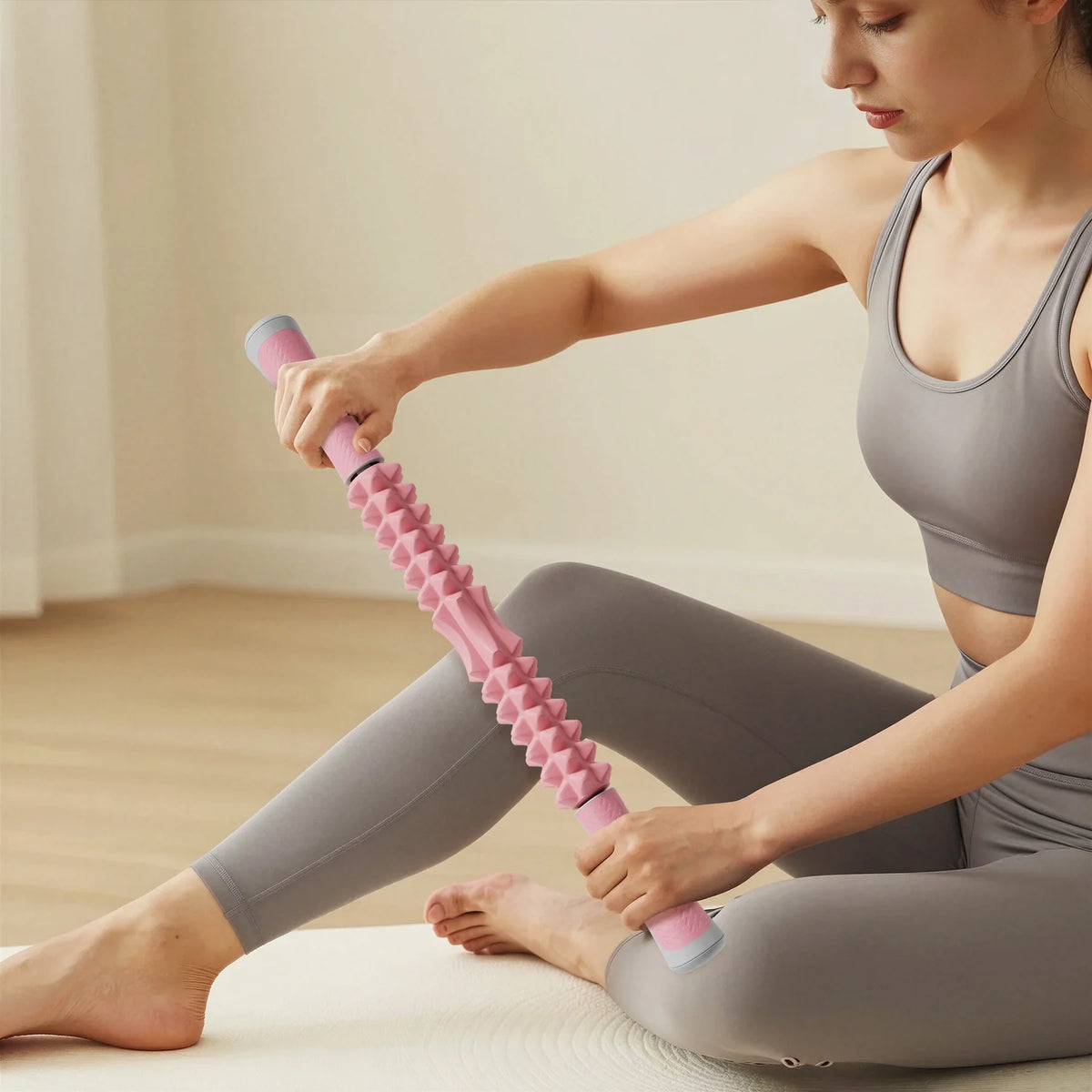
- Massage and foam rolling. Research suggests massage and rolling can reduce how sore you feel. Spend 30–60 seconds per muscle at a comfortable pressure.
- Sleep 7–9 hours. Most repair happens during sleep.
- Eat enough protein spread through the day to support repair.
- Heat or a warm bath can make stiff muscles feel better.
- Stay hydrated.
The best tools for muscle soreness
| Tool | Best for |
|---|---|
| Foam roller (17"–24") | Quads, hamstrings, glutes, upper back. Longer rollers cover both legs at once. |
| Short 13" roller | Calves, shins, travel |
| Massage roller stick | Calves, quads, IT band area; you control the pressure with your hands, seated or standing |
| Large soft mat | Comfortable floor space for rolling and stretching |
Not sure which roller to buy? Our foam roller buying guide compares sizes, solid vs hollow and textures. Roll on a large exercise mat so you have room to move without sliding onto a hard floor.
How to prevent DOMS
- Ramp up gradually. Add new exercises and volume over a few weeks.
- Repeat workouts. Soreness drops quickly once your body is used to a movement.
- Warm up for 5–10 minutes.
- Prepare for seasonal activities: a few weeks of leg training before ski season or a holiday hike goes a long way. See our ski conditioning plan.
Should you work out when sore?
Yes, usually. Train a different muscle group, or do a lighter session of the same one. Avoid maximal lifts on very sore muscles, since soreness temporarily reduces strength and coordination. And don't chase soreness as proof that a workout worked: muscle growth doesn't require it.
FAQ
How long does DOMS last?
It typically starts 12–24 hours after exercise, peaks at 24–72 hours and fades within 5–7 days.
Is DOMS caused by lactic acid?
No. Lactate clears from the blood soon after exercise. DOMS comes from small amounts of muscle damage and the repair process that follows.
Does foam rolling help sore muscles?
Massage and foam rolling can reduce how sore you feel and improve short-term range of motion. Roll each area for 30–60 seconds at a comfortable pressure.
Should I work out if I'm sore?
Light activity or training other muscle groups is fine and can help. Avoid maximal efforts on very sore muscles.
Does soreness mean I built muscle?
Not necessarily. Soreness mostly reflects how new or unfamiliar a workout was. Steady progress in weights or reps is a better sign that you're building muscle.
Written by Yuvien Royer for GXMMAT. This article is general fitness information, not medical advice. Seek medical care for severe pain, swelling or dark urine after exercise.