Do You Really Need a Special Exercise Routine to Get Ripped?
I remember the first time I decided to 'cut' for summer. I’d spent all winter grinding out heavy triples on the squat rack and eating everything that wasn't nailed down. When the weather warmed up, I panicked. I swapped my heavy plates for 15-pound dumbbells and started doing sets of 30, thinking the 'burn' was fat melting off. I didn't get shredded; I just got weak, flat, and miserable. I looked like I’d never touched a barbell in my life by the time July hit.
Finding a real exercise routine to get ripped isn't about doing more work with less weight. It’s about a strategic shift in how you manage your energy while keeping the stimulus high enough that your body doesn't decide to cannibalize its own muscle for fuel. If you’re training in a garage gym like I am, you don't need fancy cable machines or 20 different isolation moves. You need a fitness plan to get ripped that respects the laws of thermodynamics and muscle preservation.
Quick Takeaways
- Keep the weight heavy: High reps don't 'define' muscle; they just burn slightly more glycogen.
- Reduce total volume: You can't recover from 20 sets per body part when you're in a deficit.
- Prioritize compound movements: Big lifts keep your metabolic rate higher and preserve more mass.
- Conditioning is a tool, not the foundation: Use it to create a deficit, not as a replacement for lifting.
The 'High Reps for Definition' Lie We All Believed
We’ve all seen the old-school bodybuilding magazines suggesting that you should switch to high-rep 'shaping' exercises the moment you want to see your abs. It’s one of the most persistent myths in the industry. Here is the cold truth: you cannot spot-reduce fat by doing high reps on a specific muscle. Doing 50 crunches won't burn the fat off your stomach, and doing 20-rep sets of triceps extensions won't 'tone' your arms. A get ripped exercise plan that focuses exclusively on high reps is essentially a recipe for muscle loss.
When you are in a caloric deficit, your body is looking for reasons to get rid of muscle. Muscle is metabolically expensive—it costs energy just to keep it sitting there. If you stop lifting heavy, you’re telling your body it no longer needs that strength. By switching to light weights, you remove the primary reason your body has for keeping that muscle around. A fitness program to get ripped must prioritize intensity over the 'pump.' If 315 pounds on the bar built your chest, 315 pounds (or as close as you can get) is what will keep it there when the calories get low.
Why You Keep Losing Strength When You Cut
The biggest mistake I see in any get ripped training program is the refusal to adjust volume correctly. People think that because they are eating less, they need to work harder to 'burn' the fat off. This leads to massive central nervous system fatigue. Mechanical tension is the primary driver of muscle growth and retention. If you drop the weight to 'feel the burn,' you are decreasing mechanical tension. You don't need to be constantly lifting to failure in your workout to get big or to maintain that size during a cut. In fact, training to failure too often while in a deficit is a fast track to burnout.
Strength loss during a get ripped workout plan is often a sign that you're overtraining or under-recovering. When you're eating at a surplus, you can get away with sloppy programming. When you're cutting, every set counts. You need to keep the weight on the bar heavy to signal to your brain that the muscle is still a functional necessity. If your bench press drops by 20% during your workout program to get ripped, you haven't just lost fat; you've lost contractile tissue. Keep the intensity high, but don't feel like you have to grind every single rep until your eyes pop out.
What an Actual Exercise Routine to Get Ripped Looks Like
A successful gym plan to get ripped looks surprisingly similar to a strength-building plan, just with the 'fluff' cut out. I recommend a low-volume, high-intensity approach. Think 2 to 3 sets per exercise instead of 4 or 5. You want to hit your heavy compounds first—squats, deadlifts, presses—and then move on to a few accessory movements. If you're looking for a solid foundation, check out our workout hub for base strength templates that you can adapt for your cutting phase.
The best training to get ripped involves hitting each muscle group twice a week. This keeps protein synthesis elevated without crushing your recovery capacity. For example, an Upper/Lower split works wonders. You might do heavy bench and rows on Monday, heavy squats and RDLs on Tuesday, rest Wednesday, and then repeat with slightly different variations on Thursday and Friday. This workout schedule to get ripped ensures you're staying strong while leaving enough gas in the tank for some light cardio or daily walks. The best workout to get ripped is the one that allows you to maintain your current PRs while the scale moves down.
Don't Neglect the Lower Body
Many guys focus entirely on the 'mirror muscles' when looking for workouts for getting ripped. They want the chest, the shoulders, and the abs. But skipping heavy leg days is a massive tactical error. Your legs and glutes are your largest muscle groups. Training them heavy creates a systemic hormonal response and burns significantly more energy than a few sets of bicep curls. If you want the full breakdown on lower body aesthetics, read our guide on how to get ripped legs.
A ripped exercise plan that includes heavy squats or lunges will keep your metabolic rate higher for longer after you leave the gym. It also ensures that when the fat finally comes off, you actually have a powerful, athletic frame rather than just looking like a marathon runner who forgot to eat. Exercises to get ripped aren't special; they are the same basic movements done with better precision and stricter diet control.
Setting Up Your Garage for Heavy Conditioning
To get that final bit of definition, you might want to add some high-intensity interval training (HIIT) or giant sets. In a home gym, space is usually the limiting factor. You don't need a 40-yard turf to get a get ripped workout in. I like to pair a heavy lift with a bodyweight movement or a kettlebell swing. For instance, do a set of heavy overhead presses, then immediately go into 30 seconds of mountain climbers or burpees.
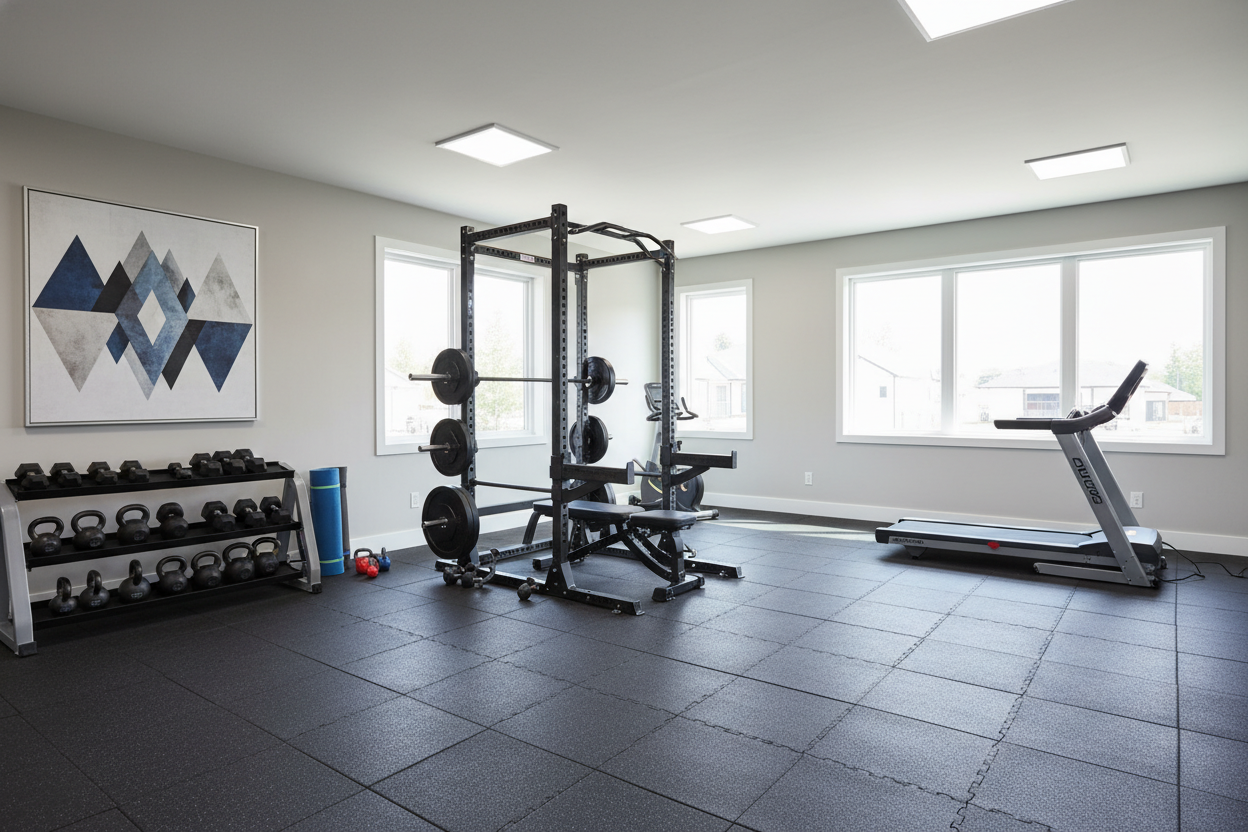
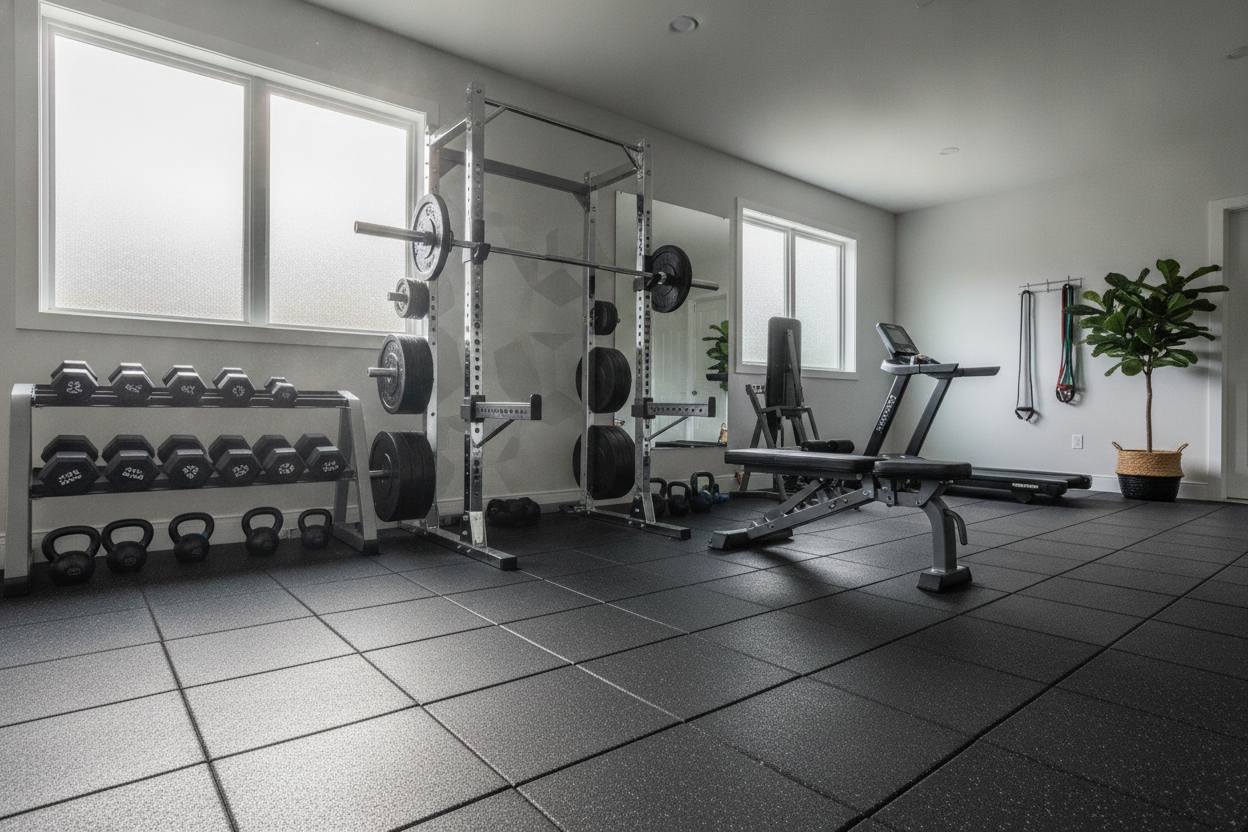
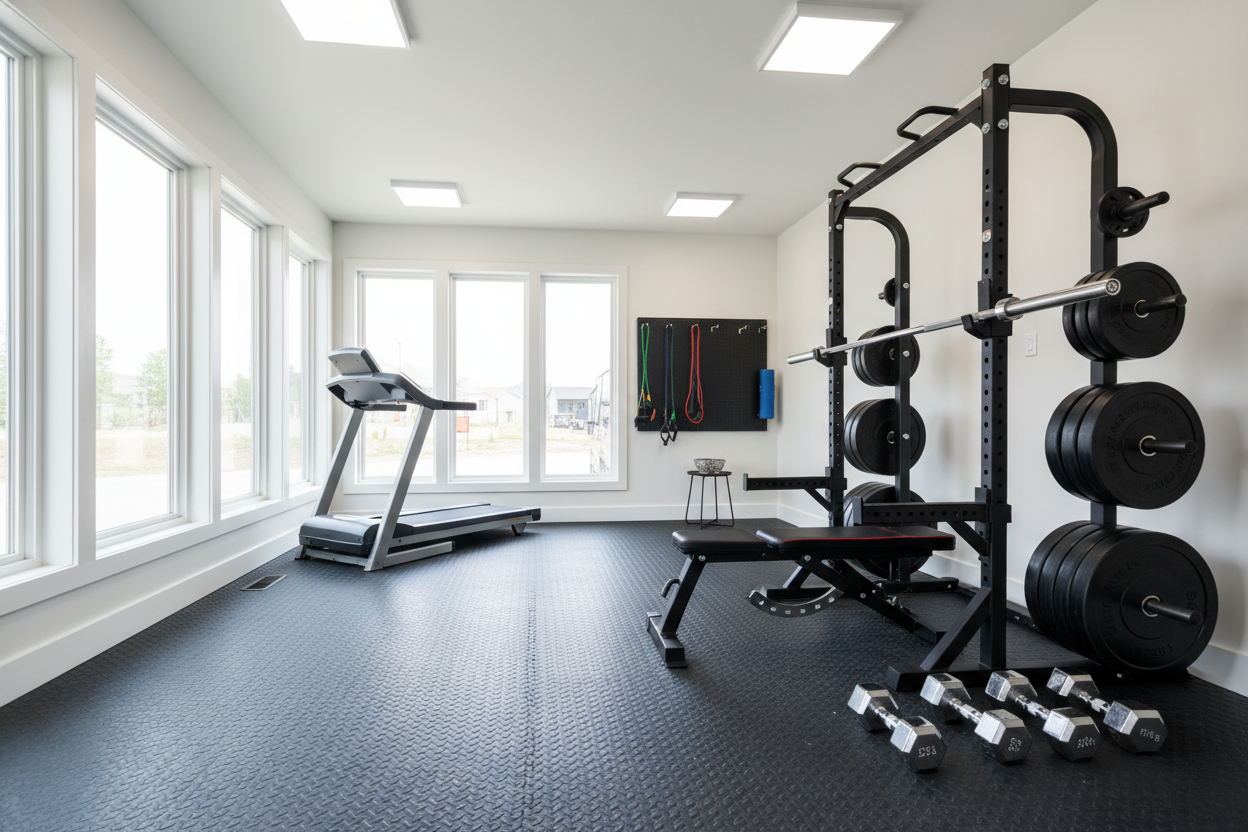
If you're doing these kinds of ripped workouts, you're going to be dropping weights and moving fast. I recommend laying down a 6x8ft exercise mat to protect your floor when the sweat starts pouring and you're gassing out during supersets. It provides the grip you need for floor-based ab work and the cushioning required for high-impact movements. This turns your lifting area into a functional space for a full body workout to get ripped without needing a commercial gym membership.
The Boring Truth About the Kitchen
I’ve tested every workout routine to get ripped under the sun, from high-volume German Volume Training to low-frequency HIT. None of them work if you are eating too much. You can have the best exercise routine to get ripped in the world, but if you're in a 500-calorie surplus, you're just going to get 'bulky.' Getting shredded is 80% about your caloric intake and 20% about the training program to get ripped.
Stop looking for workouts that get you ripped and start looking at your macros. You need enough protein to preserve muscle (about 1 gram per pound of body weight) and a modest caloric deficit (250-500 calories below maintenance). When you combine that with a gym routine to get ripped that focuses on heavy lifting, the fat has no choice but to disappear. It’s not flashy, and it’s not fast, but it’s the only way to get that 'shredded' look without looking like you've spent a month on a desert island.
Personal Experience: My Biggest Cutting Mistake
A few years back, I tried a workout plan to get big and ripped at the same time. I was doing two hours of lifting followed by 45 minutes of HIIT every single day. I was also eating about 1,800 calories. Within two weeks, my joints felt like they were filled with sand, and I was so irritable I couldn't hold a conversation. I ended up binging on an entire pizza and quitting the cut altogether. The lesson? More is not better. A get ripped routine should feel challenging but sustainable. If you can't see yourself doing it for 12 weeks, it’s a bad plan.
FAQ
What is the best exercise routine to get ripped?
The best routine is a high-intensity, low-volume strength program. Focus on 3-5 heavy compound lifts per session, twice a week per muscle group, while maintaining a caloric deficit.
How many days a week should I work out to get ripped?
Usually, 4 days a week is the sweet spot. This allows for an Upper/Lower split which provides enough recovery time for your CNS while keeping your metabolic rate elevated.
Can I get ripped without cardio?
Yes. Cardio is just a tool to increase your caloric deficit. You can achieve the same result by eating slightly less, though some light activity like walking is highly recommended for health and recovery.
How long does it take to see results from a get ripped workout plan?
If your diet is on point, you will see noticeable changes in 4 weeks, but a full transformation usually takes 12 to 16 weeks depending on your starting body fat percentage.