Ditch the Barbell: Why I Only Do the Kettlebell Hip Thrust Now
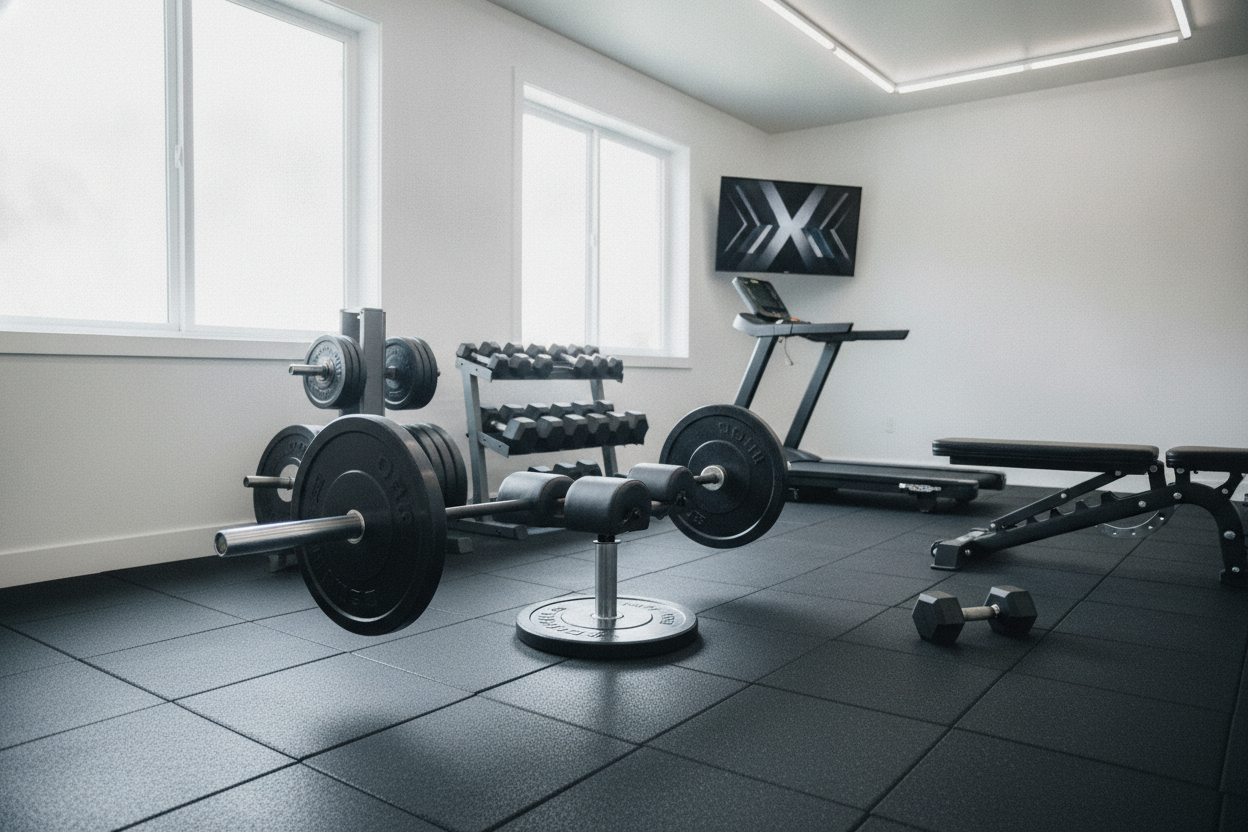
I remember the first time I tried to max out my glute bridge in my 400-square-foot garage. I spent ten minutes wrestling a 45-lb bar and four 45-lb plates into position, only to realize I’d forgotten my barbell pad. By the second set, my hip bones looked like they’d been through a car wreck and I had zero energy left for the actual lift. That is when I pivoted to the kettlebell hip thrust, and honestly, I haven't looked back.
Quick Takeaways
- Setup time is cut by 90% compared to barbell variations.
- The bell's center of gravity is more ergonomic for the pelvic crease.
- Perfect for small home gyms where a 7-foot bar is a liability.
- High-rep protocols with a kettlebell create a more intense 'burn' without the joint stress.
The Brutal Reality of Barbell Glute Training at Home
Loading a barbell for glutes is a logistical nightmare. You need the bar, the plates, the clips, and that thick foam pad that always smells like old sweat. In a tight space, you’re constantly banging the bar against your rack or your lawnmower. It is a friction-heavy process that makes you want to skip the workout entirely.
Then there is the bruising. Unless you have a $50 competition-grade pad, that steel bar is going to dig into your iliac crest. I have seen guys try to use rolled-up yoga mats or towels, but it never stays put. When the setup is more painful than the exercise, your consistency is going to tank.
Why the Kettlebell Hip Thrust Solves the Setup Nightmare
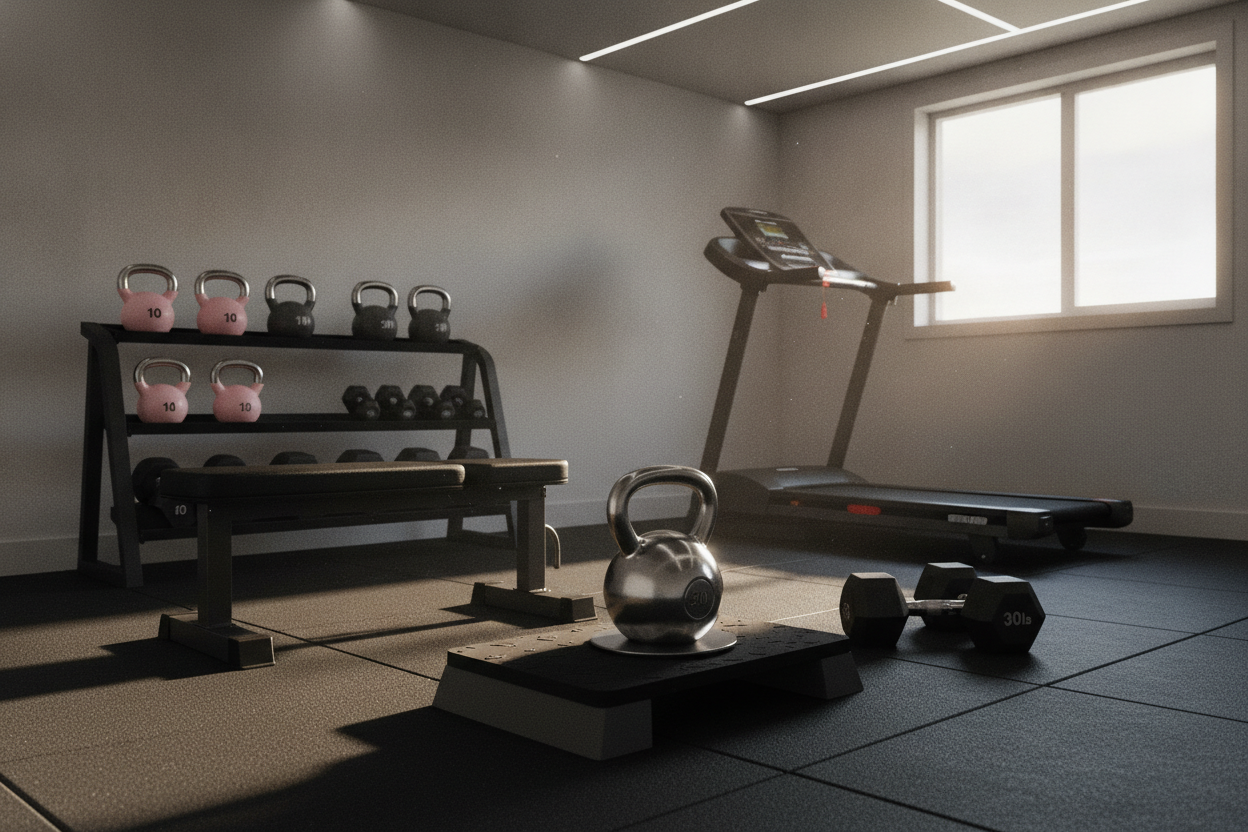
The kettlebell is built differently. A 70-lb or 80-lb bell has a compact center of gravity that sits right in the hip crease without digging into your bones like a thin steel bar. Because the weight is concentrated, the kb hip thrust feels more stable; you aren't balancing a long lever arm that wants to tilt left or right.
If you pair it with a dedicated hip thrust bench, the setup time drops from five minutes to five seconds. You just grab the bell, sit, and go. This is the difference between getting a quick session in before work and deciding it’s too much of a hassle to even start.
How to Nail Your Setup Without Sliding Across the Floor
Don't just lean against a couch or a slippery weight bench. You need a stable pivot point at the bottom of your shoulder blades. Your feet need to be flat, and if you are on a slick garage floor or cheap laminate, you are going to slide backward every time you drive up.
I always throw down a large, grippy floor mat to keep my heels anchored. Without it, your hamstrings take over because you are fighting for traction instead of driving through the floor. Keep your chin tucked and your gaze forward—don't look at the ceiling—to keep your spine neutral while performing the hip thrust kettlebell style.
Wait, What About the Kettlebell Hip Thrust Standing?
People often search for the kettlebell hip thrust standing, but let’s get clear: that is basically a kettlebell swing. While the swing is a phenomenal movement, it is a horizontal power move. A bench-supported hip thrust with kettlebell is a vertical loading move designed for hypertrophy.
The mechanics are different. The standing version uses momentum and a hinge. The thrust uses a constant tension model. If you want to build the 'shelf' on your glutes, you need the bench-supported version. If you want to be an explosive athlete, do the swings.
A No-BS Way to Program the Hip Thrust With Kettlebell
You probably won't have a 300-lb kettlebell in your garage. That is fine. To make a 50-lb or 70-lb bell feel like a ton of bricks, you need to master tempo. Try a 3-second descent, a 2-second pause at the top with a maximal squeeze, and a controlled 1-second drive.
Before you start your heavy sets, hit a kettlebell hip shift to wake up your glute medius and open up your hip flexors. It makes the actual thrusts feel way more productive. Aim for 3-4 sets of 15-20 reps. By the time you hit rep 12 with a pause, you’ll realize why you don't need the barbell anymore.
My Personal Experience
I once tried to use a 100-lb dumbbell for these because I thought 'heavier is better.' It rolled off my lap during a set and nearly crushed my toe. The kettlebell handle gives you something to actually grip, keeping the weight secure against your body. It is safer and way less clumsy when you are training solo in a garage.
FAQ
Is a kettlebell enough weight for glute growth?
Yes, if you use high reps and pauses. Most people focus on moving heavy weight with bad form; 70 lbs with a 2-second pause will build more muscle than 225 lbs with a bouncy, half-rep range of motion.
Can I do these on the floor?
You can do a glute bridge on the floor, but the range of motion is much shorter. Using a bench allows your hips to drop lower, which stretches the glute under load—that is where the real growth happens.
What size kettlebell should I start with?
Most men can start with a 35-lb (16kg) bell, while women often start with a 18-lb to 26-lb (8kg-12kg) bell. Focus on the squeeze at the top before moving up in weight.