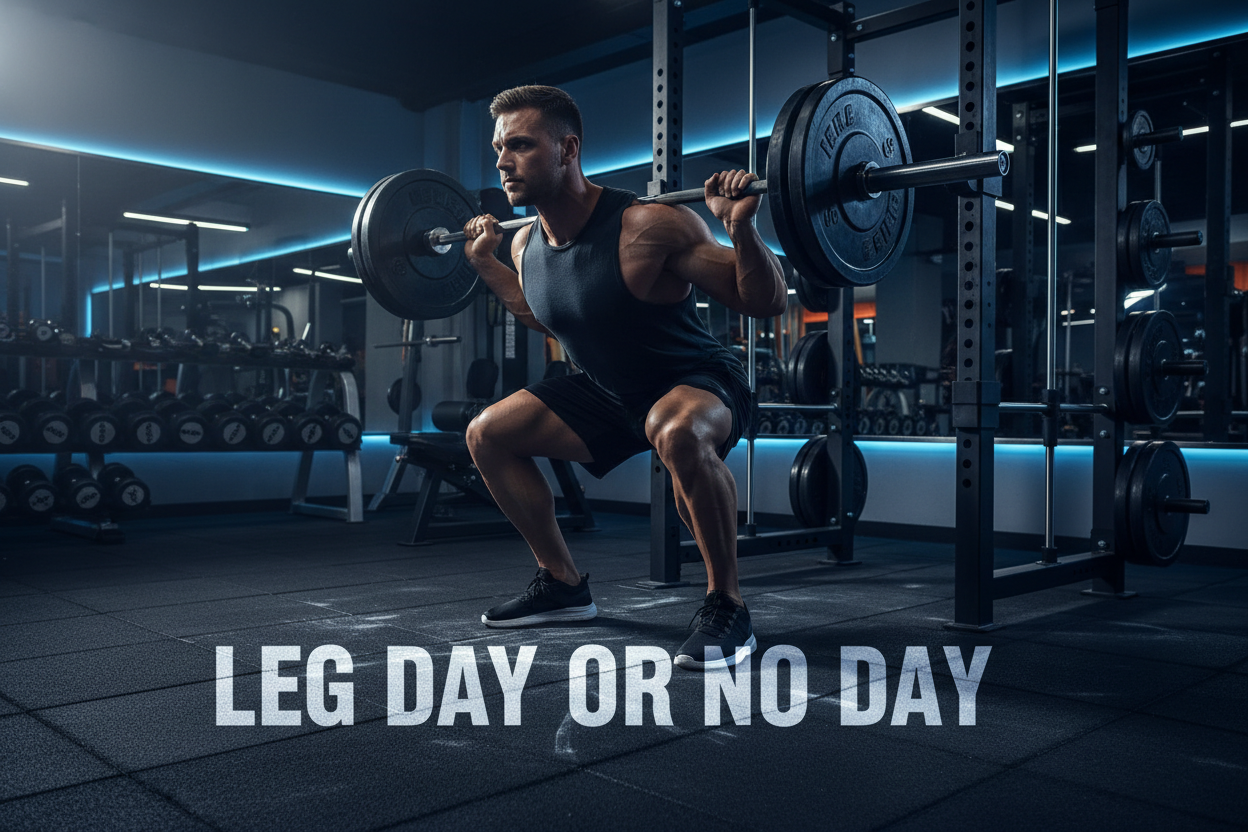
Ditch the Barbell: How to Build Strong Legs at Home With Zero Equipment
Most gym-goers operate under the misconception that leg growth stops the moment you step away from the squat rack. The belief is that without hundreds of pounds of iron across your back, you cannot generate enough stimulus to force muscle adaptation. This is simply untrue. While heavy loads are efficient for building raw power, your body does not know the difference between a metal plate and the mechanical tension created by leverage and gravity. If you manipulate intensity, volume, and rest times correctly, you can build impressive lower body size and strength anywhere.
To effectively approach leg training without weights, you must focus on progressive overload through methods other than simply adding mass. This involves increasing the time under tension, reducing stability to engage more muscle fibers, and utilizing higher repetition ranges to induce metabolic stress. The goal is to reach muscular failure. If you finish a set feeling like you could have done five more reps, you aren't training hard enough. You have to chase the burn and the shake.
The Mechanics of Bodyweight Leg Growth
Understanding how to workout legs without weights requires a pivot from bilateral movements (using both legs) to unilateral movements (using one leg). A standard bodyweight squat might feel easy because your body weight is distributed across two strong pillars. Shift that same load onto a single leg, as seen in a pistol squat or Bulgarian split squat, and the intensity skyrockets. You are instantly lifting a significant percentage of your body weight with a single limb, which often rivals the intensity of a weighted barbell exercise.
I learned this lesson the hard way a few years ago. I was traveling through remote parts of Southeast Asia with absolutely no access to a gym for three months. I was terrified of losing the squat strength I had spent years building. I committed to a daily regimen of high-volume lunges, jump squats, and hill sprints. When I finally returned to a gym, I expected my numbers to have plummeted. Instead, my squat remained stable, but my stability and muscle separation had improved drastically. The soreness I experienced from those hotel room sessions was unlike anything I felt from a heavy set of five. That experience proved that intensity is a matter of effort, not just equipment.
Essential Exercises for Legs at Home Without Weights
A comprehensive routine needs to hit the quads, hamstrings, glutes, and calves. Slapping together a few random jumps won't cut it. You need structured movement patterns. Here are the most effective exercises for legs at home without weights that should form the core of your program.
The Bulgarian Split Squat
This is the king of bodyweight leg movements. By elevating your rear foot on a couch, chair, or bed, you place almost the entire load on the front leg. It challenges balance, stretches the hip flexors, and destroys the quads and glutes. Keep your torso upright to hit the quads or lean forward slightly to engage the glutes more. Aim for slow, controlled descents.
Pistol Squats (Single-Leg Squats)
The pistol squat is the ultimate test of mobility and strength. It requires you to squat all the way down on one leg while the other extends forward. If you cannot do a full pistol yet, start by squatting down to a chair and standing back up using only one leg. This movement recruits stabilizing muscles that standard squats often miss.
Glute Bridges and Single-Leg Hip Thrusts
Neglecting the posterior chain is a common mistake in at home leg workouts without weights. Quads often get all the love, leading to knee issues later. Lie on your back, knees bent, and drive your hips toward the ceiling. To make it a strength builder rather than just a warm-up, lift one leg in the air and perform the thrust with a single leg. Squeeze hard at the top for two seconds.
Nordic Hamstring Curl Negatives
This is one of the few bodyweight movements that effectively isolates the hamstrings. Kneel on a soft surface and anchor your feet under a heavy piece of furniture or have a partner hold them. Keep your body straight and slowly lower yourself toward the floor using only your hamstrings to control the fall. Catch yourself with your hands, push back up, and repeat. The eccentric (lowering) phase is where the magic happens here.
Structuring Your Leg Day Without Weights
Random effort yields random results. To see progress, you need a plan. A solid leg day without weights should follow a sequence: explosive movements first to prime the nervous system, followed by difficult unilateral strength work, and finishing with high-repetition metabolic conditioning.
Here is a sample circuit to try. Perform this circuit 3 to 4 times, resting 90 seconds between rounds:
- Jump Squats: 15 reps (Explosive power)
- Bulgarian Split Squats: 12 reps per leg (Primary strength builder)
- Single-Leg Hip Thrusts: 15 reps per leg (Posterior chain)
- Walking Lunges: 20 reps total (Hypertrophy and endurance)
- Calf Raises on a Step: 20 reps per leg (Slow tempo)
This volume adds up quickly. By the third round, your legs should be shaking. If they aren't, you are moving too fast or not going deep enough in the range of motion.
Progression: Making It Harder
Since you cannot add plates to a bar, you must use other variables to ensure you are doing effective leg strengthening exercises no equipment style. The best way to increase difficulty is by manipulating tempo. Instead of a standard up-down rhythm, try a 3-1-1 tempo: three seconds down, a one-second pause at the bottom, and one second up. That pause at the bottom removes the stretch reflex (the bounce), forcing your muscles to generate force from a dead stop.
Another method is the "1.5 rep" style. Go all the way down, come halfway up, go back down, and then return to the top. That counts as one rep. This increases the time your muscles spend under tension, which is the primary driver for hypertrophy in leg workouts with no weights.
Consistency is Key
Bodyweight training requires consistency and mental fortitude. Without the external validation of a heavy barbell, you have to be honest with yourself about your effort levels. Treat these home sessions with the same respect you would give a gym session. Put your phone away, focus on the muscle contraction, and push through the burn. Your legs can grow without iron, but they cannot grow without effort.
Frequently Asked Questions
Can you actually build muscle mass with only bodyweight leg exercises?
Yes, you can build significant muscle mass, but you need to train close to failure. Because the load is lighter than a barbell, you must perform higher repetitions or use difficult unilateral variations to create enough fatigue to stimulate growth.
How often should I train legs if I am not using weights?
Since bodyweight training generally causes less central nervous system fatigue than heavy powerlifting, you can train legs more frequently. Aim for 2 to 3 times per week, allowing at least 48 hours of recovery between sessions to let the muscles repair.
What if I have bad knees?
Bodyweight training is often better for bad knees because there is less compressive force on the joint compared to heavy lifting. Focus on posterior chain exercises like glute bridges and ensure your knees track over your toes during squats; if pain persists, reduce the range of motion or consult a physical therapist.