Don't Skip Leg Day: The Blueprint for Massive Lower Body Gains
You can’t build a skyscraper on a swamp. That old adage applies perfectly to your physique. Neglecting your lower half leaves you with a weak foundation, limiting your athletic potential, aesthetic balance, and even your upper body strength. While the bench press often gets the glory, the squat rack is where resilience is forged. If you want to build a truly capable body, you need to prioritize movement patterns that challenge the quadriceps, hamstrings, glutes, and calves through a full range of motion.
Many lifters overcomplicate their training. They hunt for exotic variations before mastering the basics. The truth is simpler: a comprehensive routine relies on a balance of knee-dominant movements (like squats) and hip-dominant movements (like deadlifts). By focusing on progressive overload on a handful of proven lifts, you will see better results than if you constantly rotate through trendy exercises you saw on social media.
My Wake-Up Call With Lower Body Training
I learned the importance of leg training the hard way. Early in my fitness journey, I treated leg day as an optional accessory to my chest and arm workouts. I figured running was enough for my legs. I was wrong. After a few years of heavy upper-body lifting, I developed nagging lower back pain and stalled on my overhead press. I felt unstable.
A mentor at the gym pulled me aside and pointed out the obvious: my posterior chain was virtually non-existent. My glutes and hamstrings were too weak to support my torso during heavy lifts. I shifted my focus entirely, dedicating two days a week solely to the lower body. Within six months, my back pain vanished, my posture improved, and surprisingly, my upper body lifts shot up. Stability starts from the ground up.
The Essential Leg Exercises List
Building a routine requires selecting the right tools for the job. You don't need to do every exercise in existence, but you do need a rotation of compound and isolation movements. Here is the leg exercises list that forms the backbone of any successful hypertrophy or strength program.
1. The Barbell Back Squat
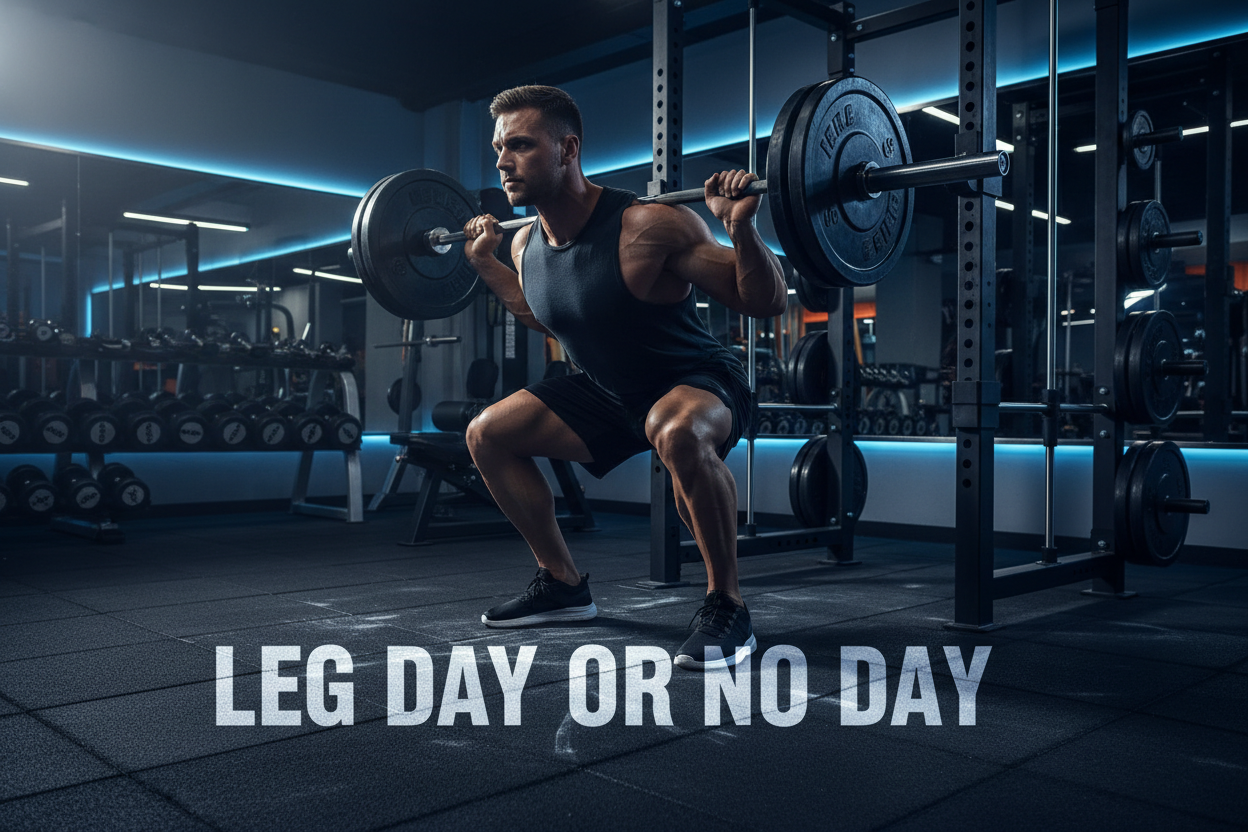
Often called the king of all exercises, the back squat loads the entire skeleton. It primarily targets the quadriceps and glutes but requires immense core stability. The key here is depth. stopping halfway down cheats your legs out of growth and places unnecessary shear force on the knees. Aim to break parallel, where the hip crease drops below the top of the knee. If mobility is an issue, placing small plates under your heels or using lifting shoes can make a massive difference in your mechanics.
2. Romanian Deadlift (RDL)
While the conventional deadlift is a total body movement, the Romanian Deadlift isolates the posterior chain. It is a pure hip-hinge pattern. Keep your legs relatively straight (soft knees are fine) and push your hips back as far as possible while lowering the bar. You should feel a deep stretch in the hamstrings. This movement is non-negotiable for counteracting the quad-dominance that many lifters develop.
3. Bulgarian Split Squat
This is the exercise everyone loves to hate. Unilateral training (working one leg at a time) is essential for fixing imbalances. If your right leg is stronger than your left, a standard barbell squat will let the dominant side take over. The Bulgarian Split Squat forces each leg to carry its own weight. It places a massive demand on the glutes and quads while improving hip mobility and balance.
4. Leg Press
Free weights are superior for stabilizers, but machines have a distinct advantage: you can take muscles to absolute failure safely. The leg press allows you to load up heavy weight without worrying about your lower back giving out before your legs do. It is an excellent accessory movement to follow up your heavy squats.
5. Seated or Lying Leg Curls
The hamstrings have two main functions: extending the hip and flexing the knee. RDLs handle the hip extension, but leg curls are necessary for knee flexion. This ensures complete hamstring development. Control the eccentric (lowering) portion of the rep; don't just let the weight slam back down.
Structuring Your Routine: A List of Leg Workouts
Knowing the exercises is only half the battle. You need to arrange them logically to manage fatigue and maximize stimulus. Below is a list of leg workouts designed for different goals. Ensure you warm up properly with dynamic stretching before attempting these working sets.
Option A: The Strength & Mass Builder
This session focuses on heavy compound movements. Rest periods should be longer (3-5 minutes for compounds) to allow for full recovery between sets.
- Barbell Back Squat: 3 sets of 5-6 reps (Focus on moving heavy weight with perfect form)
- Romanian Deadlift: 3 sets of 8-10 reps (Focus on the stretch)
- Walking Lunges: 3 sets of 12 steps per leg
- Standing Calf Raises: 4 sets of 15 reps
Option B: The Hypertrophy (Muscle Growth) Session
This routine uses higher volume and slightly shorter rest periods (90 seconds to 2 minutes) to drive metabolic stress and pump.
- Leg Press: 4 sets of 10-12 reps
- Bulgarian Split Squats: 3 sets of 10 reps per leg
- Leg Extensions: 3 sets of 15 reps (Hold the squeeze at the top for 1 second)
- Lying Leg Curls: 3 sets of 12-15 reps
- Seated Calf Raises: 3 sets of 20 reps
Execution Matters More Than Selection
You could have the perfect program on paper, but if your execution is sloppy, your results will be mediocre. The connection between your mind and the muscle is real. When you are performing a leg extension, don't just kick your foot up. Think about your quadricep contracting to pull the lower leg up. When squatting, visualize driving the floor away from you.
Progressive overload is the engine of growth. You must give your body a reason to adapt. This doesn't always mean adding weight to the bar. You can add a rep, perform the rep more slowly, or decrease the rest time between sets. Keep a logbook. If you are doing the same weight for the same reps as you were last year, your legs will look exactly the same.
Recovery and Frequency
Leg training is taxonomically draining on the central nervous system. Because the legs house the largest muscle groups in the body, they require significant resources to repair. Most natural lifters find that training legs twice a week is the sweet spot. This frequency allows for sufficient volume without overwhelming your recovery capacity. If you destroy your legs once a week so badly that you can't walk for six days, you are actually training less efficiently than if you had two moderate sessions.
Listen to your joints. Knees and hips can take a beating from heavy lifting. If a specific movement in the leg exercises list causes sharp pain (not muscle burn, but joint pain), swap it out. There is no single mandatory exercise. If back squats hurt your spine, switch to front squats or a hack squat machine. Longevity keeps you in the game long enough to see results.
Frequently Asked Questions
How often should I train my legs for maximum growth?
For most intermediate lifters, training legs twice a week is optimal. This allows you to split the volume, perhaps focusing one day on heavy compounds (squats) and the other on hypertrophy or isolation movements, ensuring you hit the muscles frequently enough to trigger growth signals without exceeding recovery limits.
What should I do if I feel squats only in my lower back?
This usually indicates a form breakdown or a weak core. Try lightening the weight and focusing on bracing your abdominals as if you were about to be punched in the stomach. Alternatively, switch to Goblet Squats or Front Squats, which force a more upright torso and naturally reduce lower back strain while still hammering the quads.
Can I build big legs with just dumbbells?
Absolutely. While barbells are easier for maximum loading, dumbbells are incredible for hypertrophy, especially with unilateral movements. Exercises like Bulgarian split squats, goblet squats, and dumbbell RDLs can build massive legs if you push close to failure and maintain high intensity.