Ditch Push-Pull For This Back Chest and Shoulder Workout
I spent years convinced that if I wasn't in my garage six days a week, I was shrinking. I followed the standard Push/Pull/Legs split religiously, even when my elbows felt like they were filled with crushed glass and my overhead press numbers were stalling harder than a 1998 Honda Civic. The truth is, most of us don't have the recovery capacity of a 22-year-old on a pro-hormone cycle, and trying to hit every muscle group in isolation is a fast track to burnout.
The solution isn't doing less work; it's doing smarter work. By moving to a consolidated back chest and shoulder workout, you treat your torso as one functional unit. This isn't some 'toning' circuit. It is a heavy, high-intensity session that forces the antagonistic muscles of the upper body to work together, allowing for more weight on the bar and more actual recovery time between sessions.
- Consolidating your upper body into one session allows for 48-72 hours of total systemic recovery.
- Antagonist supersets (chest vs. back) increase blood flow to the torso and improve strength via reciprocal inhibition.
- Heavy compound movements are prioritized when your central nervous system is fresh.
- You stop wasting time on 'fluff' exercises that don't move the needle on your physique.
Why the Six-Day Split Fails in the Real World
The 6-day PPL split is the gold standard in bodybuilding magazines, but it's a nightmare for the guy training in a garage. If life happens—a late meeting, a sick kid, or just a Tuesday where you'd rather sleep—your whole cadence is wrecked. You end up hitting 'Push' on Monday, missing Tuesday, and suddenly you haven't touched your back in eight days. It's inconsistent and frustrating.
Beyond the scheduling, there's the joint fatigue. If you're pressing on Monday (Chest) and then pressing again on Wednesday (Shoulders), your anterior delts and triceps never actually catch a break. They are constantly in a state of low-grade inflammation. By the time you get to your heavy sets, your stabilizers are already fried. A consolidated chest back shoulders workout fixes this by giving those small, vulnerable joints long stretches of absolute rest.
The Biomechanical Case for Consolidating Your Upper Body
There is a reason why old-school legends like Arnold favored chest and back days. When you pair a horizontal push with a horizontal pull, you utilize the 'antagonist' principle. While your chest is contracting during a bench press, your back muscles are being stretched and vice-versa. This keeps the blood localized in the torso, creating a massive pump that actually supports the joints during heavy lifts. You can explore our complete workout hub to see how this philosophy stacks up against traditional body-part splits.
By training the chest, back, and shoulders together, you also avoid 'competing fatigue.' If you do three different chest exercises in a row, your performance on the third exercise is garbage because the muscle is spent. But if you alternate a heavy row with a heavy press, the 'pulling' muscles are fresh while the 'pushing' muscles rest. This allows you to maintain a higher average intensity across the entire session.
How to Sequence Three Major Muscle Groups Without Crashing
Order of operations is everything. If you start with lateral raises and face pulls, you’re going to be too unstable to move real weight on the bench. My rule is simple: Horizontal, then Vertical, then Isolation. We start with the heaviest horizontal movements—think Barbell Bench Press paired with a Pendlay Row. These are your primary mass builders.
Next, we move to the vertical plane. This is where you pair Weighted Pull-ups or Lat Pulldowns with Overhead Pressing or Dips. By the time you reach the shoulders, the joints are warm and the surrounding musculature is engorged with blood, which significantly reduces the risk of impingement. If you are working with limited gear, you can easily adapt this into a chest and back workout with dumbbells at home without losing the stimulus.
Managing Floor Fatigue During Heavy Supersets
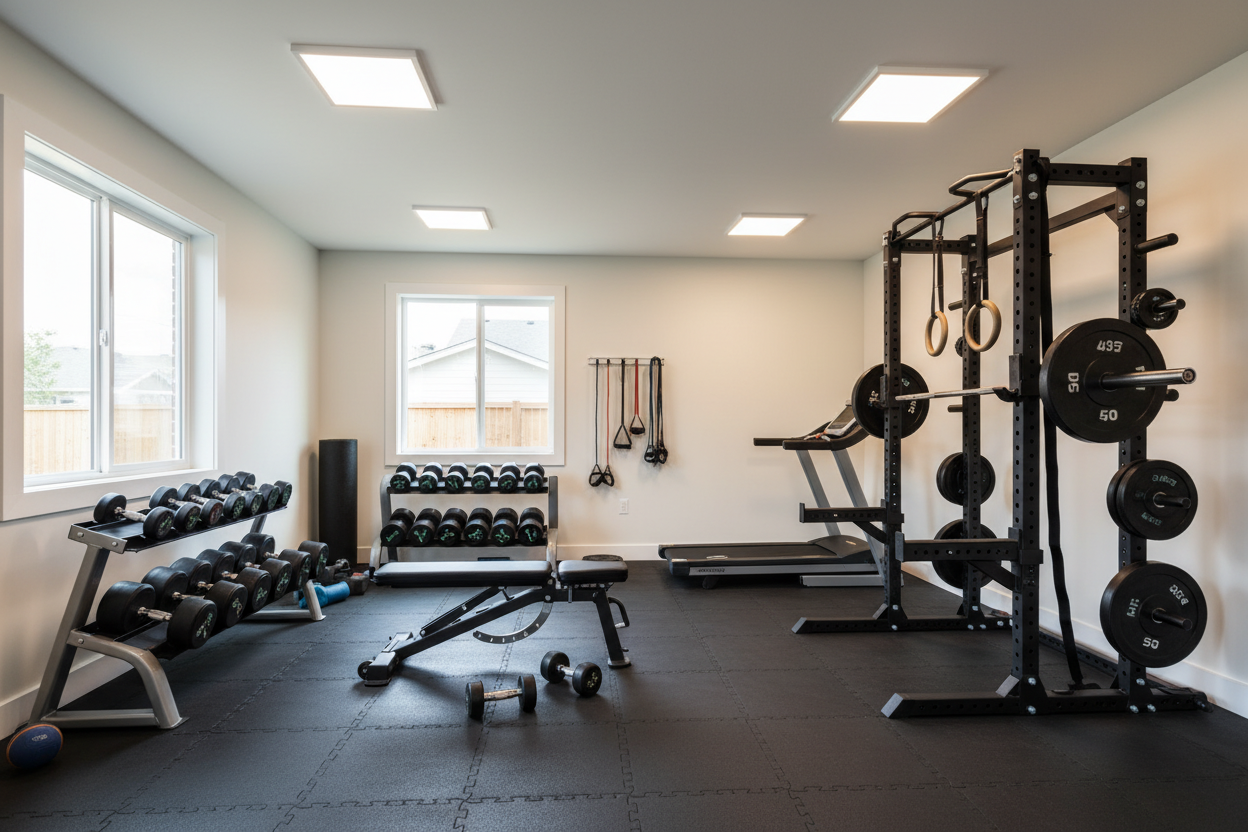
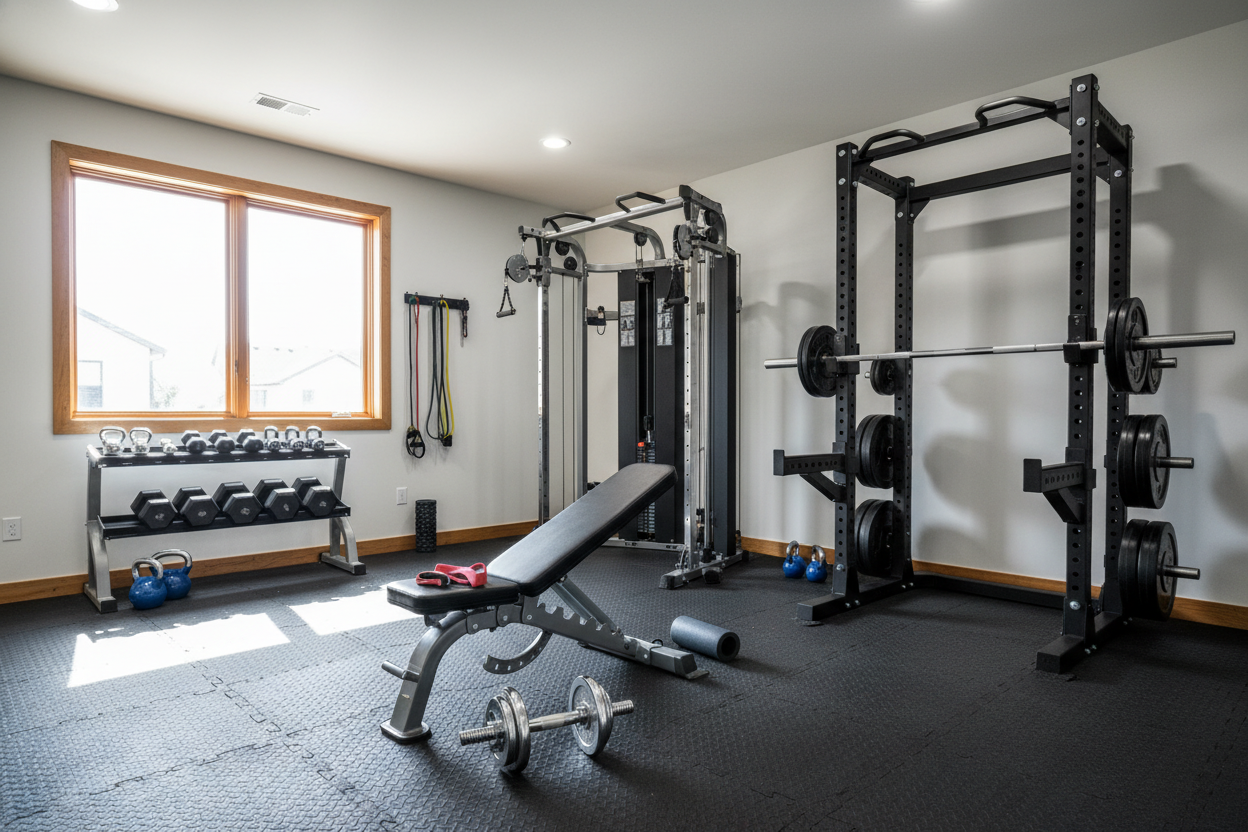
In a commercial gym, supersetting across the room is a great way to get your bench stolen. In a home gym, it’s a great way to trip over a stray 45-lb plate. Efficiency is key. You want to set up your 'stations' so that you aren't dragging a bench across the floor every five minutes. I keep my rack set up for rows and my bench positioned right inside the uprights.
Stability matters here, too. If you’re transitioning from a heavy floor press to a bent-over row, you need a surface that doesn't shift. I highly recommend investing in large gym flooring for home workouts. Having a wide, 6x8 ft stable base means you can move from your barbell to your dumbbells without having to reset your feet on uneven concrete or cheap, puzzle-piece foam mats that slide around when you sweat.
The Exact Tuesday Torso Routine I Run
This is the routine I’ve used to maintain a 315-lb bench and a 275-lb row while only training upper body twice a week. It’s brutal, it’s fast, and it works.
- A1. Barbell Bench Press: 4 sets of 6-8 reps. Focus on a controlled eccentric.
- A2. Pendlay Rows: 4 sets of 6-8 reps. Explosive off the floor, no English.
- B1. Weighted Pull-ups: 3 sets of 8-10 reps. Use a dip belt if you can do more than 12 bodyweight.
- B2. Standing Overhead Press: 3 sets of 8-10 reps. Keep the core locked tight.
- C1. Incline Dumbbell Flyes: 3 sets of 12-15 reps. Deep stretch at the bottom.
- C2. Face Pulls or Rear Delt Flyes: 3 sets of 15-20 reps. High volume for shoulder health.
Rest 90 seconds between A1 and A2, then 2 minutes before the next set. This keeps the heart rate up and the intensity high.
What About the Arms? (The Unspoken Rule)
The biggest fear people have when dropping an arm day is that their sleeves will start flapping in the wind. It’s a valid concern, but it’s mostly unfounded. When you are rowing 200+ pounds and doing weighted pull-ups, your biceps are getting hammered. When you are benching and overhead pressing, your triceps are the primary movers for the lockout.
If you absolutely feel the need for isolation, tack on two sets of curls at the very end. But honestly? The systemic load from these heavy compound movements does more for arm thickness than three variations of cable kickbacks ever will. Save your energy for the big lifts that actually build the frame.
FAQ
Can I do this workout every day?
Absolutely not. This is a high-intensity session. You need at least 48 hours between these sessions. I recommend a Monday/Thursday or Tuesday/Friday split, with legs or active recovery in between.
What if I don't have a pull-up bar?
Substitute pull-ups with heavy one-arm dumbbell rows or chest-supported rows. The goal is to get a vertical or horizontal pulling motion to counter your pressing.
How long should this session take?
If you are staying focused and keeping your rest periods under two minutes, you should be in and out of the garage in 45 to 55 minutes. If it's taking longer, you're talking too much or looking at your phone.