I Fixed My Sloppy Lockout With functional exercises for shoulder
I remember the exact moment my overhead press hit a wall. I was grinding through a 185-pound single in my garage, and instead of a clean lockout, my lower back arched like a bridge and my elbows started dancing. I had the raw strength to move the weight, but my stabilizers had checked out of the building. I realized I was chasing numbers on a straight bar while my actual joint integrity was a disaster.
It turns out that hammering the same linear path every week makes you great at one thing and fragile at everything else. I had to stop ego-lifting and start incorporating functional exercises for shoulder stability to save my training. These aren't just 'pre-hab' moves; they are the foundation that actually allows you to push heavy weight without your joints screaming for mercy.
Quick Takeaways
- Functional training fixes the 'shaky' lockout caused by weak stabilizers.
- The shoulder is a 360-degree joint; stop training it like it only moves up and down.
- Kettlebells and landmines are superior tools for building 'smart' shoulders.
- You don't need to quit the barbell, but you do need to earn the right to use it.
The Day My Overhead Press Finally Broke Down
I used to think that if I just kept adding five pounds to the bar, my shoulders would eventually become bulletproof. I was wrong. I was so focused on the prime movers—the delts and triceps—that I completely ignored the tiny muscles that keep the humerus centered in the socket. My lockout became sloppy, my ribs flared out, and I started feeling a sharp pinch every time I went heavy.
The problem is that traditional gym workout shoulder exercises usually involve sitting in a machine or standing in a rack where the path of the weight is fixed. Real-world strength doesn't work that way. When I finally filmed myself, I saw my shoulders compensating by shifting forward. I was training for a PR, but I was actually training for an injury. I had to step back and realize that a big press built on a shaky foundation is just a ticking clock.
What Makes a functional shoulder workout Actually 'Functional'?
The term 'functional' gets thrown around a lot by people balancing on bosu balls, but for a lifter, it means one thing: training the joint to do what it was designed to do. Your shoulder is the most mobile joint in your body. It is designed to rotate, reach, and stabilize in every direction. If you only ever press in a straight line, those rotational stabilizers (the rotator cuff) get lazy and weak.
A true functional shoulder workout forces your brain to talk to your muscles to keep the weight stable. It’s about scapular rhythm—the way your shoulder blade moves along your ribcage. By using 3D movements, you build functional exercises for shoulder health into your routine that protect you when you decide to go back to the heavy barbell. It’s the difference between a house built on concrete and one built on sand.
The 4 functional shoulder exercises That Saved My Joints
I stripped my program down to the basics and added these four movements. I didn't care about the weight on the bar; I cared about how the movement felt. If it felt shaky, I stayed at that weight until it was rock solid.
Bottoms-Up Kettlebell Presses (The Ego Check)
If you want to find out how weak your stabilizers are, try pressing a kettlebell with the heavy end pointing at the ceiling. The 'bottoms-up' position forces your grip and your rotator cuff to fire at 100% just to keep the bell from flopping over and hitting you in the face. You can't cheat this move. If your alignment is off by even an inch, the bell drops. It’s the ultimate feedback tool for a clean pressing path.
Half-Kneeling Landmine Presses (The Core Connector)
The landmine is my favorite piece of equipment for shoulder health. Because the bar moves in an arc, it allows your shoulder blade to rotate naturally. Doing this from a half-kneeling position (one knee down) removes your ability to arch your lower back. It forces your core to bridge the gap between your hips and your shoulders. This was the specific move that taught me how to stay 'tight' during a heavy press.
Kettlebell Halos (The Mobility Builder)
I use these as both a warm-up and a finisher. You take a light kettlebell by the horns and rotate it around your head like a halo. It sounds easy until you do three sets of 10 in each direction. It greases the groove of the shoulder socket and forces the entire shoulder girdle to work through its full range of motion under constant tension. It’s a brutal way to wake up the upper back.
Bear Crawls (The Scapular Glider)
Getting on all fours is the most underrated thing you can do for your shoulders. Bear crawls force your serratus anterior—the 'boxer's muscle'—to pull your shoulder blades flat against your ribs. This creates a stable platform for pressing. I do these on a thick exercise mat to save my wrists and knees from the concrete floor of my garage. It's a humbling way to realize that moving your own body weight can be harder than moving a plate.
How to Program These Without Losing Your Raw Strength
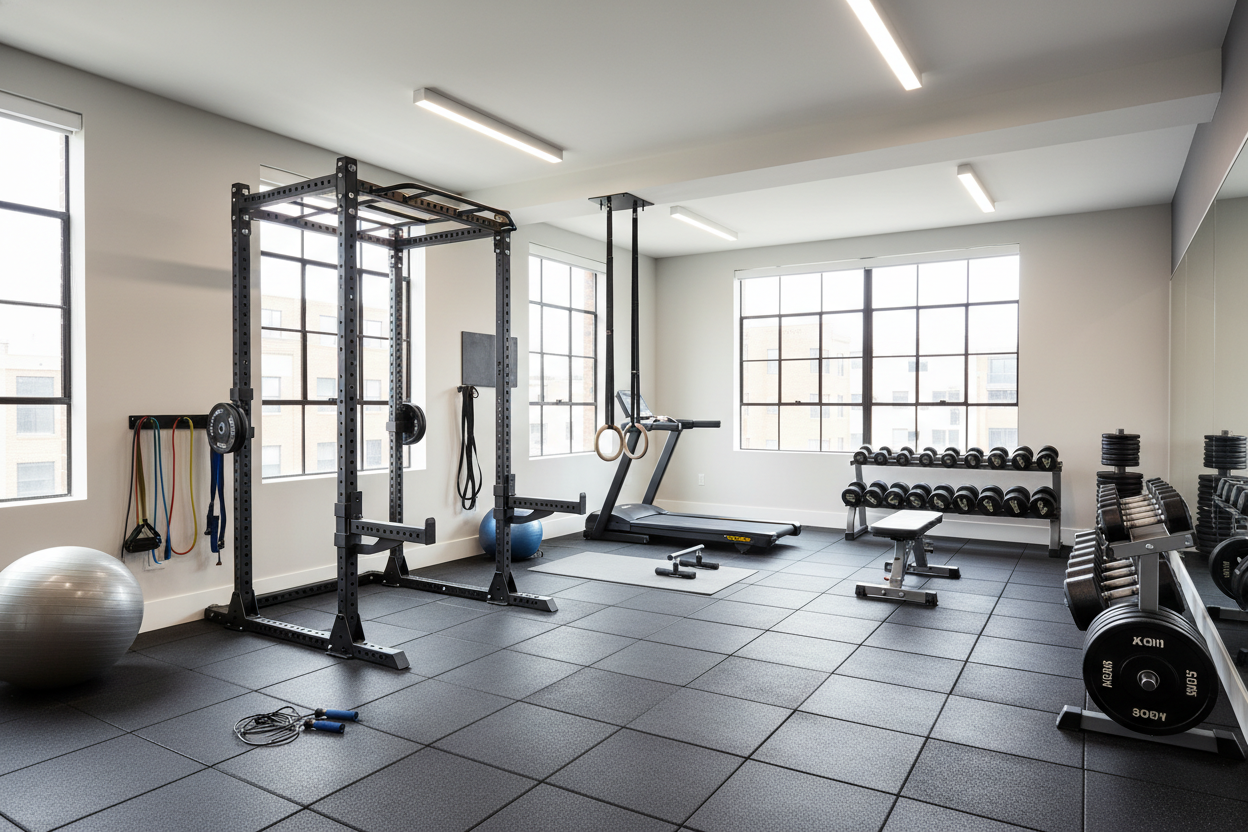
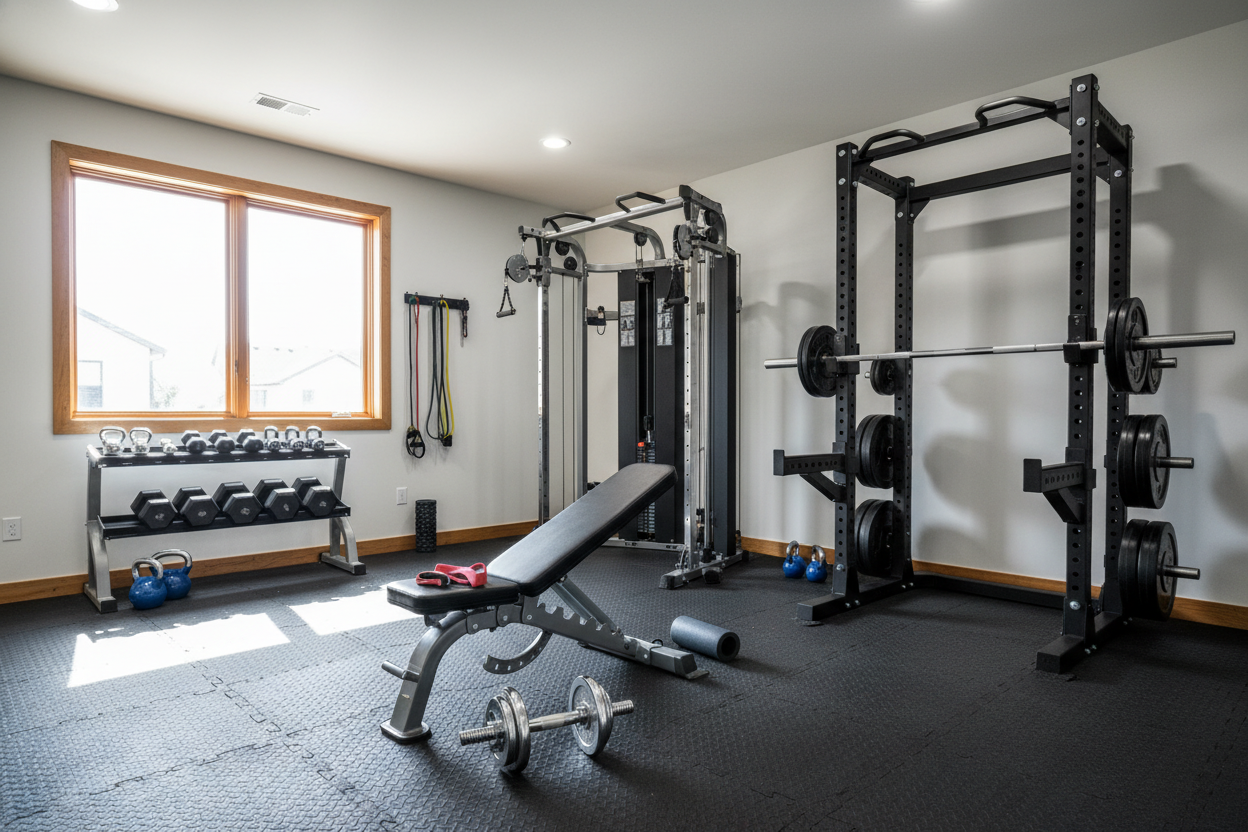
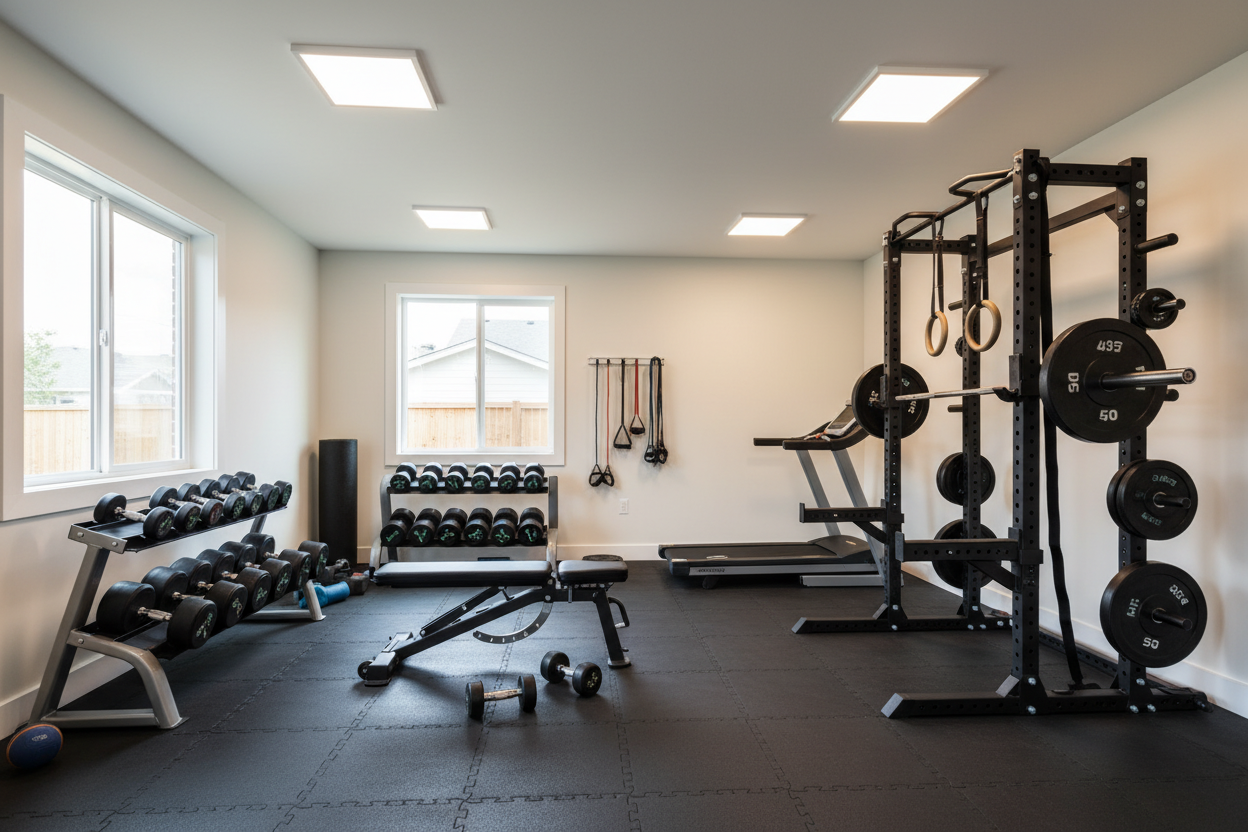
You don't have to throw your power rack in the trash. The goal is to use these functional movements to support your heavy lifting, not replace it. I started using kettlebell halos and bear crawls as part of my warm-up. They get the blood flowing and the stabilizers 'awake' before I touch a barbell. This made my heavy sets feel significantly more stable.
For the presses, I swapped my secondary shoulder day for landmine and bottoms-up work. Instead of doing high-rep lateral raises, I did 3 sets of 8-12 on the landmine. If you're looking for ways to slot these into your week, check out some garage gym workout routines that prioritize longevity. After six weeks of this, I went back to the strict barbell press and hit a 5-pound PR—not because I was 'stronger,' but because I was finally stable enough to use the strength I already had.
FAQ
Do I need heavy kettlebells for these exercises?
No. For bottoms-up work, most people are humbled by a 15-lb or 20-lb bell. The goal is stability and control, not max weight. If the bell is wobbling, it's heavy enough.
Can I do these every day?
Movements like halos and bear crawls are great for daily mobility. However, the pressing movements should be treated like any other strength work—give yourself 48 hours between intense sessions to recover.
Will this help with shoulder clicking?
Often, clicking is caused by the humerus not sitting correctly in the socket because of weak stabilizers. These exercises help center the joint, which can reduce that 'crunchy' feeling, but always see a pro if you have sharp pain.