Defined Muscles: Practical Ways to Build Them
Striving for defined muscles is one of the most common goals in home fitness. Many lifters wonder how to build defined muscles without bulky, complicated gym setups. In reality, developing visible shape comes down to two primary elements: developing solid lean muscle mass beneath the skin and maintaining balanced body composition so that muscle outlines become visible. When people ask how to get defined muscles, the answer lies in structured resistance training, patient progression, and a reliable training space rather than endless high-repetition burning sets.
What Creates Defined Muscles?
To understand what produces defined muscles, it helps to look at muscle physiology and body composition together. You cannot reveal muscular lines without building sufficient muscular shape first. Building muscle definition requires progressive stimulation so that target fibers adapt and grow firmer and denser over time.
A common misconception is that light weights lifted for dozens of repetitions will tone a muscle, whereas heavier weights will only build bulk. In practice, training for muscle definition requires sufficient mechanical tension. Lifting moderate to challenging resistance encourages the body to gain muscle definition, while daily nutrition and movement habits influence overall body composition. When these elements align, you reveal more defined muscles across your torso, arms, and legs.
What is the difference between building bulk and building muscle definition?
The difference between bulk and muscle definition primarily reflects overall muscular volume paired with body composition levels rather than entirely different training methods. While building sheer mass often involves high caloric intake alongside heavy lifting, gaining crisp lines relies on preserving lean muscle mass while keeping body composition balanced. Both paths rely on progressive overload and consistent resistance training to stimulate muscle fibers effectively.
Essential Weight Training for Muscle Definition
Effective weight training for muscle definition focuses on quality of contraction over sheer volume. Rather than rushing through reps, maintaining deliberate tempo control forces your muscles to stabilize weight through full ranges of motion. This deliberate approach is how to define muscles safely while minimizing unnecessary joint strain.
Compound movements form the foundation of any muscle definition training plan. Exercises that recruit multiple joints at once—such as squats, presses, and rows—engage large muscle groups simultaneously. For lifters comparing split options, reading a muscle building body guide provides perspective on how full-body resistance training stimulates defined muscles across three structured weekly sessions.
Once foundational compound lifts are established, targeted accessory exercises help build muscle definition in smaller areas like the shoulders and arms. Utilizing dumbbells allows each side of the body to work independently, correcting side-to-side imbalances and helping you get defined muscles with symmetrical shape.
Key Exercises for Definition Across Muscle Groups
Choosing dependable exercises for definition allows you to target major areas using basic home gym equipment. You do not need commercial machines to gain definition in muscles, though browsing a weight lifting collection can provide ideas for expanding a home training setup over time. Here are reliable movements to include in your routine:
- Floor Press: Performed with dumbbells while lying flat on a firm mat, the floor press limits shoulder strain while emphasizing the chest and triceps. It is one of the most practical floor exercises for building upper-body pressing power and muscle definition.
- Split Squats: Unilateral leg movements challenge stability and quad strength. Lowering under tempo control creates deep tension in the quads and glutes, which is central to how to get muscle definition in the lower body.
- Romanian Deadlifts: Holding a pair of dumbbells while hinging at the hips targets the hamstrings and posterior chain, teaching hip control while helping you build defined muscles throughout the backside.
- Plank Variations: Static and moving planks build lasting core stability. A strong core supports heavier compound lifts and gives the midsection a firmer, more athletic appearance.
Integrating these exercises for definition ensures that every major muscle group receives balanced work. Floor exercises are especially valuable in home workouts because they require minimal gear while challenging core stability and balance.
Structuring a Body Definition Workout Routine
A well-planned body definition workout avoids random daily exercises in favor of consistent, repeatable routines. Rotating between upper-body and lower-body sessions or using full-body circuits can keep intensity high while giving trained muscle groups time to recover. If you want a detailed look at structuring your split, our exercise muscle gain guide outlines practical scheduling methods.
What is the best way to get defined muscles at home?
The best way to get defined muscles at home is to combine progressive compound movements with dumbbells, consistent tempo control, and sensible recovery. To gain muscle definition effectively, focus on three to four focused workouts per week, gradually increasing resistance or repetitions over time. This approach challenges your muscles to adapt without causing excessive fatigue.
In a standard body definition workout, prioritize heavier multi-joint movements at the start when energy is high. Finish with controlled isolation lifts or floor exercises to fully fatigue the target areas. Paying attention to progressive overload—whether by adding a repetition, slowing the lowering phase, or increasing dumbbell weight—is the clearest method for how to increase muscle definition over the long haul.
Home Gym Flooring and Workout Space Setup
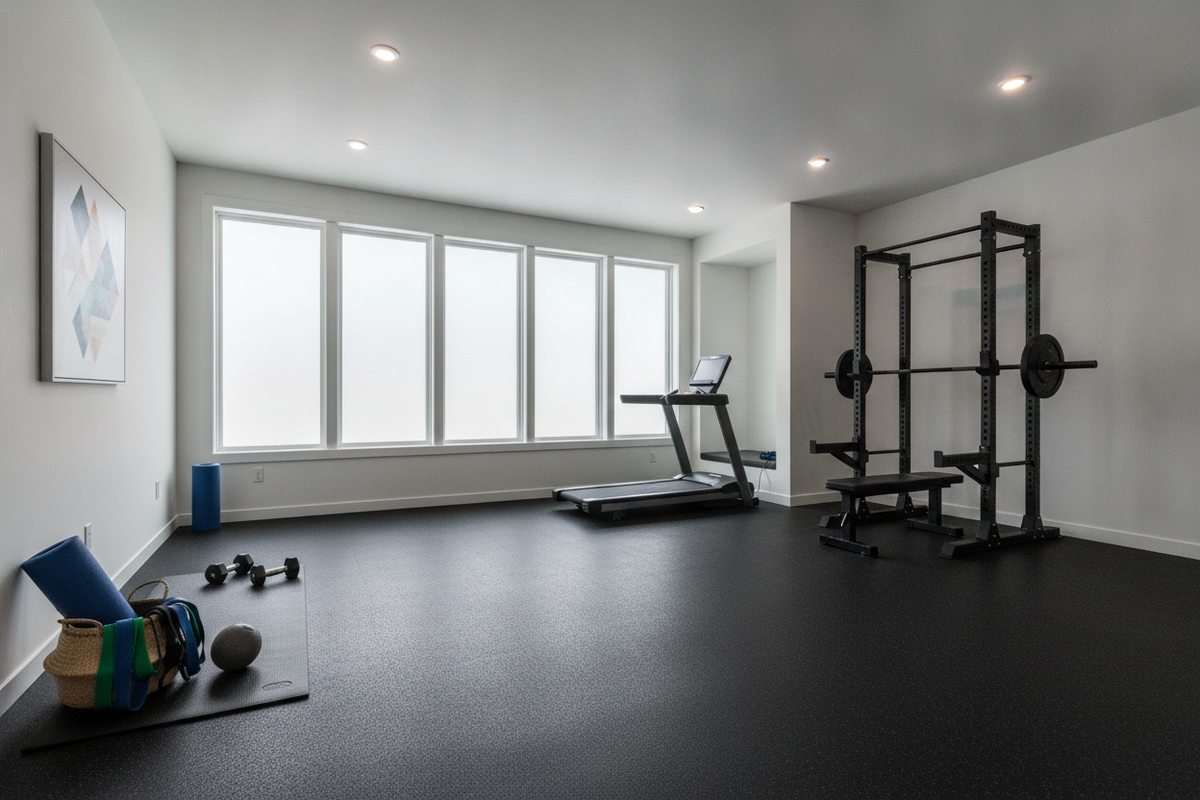
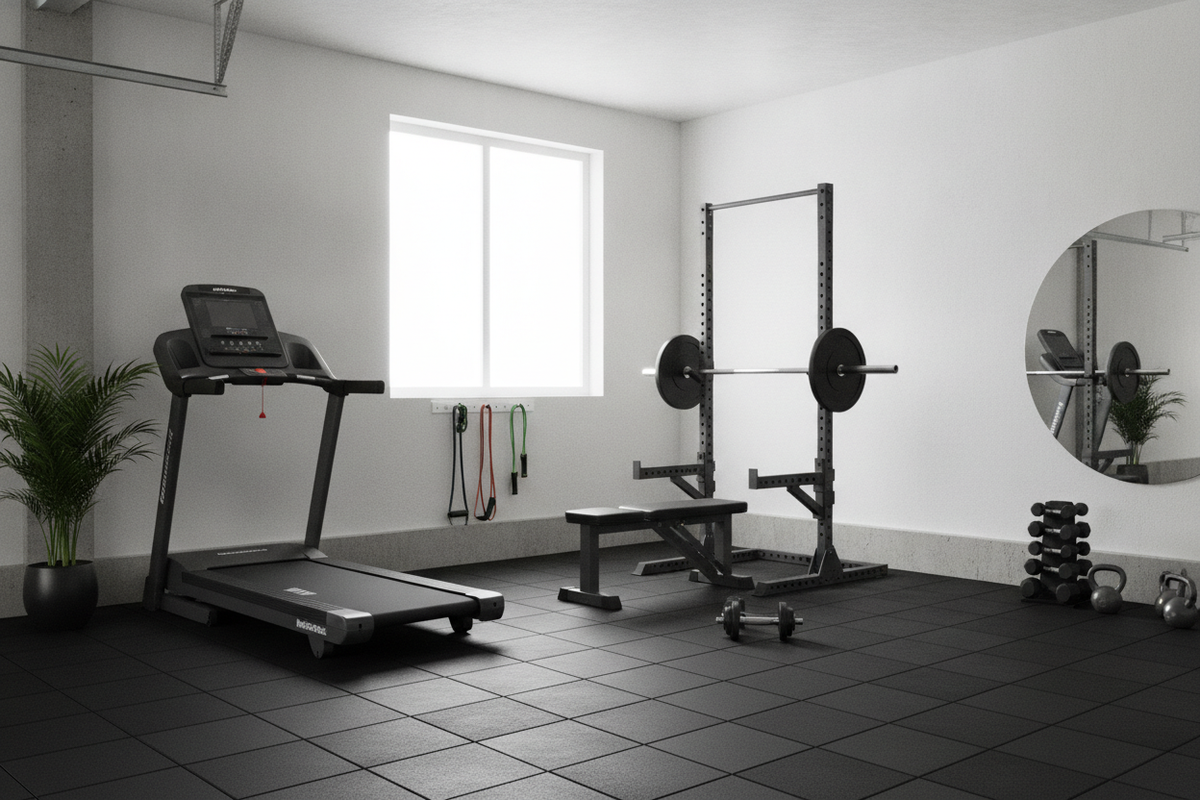
Working toward defined muscles requires stability, especially when performing standing presses, lunges, or floor exercises. Hardwood, tile, or thin carpet can cause slipping or strain your elbows and knees during floor work. Quality home gym flooring creates a dependable base that improves traction and grip during explosive or heavy lifts.
A durable, shock-absorbing surface like a exercise workout product offers ample room for dumbbell training, lunges, and mobility routines without shifting underfoot. Investing in a large exercise mat provides meaningful shock absorption that protects both subfloors and joints from sudden impacts when weights are set down.
Maintaining dedicated home gym flooring also keeps your workout area organized and inviting. When you have sufficient floor space with reliable traction and grip, you can transition smoothly from standing compound movements to floor press sets without needing to rearrange your room. Proper joint protection during ground work lets you focus fully on muscular effort rather than joint discomfort.
Consistency, Recovery, and Joint Protection
Training hard is only one part of how to make muscle more defined; allowing your body time to rebuild is equally critical. Defined muscles become prominent through the cycle of training stress followed by restful recovery. Without adequate rest, muscle tissue cannot rebuild efficiently, which can stall your progress toward more defined muscles.
Incorporate active recovery days featuring light walking, mobility drills, and gentle stretching on your large exercise mat. These low-intensity sessions promote circulation to tired tissues without adding training fatigue. Protecting your joints through sensible exercise selection, steady tempo control, and proper padding ensures that you can train consistently month after month.
In my own home setup, switching to a dense floor mat made floor presses and split squats noticeably more comfortable on my wrists and knees. That quiet stability allows for deeper focus on each repetition, helping you get defined muscles through safe, sustainable training habits.