Decorative Foam Play Mats: The Hybrid Home Gym Secret
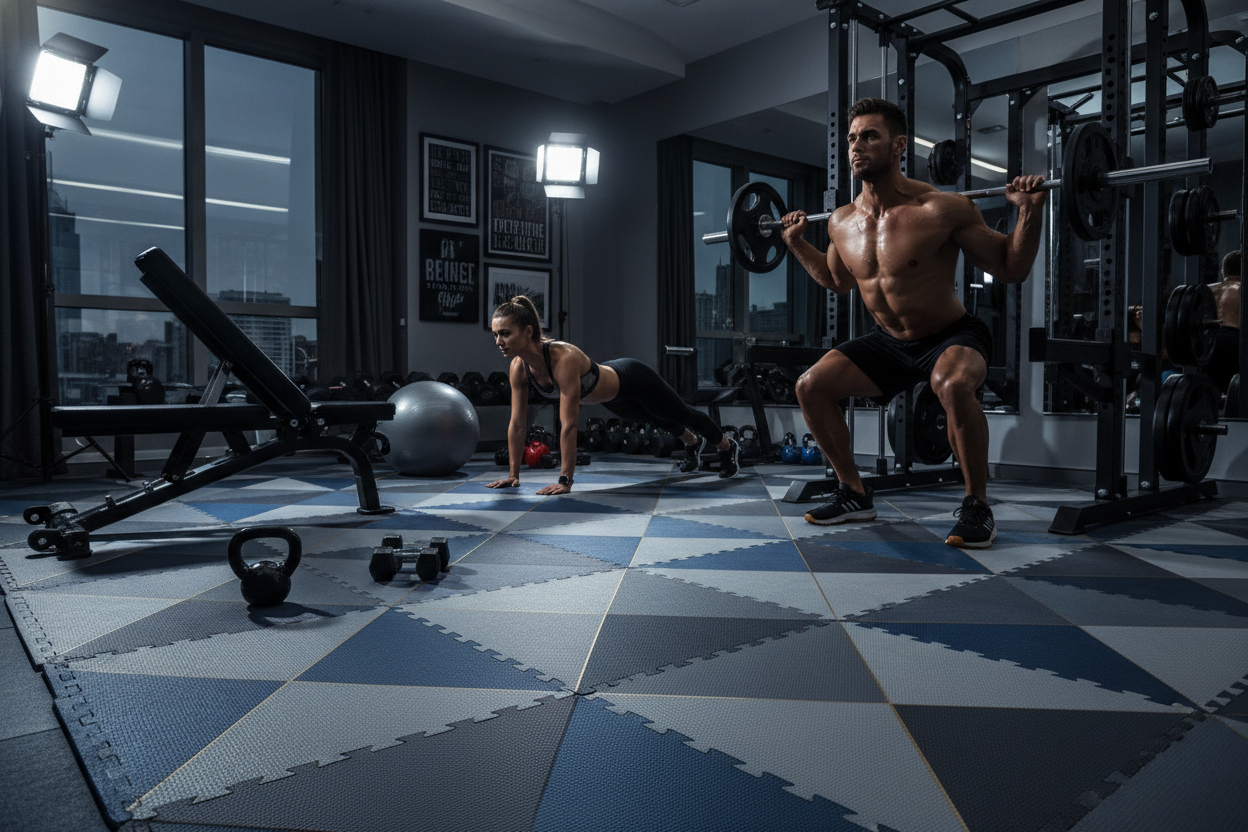
Building a home gym doesn't mean you have to sacrifice the look of your house. If you share your workout space with a family room or living area, traditional black rubber stall mats can instantly kill the room's vibe. Enter decorative foam play mats. These versatile flooring options offer the cushion you need for bodyweight workouts and stretching, while keeping your living space looking like an actual home. In this guide, we'll break down how to choose the right flooring to elevate your hybrid workout space.
Key Takeaways
- Foam density matters more than thickness for joint support and equipment stability.
- Look for non-toxic, EVA foam materials to ensure safety for both children and pets.
- Interlocking puzzle designs allow for custom sizing in awkward room layouts.
- They are ideal for bodyweight exercises, yoga, and light dumbbells, but not heavy barbell drops.
Merging Style with Home Gym Functionality
Material and Density Specs
When shopping for a beautiful play mat, don't let the aesthetics distract you from the performance specs. You need high-density EVA foam. Standard baby mats are often too squishy, meaning your ankles might roll during heavy lunges or squats. A firmer designer foam play mat bridges the gap, offering enough shock absorption for a toddler's tumble and enough stability for your kettlebell swings.
Space Planning for Shared Rooms
Measuring Your Layout
Most modern foam play mat tiles come in 24-inch squares. If you are setting up in a basement corner or a living room, measure your clearance carefully. Leave a two-inch gap between the mat edges and the baseboards to account for foam expansion during warmer months. Because they are lightweight, you can easily pull up a section if you need to access floor outlets or vents.
Durability and Long-Term Maintenance
Wear and Tear Expectations
Unlike vulcanized commercial rubber, foam will show indentations if you leave heavy power racks or benches sitting on it permanently. To maximize longevity, use hard plastic furniture coasters under heavy equipment, or dedicate the foam section purely to floor work, stretching, and free weights.
From Our Gym: Honest Take
We recently tested a geometric-patterned foam mat in our upstairs guest-room-turned-gym. I do a lot of early morning mobility work and light dumbbell routines while my toddler plays nearby. The aesthetic upgrade from our old horse stall mats was night and day—it actually looks like a cozy, inviting room now. However, I will be completely honest: I dropped a 35-pound hex dumbbell from waist height, and it definitely left a permanent crescent-shaped dent in the foam. It didn't pierce the hardwood floor beneath, which is the main goal, but keep in mind that these are not meant for aggressive Olympic lifting or careless dumbbell drops.
Frequently Asked Questions
Are decorative foam play mats safe for home gym equipment?
They are great for light to medium equipment like stationary bikes, adjustable dumbbells, and yoga gear. Heavy power racks or treadmills may compress the foam too much, requiring a solid plywood base or specialized high-density rubber underneath.
How do I clean a foam play mat?
A simple wipe-down with mild soap and warm water is usually enough. Avoid harsh chemical cleaners or bleach, as they can degrade the printed decorative layer and compromise the foam over time.
Do interlocking foam tiles pull apart during workouts?
High-quality mats feature tight, precision-cut puzzle edges that stay together during side-to-side movements like skaters or burpees. If you notice shifting on slick hardwood, using double-sided carpet tape on the perimeter tiles can lock the entire footprint securely in place.